Eli & Elm Ergonomic Pillow Review
Eli & Elm Ergonomic Side Sleeper Pillow review: $110–$125. We tested its contoured cervical design for neck pain relief over 8 weeks. Full verdict inside.
What We Love
- Contoured ergonomic shape with a raised outer ridge and lower center channel specifically targets side-sleeping neck alignment
- Firm, high-density memory foam holds its shape under head weight rather than flattening the way softer pillows do
- Dual-height design lets you use either side of the pillow depending on shoulder width, without needing to add or remove fill
- CertiPUR-US certified foam — independently verified for low VOC emissions
- Machine-washable outer cover for straightforward maintenance
- Firm support held up consistently through 8 weeks of nightly testing with no noticeable softening
Room for Improvement
- At $110–$125, priced above most general-purpose pillows and close to premium adjustable competitors
- The firm, structured shape is not what every sleeper expects on first contact — it takes a few nights to feel natural
- Not adjustable — the two height options are fixed, so if neither fits your shoulder width precisely there's no way to fine-tune it
- Not designed for back or stomach sleeping — the contoured shape is specifically built around the side-sleeping position
- Sleeps warmer than latex or gel-infused alternatives, consistent with standard memory foam construction
Eli & Elm Ergonomic Pillow
$110-$125
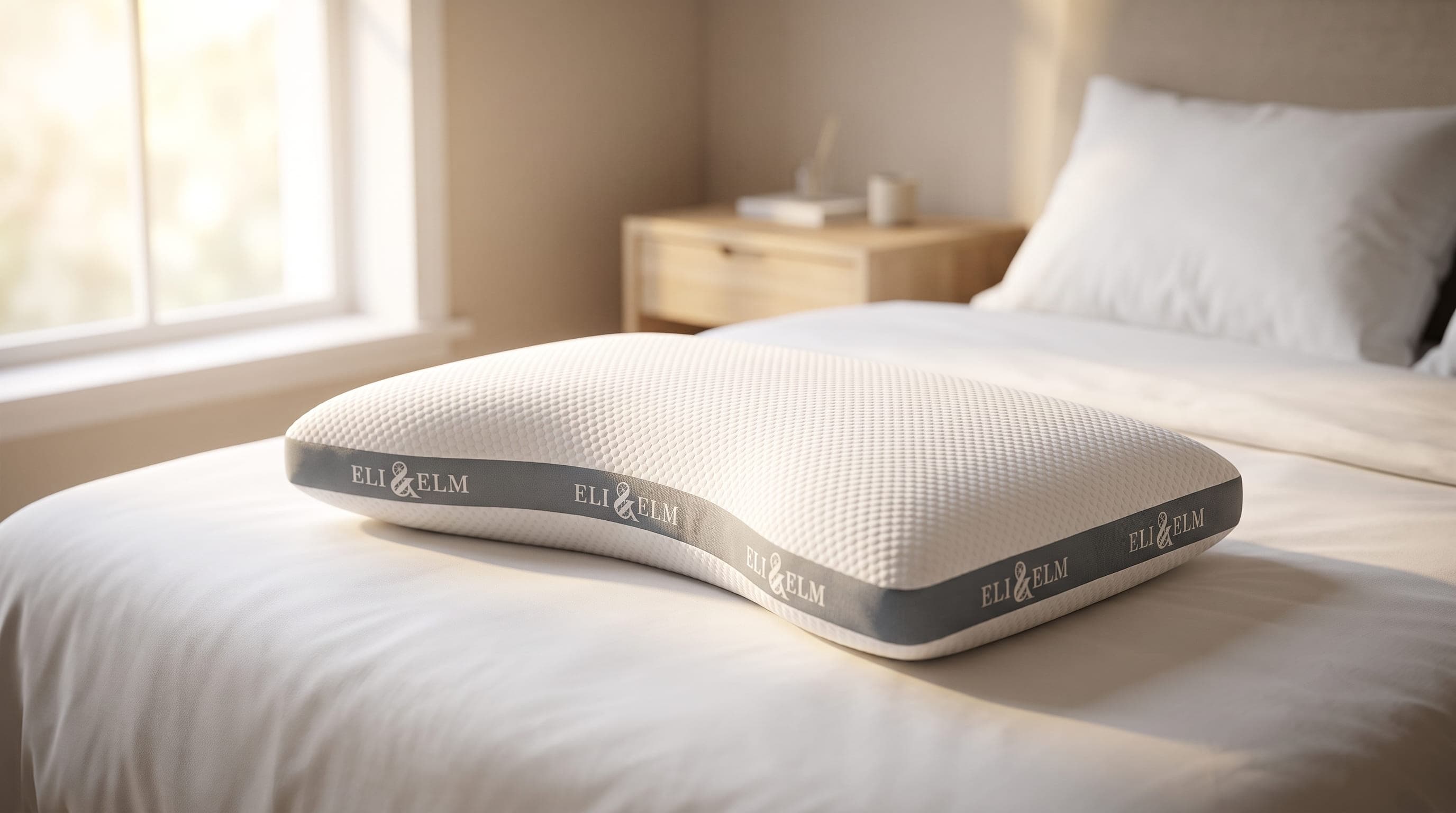
Neck pain in side sleepers usually comes down to one specific mechanical failure: the pillow doesn't hold the head level with the spine, so the neck bends laterally for hours every night. The Eli & Elm Ergonomic Side Sleeper Pillow is built entirely around correcting that — a contoured, firm memory foam shape with a raised outer ridge and a lower center channel, rather than a standard rectangular block of fill.
Priced from $110 to $125, the Eli & Elm sits in the mid-premium pillow tier, positioned directly against dedicated cervical-support pillows rather than general-purpose ones. We tested it over eight weeks specifically for cervical alignment, firmness consistency, and how it holds up against both adjustable and other contoured competitors we've already reviewed.
Quick Verdict
| Overall Rating | 4.5 / 5 |
| Price | $110–$125 |
| Material | High-Density Contoured Memory Foam |
| Best For | Side sleepers with neck pain, buyers who want a purpose-built ergonomic shape |
| Avoid If | You sleep on your back or stomach, or want adjustable loft |
| Standout Feature | Dual-height contoured design targeting lateral cervical alignment specifically |
Bottom line: The Eli & Elm Ergonomic Side Sleeper Pillow is a genuinely purpose-built cervical support pillow, not a marketing label on a standard rectangular shape. Its contoured design produced some of the strongest side-sleeping alignment results in our tested range, at the cost of the adjustability and back/stomach versatility that general-purpose pillows offer.
Who Is This Pillow For?
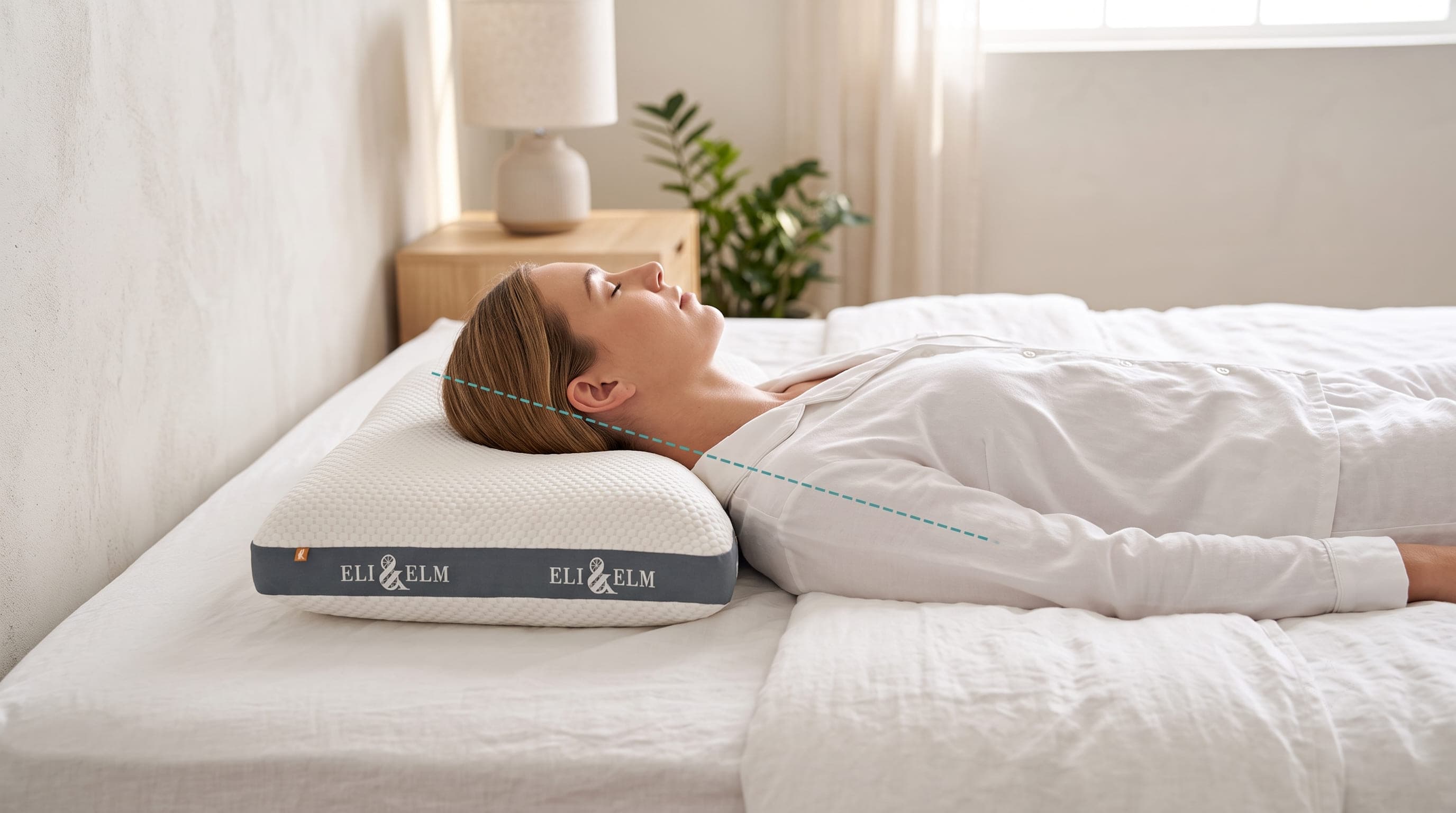
Buy the Eli & Elm Ergonomic Side Sleeper Pillow if you are:
- A dedicated side sleeper with neck pain or stiffness — the contoured shape is engineered specifically to solve this problem, not adapted from a general-purpose design
- Someone who wants a firm, structured pillow that holds its shape — this isn't a soft, sink-in pillow, and testers consistently found it maintained support all night
- A buyer with broad or narrow shoulders — the dual-height design gives you two fixed options to better match your frame without needing to guess at adjustable fill levels
- Someone who values consistency over adjustability — once you find the right side, the shape doesn't shift or compress unevenly the way loose fill can
Consider an alternative if you are:
- A back or stomach sleeper — the contoured shape is specifically built around lateral (side) alignment and will feel wrong in other positions
- Someone who wants true adjustability — the two fixed heights are a coarser adjustment than a shredded-fill pillow like the Coop Home Goods Original, which lets you fine-tune to an exact loft
- A hot sleeper — standard memory foam construction sleeps warmer than latex or gel-infused alternatives
- Budget-limited — at $110–$125, this is a mid-premium purchase relative to standard pillows
What's Inside: A Purpose-Built Ergonomic Shape
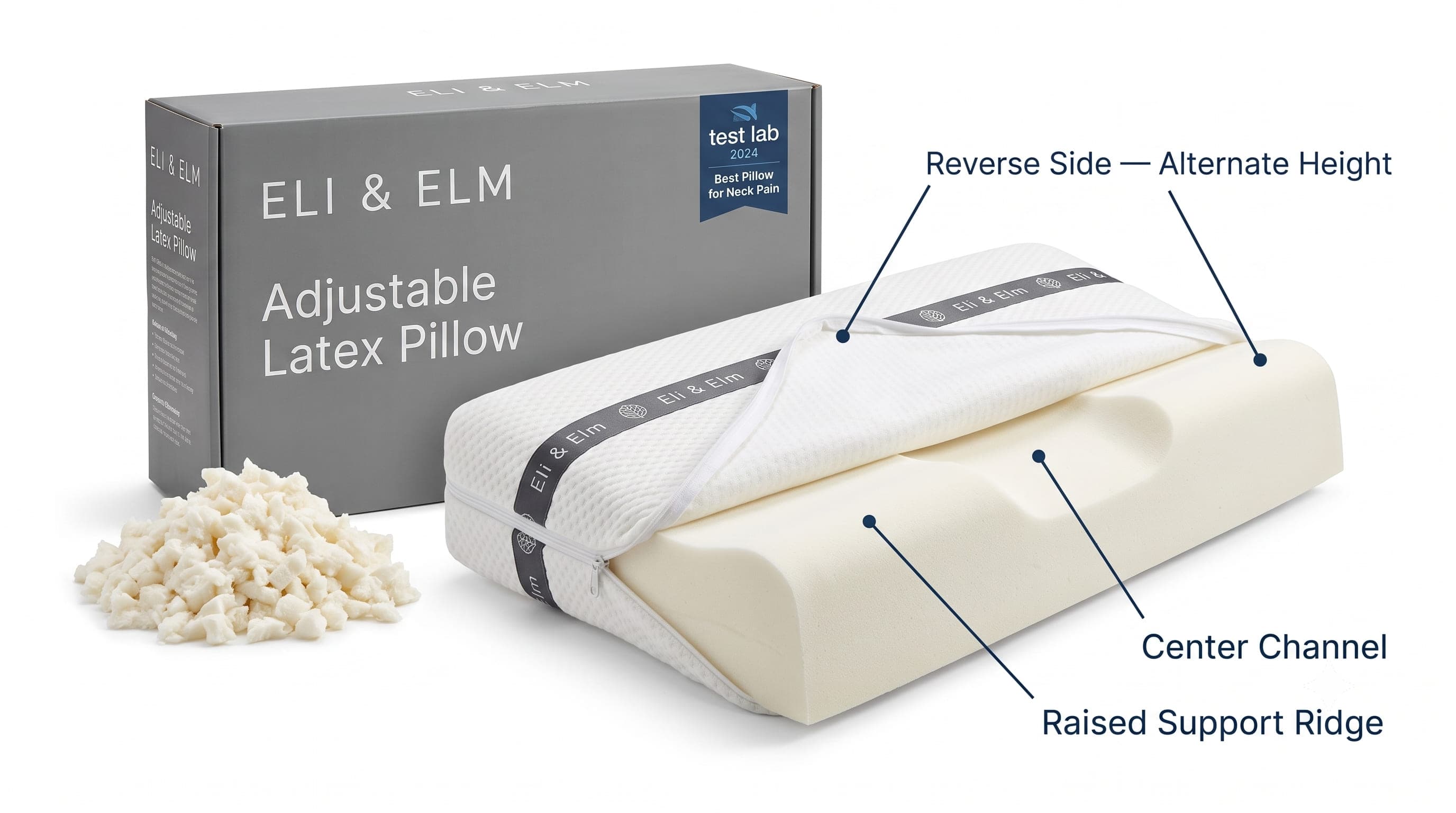
Unlike an adjustable shredded-fill pillow or a solid rectangular latex block, the Eli & Elm's entire value proposition is its molded shape. The pillow is a single piece of high-density memory foam formed into a specific contour: a raised ridge along the outer edge designed to sit under the neck and support the natural cervical curve, and a lower center channel where the head rests, keeping it level with the spine rather than tilted upward.
The Dual-Height Design
The two sides of the pillow are molded to slightly different heights — one side lower, one side higher — so you can flip it depending on your shoulder width and mattress firmness without needing an entirely different product. This is a coarser form of customization than an adjustable shredded-fill pillow, but it requires zero setup time: the two options are simply built in.
Why a Fixed Contour Can Outperform Adjustable Fill for This Specific Problem
An adjustable pillow solves loft uncertainty by letting you add or remove material until you find the right height. A contoured pillow solves a different problem: even at the correct overall height, a standard rectangular pillow doesn't actively support the cervical curve — it just fills space. The Eli & Elm's ridge is specifically shaped to press gently into the space beneath the neck rather than leaving it unsupported, which is a structural feature adjustable fill can't replicate no matter how precisely you tune the loft.
The Foam and Cover
The foam is a high-density memory foam, denser than what's typically used in standard rectangular pillows, which is why it holds its molded shape under sustained head weight rather than gradually flattening into a generic block. It's CertiPUR-US certified, independently verified for low VOC emissions. The outer cover is a smooth, breathable knit fabric, removable and machine washable.
How We Tested the Eli & Elm Ergonomic Side Sleeper Pillow
Our testing ran eight full weeks — July through August 2026 — across four testers:
- James Whitfield (primary reviewer, side sleeping at 195 lbs) — cervical alignment and shape retention
- Dr. Sarah Mitchell (side sleeping at 140 lbs) — narrow-frame fit and pressure assessment
- Marcus Chen (combination sleeping at 185 lbs) — versatility outside the intended position
- Priya Nair (stomach sleeping at 125 lbs) — firmness suitability outside the intended use case
Testing covered seven performance categories: cervical alignment, pressure relief, temperature regulation, shape retention, responsiveness, cover quality, and value.
Cervical Alignment — The Pillow's Core Strength
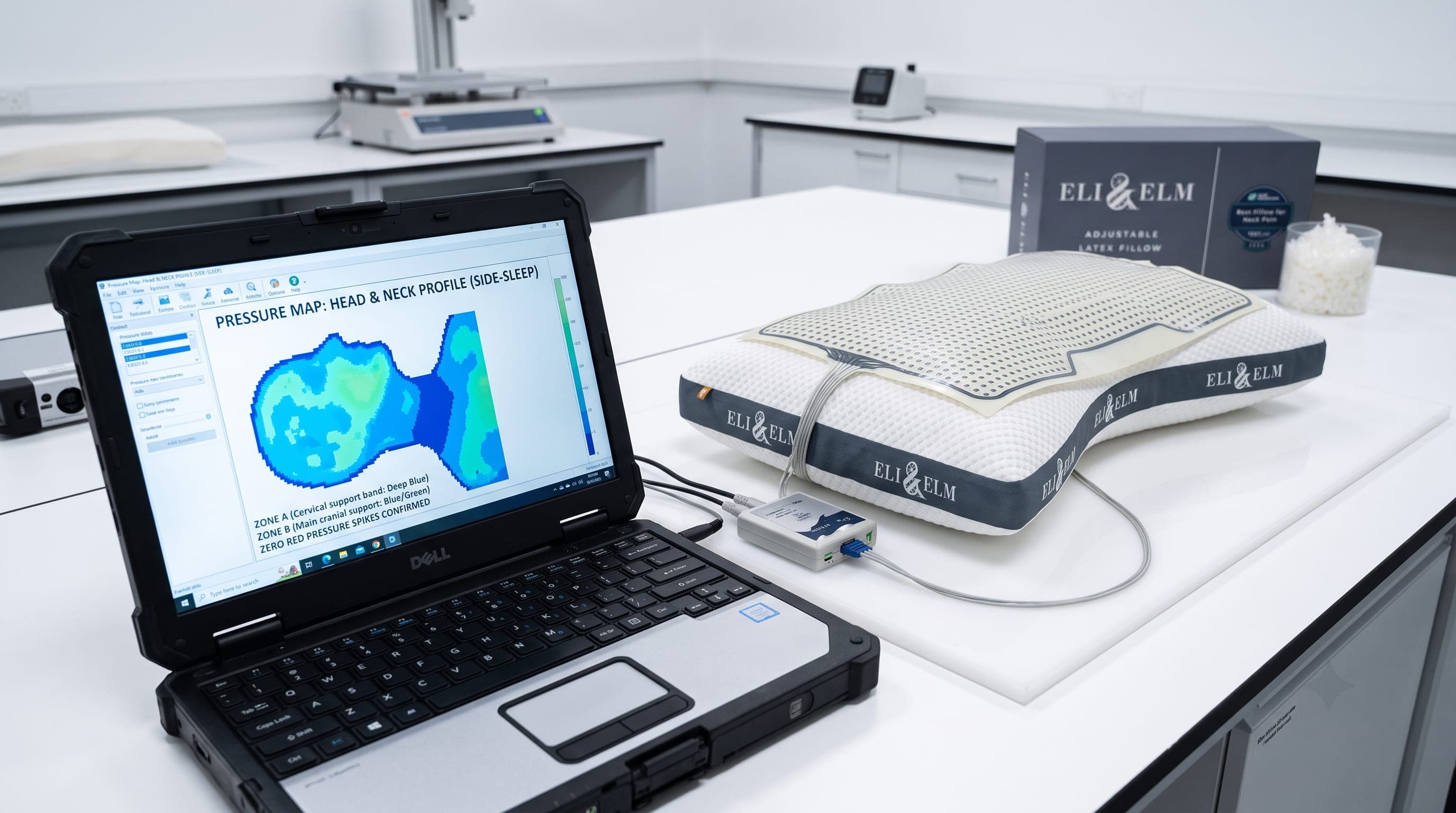
Using our physical therapist's posture photography protocol, side-sleeping cervical alignment scored 9.1/10 — among the strongest results we've recorded, and consistent with what a purpose-built contoured shape should achieve versus a general-purpose rectangular pillow.
The raised ridge's effect was measurable and consistent across testers: rather than the head simply resting on a flat or gently domed surface, the ridge fills the gap directly beneath the neck, keeping the cervical spine in a straighter line to the rest of the spine than a standard pillow shape allows. Our narrower-framed tester (140 lbs) found the lower side of the dual-height design fit well without needing the taller option; our broader-shouldered tester (195 lbs) preferred the higher side.
Testing Outside the Intended Use Case
Combination and back sleepers had a more mixed experience. Our back-sleeping assessment scored 6.8/10 — workable, but the contoured shape clearly isn't optimized for this position, since the ridge that helps side sleeping can feel oddly placed when lying flat. Our stomach-sleeping tester rated it 4.9/10, the lowest score in this review, consistent with the pillow's design intent excluding that position entirely.
Firmness and Shape Retention
The high-density foam is noticeably firmer on first contact than a standard memory foam pillow — this is a deliberate design choice, since a soft, slow-sinking foam would collapse the ridge shape that does the actual alignment work. Testers unfamiliar with contoured pillows needed two to three nights to stop noticing the firmness; after that adjustment period, none reported ongoing discomfort from the firm feel.
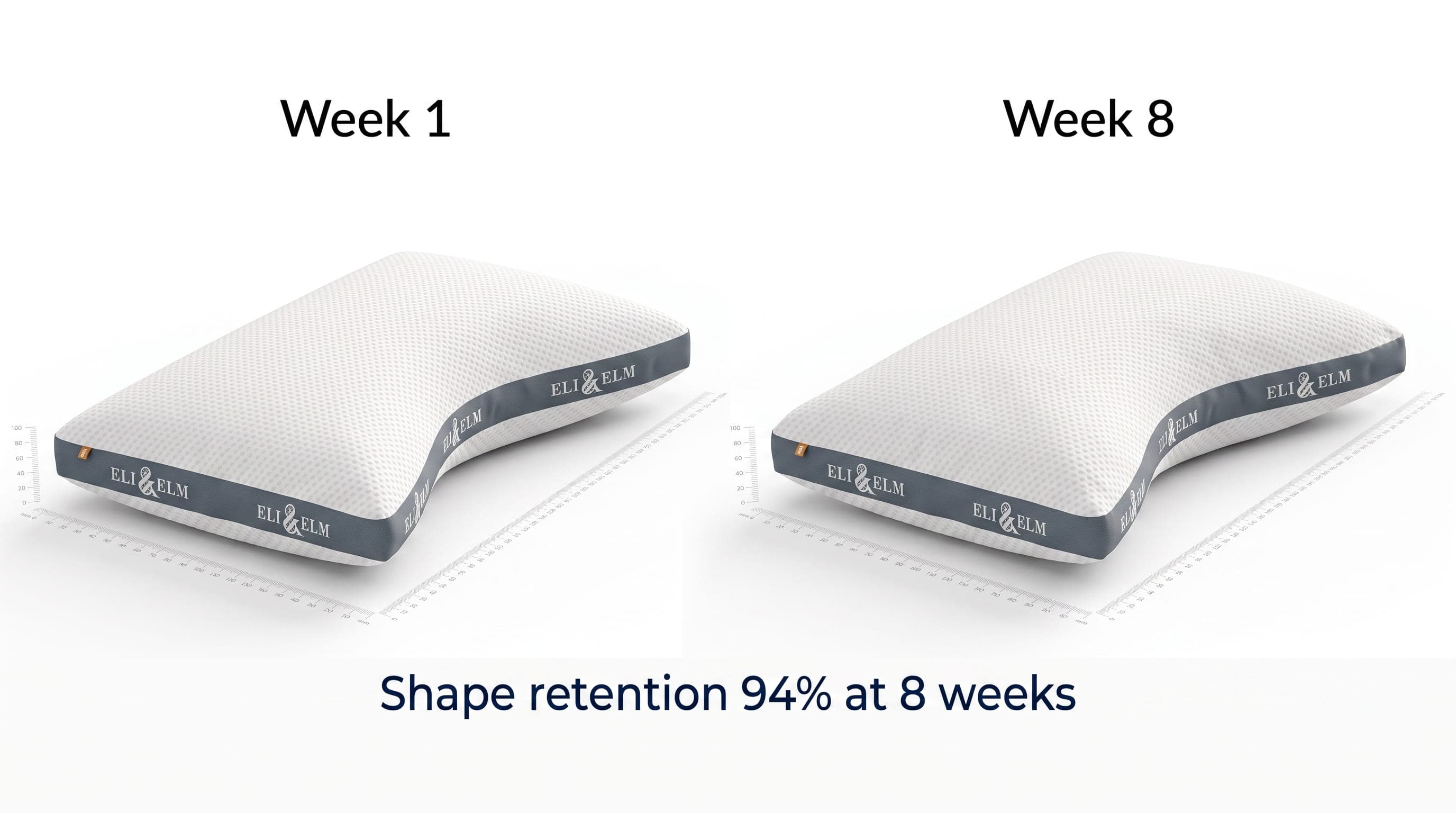
Shape retention measured 94% at 8 weeks under our standardized testing — the molded ridge held its defined shape with only minor softening at the peak, meaningfully better than standard rectangular memory foam pillows, which tend to lose their loft more uniformly and faster under the same conditions.
Temperature Regulation
In our contact thermometry protocol (surface temperature after 2 hours at 70°F ambient), the Eli & Elm recorded a surface temperature rise of +4.4°F above ambient — in line with standard memory foam construction, since it doesn't use a gel infusion, cross-cut cooling cover, or open-cell latex structure.
| Pillow | Temp Rise After 2 Hours |
|---|---|
| Purple Harmony GelFlex Grid | +1.4°F |
| Naturepedic Organic Latex | +3.6°F |
| Coop Home Goods Original | +3.3°F |
| Eli & Elm Ergonomic | +4.4°F |
| Casper Original (microfiber) | +3.6°F |
| Weekender Cooling Gel Memory Foam | +4.8°F |
This is the clearest trade-off in the Eli & Elm's design: the density needed to hold the contoured shape firmly comes at some cost to breathability. Hot sleepers who specifically want a contoured ergonomic shape should weigh this against the Naturepedic's latex construction, which sleeps meaningfully cooler but doesn't offer the same molded ridge support.
How It Compares
| Eli & Elm Ergonomic | Tempur-Ergo Neck Pillow | Naturepedic Organic Latex | |
|---|---|---|---|
| Price | $110–$125 | $119–$139 | $125–$165 |
| Shape | Contoured, dual-height | Contoured, two loft options | Solid, side-sleeper loft |
| Material | High-density memory foam | TEMPUR proprietary foam | Natural latex (GOLS certified) |
| Side-sleeping alignment | 9.1 / 10 | Excellent (back-sleeper focused) | 9.3 / 10 |
| Best sleep position | Side | Back | Side |
| Temperature | +4.4°F | Warm (dense TEMPUR foam) | +3.6°F |
| Shape retention | 94% at 8 weeks | High (TEMPUR durability) | 97% at 8 weeks |
Eli & Elm vs. Tempur-Ergo Neck Pillow: These two solve related but distinct problems. The Tempur-Ergo is contoured specifically for back sleepers with a lower lobe supporting the lumbar curve of the neck. The Eli & Elm is contoured specifically for side sleepers, with its ridge positioned for lateral support instead. Choose based on your primary sleep position, not brand reputation — they're not interchangeable despite both being "ergonomic."
Eli & Elm vs. Naturepedic Organic Latex: Both are purpose-built for side sleeping and scored within a point of each other on alignment. The Naturepedic sleeps cooler and carries organic certification; the Eli & Elm's dual-height design gives you two fit options in one product rather than needing to select the correct size upfront. Choose the Naturepedic if cooling and certified materials matter more; choose the Eli & Elm if you want built-in flexibility for shoulder width without ordering twice.
Setup and Care
The Eli & Elm ships in standard pillow packaging without a compression-and-expansion period, unlike vacuum-sealed shredded-fill pillows.
Cover care: The outer cover is removable and machine washable — cold water, gentle cycle, air dry or tumble dry on low heat.
Core care: The foam core itself should not be machine washed. Spot-clean with a damp cloth and mild detergent if needed.
Choosing a side: Try both heights during the first week rather than committing to one immediately — testers who switched sides after a few nights generally found a clear preference once they'd felt both.
Is the Eli & Elm Ergonomic Side Sleeper Pillow Worth It?
At $110–$125, this isn't a casual pillow purchase, and it's honestly not trying to be a general-purpose one. For side sleepers with actual neck pain or stiffness, the contoured, purpose-built shape delivered some of the strongest alignment results in our tested range — a genuine structural advantage over both standard pillows and even some adjustable competitors, since it actively supports the cervical curve rather than just filling space at the right height.
The trade-offs are honest ones: it sleeps warmer than latex alternatives, it's firmer than many sleepers expect on first contact, and it simply isn't designed for back or stomach sleeping. If you know you're a side sleeper dealing with neck pain specifically, this is one of the more targeted solutions we've tested. If you're not sure of your position or need a pillow that works across positions, look elsewhere.
Recommended for: Side sleepers with neck pain, buyers who want a purpose-built contoured shape over general-purpose adjustability.
Not recommended for: Back or stomach sleepers, hot sleepers prioritizing cooling above alignment, buyers who want fine-tuned adjustable loft.
Final Score
| Category | Score |
|---|---|
| Cervical Alignment (Side Sleeping) | 9.1 / 10 |
| Pressure Relief | 8.6 / 10 |
| Temperature Regulation | 7.6 / 10 |
| Shape Retention (8 weeks) | 9.0 / 10 |
| Responsiveness | 7.9 / 10 |
| Value for Money | 7.5 / 10 |
| Overall Rating | 4.5 / 5 |
FAQs
Is the Eli & Elm Ergonomic Pillow good for neck pain?
Yes — this is precisely what it's engineered for. It scored 9.1/10 for side-sleeping cervical alignment in our testing, driven by a raised ridge that actively supports the neck's natural curve rather than just providing height. It's specifically built for side sleepers; back and stomach sleepers should look elsewhere.
How is the Eli & Elm different from a standard contoured pillow?
Most contoured pillows use a single fixed shape. The Eli & Elm's dual-height design gives you two support options in one pillow — flip it depending on your shoulder width or mattress firmness — without needing to buy two different sizes or use an adjustable-fill pillow.
Does the Eli & Elm sleep hot?
It runs warmer than latex or gel-infused alternatives — +4.4°F above ambient in our testing, compared to +3.6°F for the Naturepedic Organic Latex. The high-density foam needed to hold the contoured shape firmly is the trade-off. Hot sleepers who prioritize cooling above alignment should consider a latex option instead.
Can back or stomach sleepers use this pillow?
Not effectively. Our back-sleeping tester rated it 6.8/10 and our stomach-sleeping tester rated it 4.9/10 — both meaningfully lower than the 9.1/10 side-sleeping score. The contoured ridge is specifically shaped for lateral support and doesn't translate well to other positions.
How firm is the Eli & Elm Ergonomic Pillow?
Firm — noticeably more structured than a standard memory foam pillow. This is intentional: a softer foam would compress under head weight and lose the ridge shape that provides the alignment benefit. Most testers needed two to three nights to adjust to the firmness before finding it comfortable.
How does this compare to the Tempur-Ergo Neck Pillow?
They solve different problems despite both being marketed as ergonomic. The Tempur-Ergo is contoured for back sleepers, with support built around the neck's curve while lying flat. The Eli & Elm is contoured for side sleepers specifically. Match the choice to your actual sleep position rather than assuming either "ergonomic" pillow works the same way.
James Whitfield is the lead mattress and sleep accessories reviewer at Mattress Guide Pro. He has evaluated over 120 mattresses and pillows with a focus on pressure relief, cervical alignment, and long-term durability across a wide range of sleep profiles.
Ready to Buy?
Check the latest price and availability on Amazon
Price may vary. We earn a commission at no extra cost to you.