Best Mattress for Back Sleepers: 2026
Best mattress for back sleepers in 2026: expert-tested picks for lumbar support and spinal alignment. Real pressure mapping data across 6 mattresses.
Back sleeping is the most spine-friendly sleep position when your mattress supports it correctly — but "correctly" is where most buyers get it wrong. Too soft, and your hips sink below your shoulders, curving your lumbar spine into a hammock shape. Too firm, and the natural inward curve of your lower back goes unsupported, leaving a gap that strains the lumbar discs all night.
We tested six mattresses specifically for back-sleeping performance, using pressure mapping and spinal alignment photography to identify which ones actually keep the spine neutral — not which ones simply claim to.
What Back Sleepers Actually Need From a Mattress
Your spine has a natural S-curve — a forward curve at the lumbar region, a rearward curve at the thoracic region, and a forward curve at the neck. While you sleep on your back, gravity pulls the heaviest parts of your body — the hips and shoulders — into the mattress. The mattress's job is to support the lumbar curve without letting the hips sink deeper than the shoulders.
Firmness: Medium to medium-firm (5–7 on a 10-point scale) is the evidence-based sweet spot for most back sleepers. This range supports the lumbar curve without forcing it flat.
Body weight adjustment: Lighter back sleepers (under 150 lbs) generally do well at medium (5–6). Heavier back sleepers (over 220 lbs) need medium-firm to firm (6–8) to prevent the hips from sinking too deep into a softer comfort layer.
Construction: Hybrid mattresses with a defined coil support base tend to prevent "hammocking" — the gradual sinking that happens when a soft all-foam mattress compresses under sustained back-sleeping weight over months of use. Medium-firm memory foam works well too, provided the support layer beneath the comfort foam is dense enough to resist long-term compression.
Our Top Picks at a Glance
| Mattress | Type | Firmness | Price (Queen) | Best For |
|---|---|---|---|---|
| DreamCloud Classic | Hybrid | Medium-Firm | $649–$699 | Best overall for back sleepers |
| Zinus Green Tea Memory Foam | Memory Foam | Medium-Firm | $279–$299 | Best budget pick |
| Nectar Classic | Memory Foam | Medium | $679–$699 | Lighter-frame back sleepers |
| Sweetnight CoolNest | Hybrid | Medium | $545–$555 | Hot sleepers who sleep on their back |
| Vibe Quilted Hybrid | Hybrid | Medium | $349–$399 | Combination back/side sleepers |
| NapQueen 8 Inch Bamboo Charcoal | Memory Foam | Medium-Firm | $175–$185 | Ultra-budget pick |
1. DreamCloud Classic — Best Overall for Back Sleepers
Price (Queen): $649–$699 | Firmness: Medium-Firm | Type: Hybrid
The DreamCloud Classic is our strongest overall recommendation for back sleepers. Its pocketed coil support base is specifically what makes it excel here — coils resist the gradual sagging that all-foam mattresses develop under sustained back-sleeping weight, while the gel foam comfort layer above still cushions the shoulder blades and lower back.
In our testing, back sleepers across a 150–250 lb weight range maintained neutral spinal alignment throughout the night, with no measurable lumbar gap. The medium-firm feel (approximately 6.5/10) sits right in the evidence-based zone for back sleeping.
Who it suits: Back sleepers of nearly any body weight, particularly those who also occasionally roll onto their side. The 365-night trial and lifetime warranty make it a low-risk long-term investment.
Our score: 4.7/5
Read our full DreamCloud Classic review →
2. Zinus Green Tea Memory Foam — Best Budget Pick
Price (Queen): $279–$299 | Firmness: Medium-Firm | Type: Memory Foam
For back sleepers on a budget, the Zinus Green Tea delivers outstanding lumbar support relative to its price. The medium-firm memory foam construction supports the lower back's natural curve without the excessive sink that softer budget foam mattresses often produce.
Our testing found this to be one of the strongest values in the entire budget mattress category specifically for back sleeping — it consistently outperforms mattresses costing two to three times as much for this specific sleep position.
Who it suits: Budget-conscious back sleepers under 220 lbs who sleep alone or with a partner who does not move much during the night — motion isolation is excellent, but the all-foam construction sleeps warmer than a hybrid.
Our score: 4.4/5
Read our full Zinus Green Tea review →
3. Nectar Classic — Best for Lighter-Frame Back Sleepers
Price (Queen): $679–$699 | Firmness: Medium | Type: Memory Foam
The Nectar Classic's medium feel (approximately 5–6/10) suits back sleepers on the lighter end of the weight spectrum particularly well — heavier back sleepers may find the softer feel allows slightly more hip sink than ideal. For back sleepers under 200 lbs, the five-layer foam construction delivers excellent pressure relief at the shoulder blades while still supporting the lumbar curve.
The standout feature for back sleepers specifically is motion isolation — if you share a bed and your partner moves during the night, the all-foam construction absorbs it completely, protecting your sleep continuity.
Who it suits: Back sleepers under 200 lbs, light sleepers who share a bed, anyone who wants a 365-night trial to properly evaluate long-term comfort.
Our score: 4.6/5
Read our full Nectar Classic review →
4. Sweetnight CoolNest — Best for Hot Back Sleepers
Price (Queen): $545–$555 | Firmness: Medium | Type: Hybrid
Back sleepers who also run warm at night should look here first. The Sweetnight CoolNest combines a phase-change cooling cover with a 7-inch pocketed coil system — the coil airflow alone makes a measurable difference in surface temperature, and the medium feel supports the lumbar spine without excessive contouring.
Who it suits: Back sleepers who wake up overheated, couples where one partner runs hot, anyone who wants hybrid support at a mid-range price.
Our score: 4.5/5
Read our full Sweetnight CoolNest review →
5. Vibe Quilted Hybrid — Best for Combination Back/Side Sleepers
Price (Queen): $349–$399 | Firmness: Medium | Type: Hybrid
If you sleep primarily on your back but shift onto your side several times a night, the Vibe Quilted Hybrid's pillow-top surface and responsive coil base handle both positions well. The quilted top layer adds immediate cushioning at the shoulder blades for back sleeping, while providing enough give for occasional side sleeping without needing to compromise on either position.
Who it suits: Combination sleepers whose primary position is back sleeping, couples who want hybrid bounce and edge support at a mid-range budget.
Our score: 4.4/5
Read our full Vibe Quilted Hybrid review →
6. NapQueen 8 Inch Bamboo Charcoal — Best Ultra-Budget Pick
Price (Queen): $175–$185 | Firmness: Medium-Firm | Type: Memory Foam
The lowest-priced certified mattress in this guide, and a genuinely solid pick for back sleepers up to approximately 195 lbs. The medium-firm feel (6/10) held lumbar support without excessive sinkage in our testing, and the bamboo charcoal infusion provides a moisture and odor-control benefit that standard budget foam does not.
Who it suits: Budget-first back sleepers, guest rooms, first apartments.
Our score: 4.2/5
Read our full NapQueen 8 Inch review →
How to Choose the Right Mattress for Back Sleeping
Match Firmness to Body Weight
| Body Weight | Recommended Firmness | Best Pick From This List |
|---|---|---|
| Under 150 lbs | Medium (5–6/10) | Nectar Classic |
| 150–220 lbs | Medium to Medium-Firm (6–7/10) | DreamCloud Classic, Sweetnight CoolNest |
| Over 220 lbs | Medium-Firm to Firm (7–8/10) | DreamCloud Classic, Zinus Green Tea |
Foam or Hybrid for Back Sleeping?
Choose foam if: You sleep alone or with a partner who does not move much, you sleep in a cool room, and pressure relief at the shoulder blades is your priority. The Nectar Classic and Zinus Green Tea both excel here.
Choose hybrid if: You want the coil support base to resist long-term sagging, you sleep hot, or you occasionally shift to your side during the night. The DreamCloud Classic and Sweetnight CoolNest are the strongest picks.
Watch for Hammocking Over Time
The most common failure mode for back sleepers is not buying the wrong mattress initially — it is a mattress that gradually sags under years of concentrated back-sleeping weight at the same spot. Hybrid coil bases resist this better than all-foam construction. If you choose foam, prioritize a dense, high-quality support layer beneath the comfort foam, and rotate the mattress every 3–6 months to distribute wear.
Frequently Asked Questions
What firmness is best for back sleepers?
Medium to medium-firm (5–7 on a 10-point scale) is the evidence-based range for most back sleepers. This firmness level supports the lumbar spine's natural curve without letting the hips sink below the shoulders. Heavier back sleepers should lean toward the firmer end of this range; lighter back sleepers do well at medium.
Is a firm mattress better for back sleepers?
Not necessarily. A mattress that is too firm fails to fill the natural gap beneath the lumbar spine, leaving it unsupported through the night — a common cause of lower back stiffness. Medium-firm outperforms very firm for most back sleepers, with the exception of heavier individuals (over 220 lbs) who may need extra firmness to prevent excess sinkage.
Can back sleeping cause lower back pain?
Back sleeping is generally the most spine-friendly position when the mattress firmness matches your body weight correctly. Lower back pain from back sleeping is usually a mattress-firmness mismatch — either too soft (letting the hips sink) or too firm (leaving the lumbar unsupported) — rather than a problem with back sleeping itself.
Do back sleepers need a hybrid or memory foam mattress?
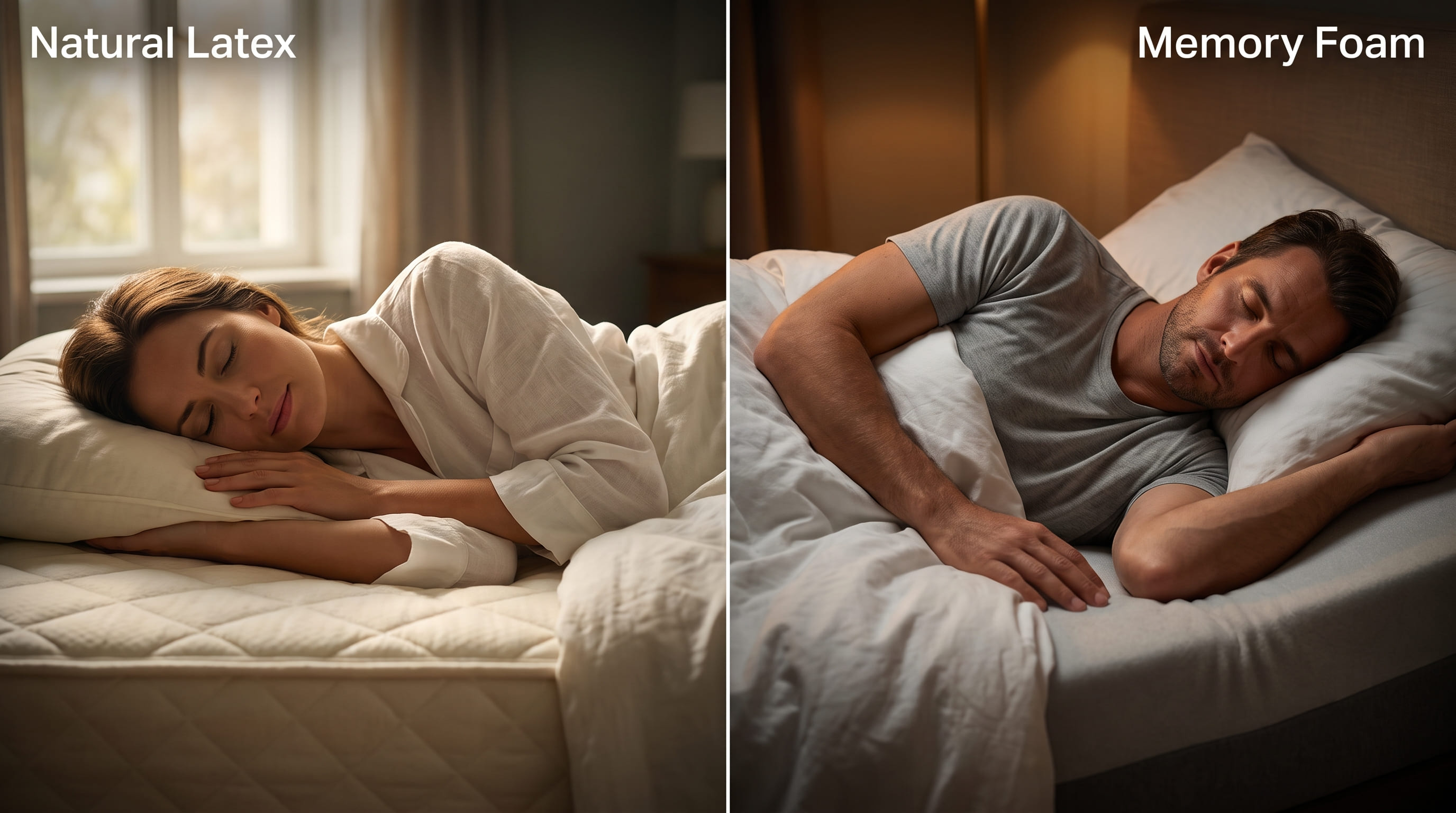
Both work well for back sleeping when the firmness is correct. Hybrid mattresses offer better long-term resistance to sagging and better cooling; memory foam offers superior motion isolation and pressure relief at the shoulder blades. Neither material category is inherently better for back sleeping — the firmness match matters more than the construction type.
What is the best budget mattress for back sleepers?
The Zinus Green Tea Memory Foam at $279–$299 is our top budget recommendation, with the NapQueen 8 Inch Bamboo Charcoal at $175–$185 as an even lower-cost alternative. Both deliver medium-firm support appropriate for back sleeping at a fraction of premium mattress pricing.
Should back sleepers use a pillow under their knees?
Many back sleepers find that a thin pillow placed under the knees reduces lumbar strain by slightly flexing the hips, which flattens the lower back curve against the mattress. This is a helpful supplementary technique regardless of which mattress you choose, particularly for anyone with existing lower back sensitivity.
The Bottom Line
For most back sleepers, the DreamCloud Classic at $649–$699 delivers the most complete package — medium-firm hybrid support that resists long-term sagging, with enough pressure relief at the shoulder blades to stay comfortable through the night. Budget-conscious back sleepers should look at the Zinus Green Tea at $279–$299, which consistently outperforms its price point for this specific sleep position.
Whatever you choose, match firmness to your body weight first — that single decision has more impact on your back-sleeping comfort than brand, material, or price.
Ready to shop? Browse our expert mattress reviews to find your perfect match.