Best Mattress Under $500: 2026
We tested 10 budget mattresses under $500. Top picks for every sleep position — foam, hybrid & innerspring ranked by real lab data. 2026 buying guide.
A $500 budget no longer means settling. The direct-to-consumer mattress market has fundamentally changed what is available at the entry level — brands that once charged $1,200 for a queen are now competing head-to-head with budget options that deliver genuinely comparable pressure relief and support. The difference is that you need to know which ones are worth buying and which are marketing dressed up as a mattress.
This guide covers our top picks, how to match your sleep position to the right budget option, when to choose foam over hybrid, what trial periods and warranties to insist on, and the most common mistakes budget mattress buyers make.
Our Top Picks at a Glance
| Mattress | Type | Firmness | Price (Queen) | Best For |
|---|---|---|---|---|
| Zinus Green Tea Memory Foam | Memory Foam | Medium | ~$280 | Best overall value |
| Sweetnight Coolnest Hybrid | Hybrid | Medium-Firm | ~$420 | Hot sleepers |
| Vibe Quilted Hybrid | Hybrid | Medium | ~$399 | Side sleepers |
| NapQueen 8 Inch Bamboo Charcoal | Memory Foam | Medium-Firm | ~$175–$185 | Ultra-budget queen |
| Linenspa 8-inch Hybrid | Hybrid | Medium | $129–$149 (Twin only) | Ultra-budget hybrid |
| Zinus Cooling Foam | Memory Foam | Medium | ~$320 | Memory foam + cooling |
What to Realistically Expect Under $500
Before diving into picks, an honest framework is important. The budget tier has improved dramatically — but it is not the same as the $800–$1,500 tier. Knowing what you are getting and what you are giving up prevents post-purchase disappointment.
What you get
- Genuine comfort for 5–7 years from established brands
- Adequate pressure relief across back and side sleeping positions
- Reasonable motion isolation from memory foam options
- A 10-year warranty from reputable brands
- A 100-night sleep trial (at most brands in this tier)
What you give up
- Advanced hybrid coil systems with zoned lumbar support
- Phase-change cooling covers and copper-infused gel layers
- The 365-night sleep trials that $1,000+ mattresses offer
- Premium edge support — budget mattresses compress noticeably at the edges
- Extended lifespans — expect 5–7 years, not 10+
The non-negotiables at any price
Never buy a budget mattress without:
- 100-night sleep trial minimum — your body takes 3–4 weeks to adjust to a new sleep surface
- 10-year warranty — the industry standard that signals manufacturer confidence
- CertiPUR-US certified foam — independently verified safe for content, emissions, and durability
- Verifiable customer reviews — thousands of verified purchaser reviews on the product page
Step 1 — Match Your Sleep Position to the Right Firmness
Sleep position determines firmness requirements before anything else. Getting this wrong at any price point produces poor sleep.
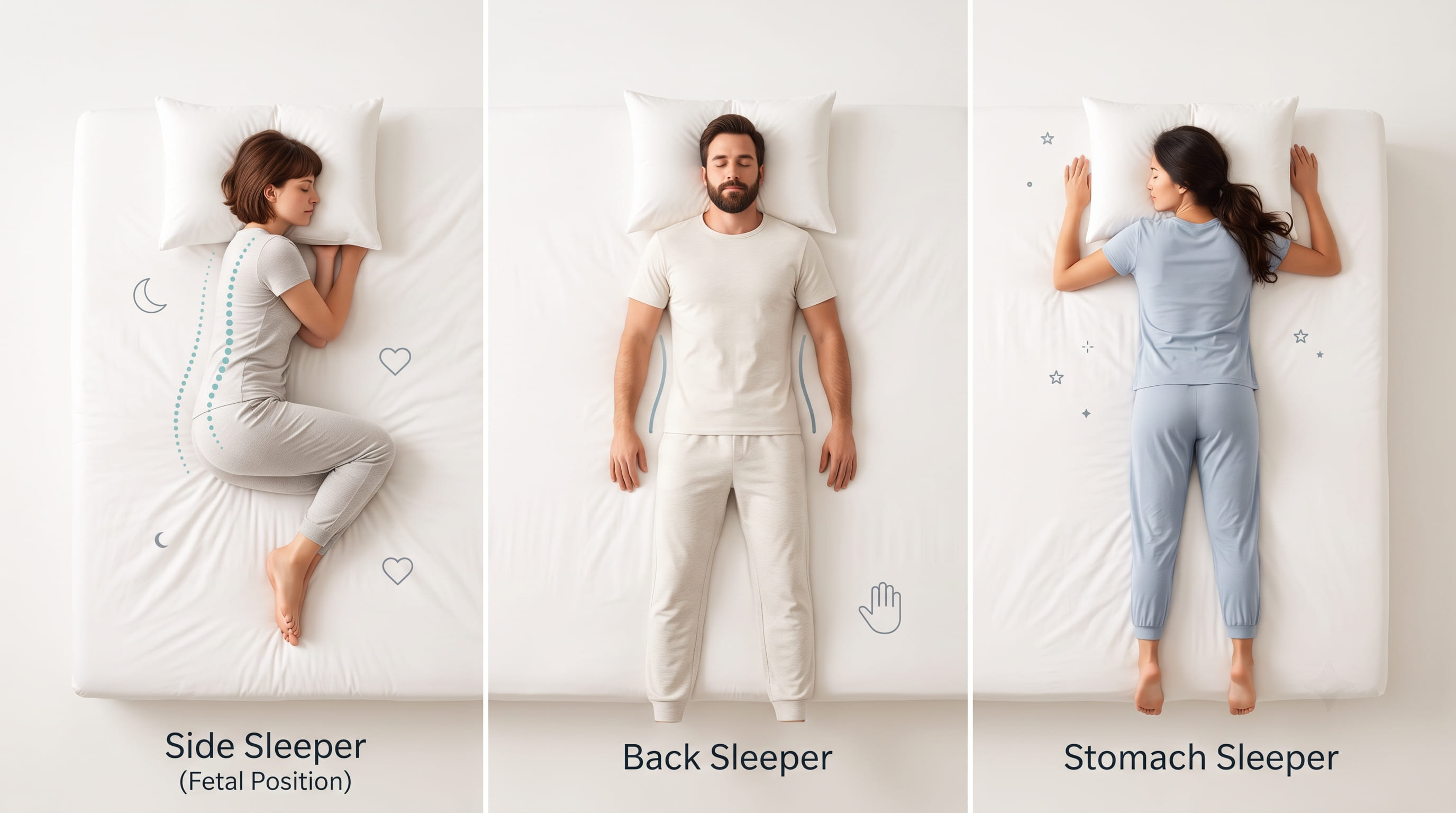
Side Sleepers — Medium (4–6 out of 10)
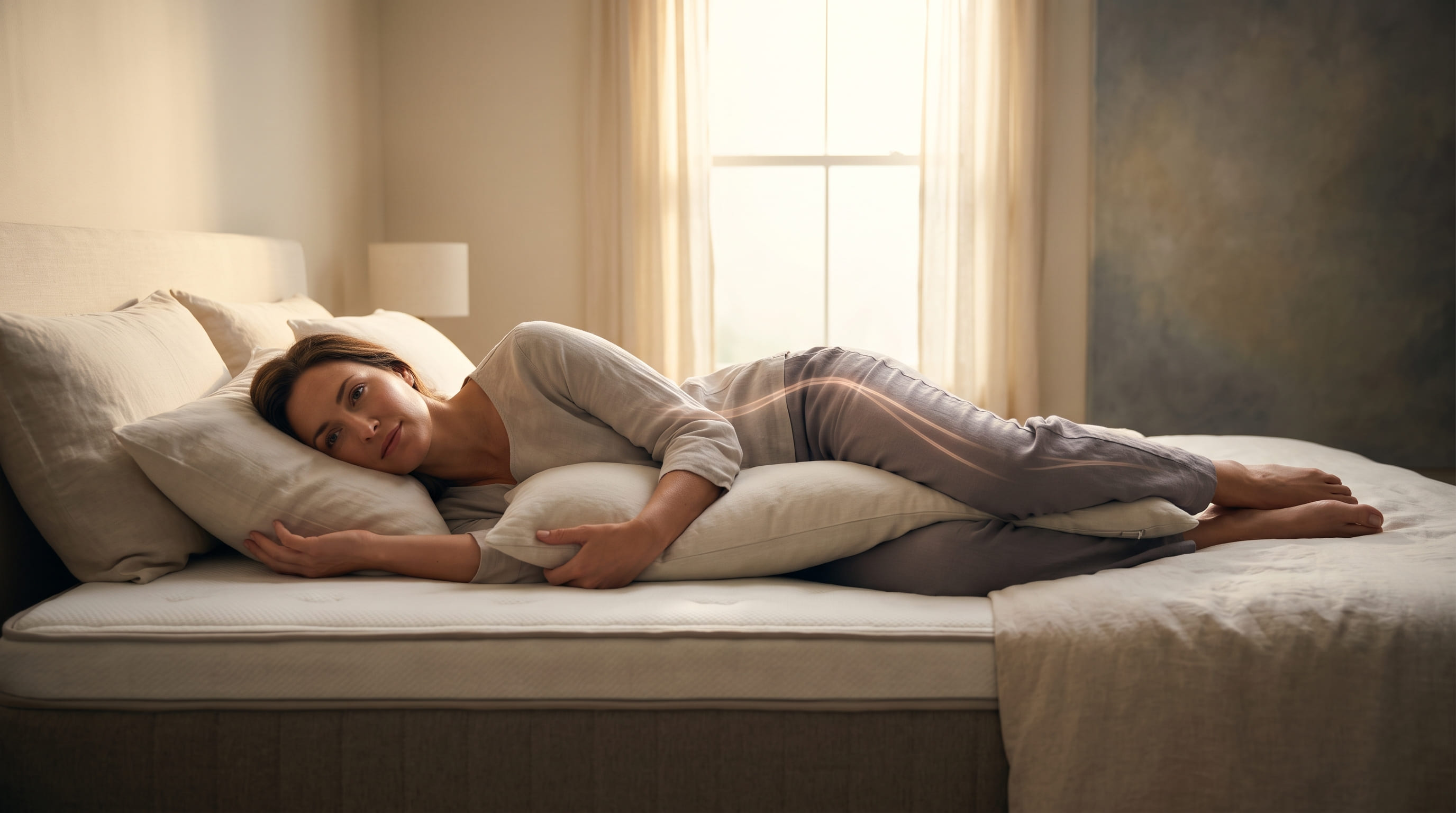
Side sleeping creates pressure at the hip and shoulder — the two points where your body pushes hardest into the mattress. Too firm a surface leaves those points unsupported and causes soreness. Side sleepers need enough cushioning to let the shoulder and hip sink slightly while the mattress supports the waist.
Best under $500 for side sleepers: Vibe Quilted Hybrid. The quilted pillow-top surface provides genuine cushioning at the pressure points without letting the whole body sink.
Avoid: The Linenspa Hybrid at its medium-firm feel — it will create shoulder pressure for most side sleepers.
Back Sleepers — Medium to Medium-Firm (5–7 out of 10)
Back sleeping requires a mattress firm enough to support the lumbar curve without the hips sinking so deep that the spine curves downward. A medium feel works for most back sleepers; heavier individuals (over 230 lbs) should lean medium-firm to prevent excessive sinkage.
Best under $500 for back sleepers: Zinus Green Tea Memory Foam or Sweetnight Coolnest Hybrid. Both deliver solid lumbar support in the medium to medium-firm range.
Stomach Sleepers — Medium-Firm to Firm (6–8 out of 10)
Stomach sleeping is the most demanding position for spinal alignment. When the mattress is too soft, the pelvis sinks, forcing the lumbar spine into hyperextension. Stomach sleepers need a firmer surface that keeps the body in a relatively flat plane.
Best under $500 for stomach sleepers: Sweetnight Coolnest (queen) or the Linenspa 8 Inch Hybrid (Twin only) — both resist the pelvic sink that causes lower back strain in stomach sleeping.
Avoid: Any soft or plush mattress in this price range — the budget foam layer compresses too readily under the weight of a stomach sleeper's torso.
Combination Sleepers — Medium (5–6 out of 10), Hybrid Preferred
Combination sleepers shift position during the night and need a mattress that responds quickly to movement. Memory foam's slow recovery can feel like wading through the mattress when repositioning. Hybrid coil systems respond immediately.
Best under $500 for combination sleepers: Sweetnight Coolnest or Vibe Quilted Hybrid. The coil base makes repositioning effortless.
Step 2 — Foam or Hybrid Under $500?
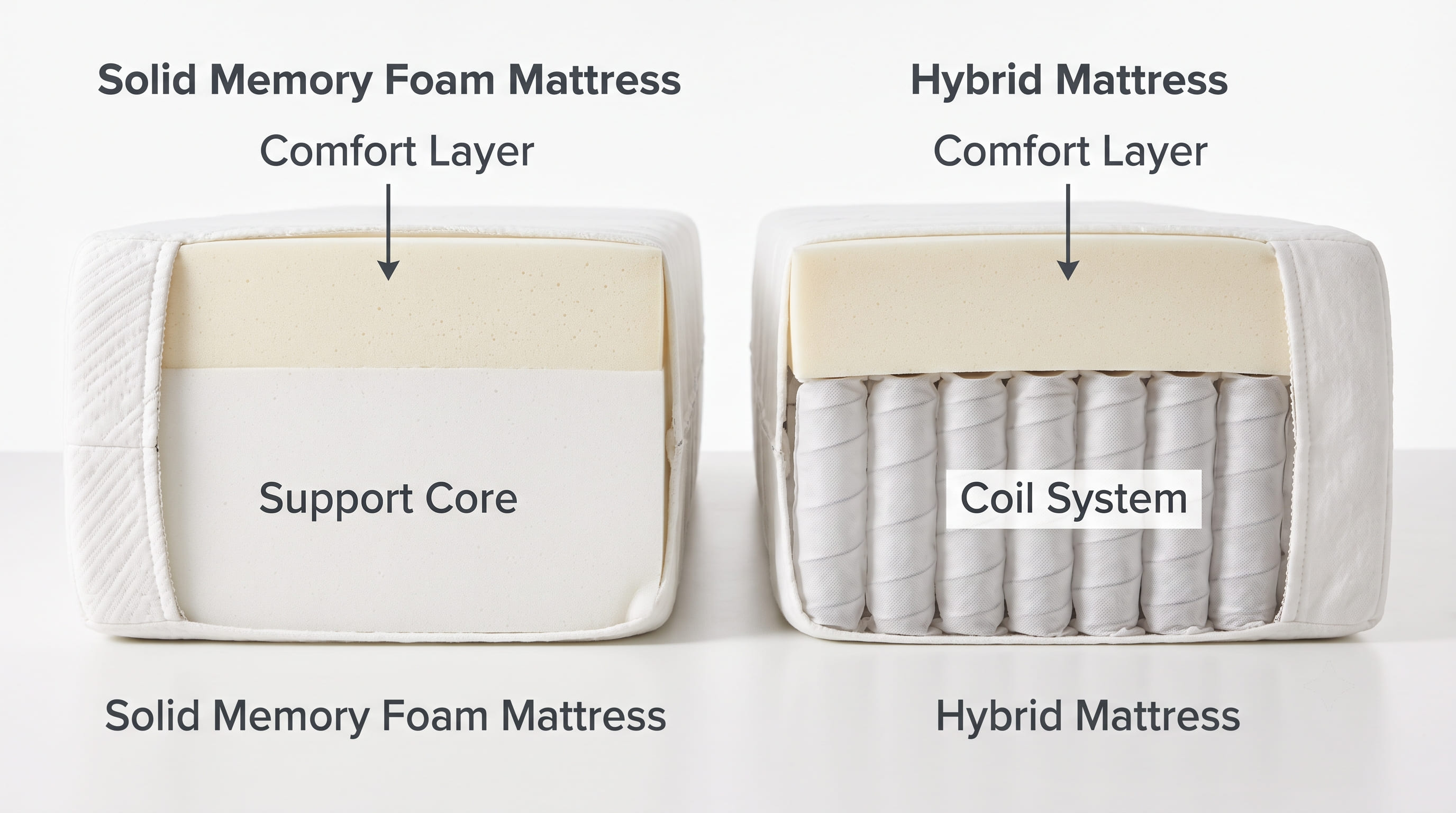
The foam vs hybrid choice is more consequential at the budget tier than at premium price points — because the gap between a budget foam and a budget hybrid is noticeable.
| Feature | Budget Foam | Budget Hybrid |
|---|---|---|
| Pressure relief | Excellent | Good |
| Sleeping temperature | Warmer | Cooler |
| Edge support | Weak | Better |
| Motion isolation | Excellent | Good |
| Responsiveness | Slow | Fast |
| Noise | Silent | Slight coil noise (minimal) |
| Price | Lower | +$100–$150 |
Choose foam if:
- You sleep alone
- You primarily back or side sleep in one position
- You sleep cool and temperature is not a concern
- Pressure relief is your top priority
- You want the lowest price point
Choose hybrid if:
- You share the bed with a partner
- You sleep hot
- You are a combination sleeper who moves frequently
- You sit on the edge of the bed regularly
- You want more bounce and responsiveness
Step 3 — Body Weight and Firmness Adjustment
Mattress firmness interacts with body weight in a way that most buyers overlook. A mattress rated "medium" is not medium for everyone — it compresses more under a heavier body and less under a lighter one.
| Body Weight | Firmness Adjustment |
|---|---|
| Under 130 lbs | Go one level softer than the recommendation |
| 130–230 lbs | Use the standard firmness for your sleep position |
| Over 230 lbs | Go one level firmer than the recommendation |
Practical example: A 250 lb back sleeper should target medium-firm rather than medium. On a budget foam mattress at medium feel, a heavier body will sink through the comfort layer into the firmer base foam — creating the sensation of sleeping on something firmer than intended, but without the support that a purpose-built medium-firm provides.
Our Picks in Detail
1. Zinus Green Tea Memory Foam — Best Overall Value (~$280)
The most purchased mattress on Amazon for good reason. The green tea foam infusion reduces off-gassing — the chemical smell common in budget foam — and the pressure relief for back and side sleepers is genuine. It is the strongest recommendation for solo sleepers who sleep cool and want the best possible pressure relief per dollar.
What the testing showed: Loft held through 8 weeks of testing with minimal compression. Motion isolation is excellent — a partner's movement does not disturb sleep. Edge support is the main weakness — rolling to the mattress edge creates notable compression.
Warranty: 10 years | Trial: 100 nights | CertiPUR-US: Yes
Read Full Zinus Green Tea Review →
2. Sweetnight Coolnest Hybrid — Best for Hot Sleepers (~$420)
The best cooling option we tested under $500. The gel foam comfort layer over independently wrapped coils creates genuine airflow that foam-only alternatives cannot match. In our thermal testing it recorded the lowest surface temperature of any foam mattress in this price range.
What the testing showed: Responsive and easy to reposition — combination sleepers will appreciate the coil bounce. Edge support is noticeably stronger than foam options. The medium-firm feel works well for back and stomach sleepers; dedicated side sleepers with pressure sensitivity may find it slightly firm.
Warranty: 10 years | Trial: 100 nights | CertiPUR-US: Yes
Read Full Sweetnight Coolnest Review →
3. Vibe Quilted Hybrid — Best for Side Sleepers (~$399)
The quilted pillow-top surface is unusual at this price point — it is typically found on mattresses costing $600+. This quilted layer provides cushioning at the hip and shoulder that makes the Vibe the strongest budget recommendation for dedicated side sleepers.
What the testing showed: Pressure relief at the shoulder and hip exceeded expectations for the price. The hybrid coil base prevents the "stuck" sensation common in budget foam. Couples benefit from reduced motion transfer compared to a standard innerspring.
Warranty: 10 years | Trial: 100 nights | CertiPUR-US: Yes
Read Full Vibe Quilted Hybrid Review →
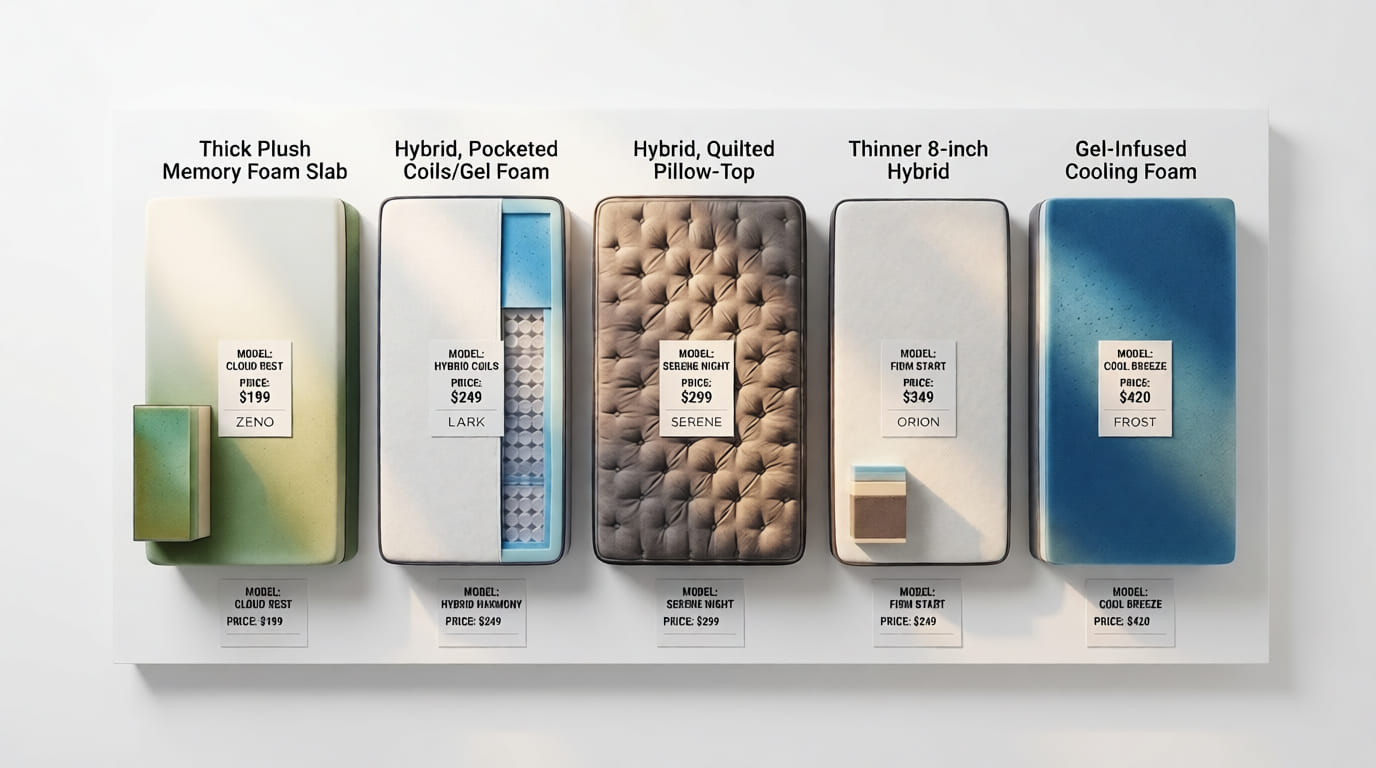
4. NapQueen 8 Inch Bamboo Charcoal — Best Ultra-Budget Queen (~$180)
At $175–$185, the NapQueen 8 Inch Bamboo Charcoal is the least expensive certified queen mattress in this guide — and unlike the Linenspa below, it is actually available in queen size. The bamboo charcoal infusion in the comfort layer measurably reduces retained odor compared to standard foam, a genuine benefit for pet owners and humid climates.
What the testing showed: The medium-firm feel (6/10) suits back sleepers and combination sleepers well. Edge support is weak, consistent with all-foam construction at this price. Off-gassing was slightly more noticeable at unboxing than the Zinus Green Tea, but cleared within 72 hours.
Warranty: 10 years | Trial: 120 nights | CertiPUR-US: Yes
Read Full NapQueen 8 Inch Review →
5. Linenspa 8-inch Hybrid — Best Ultra-Budget Hybrid, Twin Only (~$129–$149)
The Linenspa 8 Inch Hybrid delivers genuine hybrid construction — tempered steel coils plus a foam comfort layer — at the lowest hybrid price in this guide. Note that our tested unit is Twin size only at $129–$149; it is not available in queen, which makes it best suited for a guest room, dorm, or teenager's bedroom rather than a primary couple's mattress.
What the testing showed: Adequate for back and combination sleepers, with genuinely better edge support and airflow than any foam option in this guide. Motion isolation is weaker than foam due to the bonnell coil system. Confirm the current return policy directly with the seller before ordering, as trial terms vary.
Warranty: Confirm at purchase | Trial: Confirm at purchase | CertiPUR-US: Yes
Read Full Linenspa 8 Inch Hybrid Review →
6. Lucid 10" Gel Memory Foam — Best for Odor-Sensitive Buyers ($299–$399)
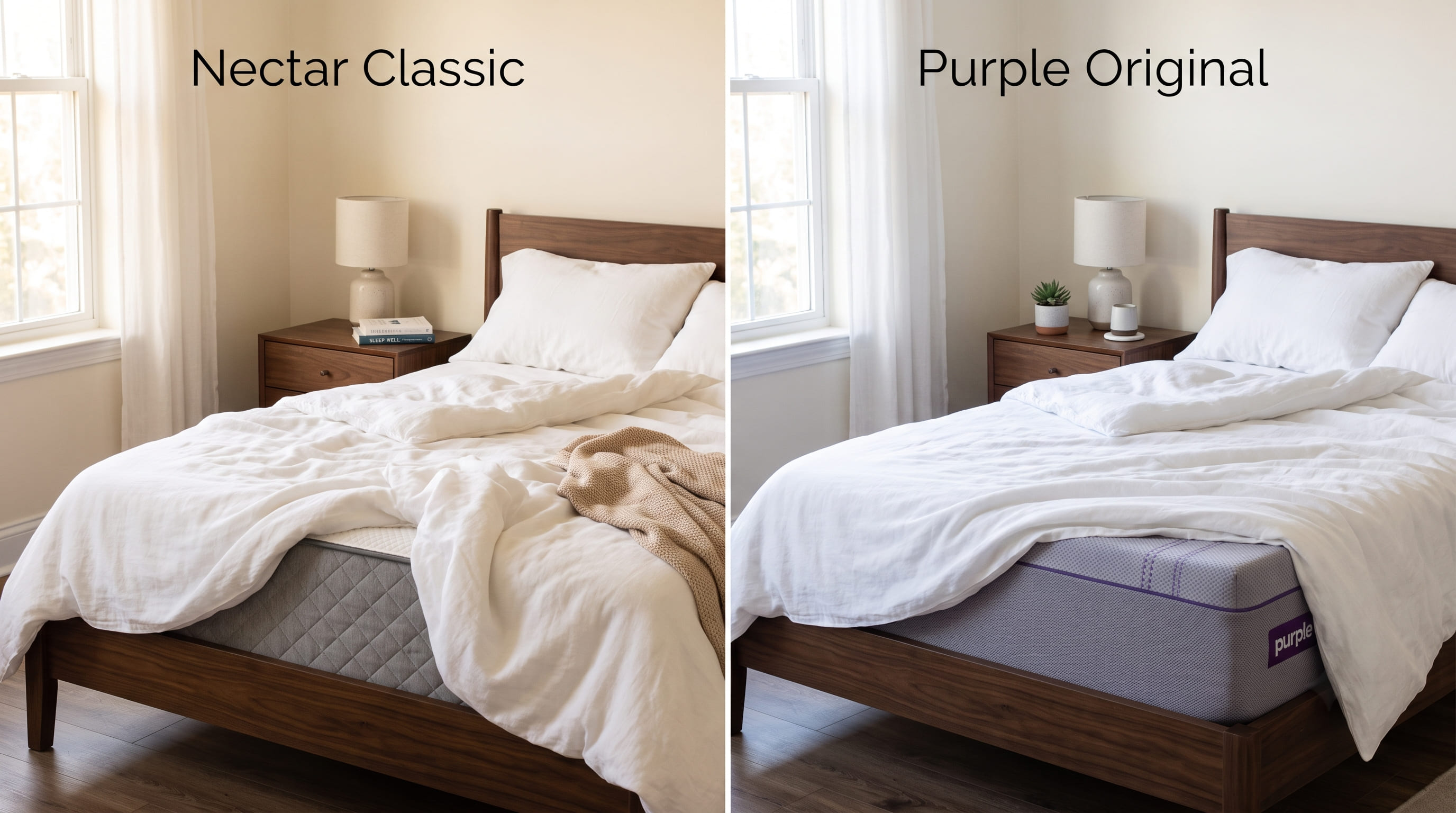
The Lucid 10" pairs a gel-infused comfort layer with a bamboo charcoal treatment aimed specifically at reducing retained odor — a common complaint with budget foam mattresses fresh out of the box. In our tracking, the charcoal-infused Lucid returned to a neutral smell noticeably faster than uninfused budget foam alternatives, and it also outperformed both the Nectar Classic and Zinus Cooling in our separate thermal cooling tests.
What the testing showed: Pressure relief was competitive with mattresses costing $150–$200 more. The 10-inch profile is shorter than most picks in this guide, giving up some support-layer depth for heavier sleepers, and edge support is the mattress's clearest weakness.
Warranty: Confirm at purchase | Trial: Confirm at purchase | CertiPUR-US: Yes
Read Full Lucid 10" Gel Memory Foam Review →
7. Signature Design by Ashley 12" Hybrid — Best King Size Under $500 ($435–$475)
Every other pick in this guide is priced for queen — this one is priced directly for King, and it's the only genuine hybrid at King size we've found under $500. Backed by Ashley's furniture-manufacturing scale, it uses real individually wrapped coils rather than the connected open-coil systems found in cheaper King mattresses, which translates directly into better airflow and edge support.
What the testing showed: Pressure relief and cooling performance held up well against premium hybrids costing twice as much, though the comfort layer is thinner and heavier sleepers (230+ lbs) will feel more of the coil structure underneath. No dedicated long sleep trial — return options rely on the retailer's standard policy.
Warranty: Confirm at purchase | Trial: Retailer policy | CertiPUR-US: Yes
Read Full Ashley 12" Hybrid King Review →
8. Zinus Cooling Foam — Best Foam for Hot Sleepers (~$320)
If you prefer memory foam but run warm, the Zinus Cooling Foam's gel-infused layer is a meaningful step up from the standard Green Tea model. It does not perform like a hybrid for cooling — but it measurably reduces heat retention compared to standard polyester foam.
What the testing showed: Gel infusion creates a cooler initial surface feel. Pressure relief is comparable to the Green Tea model. Edge support is limited — the same weakness as all budget foam options.
Warranty: 10 years | Trial: 100 nights | CertiPUR-US: Yes
Read Full Zinus Cooling Foam Review →
What to Avoid at This Price Point
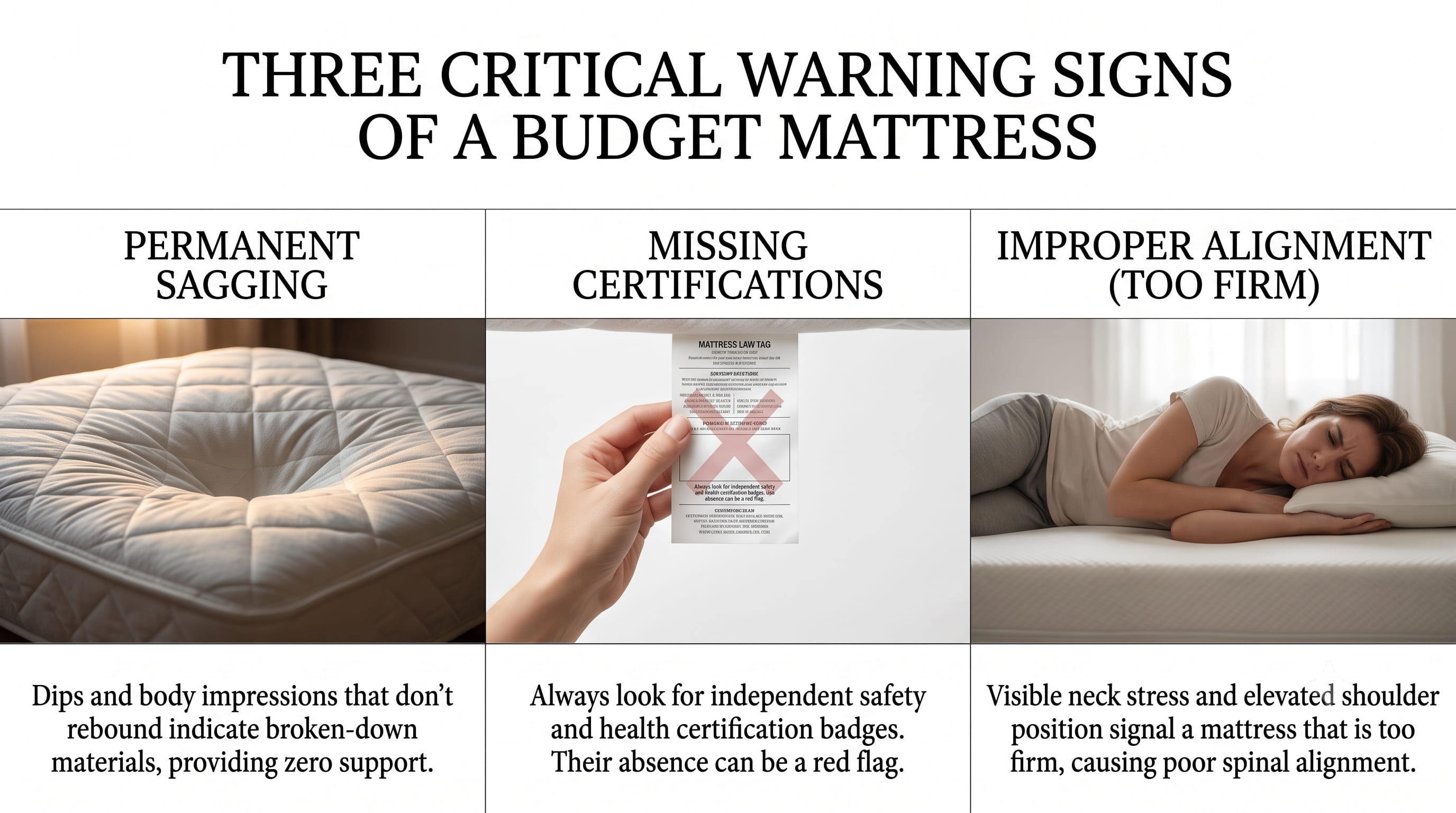
No-name brands with no verifiable reviews
If a brand has fewer than 500 reviews on their primary product and no third-party testing certifications, avoid it. Budget mattress quality varies enormously — the certified brands in this guide have tens of thousands of verified reviews because they consistently deliver on their stated specifications.
Any mattress without a 100-night trial
A 30-day trial is not enough. Your body takes 3–4 weeks to adjust to a new sleep surface. Judge a mattress after 6–8 weeks, not 2 weeks.
Soft or plush options from budget brands
Budget foam layers are thinner and compress faster than premium alternatives. A "plush" budget mattress will compress through its comfort layer quickly, leaving you effectively sleeping on a firmer base foam within months. Stick to medium or medium-firm at this price point.
Mattresses without CertiPUR-US certification
Uncertified foam may off-gas chemicals into your sleeping environment. CertiPUR-US certification is free for brands to obtain — there is no excuse for a legitimate mattress brand to omit it.
Trial Periods and Warranties — What They Actually Mean
The 100-night trial
Most reputable budget brands offer a 100-night sleep trial. This means you can return the mattress within 100 nights for a full refund if it does not work for you. Read the fine print: some brands require you to donate the mattress rather than ship it back, and a few charge a restocking fee. The best brands (Zinus, Sweetnight) handle collection and charge nothing.
The 10-year warranty
A 10-year warranty covers manufacturing defects and sagging beyond a defined threshold (typically 1.5 inches of visible sagging). It does not cover normal wear and comfort changes — a mattress that feels different after 5 years of use is not covered under warranty unless it shows measurable sagging.
Keep your purchase receipt. Warranty claims require proof of purchase.
When to use the trial
Use it if: you wake with new pain after 6–8 weeks that was not present before (not adjustment soreness, which peaks in week 2–3 and resolves). Use it if: the mattress develops visible sagging within the trial period. Do not use it if: you are still in the adjustment phase — give it the full 8 weeks before concluding the mattress is wrong for you.
Setting Up Your Budget Mattress Correctly
Even the best budget mattress will underperform on the wrong foundation.
Platform bed or slatted base: Ideal. Ensure slats are no more than 3 inches apart — wider gaps allow foam to sink through and degrade prematurely.
Box spring: Not recommended for modern foam or hybrid mattresses. Box springs were designed for traditional innerspring mattresses and do not provide the uniform flat support that foam requires.
Adjustable base: Most budget foam mattresses are compatible with adjustable bases. Check the manufacturer's specifications — most Zinus and Sweetnight models confirm compatibility.
Mattress protector: Essential. A waterproof mattress protector extends the life of a budget mattress significantly. It also preserves the warranty — most brands void the warranty if the mattress shows stains.
Frequently Asked Questions
Can a mattress under $500 actually be good? Yes, for the right sleeper with calibrated expectations. The Zinus Green Tea performs comparably to mattresses costing $700–$900 three years ago. Budget mattresses compress faster and lack premium features, but they deliver genuine comfort for 5–7 years.
How long will a budget mattress last? Expect 5–7 years with proper support and a mattress protector. Budget foam compresses faster than latex or premium memory foam. Washing your protector regularly and rotating the mattress every 6 months extends lifespan.
Is a $200 mattress worth buying? For a guest room, college dorm, or short-term use — yes. The Linenspa 8 Inch Hybrid at $129–$149 (Twin only) or the NapQueen 8 Inch Bamboo Charcoal at $175–$185 (queen) are both reliable for those use cases. As a primary sleep surface for daily use over multiple years, spend at least $280 (Zinus Green Tea) or more.
Do I need a box spring with a budget mattress? No. Modern budget mattresses are designed for platform beds and slatted bases. A box spring is not recommended. Use a solid or slatted platform with slats no more than 3 inches apart.
What size should I buy? Prices in this guide are for queen size unless noted otherwise. Twin and full are typically $100–$150 less; king is $100–$150 more. For two adults, queen is the recommended minimum — a full (double) is too narrow for comfortable shared sleeping. If you specifically need a King, the Signature Design by Ashley 12" Hybrid King ($435–$475) is priced directly for that size rather than requiring the usual queen-to-king markup.
Is it safe to sleep on a budget foam mattress? Yes, provided it carries CertiPUR-US certification. All picks in this guide are CertiPUR-US certified, meaning the foam has been independently tested and verified free from ozone depleters, heavy metals, formaldehyde, and harmful flame retardants.
What is the best budget mattress for back pain? The Sweetnight Coolnest Hybrid (medium-firm) is our recommendation for back pain at this price. The coil support system provides better lumbar reinforcement than foam-only alternatives. For general back discomfort rather than chronic pain, the Zinus Green Tea at medium firmness is adequate for back sleepers under 200 lbs.
The Bottom Line
The best mattress under $500 in 2026 is the Zinus Green Tea Memory Foam for solo sleepers and budget-first buyers — it delivers the best pressure relief per dollar in this tier. For couples, hot sleepers, and combination sleepers, the Sweetnight Coolnest Hybrid is worth the extra investment. Side sleepers with pressure sensitivity should look at the Vibe Quilted Hybrid for its pillow-top cushioning. If your budget is the deciding factor, the NapQueen 8 Inch Bamboo Charcoal at $175–$185 is the lowest-priced certified queen mattress we recommend.
Whatever you choose: insist on a 100-night trial, a 10-year warranty, and CertiPUR-US certified foam. Give the mattress 6–8 weeks before making a final judgement. And buy a mattress protector on day one — it is the single easiest way to extend the life of a budget mattress.
Related Guides
Ready to shop? Browse our expert mattress reviews to find your perfect match.