Best Mattress Topper Guide: 2026
Complete mattress topper guide 2026. Learn which type, thickness, and firmness suits your sleep position, budget, and mattress. Expert-tested advice.
A good mattress topper can add years of life to a mattress that is still structurally sound but has lost its comfort. The right one can also turn a firm guest bed into a hotel-quality sleeping surface, fix a too-firm feel without replacing a mattress, and in some cases meaningfully reduce the pressure pain that causes people to wake stiff and sore.
The wrong one — bought without understanding what the different types actually do — is $100–$400 spent on something that sits in a cupboard after two weeks.
This guide covers everything you need to make the right choice: what a topper actually does, the five types and their real-world differences, thickness, firmness, cooling, and which topper suits which sleeper. Where relevant we link to our full individual reviews.
Mattress Topper vs Mattress Pad — What Is the Difference?
This is the most common point of confusion before buying, and it matters because they do completely different jobs.
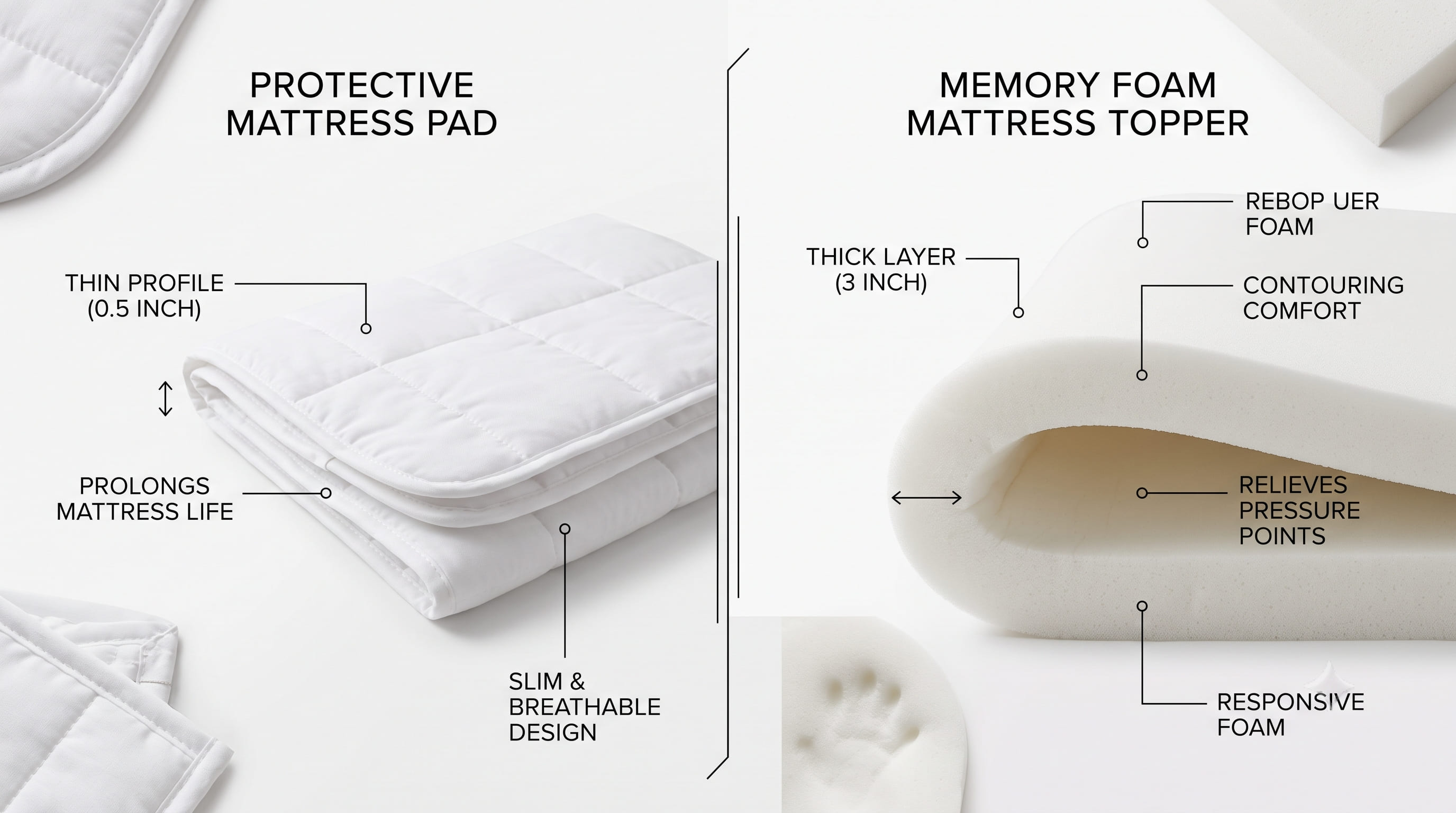
A mattress pad is a thin quilted layer (typically 0.5–1 inch) whose primary purpose is protection — it guards the mattress against spills, allergens, and general wear. A mattress pad does not change how your mattress feels in any meaningful way. Think of it as a waterproof or quilted sheet cover.
A mattress topper is a thick comfort layer (typically 2–4 inches) that physically changes how your mattress feels. A topper adds softness, pressure relief, or support depending on its material and construction. It sits on top of your mattress and is held in place by anchor straps.
When you need a pad: You want to protect your mattress and are happy with how it currently feels.
When you need a topper: Your mattress is too firm, you have pressure point pain, or you want to significantly change the sleep surface feel without buying a new mattress.
Will a Topper Fix My Mattress?
Before buying a topper, answer this question honestly: is your mattress still structurally sound?
A topper works well when your mattress has a solid, flat support layer but the comfort surface has become too firm or too thin. In this case, a topper adds a genuine comfort upgrade.
A topper will not fix:
- A sagging mattress. Body impressions deeper than 1.5 inches mean the support layer has failed. A topper will conform to the existing sag rather than correct it — you will sleep in the same dip, just on softer material.
- Broken coils. Structural support failure requires replacement.
- A mattress more than 8–10 years old with visible wear. At this stage, the investment is better directed toward a new mattress. See our Best Queen Mattress Under $800 guide for starting points.
The honest rule: If you press your hand flat into your mattress and it springs back evenly across the surface with no visible dip, a topper is a valid upgrade. If there is a hollow where you sleep, replace the mattress.
The 5 Types of Mattress Topper
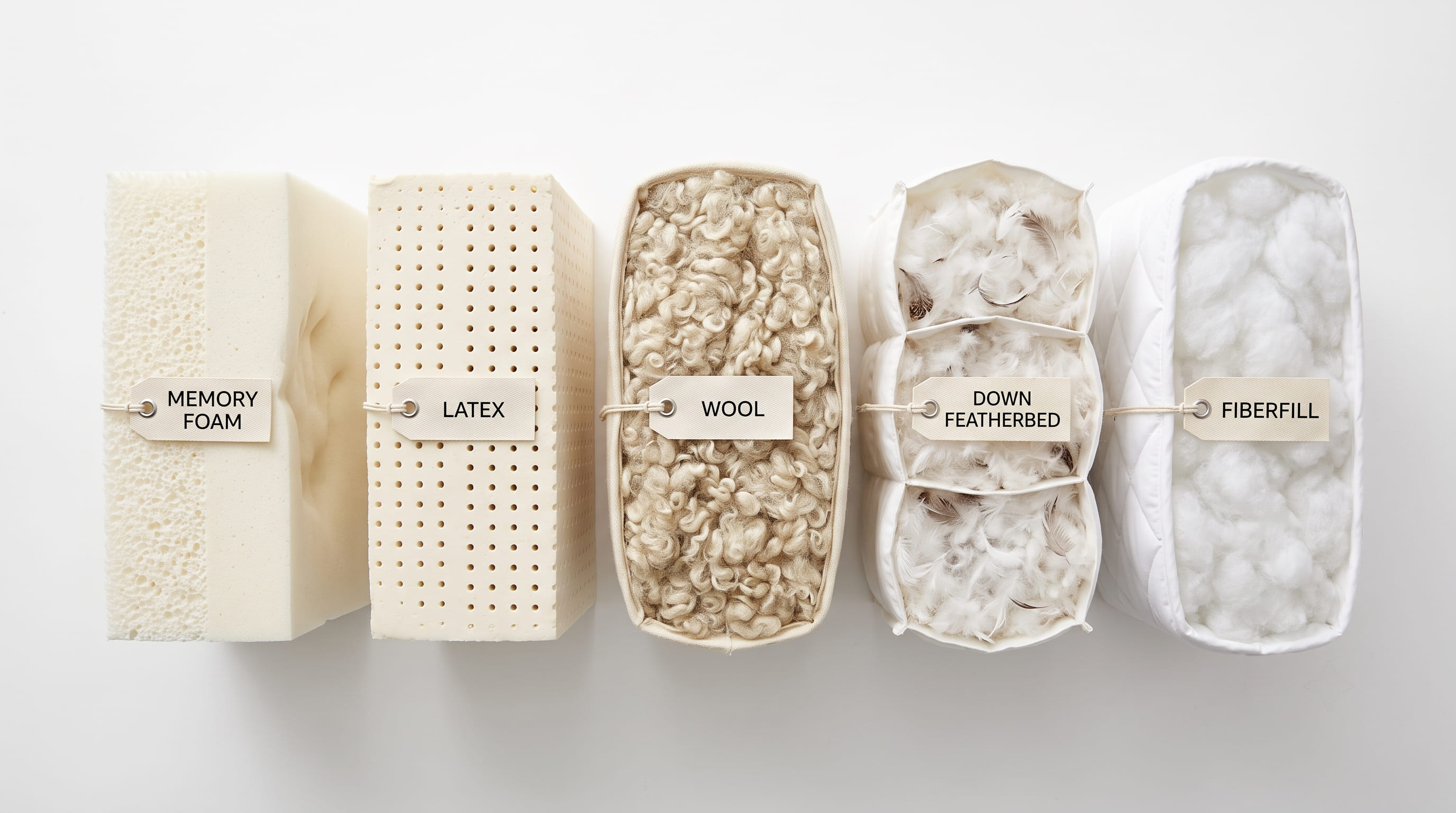
1. Memory Foam Toppers
Best for: Pressure relief, motion isolation, back and side sleepers
Memory foam toppers are the most popular type and for good reason — they provide the best pressure relief of any topper material. The slow-conforming foam distributes body weight evenly across the contact surface, reducing peak pressure at the shoulders, hips, and lower back.
Standard memory foam conforms under pressure and body heat, creating a "hug" feel that many sleepers find comfortable and supportive. It is the most affordable foam option.
Gel-infused memory foam adds gel beads or a gel layer to reduce surface temperature. It is moderately cooler than standard foam but does not eliminate the inherent heat retention of dense foam.
TEMPUR material (Tempur-Pedic's proprietary foam) is the premium end of the memory foam category — denser, more precisely conforming, and significantly more durable than standard memory foam. It is also the warmest of any topper material in its plush form. Our tested top pick: TEMPUR-Adapt Supreme 3" King at $399. If heat retention is a concern, the TEMPUR-Adapt + Cooling 3" King at $495–$515 delivers the same TEMPUR precision in a medium firmness with a phase-change cooling cover built in.
Trade-offs: All memory foam sleeps warmer than other topper types. Standard foam also loses loft faster than TEMPUR material — expect 15–25% loft reduction in standard foam toppers within 2–3 years.
Who should choose memory foam: Side sleepers with shoulder or hip pressure pain. Couples sharing a bed who need motion isolation. Anyone on a firm innerspring or coil mattress who wants a softer feel.
2. Latex Toppers
Best for: Cooling, responsive feel, durability, eco-conscious buyers
Latex toppers are made from either natural latex (tapped from rubber trees) or synthetic latex (petroleum-based). Natural latex is the premium choice — it is more breathable, more durable, and produced from a renewable source.
Latex has a fundamentally different feel from memory foam. Where memory foam has slow, conforming response, latex has fast, buoyant response — it pushes back immediately when you move rather than holding your position. This makes it excellent for combination sleepers who shift positions during the night.
Latex also sleeps significantly cooler than memory foam. The open-cell structure of latex allows airflow through the material in a way that dense memory foam cannot. For hot sleepers who also want pressure relief, latex is usually the better choice over gel-infused foam.
Trade-offs: Natural latex toppers cost more than memory foam — quality 3-inch natural latex toppers typically run $200–$500. Synthetic latex is cheaper but loses the cooling and durability advantages of natural latex. Some people have latex allergies — confirm before purchasing.
Our tested pick: Saatva Natural Latex Topper at $365–$385 — 100% GOLS-certified Talalay latex with a GOTS-certified organic cotton cover. In our 8-week test it held its loft with minimal compression and delivered the coolest surface temperature of any topper we have reviewed.
Premium alternative: Avocado Eco Organic Latex Topper at $649–$949 — carries the same dual GOLS and GOTS certification as the Saatva, with a plush 3-inch feel and near-identical test results. In our testing it didn't outperform the Saatva enough to justify the roughly $300–$600 premium on pure metrics, but it's worth considering if you're already invested in the Avocado brand ecosystem or prefer its specific plush tuning.
Who should choose latex: Hot sleepers who also need pressure relief. Combination sleepers who need the mattress to respond quickly when they change position. Anyone who dislikes the contouring "hug" feel of memory foam and prefers a more responsive surface.
3. Wool Toppers
Best for: Temperature regulation year-round, natural materials, moderate pressure relief
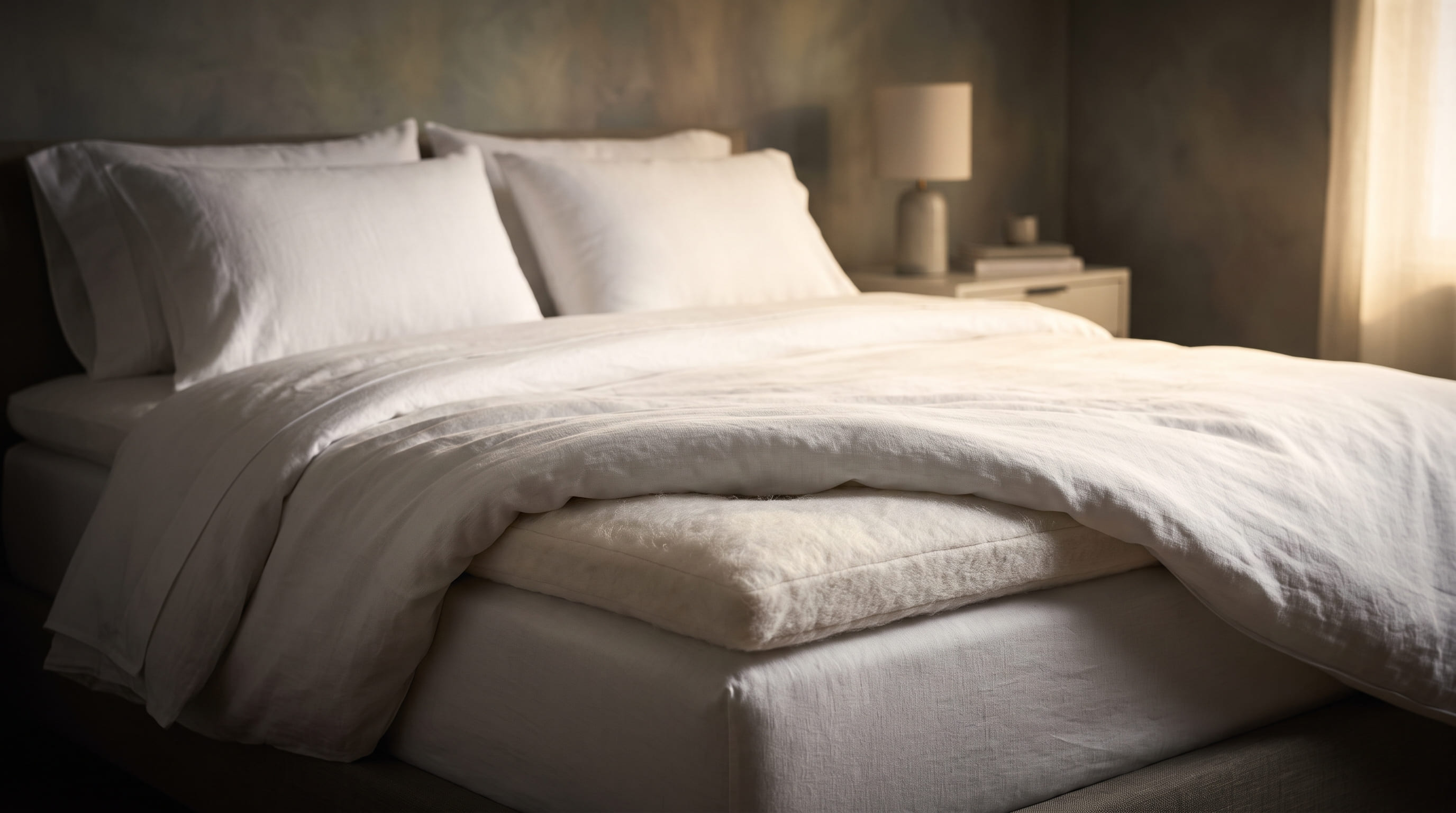
Wool is the most naturally temperature-regulating topper material. Wool fibres wick moisture away from the body and regulate surface temperature across a wider ambient range than foam or latex — keeping you warmer in winter and cooler in summer. This makes wool toppers popular in bedrooms without climate control.
Wool toppers are naturally resistant to dust mites and mould, making them a good choice for allergy sufferers. They are also naturally flame retardant — no chemical treatment required.
Trade-offs: Wool toppers provide moderate pressure relief only — less than memory foam or latex. They are also the most expensive per-inch of comfort. Wool toppers typically require dry cleaning or specialist washing.
Who should choose wool: Those who sleep in a room without consistent climate control. Allergy sufferers looking for a natural, chemical-free option. Anyone who prefers natural materials across their bedding.
We have not yet completed a full hands-on test of a wool topper for this guide — check back for a dedicated review, or see our Saatva Natural Latex Topper review for a natural-material alternative we have fully tested.
4. Down and Featherbed Toppers
Best for: Plush surface softness, lightweight feel, traditional bedding preference
Featherbed toppers (filled with down, feathers, or a blend) add a cloud-like surface softness that no foam or latex product replicates. They are lightweight, easy to reposition, and machine washable. They are also the least expensive topper type — quality featherbeds start around $80–$150 Queen.
What they do not do: Featherbeds add surface softness only — they provide no meaningful pressure relief or structural support change. If pressure point pain is your issue, a featherbed is the wrong solution. It is purely a comfort and luxury upgrade.
Trade-offs: Down compresses over time and requires regular fluffing. Down toppers are not suitable for allergy sufferers sensitive to animal products. They shift and bunch more than foam or latex options.
Who should choose down: Those who want a soft, hotel-like surface feel without pressure relief needs. Anyone who already sleeps well but wants extra plushness. Guest rooms where easy washing and storage matter.
We have not yet completed a full hands-on test of a featherbed topper for this guide — check back for a dedicated review.
5. Fiberfill (Gel Fibre) Toppers
Best for: Budget buyers, easy washing, lightweight softness
Fiberfill toppers use polyester fibres (often gel-coated) to create a soft, lofty surface layer at a low price point — typically $40–$120 Queen. They are machine washable in full (unlike foam or latex toppers where only the cover washes), lightweight, and easy to store.
Trade-offs: Fiberfill compresses and mats faster than any other topper type — expect meaningful loft loss within 12–18 months. Pressure relief is minimal. For anyone with actual pressure point pain or support needs, fiberfill is an inadequate solution.
Who should choose fiberfill: Budget buyers adding surface softness to an adequate mattress. Anyone who prioritises easy washing and maintenance. Guest rooms and children's beds where durability is less critical.
We have not yet completed a full hands-on test of a fiberfill topper for this guide — check back for a dedicated review, or see our Saatva Graphite Memory Foam Topper review for a budget-friendly foam alternative we have fully tested.
Thickness: 2-Inch vs 3-Inch vs 4-Inch
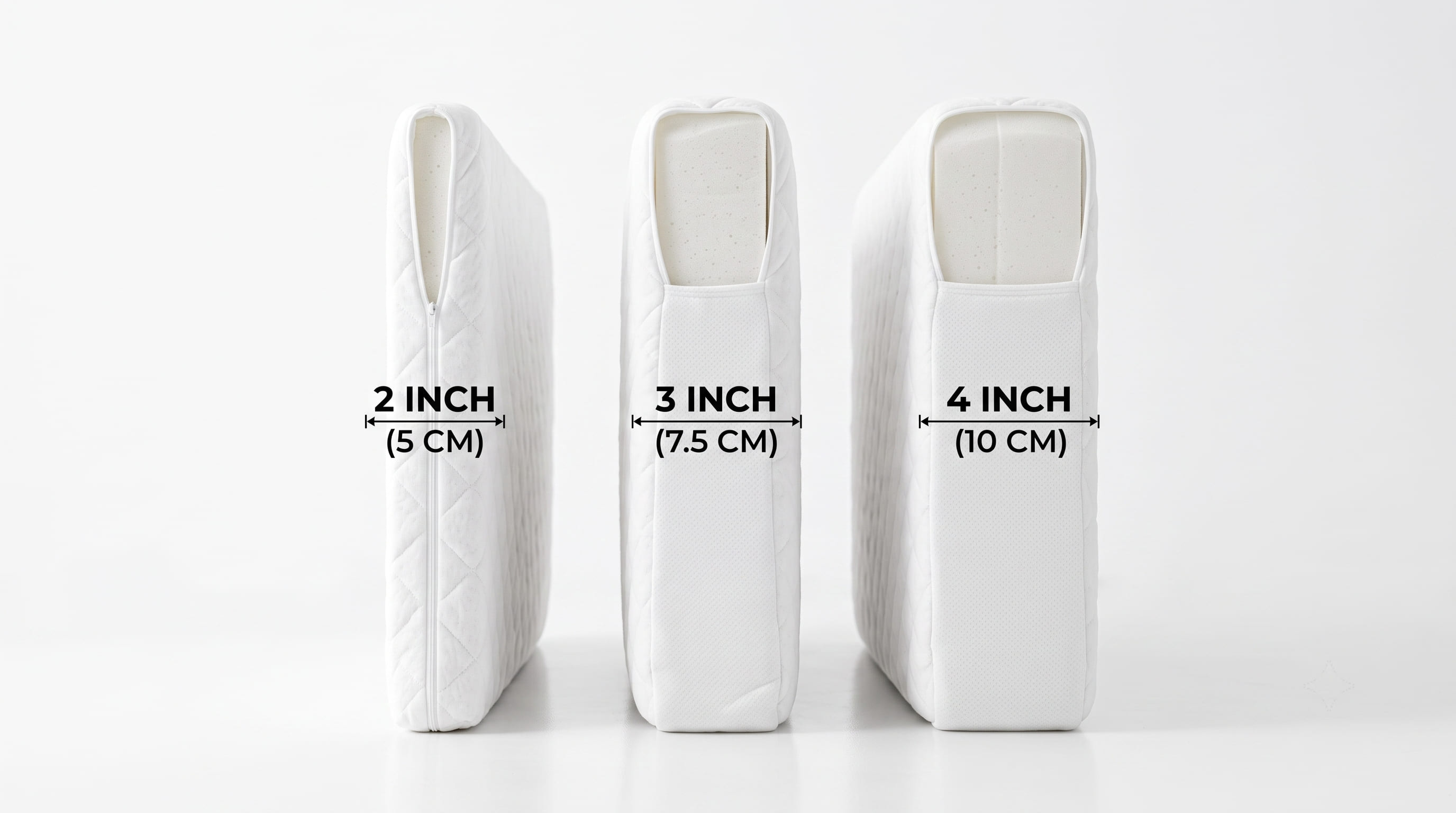
Topper thickness is one of the most important decisions you will make, and it is largely determined by what you are trying to fix.
2-Inch Toppers
A 2-inch topper softens the surface of your mattress without dramatically changing its fundamental feel. You will notice a difference — particularly if your mattress is firm — but the underlying mattress still significantly influences how you sleep.
Choose 2 inches if: Your mattress is medium firmness and you want light softening. Fitted sheets fit standard depth (no new sheets required for most 10-inch mattresses). Budget is a factor.
Best for: Mild firmness complaints, adding surface comfort to a mattress that is already adequate.
3-Inch Toppers
Three inches is the most popular topper thickness and the right choice for most buyers. At 3 inches, the topper layer is thick enough to genuinely transform the feel of the base mattress — a firm mattress becomes noticeably soft, and pressure relief is meaningful rather than marginal.
Choose 3 inches if: Your mattress is medium-firm or firm and you want a significant feel change. You have shoulder or hip pressure point pain. You want a premium result that justifies the higher cost.
Best for: Most buyers, side sleepers with pressure pain, firm mattress owners.
Our tested recommendation: TEMPUR-Adapt Supreme 3" King — 9.6/10 pressure relief in testing.
4-Inch Toppers
Four inches is the maximum useful thickness for most sleepers. At this depth, the topper essentially replaces the comfort layer of the mattress entirely — lighter sleepers may feel as though they are sleeping on the topper alone rather than the mattress beneath.
Choose 4 inches if: You are a heavier sleeper (250 lbs+) and find 3-inch toppers compress too much under your weight. You want the maximum possible softness transformation. Your base mattress is very firm (8/10 or above).
Caution: 4-inch toppers add significant height — standard fitted sheets will not fit most mattress + 4-inch topper combinations. Measure carefully and buy deep-pocket sheets before adding the topper.
Firmness Guide by Sleep Position
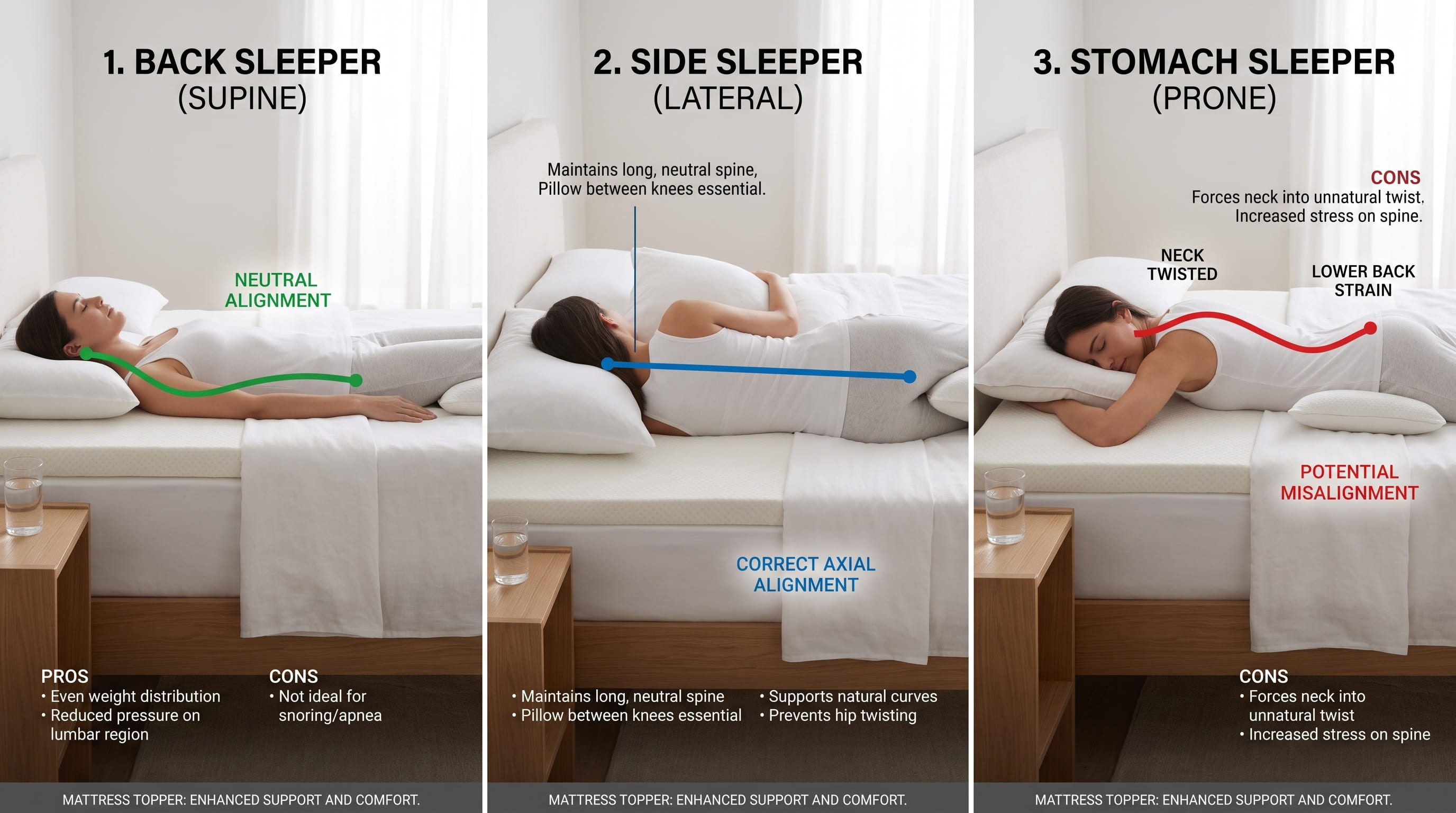
The topper firmness you need is determined by your sleep position — not personal preference alone.
| Sleep Position | Recommended Topper Feel | Why |
|---|---|---|
| Side sleeper | Soft to Medium-Soft (2–4/10) | Shoulders and hips must sink to keep spine horizontal |
| Back sleeper | Medium (4–6/10) | Lumbar curve needs support; too soft causes hips to sag |
| Stomach sleeper | Medium-Firm (6–7/10) | Hips must not sink — lower back extension causes pain |
| Combination sleeper | Medium (5/10) with fast response | Needs to reform quickly when position changes |
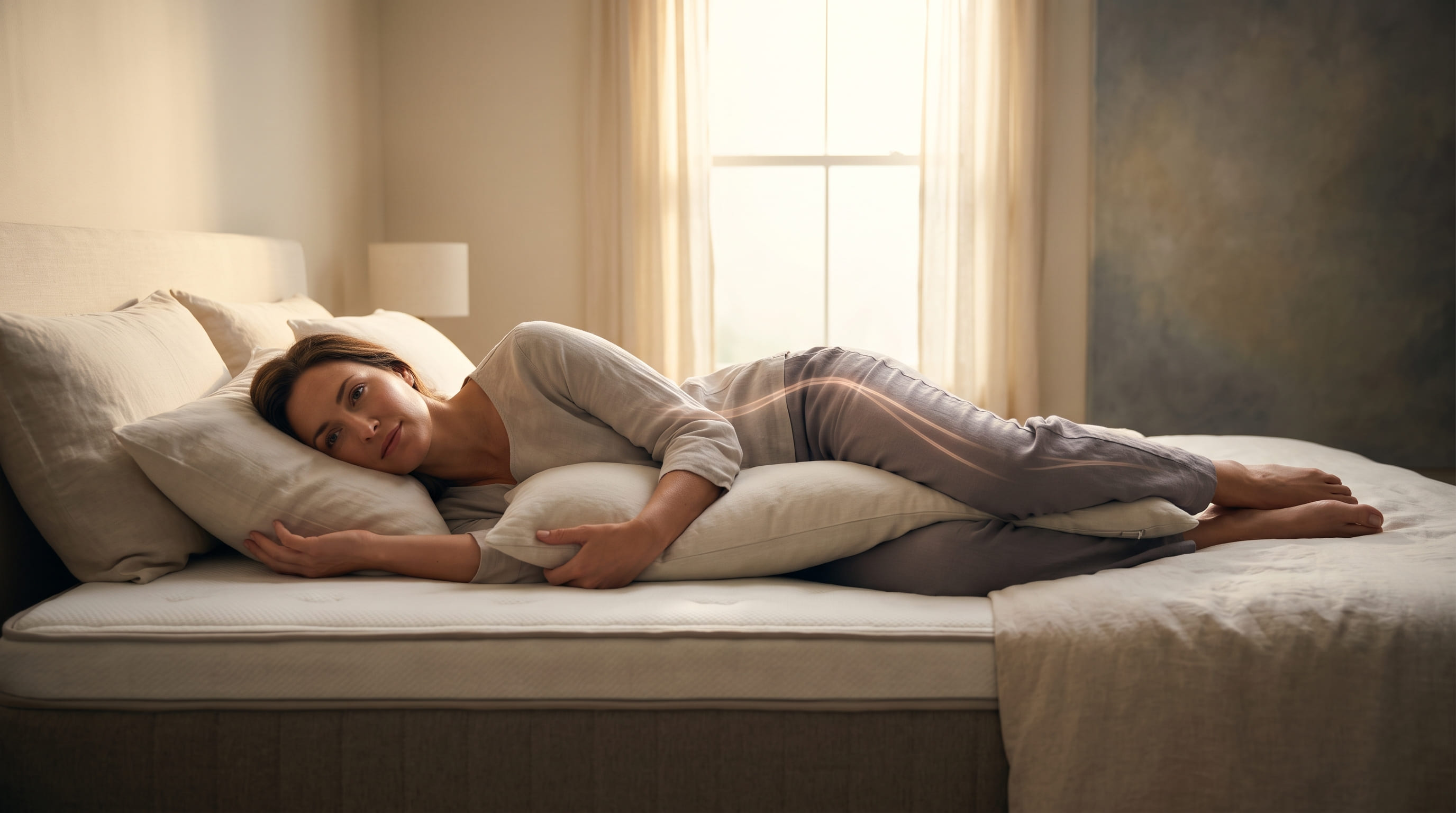
Side sleepers need the most cushioning — a soft memory foam or TEMPUR topper provides the deepest pressure relief at the shoulders and hips. The 3-inch thickness is the minimum to achieve proper alignment for most side sleepers.
Back sleepers need moderate softness — enough to cushion the shoulders and lumbar, but not so soft that the hips drop below spinal neutral. A medium memory foam or medium latex topper works well.
Stomach sleepers should avoid plush toppers entirely — they cause the hips to sink below the shoulders, pushing the lumbar into extension. A thin (2-inch) firm latex topper is the safest option for stomach sleepers who want a topper at all. Many stomach sleepers are better served without one.
Cooling Toppers: What Actually Works
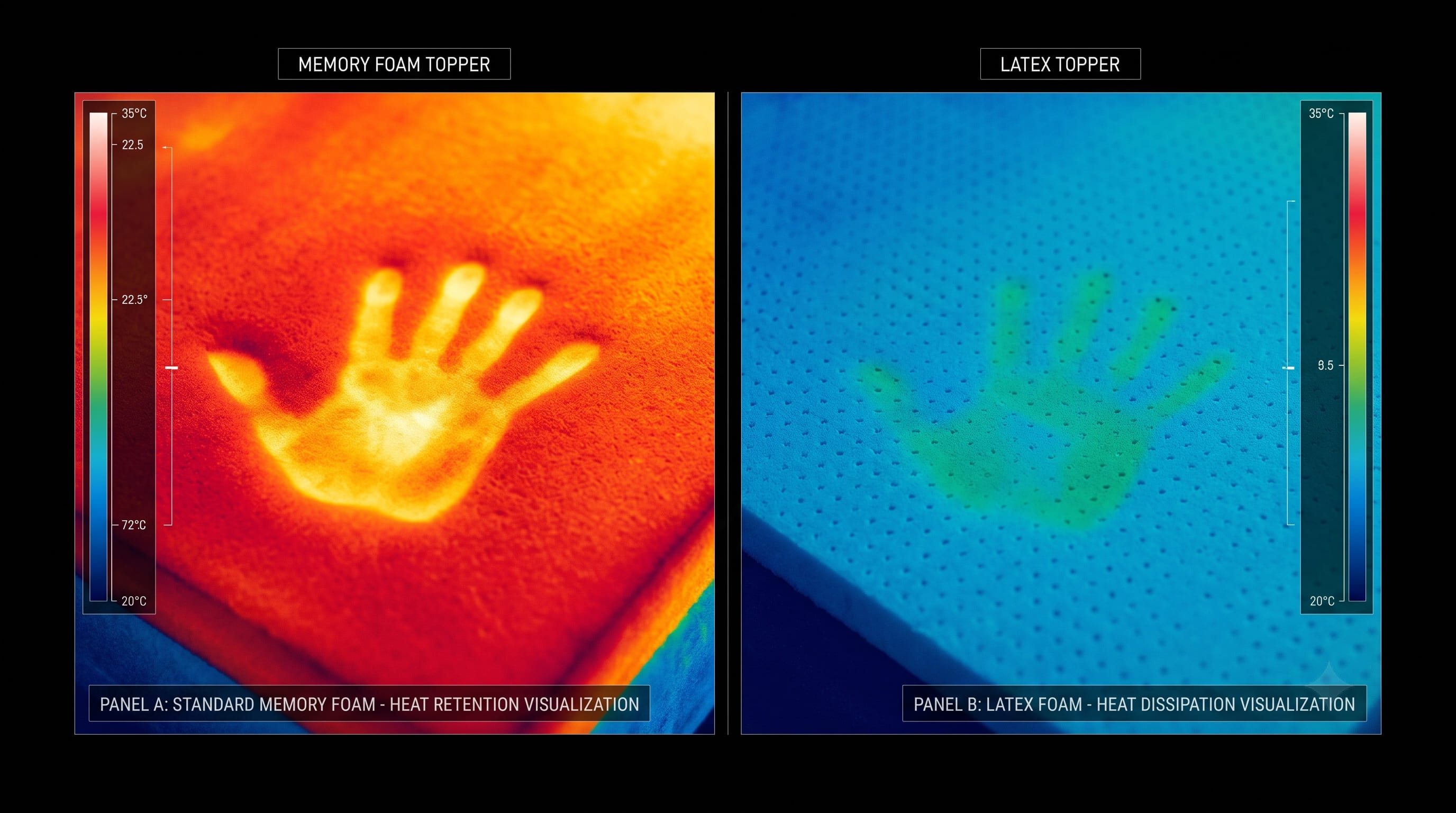
Temperature is the most common complaint about mattress toppers — particularly foam toppers. Here is an honest ranking of cooling effectiveness:
Most cooling → Least cooling:
- Natural latex — open-cell structure provides genuine airflow through the material. The most cooling topper type by a significant margin. Our tested picks: Saatva Natural Latex Topper and Avocado Eco Organic Latex Topper.
- Wool — moisture-wicking and temperature-regulating. Cooler than foam in warm conditions.
- Fiberfill / down — breathable but no active cooling mechanism.
- Gel-infused memory foam — measurably cooler than standard foam (+1–2°F difference) but still retains heat.
- Standard memory foam — the warmest common topper material.
- TEMPUR material — the warmest of all — dense viscoelastic foam with minimal airflow.
Practical guidance:
If cooling is your primary concern, choose natural latex — our tested pick is the Saatva Natural Latex Topper at $365–$385, which recorded the coolest surface temperature of any topper in our lineup. If you also need the pressure-conforming properties of memory foam and cooling is secondary, choose gel-infused foam. If you want TEMPUR-quality pressure relief with genuine cooling built in, the TEMPUR-Adapt + Cooling Topper adds a phase-change cover that measured approximately 1.4°F cooler than TEMPUR-Pedic's standard (non-cooling) models in our testing.
Avoid standard memory foam toppers entirely if you already sleep warm — the temperature problem will be immediately noticeable.
Our Top Topper Picks by Category
| Category | Our Pick | Price (King) | Score |
|---|---|---|---|
| Best overall | TEMPUR-Adapt Supreme 3" | ~$399 | 4.6/5 |
| Best cooling + pressure relief | TEMPUR-Adapt + Cooling | ~$495–$515 | 4.5/5 |
| Best natural latex / most durable | Saatva Natural Latex Topper | ~$365–$385 | 4.7/5 |
| Best premium certified organic | Avocado Eco Organic Latex Topper | ~$649–$949 | 4.6/5 |
| Best budget cooling | Saatva Graphite Foam Topper | ~$295–$315 | 4.5/5 |
| Best value | Lucid 3" Gel Memory Foam | ~$120 | 4.2/5 |
| Best for hot sleepers | Saatva Natural Latex Topper | ~$365–$385 | 4.7/5 |
| Best for side sleepers | TEMPUR-Adapt Supreme 3" | ~$399 | 4.6/5 |
| Best for back pain | Saatva Graphite Foam Topper | ~$295–$315 | 4.5/5 |
Full individual reviews:
- TEMPUR-Adapt Supreme 3" Topper Review →
- TEMPUR-Adapt + Cooling Topper Review →
- Saatva Natural Latex Topper Review →
- Avocado Eco Organic Latex Topper Review →
- Saatva Graphite Foam Topper Review →
Certifications to Look For
Before buying, check the certification on any foam topper:
CertiPUR-US — the minimum standard for any polyurethane foam topper. Independently tests for prohibited chemicals, heavy metals, formaldehyde, and VOC emissions below 0.5 ppm. If a foam topper does not carry CertiPUR-US certification, do not buy it.
OEKO-TEX Standard 100 — covers all components of the topper including cover, fill, thread, and dyes. More comprehensive than CertiPUR-US for the whole product.
GOLS (Global Organic Latex Standard) — for natural latex toppers. Certifies that the latex is from organic rubber tree sources and processed without prohibited chemicals. Both the Saatva Natural Latex Topper and the Avocado Eco Organic Latex Topper are GOLS-certified alongside a GOTS-certified organic cotton cover — the two most thoroughly certified toppers in our lineup.
For a full explanation of what these certifications cover: CertiPUR-US Certification Explained.
Setup, Care, and Maintenance
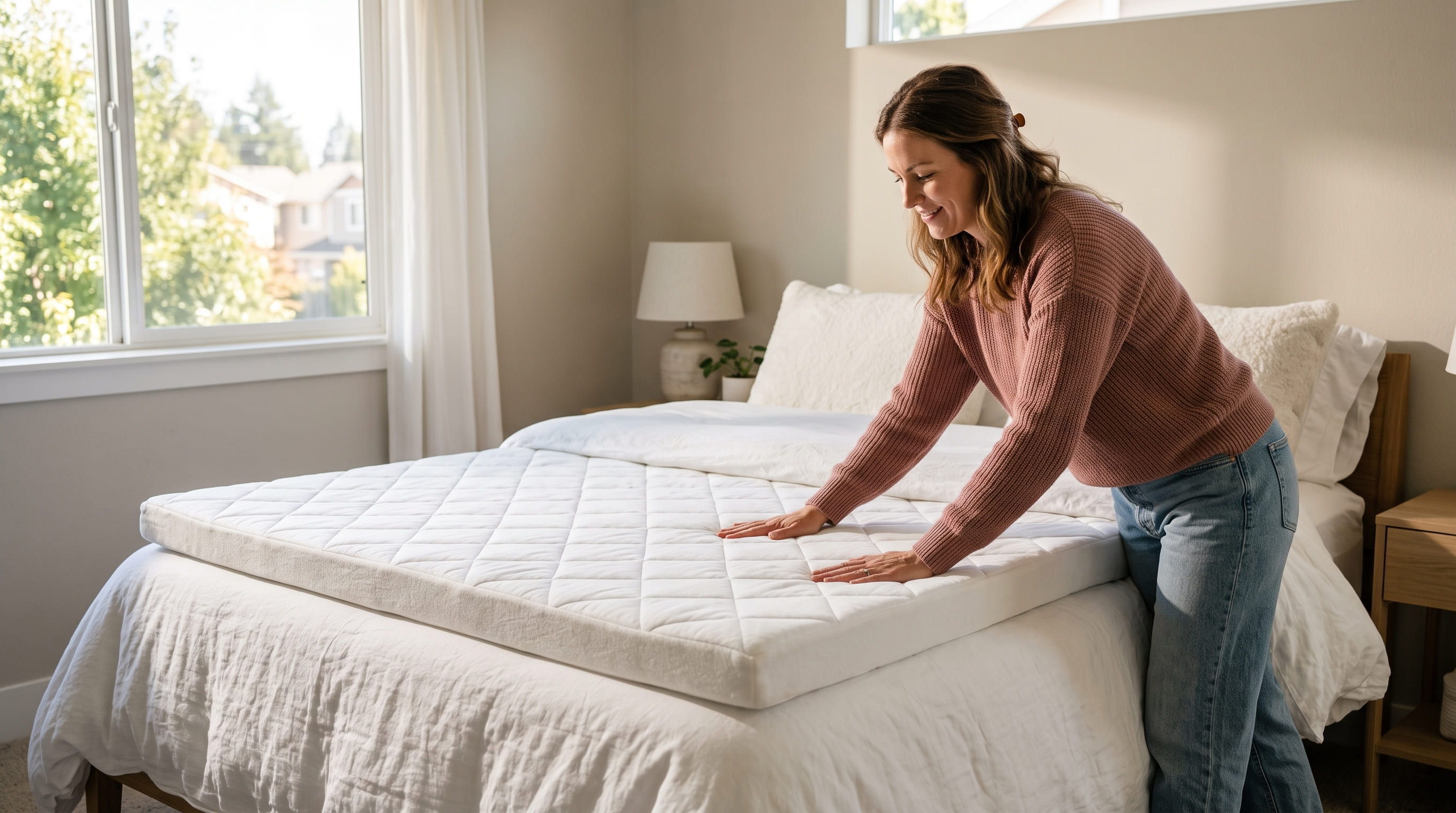
Setting up your topper:
- Remove the topper from packaging and allow it to fully expand — foam toppers need 2–4 hours, latex toppers are typically ready immediately.
- Place the topper centred on your mattress with anchor straps attached at each corner.
- Pull a deep-pocket fitted sheet over the topper and mattress together.
Sheet depth: Add your mattress depth and topper thickness to find the fitted sheet pocket depth you need. A 12-inch mattress + 3-inch topper = 15 inches minimum, and 18 inches recommended for easy fitting.
Washing:
- Memory foam and latex: Never machine wash the foam core. Spot clean with mild soap and water. Wash the removable cover on a cold gentle cycle.
- Wool: Follow manufacturer instructions — typically dry clean or specialist wool wash.
- Down and fibrefill: Machine washable in full — cold gentle cycle, tumble dry low.
Rotation: Rotate your foam or latex topper 180° (head to foot) every 3–6 months to even out wear and extend useful life.
Lifespan by type:
| Type | Expected Lifespan |
|---|---|
| TEMPUR material | 3–5 years |
| Natural latex | 4–6 years |
| Standard memory foam | 2–4 years |
| Wool | 5–8 years |
| Down / fibrefill | 1–3 years |
Common Questions About Mattress Toppers
Can a mattress topper help with back pain?
Yes — if the pain is caused by your mattress being too firm or providing inadequate pressure relief. A medium-soft memory foam or TEMPUR topper (3 inches) reduces peak pressure at the lumbar and hips, which is the most common cause of mattress-related back pain. If your back pain is structural — disc issues, sciatica, spinal stenosis — consult a physiotherapist before choosing a topper, as loft and firmness requirements may be specific to your condition. For mattress recommendations for back pain, see: Best Mattress for Back Pain.
How long does a mattress topper last?
It depends heavily on the material. TEMPUR and natural latex toppers last 3–6 years. Standard memory foam toppers last 2–4 years. Fibrefill and down toppers last 1–3 years with regular washing. All foam toppers eventually show permanent compression — the reliable sign that it is time to replace the topper is when the loft no longer returns to its original height after you get up in the morning.
Should I buy a 2-inch or 3-inch topper?
For most buyers, 3 inches is the right choice. Two inches is appropriate only if your mattress is already close to the feel you want and you are looking for light softening. If your mattress is firm and you have pressure point pain, 2 inches will provide marginal improvement — 3 inches provides a meaningful transformation. For heavier sleepers (250 lbs+), 4 inches may be necessary.
Can I use a topper on a memory foam mattress?
Yes — but think carefully about why. If your foam mattress is too firm, a soft foam or latex topper adds the missing cushioning. If your foam mattress is sagging, a topper will not fix the structural problem. If your foam mattress is already soft and comfortable, adding another foam layer creates excessive sinkage that can worsen spinal alignment. The most common valid reason to add a topper to an existing foam mattress is to improve cooling — a natural latex topper over a foam base mattress significantly improves airflow.
Does a mattress topper go under the mattress protector?
No. The correct order from bottom to top is: mattress → topper → mattress protector → fitted sheet. The protector goes over the topper to protect it (and the mattress beneath) from spills and allergens. The fitted sheet then goes over the entire assembly.
Will a mattress topper void my mattress warranty?
Generally no — adding a topper does not affect mattress warranties. Warranties are voided by physical damage, stains, or use outside the manufacturer's guidelines. A topper sits on top of the mattress without altering it in any way. That said, read your specific warranty terms to confirm.
Mattress Topper Buying Checklist
Before you buy, confirm:
- My mattress has no visible sagging or body impressions deeper than 1.5 inches
- I have identified my sleep position and matched firmness accordingly
- I have chosen the right material for my needs (foam for pressure relief, latex for cooling, wool for temperature regulation)
- I have chosen the right thickness (2" light softening / 3" full transformation / 4" maximum for heavy sleepers)
- The topper I am buying carries CertiPUR-US or equivalent certification
- I have measured my mattress depth and ordered the correct fitted sheet pocket depth
- I understand the washing requirements of the material I am buying

Dr. Sarah Mitchell is a certified sleep science researcher and lead mattress analyst at Mattress Guide Pro. All topper testing is conducted using standardised protocols including Tekscan pressure mapping, contact thermometry, loft retention measurement, and 8-week comfort evaluation.
Ready to shop? Browse our expert mattress reviews to find your perfect match.