CertiPUR-US Explained: 2026
CertiPUR-US foam means no harmful chemicals, low VOCs & third-party tested safety. Learn what the label covers, what it doesn't, and why it matters.
When you buy a new mattress, you are spending 7–9 hours per night with your face inches from the foam inside it. What is that foam made of? What chemicals were used during manufacturing? What is slowly off-gassing into your bedroom air?
These are not paranoid questions. Conventional polyurethane foam — the material inside most mattresses, pillows, and sofas — can be manufactured using a range of chemical compounds, some of which have raised health and environmental concerns. CertiPUR-US was created to address exactly this: to give consumers a third-party-verified way to know that the foam in their mattress meets specific safety and emissions standards.
This guide explains what CertiPUR-US actually certifies, what testing is involved, what the label does not cover, and how it compares to other certifications you may see on mattress labels.
What Is CertiPUR-US?
CertiPUR-US is a voluntary certification program for polyurethane foam used in bedding and upholstered furniture, administered by a non-profit organisation. Foam manufacturers who want to use the CertiPUR-US seal must have their foam independently tested by accredited third-party laboratories. The program was established in 2008 in North America and is now the most widely recognised foam certification in the US mattress market.
The certification focuses on what is not in the foam — it is fundamentally a chemical exclusion standard. A mattress bearing the CertiPUR-US label means the flexible polyurethane foam inside it has been tested and confirmed to be free of a specific list of harmful substances, and that it emits indoor air pollutants below defined thresholds.
It does not certify the entire mattress. It certifies the foam.
Why Foam Safety Matters
Polyurethane foam is produced from petroleum-based chemicals through a reaction between polyols and diisocyanates. During and after manufacturing, the resulting foam can contain or off-gas various chemical byproducts depending on how it was made, what flame retardants were used, what catalysts and blowing agents were involved, and what quality controls were in place.
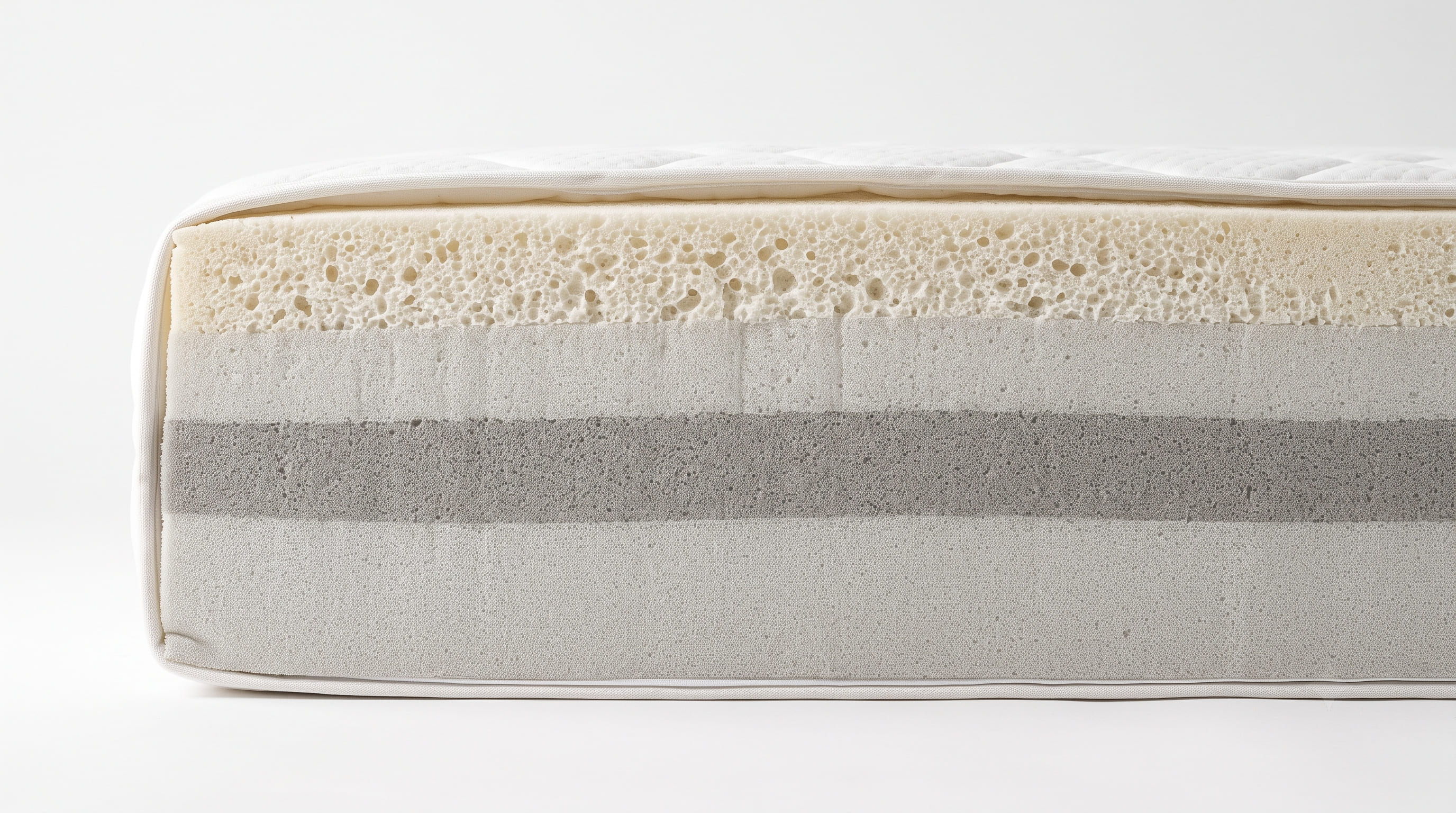
The concern is not that every piece of conventional foam is dangerous — most is not. The concern is consistency and verification. Without third-party testing, consumers have no way to confirm what is in the foam from any given manufacturer, especially when much of the world's foam is produced in facilities with varying regulatory standards.
Indoor air quality is also a real consideration. A new mattress in an unventilated bedroom can temporarily elevate volatile organic compound (VOC) concentrations — a phenomenon commonly described as "off-gassing." For most people this causes nothing beyond a noticeable chemical smell. For people with chemical sensitivities, asthma, or young children sleeping in the same room, VOC exposure from bedding is worth taking seriously.
What CertiPUR-US Certifies
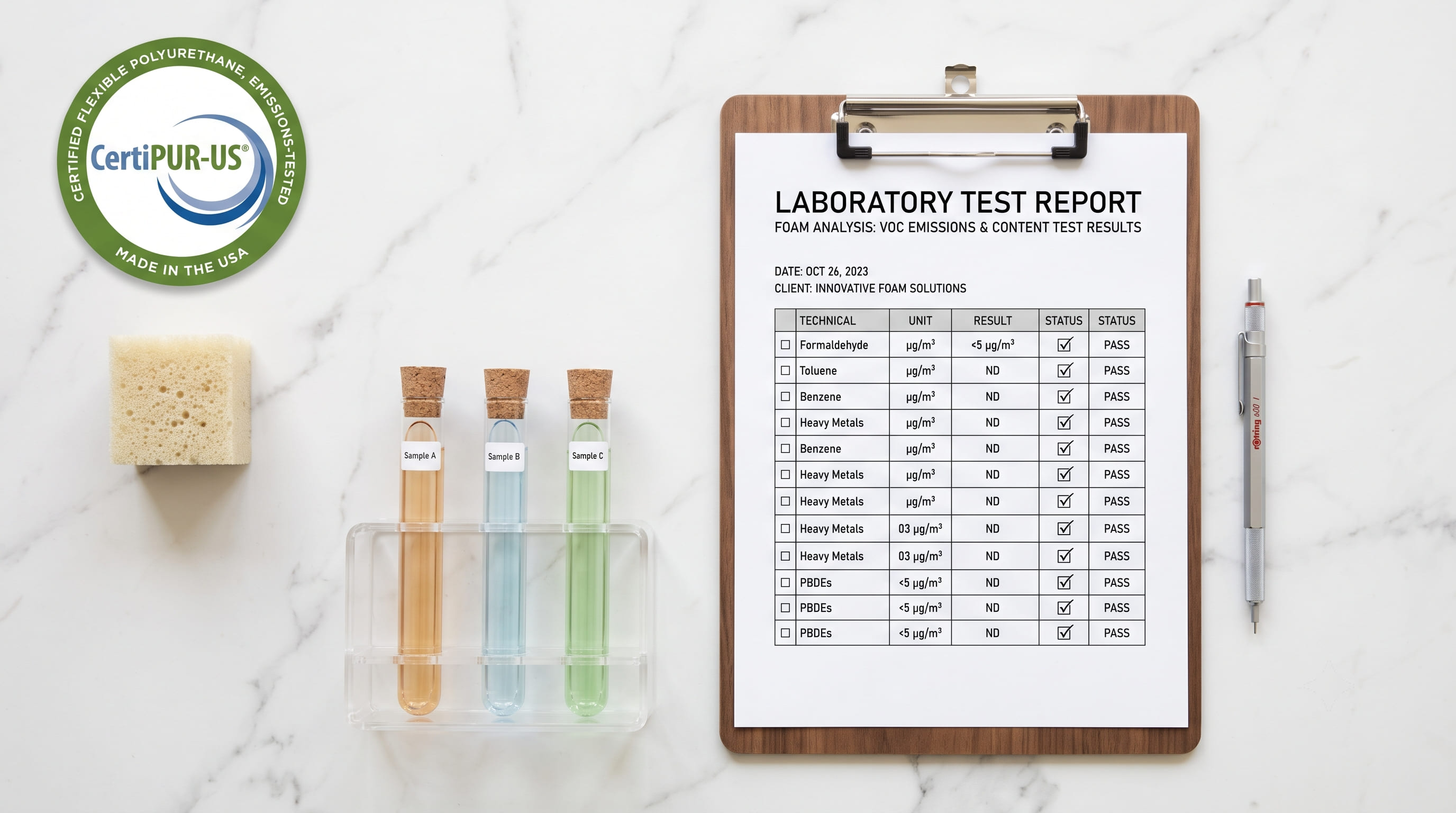
The CertiPUR-US standard tests for and prohibits the following in certified foam:
1. Ozone Depleters
Certain blowing agents historically used in foam manufacturing — particularly chlorofluorocarbons (CFCs) — deplete stratospheric ozone. CertiPUR-US prohibits their use. Modern foam manufacturing has largely moved away from these, but third-party verification confirms compliance.
2. PBDE Flame Retardants
Polybrominated diphenyl ethers (PBDEs) were widely used as flame retardants in foam and upholstered furniture through the 1990s and 2000s. Studies have linked PBDEs to thyroid disruption, neurodevelopmental effects, and reproductive toxicity. Several PBDE compounds have been banned in the US and EU. CertiPUR-US prohibits all PBDE flame retardants in certified foam.
3. TDCPP and TCEP
These are chlorinated flame retardants — also known as "chlorinated Tris" — that replaced PBDEs in many applications after PBDE restrictions were introduced. Both are listed as possible human carcinogens. CertiPUR-US prohibits TDCPP (tris(1,3-dichloro-2-propyl) phosphate) and TCEP (tris(2-chloroethyl) phosphate) in certified foam.
4. Heavy Metals
The standard prohibits mercury, lead, cadmium, chromium, and antimony above defined thresholds. Heavy metals can be introduced into foam through pigments, catalysts, or contaminated raw materials.
5. Formaldehyde
Formaldehyde is a known human carcinogen and a common indoor air pollutant. CertiPUR-US requires that certified foam contain formaldehyde below 0.5 parts per million (ppm) — far below levels associated with health effects.
6. Phthalates
Certain phthalates used as plasticisers — particularly DEHP, DBP, and BBP — are endocrine disruptors associated with reproductive and developmental effects. CertiPUR-US prohibits these specific phthalates in certified foam.
7. Low VOC Emissions
This is the emissions-based component of the standard. Certified foam must emit total volatile organic compounds (TVOCs) below 0.5 parts per million as measured by the standard chamber test. Specific VOCs measured include acetaldehyde, benzene, formaldehyde, toluene, and others.
How the Testing Works
CertiPUR-US is not a self-declaration. The process requires independent, accredited laboratory testing.
Here is how certification is obtained and maintained:
1. Initial Testing: A foam manufacturer submits foam samples to an accredited third-party laboratory — not a lab of their own choosing, but one approved by CertiPUR-US. The lab conducts chemical analysis and VOC emissions chamber testing against all parameters in the standard.
2. Annual Re-testing: Certification is not permanent. Certified foam must be re-tested annually. If a manufacturer changes their formulation, raw material suppliers, or production process, additional testing may be required.
3. Facility Audits: In addition to lab testing, CertiPUR-US conducts facility audits to verify that the foam being sold under the certification is the same foam that was tested.
4. Public Database: All certified foam and the manufacturers who produce it are listed in a searchable public database at the CertiPUR-US website, allowing consumers and retailers to verify claims.
This structure means the certification is meaningfully more rigorous than a manufacturer simply stating that their foam is "safe" or "non-toxic" on their website.
What CertiPUR-US Does NOT Cover
Understanding the limits of the certification is as important as understanding what it covers.
It Only Covers Polyurethane Foam
CertiPUR-US certifies flexible polyurethane foam. It does not certify:
- Latex (natural or synthetic) — a different material entirely, covered by other certifications such as GOLS and OEKO-TEX
- Fabric covers and ticking — the fabric shell of your mattress is not tested under CertiPUR-US
- Steel coils — innerspring and pocketed coil systems are outside the scope
- Adhesives and glues used to bond foam layers together
- Flame barriers made from fibres or non-foam materials
- Pillow fill made from polyester fibre
This is significant. A mattress can be CertiPUR-US certified and still use fabric covers treated with chemical flame retardants, adhesives with high VOC content, or synthetic pillow fill that has never been independently tested.
It Does Not Address Latex Mattresses
If you are buying a natural latex mattress and seeing a CertiPUR-US seal, be cautious — that seal relates to any polyurethane foam components (like the cover or a thin transition layer), not to the latex core itself. Look for GOLS (Global Organic Latex Standard) or OEKO-TEX Standard 100 certification for latex mattresses.
It Is Not an Organic or Natural Certification
CertiPUR-US foam is still petroleum-based polyurethane foam. The certification means it is made without certain harmful chemicals — it does not mean the foam is organic, natural, or derived from sustainable sources. If a brand markets their CertiPUR-US foam as "natural foam" or "organic foam," that is misleading.
It Does Not Cover the Manufacturing Environment
CertiPUR-US certifies the end product — the finished foam. It does not audit working conditions, environmental practices during manufacturing, carbon footprint, or waste management at foam plants.
CertiPUR-US vs. Other Certifications
Several other certifications appear on mattress labels. Here is how they compare:
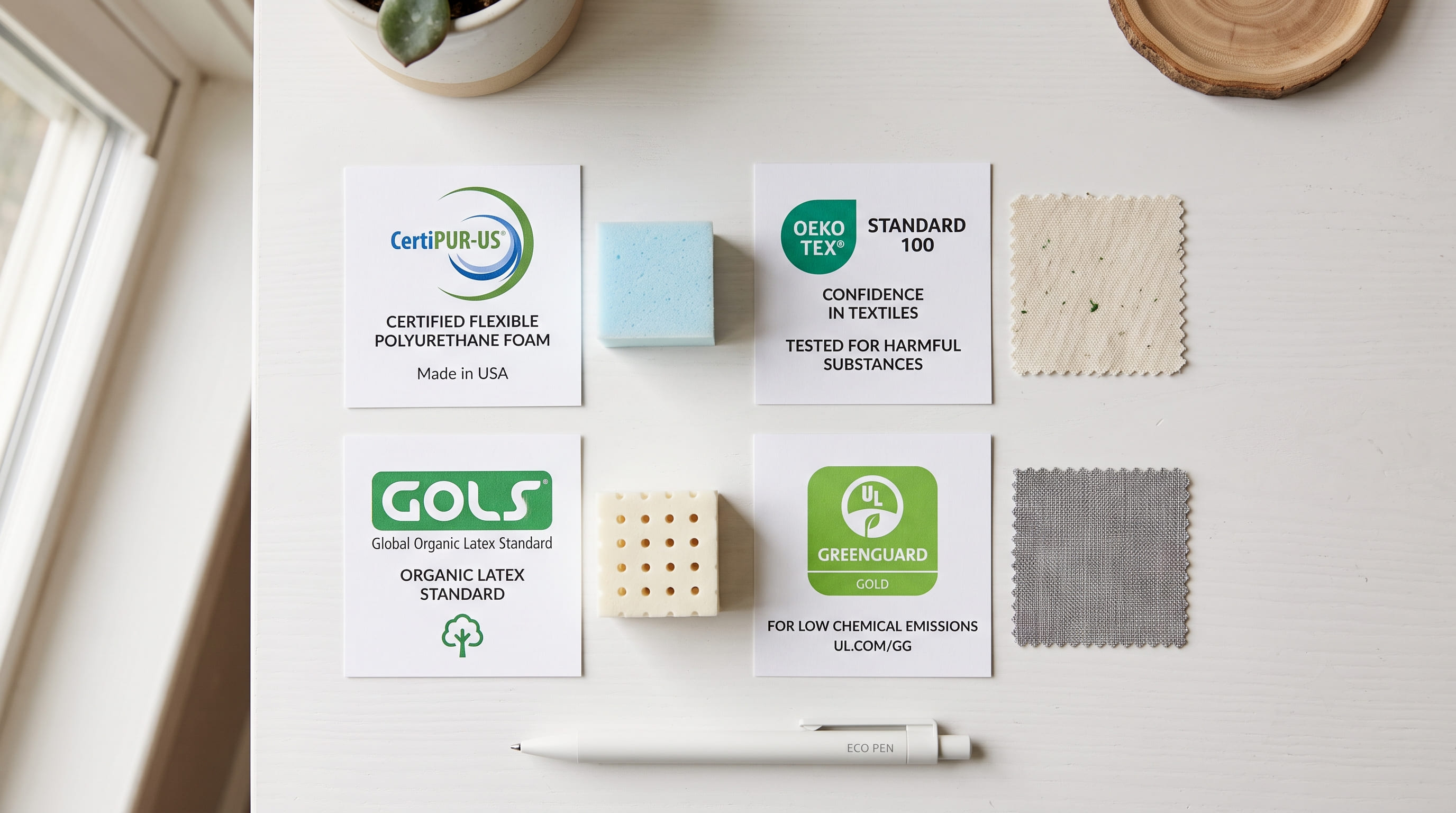
| Certification | Scope | What It Tests |
|---|---|---|
| CertiPUR-US | Polyurethane foam only | Chemical content + VOC emissions |
| OEKO-TEX Standard 100 | All textile components | 100+ harmful substances across entire product |
| GOLS | Natural latex only | Organic content + chemical limits for latex |
| GOTS | Organic textiles | Organic fibre content + processing standards |
| GREENGUARD Gold | Finished product | VOC emissions from entire assembled product |
GREENGUARD Gold is worth noting because it tests the finished mattress (or product), not just one material inside it. A mattress with GREENGUARD Gold certification has been tested for VOC emissions as a complete assembled unit — a higher bar than CertiPUR-US for the specific question of "what is this mattress emitting into my bedroom air?"
OEKO-TEX Standard 100 tests all components — foam, fabric, fill, dyes, accessories — against 100+ regulated substances. It is broader than CertiPUR-US but applies at the component level, not the assembled product level.
Neither is strictly superior. They measure different things. The most thoroughly vetted mattresses carry multiple certifications across different components.
Why Mattress Brands Use CertiPUR-US
From a manufacturer perspective, CertiPUR-US serves several functions:
Differentiation: In a market where consumers are increasingly asking about chemical content, the seal provides a credible, third-party-verified answer that "we checked."
Retail access: Many major retailers — including Amazon, Casper, Purple, and others — require CertiPUR-US certification for foam mattresses sold on their platforms. The certification is effectively a market-access requirement for brands selling through major US retail channels.
Legal risk reduction: By requiring independent testing and maintaining a paper trail of results, brands protect themselves against liability claims related to chemical content.
For consumers, the key takeaway is that the certification represents a real, third-party-verified baseline — not a marketing badge that any brand can print.
Which Mattresses We've Tested Are CertiPUR-US Certified
All of the foam mattresses in our tested lineup carry CertiPUR-US certification on their foam components:
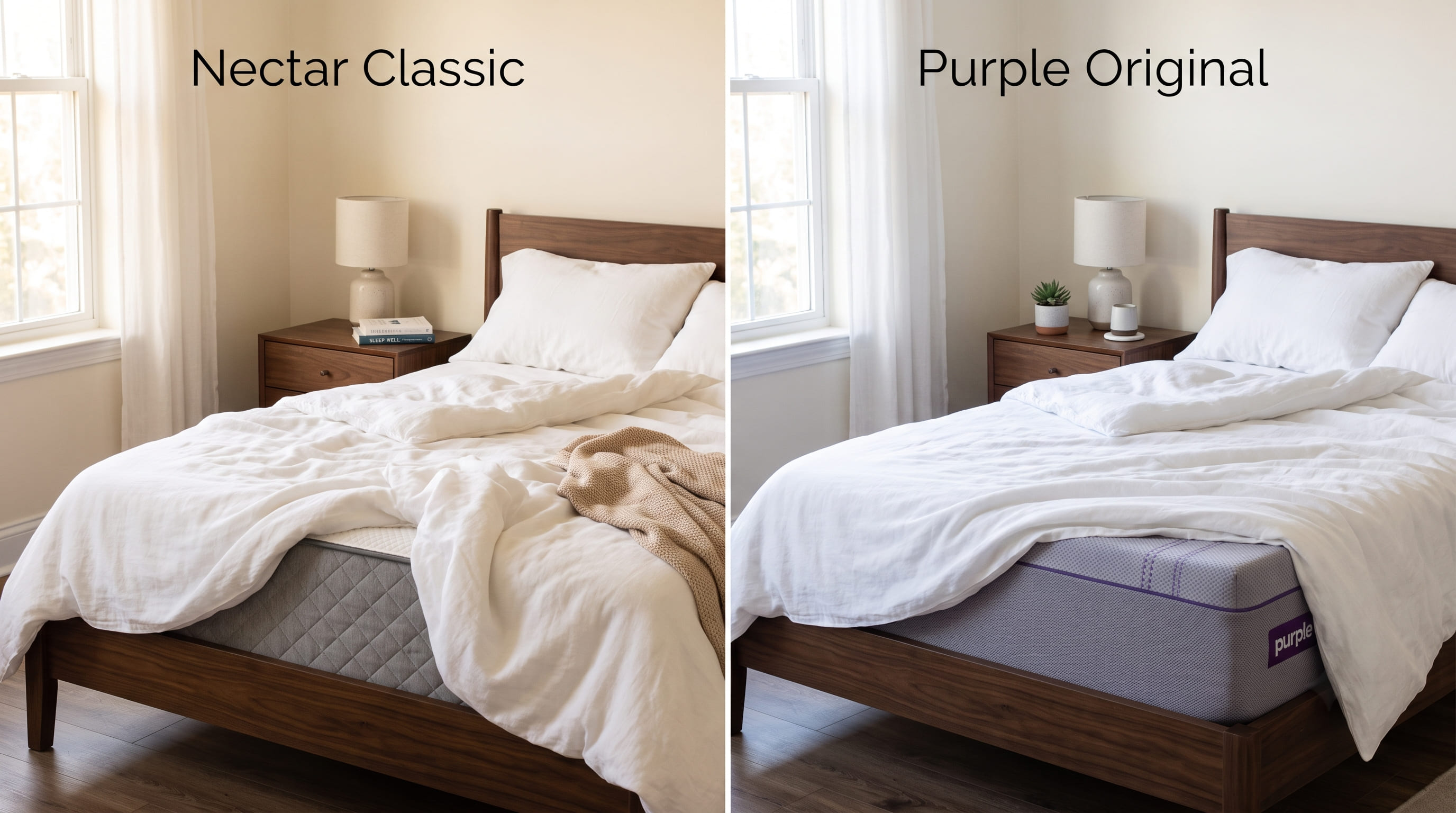
- Nectar Classic Mattress — five-layer all-foam construction, all layers CertiPUR-US certified, strong pressure relief at $899 (king)
- DreamCloud Classic Mattress — hybrid with CertiPUR-US certified gel memory foam comfort layer, excellent edge support at $649–$699
- Zinus Green Tea Mattress — all-foam construction with CertiPUR-US certified foam infused with green tea extract and charcoal for odour control at $279–$299
- Sweetnight CoolNest Mattress — hybrid with CertiPUR-US certified cooling foam layers at $545–$555
- Vibe Quilted Hybrid Mattress — pocketed coil hybrid with CertiPUR-US certified foam comfort layers at $349–$399
- Purple Original Mattress — GelFlex Grid layer is not polyurethane foam, but any foam components carry CertiPUR-US at $1,549–$1,599
Practical Advice: How to Use This When Buying
When shopping for a mattress and evaluating certifications, here is a practical framework:

Step 1: Verify the claim. Do not rely on a brand's website alone. Go to the CertiPUR-US website and search the certified foam database for the manufacturer. If the foam brand or mattress company is not listed, the claim is unverified.
Step 2: Ask what else is certified. CertiPUR-US covers the foam. What about the fabric cover? The flame barrier? If the brand cannot provide certifications for those components (OEKO-TEX 100 or similar), understand that your exposure may still include uncertified materials.
Step 3: Air it out regardless. Even CertiPUR-US certified foam will off-gas some VOCs when new — just within defined limits. Unbox your new mattress in a well-ventilated room, let it air for 24–72 hours before sleeping on it, and keep the bedroom ventilated during this period. This applies to all new foam products.
Step 4: Consider your household context. For most adults, CertiPUR-US foam is a reasonable and sufficient baseline. If you have infants sleeping in the room, family members with chemical sensitivities, or personal concerns about petrochemical-derived products, you may want to look at mattresses with GREENGUARD Gold certification (full product VOC testing) or natural latex options certified to GOLS.
Step 5: Do not pay a premium solely for the label. CertiPUR-US is a baseline standard that virtually all reputable mattress brands meet. It distinguishes certified foam from uncertified foam — it does not distinguish a $2,000 mattress from a $400 one. Budget-friendly options like the Zinus Green Tea carry the same certification as premium brands.
Frequently Asked Questions
Is CertiPUR-US foam safe for babies and children?
CertiPUR-US certified foam meets established safety thresholds for the chemicals it tests. However, for infant sleep environments, many paediatricians and safety organisations recommend additional caution. Consider GREENGUARD Gold certified products for cribs and children's mattresses, as this certification specifically tests the finished product at VOC levels set for sensitive populations.
Does CertiPUR-US cover memory foam specifically?
Yes. Memory foam is a type of viscoelastic polyurethane foam — it is fully within the scope of CertiPUR-US. Any memory foam carrying the CertiPUR-US seal has been tested against all parameters in the standard.
How long does off-gassing last in CertiPUR-US certified foam?
Most people notice the chemical smell of new foam dissipating within 24–72 hours in a ventilated room. The VOC emissions threshold in the CertiPUR-US standard (0.5 ppm TVOC) is set at a level considered safe for normal residential use, including sleeping. Airing the mattress before use accelerates the dissipation.
Can I verify a mattress brand's certification myself?
Yes. The CertiPUR-US website maintains a public list of certified foam manufacturers. Note that the certification is on the foam manufacturer, not always the mattress brand — a mattress brand may purchase certified foam from a supplier and it is the supplier that appears in the database.
Is CertiPUR-US recognised internationally?
CertiPUR-US is a North American program. The European equivalent is CertiPUR (without the "US"), administered separately under the European Isocyanate Technology Centre. The standards are similar but independently administered. OEKO-TEX Standard 100, which is European in origin, is widely recognised internationally for broader chemical testing of textiles and bedding components.
If a mattress has no CertiPUR-US label, should I avoid it?
Not necessarily. Some reputable manufacturers — particularly those producing natural latex mattresses — do not use polyurethane foam at all and therefore do not have CertiPUR-US certification. What the absence of the label does mean is that any polyurethane foam in the mattress has not been independently verified against this standard. Ask the brand directly what independent testing their foam has undergone.
Bottom Line
CertiPUR-US is a credible, third-party-verified certification for polyurethane foam. It means the foam in your mattress has been independently tested and confirmed to be free of a specific list of harmful chemicals — including prohibited flame retardants, heavy metals, phthalates, and formaldehyde — and that it emits VOCs below defined thresholds.
It is not a whole-mattress certification, not an organic certification, and not a guarantee that every component in your mattress has been tested. But for the foam — the material you will be closest to for 8 hours every night — it represents a meaningful, verifiable baseline that distinguishes responsible manufacturers from those who have never had their foam tested at all.
For most buyers, a mattress with CertiPUR-US certified foam, a reputable brand, and strong independent review scores is the right call. Use the certification as a filter — a minimum requirement — rather than a premium feature, and focus the rest of your evaluation on performance, firmness, and value.
Dr. Sarah Mitchell is a certified sleep scientist and the lead mattress reviewer at Mattress Guide Pro. She oversees our 8-week testing protocol and has personally evaluated more than 50 mattresses using Tekscan pressure mapping and FLIR thermal imaging.
Ready to shop? Browse our expert mattress reviews to find your perfect match.