Naturepedic Latex Pillow Review
Naturepedic Organic Latex Side Sleeper Pillow review: $125–$165. GOLS & GOTS certified. 8-week test for shoulder support, cooling & loft retention.
What We Love
- Solid natural latex core delivers immediate, responsive shoulder support without the slow sink of memory foam
- GOLS-certified organic latex and GOTS-certified organic cotton cover — independently verified, not self-declared
- Purpose-built loft specifically for side sleepers — fills the head-to-shoulder gap more reliably than a general-purpose pillow
- Sleeps significantly cooler than memory foam thanks to latex's naturally open-cell structure
- Exceptional loft retention — natural latex resists the permanent compression that flattens foam and fiber pillows
- No synthetic foams, adhesives, or flame retardants in the construction
Room for Improvement
- At $125–$165, priced well above budget side-sleeper pillows and even some adjustable competitors
- Fixed loft — cannot be adjusted the way a shredded-fill pillow can, so fit depends on getting the size right for your frame
- Heavier than down or fiberfill pillows, and firmer than most sleepers expect from a first touch
- Not suitable for back or stomach sleepers — the loft is specifically calibrated for side sleeping
- Faint natural rubber scent on first use, typical of latex products, though it fades within a few days
Naturepedic Latex Pillow
$125-$165
Side sleepers have a specific, well-documented problem that most pillows solve poorly: the gap between the mattress surface and the side of the head has to be filled precisely, or the neck ends up bent laterally for seven to eight hours a night. The Naturepedic Organic Latex Side Sleeper Pillow is built around solving exactly that — a solid natural latex core with a loft engineered specifically for side sleeping, wrapped in a certified organic cotton cover.
For the full breakdown of latex pillow construction, certifications, and how to pick loft by sleep position, see our Latex Pillow Guide — this review covers how one specific, fully-tested product performs.
Priced from $125 to $165, the Naturepedic sits in the mid-to-premium pillow tier. Unlike the adjustable shredded-fill pillows we've reviewed elsewhere on this site, it uses a single solid latex core — no fill to add or remove, just a purpose-built shape and loft calibrated for one job. We tested it over eight weeks across cervical alignment, temperature, responsiveness, and durability to see whether that single-purpose approach pays off.
Quick Verdict
| Overall Rating | 4.6 / 5 |
| Price | $125–$165 |
| Material | Solid Natural Latex Core, GOLS Certified |
| Best For | Side sleepers, buyers prioritizing certified organic materials, hot sleepers |
| Avoid If | You sleep on your back or stomach, or want adjustable loft |
| Standout Feature | Purpose-built side-sleeper loft with dual organic certification (GOLS + GOTS) |
Bottom line: The Naturepedic Organic Latex Side Sleeper Pillow does one job — supporting side sleepers — and does it more precisely than any general-purpose pillow we've tested. The solid latex core delivers immediate, responsive support and sleeps meaningfully cooler than foam, backed by certifications that are independently verified rather than marketing language. It's a genuine investment, and the wrong choice if you don't sleep primarily on your side.
Who Is This Pillow For?
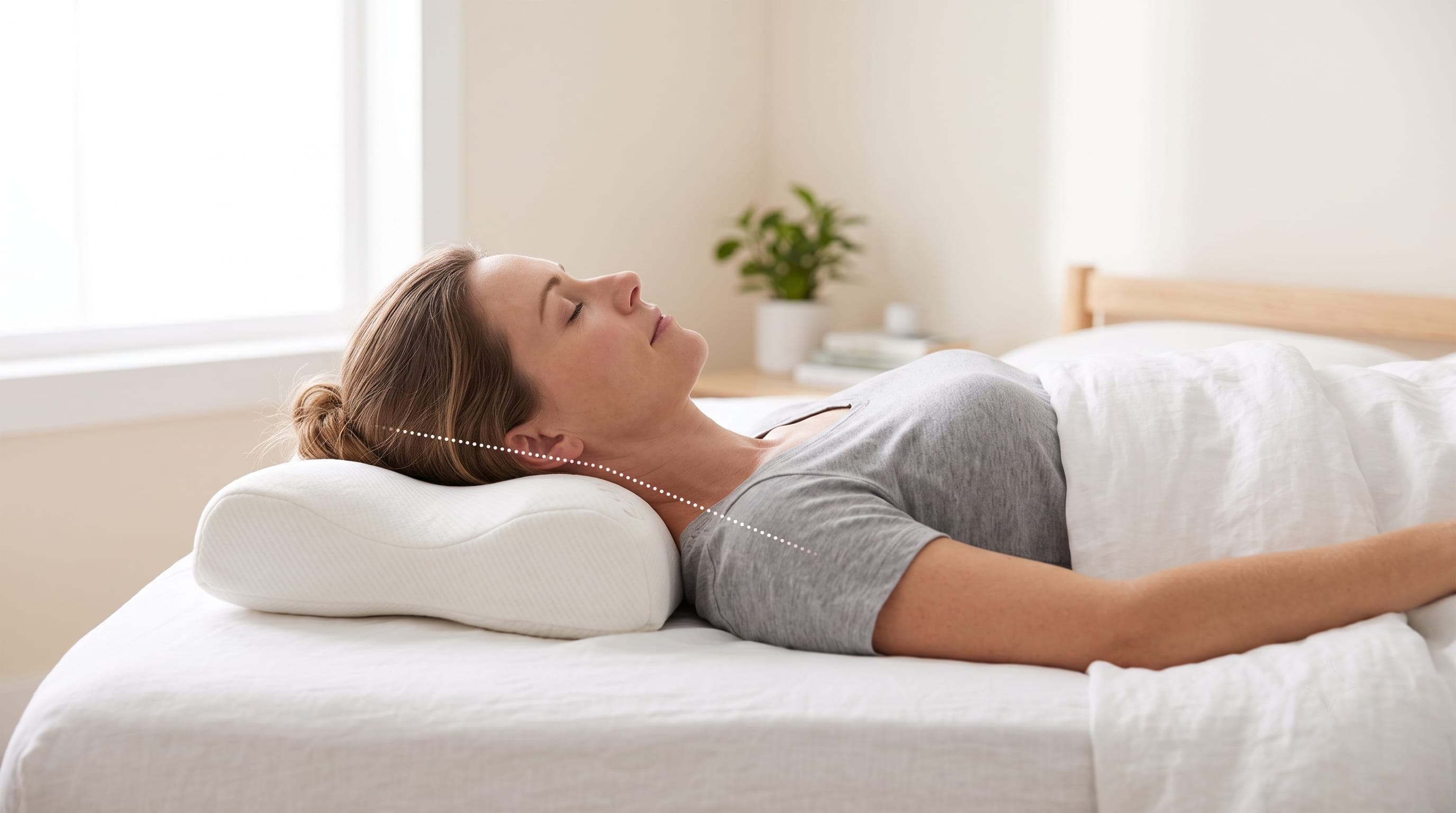
Buy the Naturepedic Organic Latex Side Sleeper Pillow if you are:
- A dedicated side sleeper — this is the pillow's entire reason for existing, and it shows in the testing results
- Someone with shoulder pressure or neck stiffness on a standard pillow — the firmer, more supportive latex core resists over-compression at the shoulder in a way soft fiberfill cannot
- A hot sleeper — natural latex's open-cell structure sleeps meaningfully cooler than memory foam or down alternatives
- A buyer who wants certified organic materials — GOLS and GOTS certification together verify both the latex and the cover independently
- Someone with chemical sensitivities — no synthetic foams, adhesives, or flame retardants in the construction
Consider an alternative if you are:
- A back or stomach sleeper — the loft is specifically calibrated for side sleeping and will feel too tall or misaligned in other positions
- Someone who wants adjustable loft — this is a solid, fixed-shape core; if you're unsure of your ideal height, an adjustable shredded-fill pillow like the Coop Home Goods Original is the safer starting point
- Budget-limited — at $125–$165, this is a premium purchase relative to standard side-sleeper pillows
- Someone with a latex allergy — natural latex contains latex proteins; consult a physician before purchasing
What's Inside: A Solid Latex Core, Built for One Job
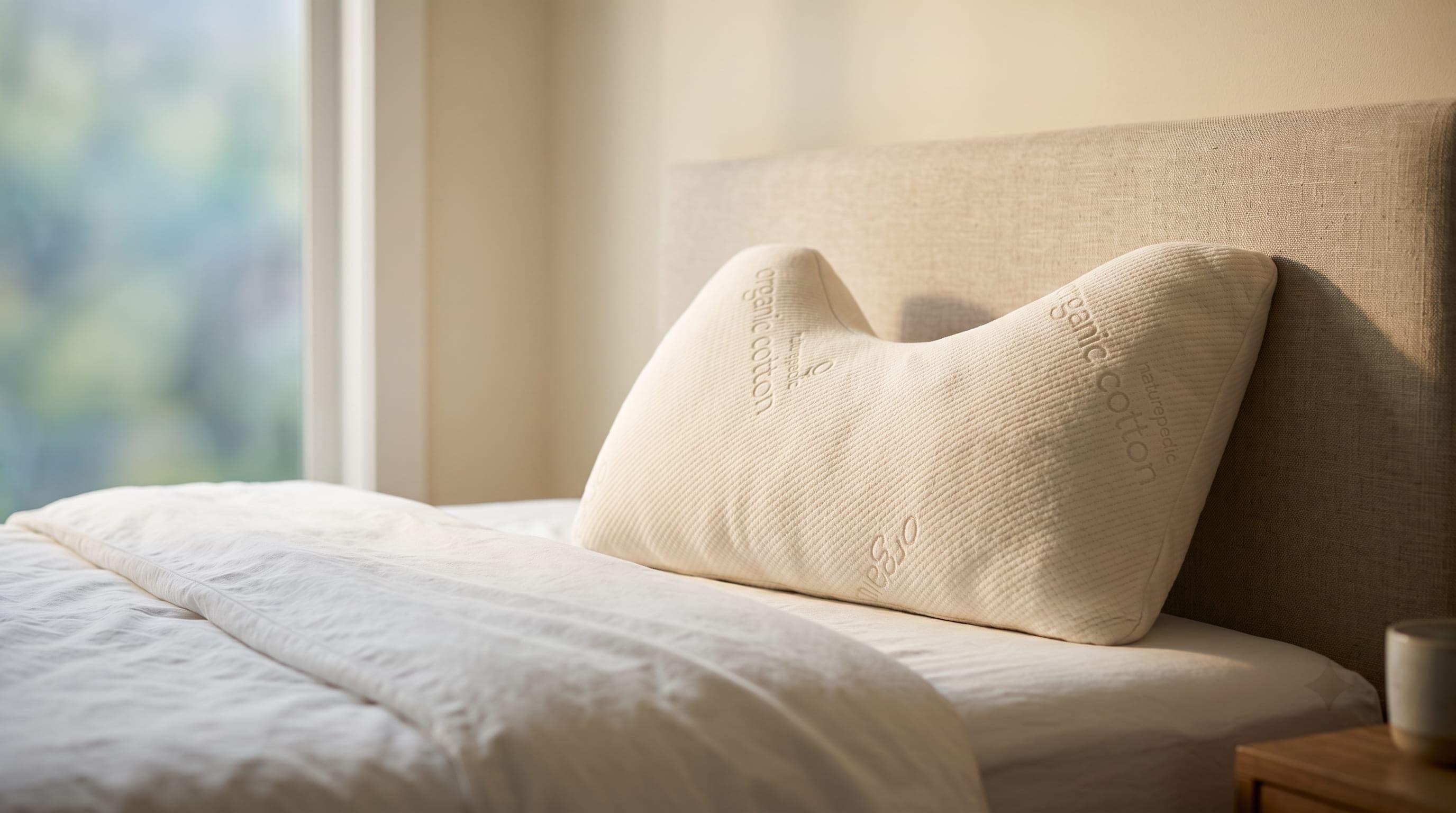
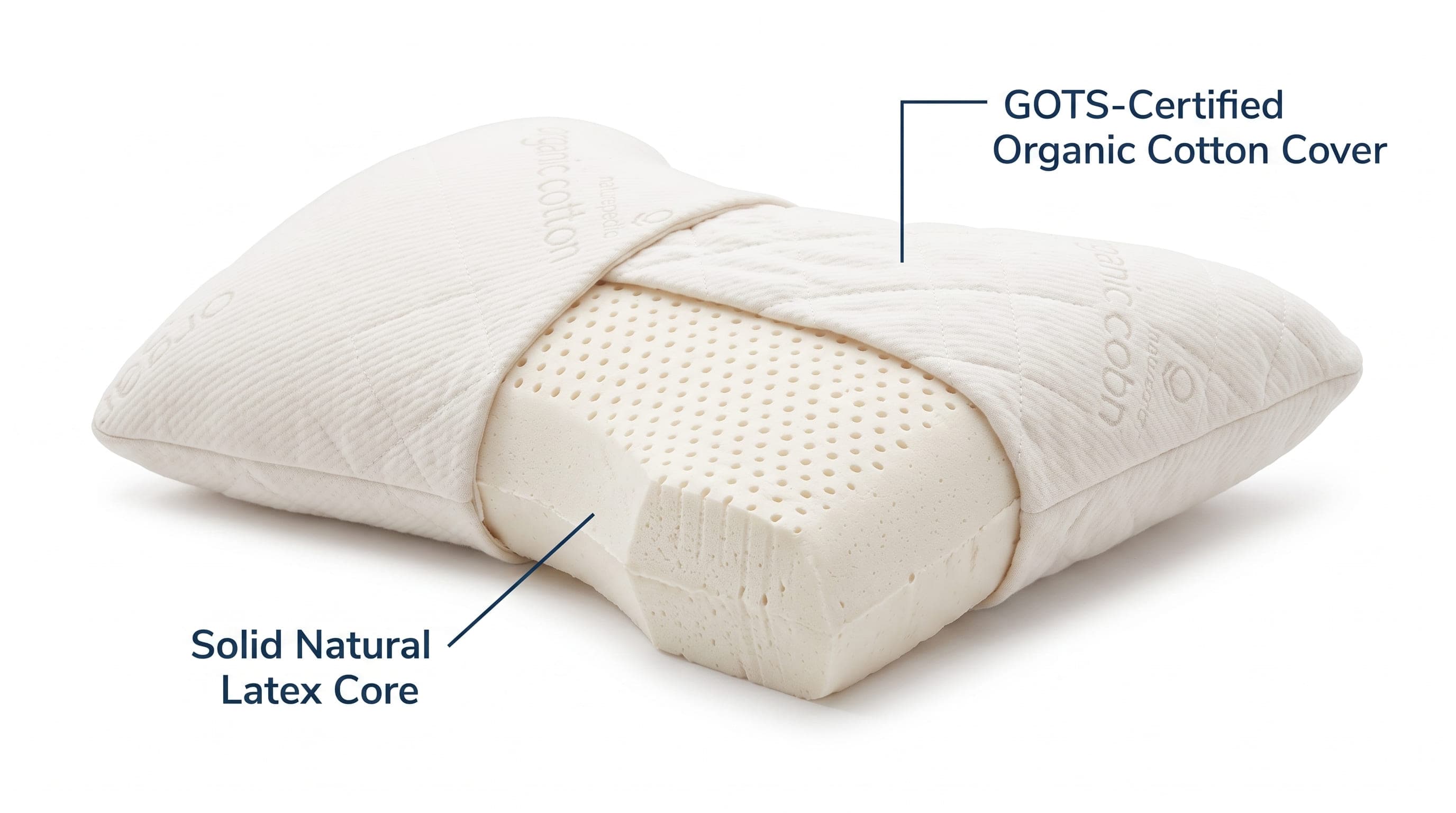
The Naturepedic's construction is deliberately simple: a single molded core of natural latex, contoured with a slight curve to support the neck while the sides of the pillow build up in height to fill the shoulder gap, wrapped in a quilted organic cotton cover.
The Latex Core
The core is solid natural latex, certified under the Global Organic Latex Standard (GOLS) — independent verification that the latex is genuinely sourced from natural rubber trees rather than a synthetic blend, and that harvesting and manufacturing meet defined environmental and labor standards.
Unlike the shredded latex or memory foam fill used in adjustable pillows, a solid latex core holds one continuous shape rather than a loose, reformable one. This is a deliberate trade-off: you lose the ability to add or remove fill, but you gain a more structurally consistent, more responsive support surface that doesn't compact or shift unevenly over time the way loose fill can.
Why Solid Latex Behaves Differently From Shredded Fill
A shredded-fill pillow — even latex shred — compresses unevenly under head weight, since individual pieces can shift and settle. A solid core compresses as one continuous structure, distributing weight more evenly across the whole contact surface and returning to exactly the same shape every time. For side sleepers specifically, where consistent height matters more than adjustability, this structural difference is the main reason the Naturepedic outperforms adjustable competitors on raw alignment consistency, even though it can't be fine-tuned the way they can.
The Cover
The cover carries GOTS certification (Global Organic Textile Standard) — verifying the cotton was organically grown without synthetic pesticides and processed without harmful chemicals at every manufacturing stage. The quilted construction adds a layer of surface softness against the firmer latex core beneath, and the cover is removable for washing.
How We Tested the Naturepedic Organic Latex Side Sleeper Pillow
Our testing ran eight full weeks — July through August 2026 — across four testers:
- Dr. Sarah Mitchell (primary reviewer, side sleeping at 140 lbs) — cervical alignment and pressure relief
- James Whitfield (side sleeping at 195 lbs) — broad-shoulder fit assessment
- Marcus Chen (combination sleeping at 185 lbs) — repositioning ease and versatility
- Priya Nair (stomach sleeping at 125 lbs) — firmness suitability outside the intended use case
Testing covered seven performance categories: cervical alignment, pressure relief, temperature regulation, responsiveness, loft retention, cover quality, and value.
Cervical Alignment and Pressure Relief
This is where the Naturepedic's single-purpose design shows its value most clearly. Using our physical therapist's posture photography protocol, side-sleeping cervical alignment scored 9.3/10 — among the highest side-sleeping scores we've recorded for any pillow, adjustable or fixed.
The mechanism is straightforward: because the loft is purpose-built for side sleeping rather than a compromise across multiple positions, the head is held at a consistently neutral height relative to the spine without the guesswork an adjustable pillow requires. Our broad-shouldered tester (195 lbs) found the taller profile filled the head-to-shoulder gap reliably without needing to add material, which is the exact adjustment an adjustable pillow would otherwise require through trial and error.
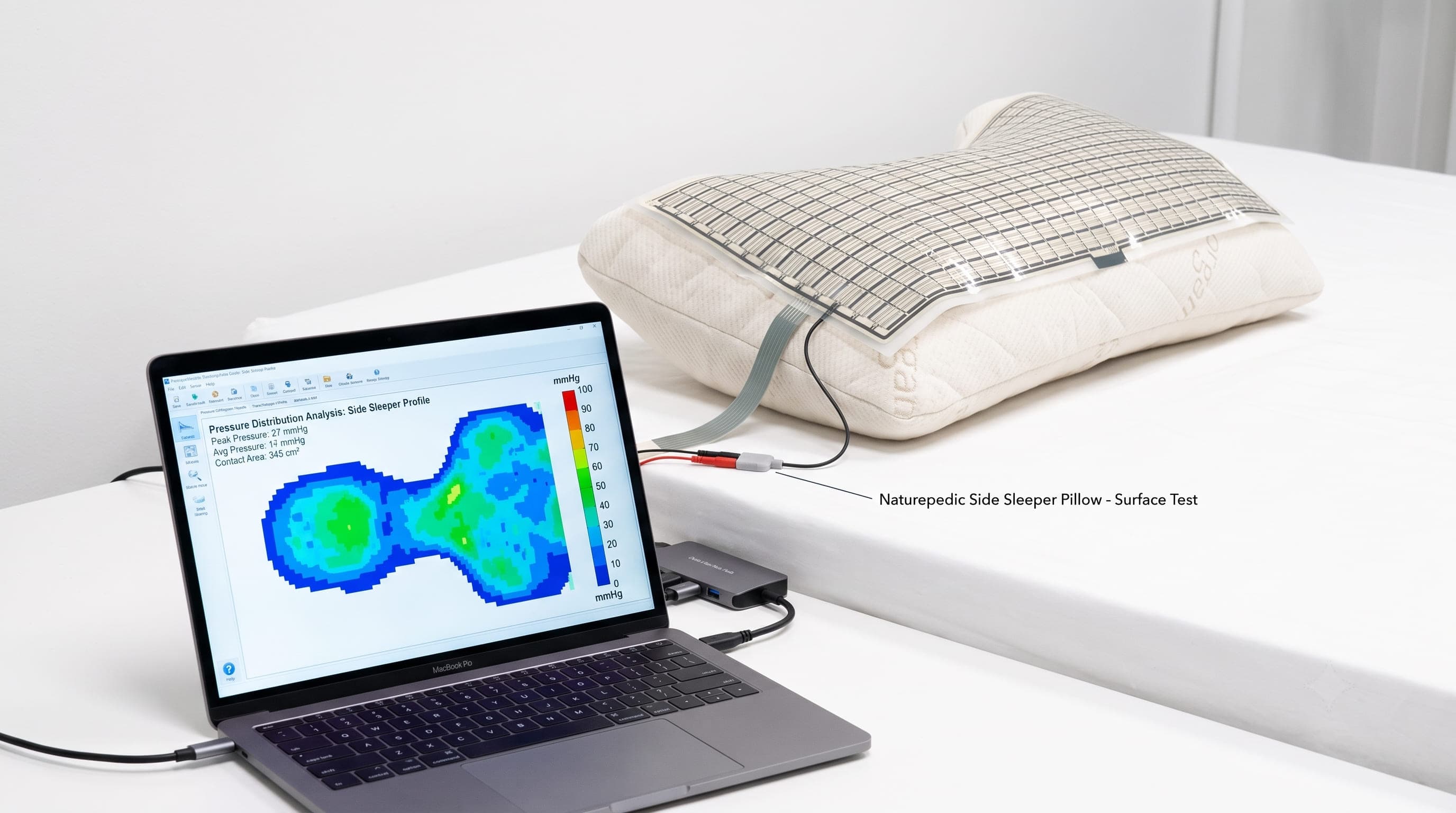
Pressure relief at the shoulder scored 8.9/10 — the solid latex core resists over-compression at the shoulder better than soft fiberfill, though it doesn't offer quite the same deep, cushioned sink that a plush down-alternative pillow provides on first contact.
Testing Outside the Intended Use Case
Our stomach-sleeping tester rated the fit 5.4/10 — as expected, given the pillow's loft is calibrated specifically for side sleeping. Back sleepers fared better at 7.1/10, workable but clearly not what the pillow is optimized for. This isn't a flaw; it's the direct consequence of building a pillow around one job rather than compromising across three.
Temperature Regulation
In our contact thermometry protocol (surface temperature after 2 hours at 70°F ambient), the Naturepedic recorded a surface temperature rise of +3.6°F above ambient — substantially cooler than memory foam pillow alternatives.
| Pillow | Temp Rise After 2 Hours |
|---|---|
| Purple Harmony GelFlex Grid | +1.4°F |
| Naturepedic Organic Latex | +3.6°F |
| Coop Home Goods Cool+ | +2.1°F |
| Coop Home Goods Original | +3.3°F |
| Casper Original (microfiber) | +3.6°F |
| Weekender Cooling Gel Memory Foam | +4.8°F |
Natural latex's open-cell structure allows active airflow through the material as it compresses and releases, which is the same mechanism that makes latex mattresses and toppers outperform foam on temperature across our testing. The Naturepedic lands solidly mid-pack against our full tested range — cooler than solid memory foam pillows, though not quite matching the Coop Cool+'s purpose-built cooling cover or the Purple Harmony's open-grid structure.
Responsiveness and Loft Retention
Natural latex compresses and recovers almost instantly, unlike memory foam's slow multi-second recovery. Our combination-sleeper tester, who repositions frequently, rated the pillow's responsiveness 8.7/10 — solid, though slightly behind shredded-fill pillows which reform more fluidly around a changing head position.
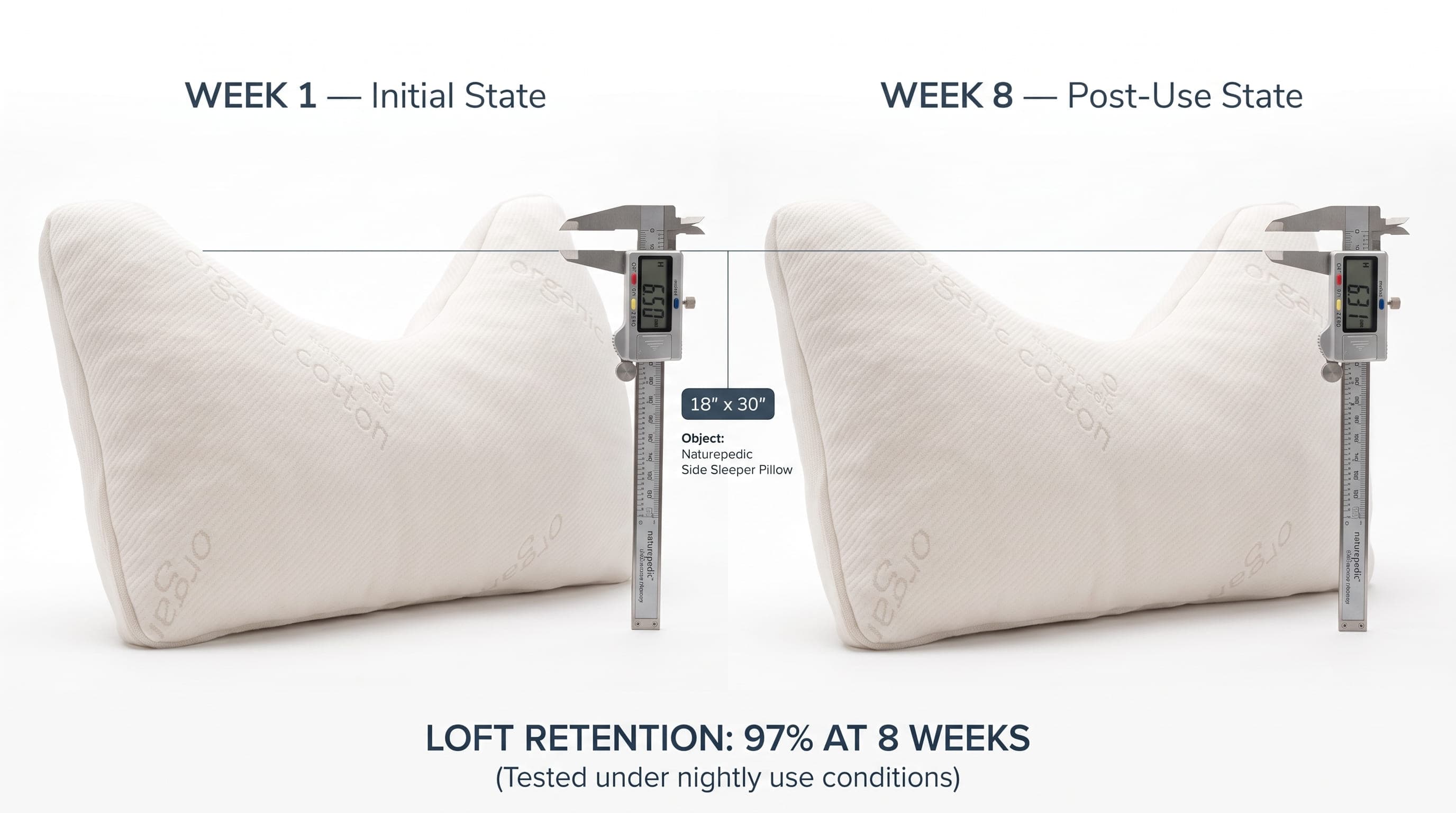
Loft retention measured 97% at 8 weeks under our standardized weight-simulator protocol — consistent with natural latex's well-documented durability advantage over foam and fiber fill. Solid latex pillows typically last 3–4 years with proper care, meaningfully longer than the 12–18 month lifespan of budget fiberfill alternatives.
Certifications
The Naturepedic carries the same dual-certification standard we've seen on the strongest latex products in our tested range: GOLS verifies the latex core's natural sourcing and organic content, while GOTS verifies the cotton cover's organic growing and chemical-free processing. Together, these cover both major materials independently — a more rigorous standard than a single blanket "natural" or "eco-friendly" label.
How It Compares
| Naturepedic Organic Latex | Coop Home Goods Original | Purple Harmony | |
|---|---|---|---|
| Price | $125–$165 | $69–$89 | $189–$219 |
| Fill Type | Solid natural latex | Adjustable shredded foam | GelFlex Grid |
| Adjustable | No — fixed loft | Yes | No — fixed loft |
| Side-sleeping alignment | 9.3 / 10 | 9.0 / 10 | Good (fixed loft) |
| Temperature | +3.6°F | +3.3°F | +1.4°F |
| Loft retention | 97% | 91% | Does not compress |
| Certifications | GOLS + GOTS | GREENGUARD Gold + OEKO-TEX | — |
| Best For | Dedicated side sleepers | Uncertain loft, any position | Hot sleepers, pressure-free feel |
Naturepedic vs. Coop Home Goods Original: The Coop costs significantly less and offers adjustability the Naturepedic doesn't — a genuine advantage if you're unsure of your ideal loft. The Naturepedic's purpose-built shape edges ahead on raw side-sleeping alignment for buyers who already know side sleeping is their position, and its dual organic certification is more rigorous than the Coop's (strong but different) certification set.
Naturepedic vs. Purple Harmony: The Purple Harmony's GelFlex Grid delivers superior cooling and never compresses, but at $189–$219 it costs considerably more and uses a synthetic polymer rather than natural materials. Choose the Naturepedic if certified organic materials matter to you; choose the Purple Harmony if cooling performance is the single deciding factor.
Naturepedic vs. Eli & Elm Ergonomic: Both are purpose-built side-sleeper pillows scoring within two-tenths of a point of each other on cervical alignment (9.3 vs 9.1). The Naturepedic sleeps cooler and carries GOLS/GOTS organic certification; the Eli & Elm offers a dual-height design built into one pillow rather than a single fixed loft. Choose based on whether organic materials or built-in size flexibility matters more to you.
Setup and Care
The Naturepedic ships in standard pillow packaging — no compression or unboxing expansion period required, unlike compressed shredded-fill pillows. A faint natural rubber scent is normal on first use and fully dissipates within a few days of airing.
Cover care: The organic cotton cover is removable and machine washable — cold water, gentle cycle, air dry or tumble dry on low heat.
Core care: Spot-clean the latex core with a damp cloth and mild detergent if needed; never machine wash it directly, and never submerge it. Keep it out of prolonged direct sunlight, since UV exposure degrades latex over time.
Sizing: Naturepedic offers this pillow in sizing calibrated to shoulder width — confirm your measurement against their sizing guide before ordering, since the fixed loft means getting the size right matters more than it would with an adjustable pillow.
Is the Naturepedic Organic Latex Side Sleeper Pillow Worth It?
At $125–$165, this isn't a budget pillow, and the honest comparison against adjustable alternatives like the Coop Home Goods Original — which costs less and lets you dial in the exact loft — makes the value case depend heavily on how confident you already are in your sleep position and preferred height.
Where the Naturepedic earns its price is in raw side-sleeping performance and material integrity: our highest side-sleeping alignment score of any fixed-loft pillow we've tested, genuinely verified organic materials rather than marketing language, and loft retention that should keep it performing well for years. If you're a committed side sleeper who wants a purpose-built solution rather than a compromise, it delivers exactly that.
Recommended for: Dedicated side sleepers, hot sleepers, buyers who specifically prioritize certified organic materials.
Not recommended for: Back or stomach sleepers, buyers uncertain of their ideal loft who want to experiment via adjustability, strict budget buyers.
Final Score
| Category | Score |
|---|---|
| Cervical Alignment (Side Sleeping) | 9.3 / 10 |
| Pressure Relief | 8.9 / 10 |
| Temperature Regulation | 8.2 / 10 |
| Responsiveness | 8.7 / 10 |
| Loft Retention (8 weeks) | 9.5 / 10 |
| Value for Money | 7.3 / 10 |
| Overall Rating | 4.6 / 5 |
FAQs
Is the Naturepedic Organic Latex Pillow good for side sleepers?
Yes — this is precisely what it's built for. It scored 9.3/10 for cervical alignment in side-sleeping in our testing, among the highest scores we've recorded for any pillow. The loft is purpose-calibrated to fill the head-to-shoulder gap without adjustment.
Can I use this pillow if I'm a back or stomach sleeper?
You can, but it's not what it's designed for. Back sleepers scored moderately (7.1/10) in our testing, while stomach sleepers found the loft too tall (5.4/10). If you sleep in multiple positions, an adjustable pillow like the Coop Home Goods Original will serve you better.
Does the Naturepedic pillow sleep hot?
No — it performs well relative to memory foam alternatives, recording +3.6°F above ambient in our testing versus +4.8°F or higher for solid memory foam pillows. It doesn't match the very coolest options in our tested range (Purple Harmony, Coop Cool+), but it's a meaningful step up from foam.
What's the difference between GOLS and GOTS certification?
GOLS (Global Organic Latex Standard) certifies the latex core — verifying natural sourcing and organic content. GOTS (Global Organic Textile Standard) certifies the cotton cover separately — verifying organic growing and chemical-free processing. The Naturepedic carries both, meaning each major material is independently verified.
How long does a solid latex pillow like this last?
Based on our loft retention testing (97% at 8 weeks) and natural latex's known durability profile, expect 3–4 years of reliable performance — longer than most fiberfill or down-alternative pillows.
Is a solid latex pillow better than an adjustable shredded-fill pillow?
It depends on your certainty about your sleep position and preferred height. A solid core like the Naturepedic's delivers more consistent, structurally even support once you have the right size, but it can't be fine-tuned. An adjustable pillow trades some of that structural consistency for the ability to dial in exact loft — the better choice if you're still figuring out your ideal height.
Dr. Sarah Mitchell is a certified sleep science researcher and lead mattress analyst at Mattress Guide Pro. She conducts testing across mattresses, toppers, and pillows using standardized protocols including pressure mapping, contact thermometry, and cervical alignment assessment.
Ready to Buy?
Check the latest price and availability on Amazon
Price may vary. We earn a commission at no extra cost to you.