Firm vs Soft Mattress: 2026
Firm vs soft mattress: which is actually better for your sleep position, body weight, and back pain? Real pressure mapping data compared for 2026.
"Should I buy a firm or soft mattress?" is one of the most common — and most poorly answered — questions in mattress shopping. The honest answer is that neither is universally better. The right firmness depends entirely on your sleep position, body weight, and where in your body you experience pressure or pain. This guide breaks down exactly when each direction is the right call, using our own pressure mapping data rather than generic advice.
What "Firm" and "Soft" Actually Mean
Mattress firmness is typically rated on a 1–10 scale, where 1 is the softest and 10 is the firmest. The scale is subjective across brands — one company's "medium" can feel like another's "medium-firm" — but the practical categories break down roughly like this:
| Rating | Category | Feel |
|---|---|---|
| 1–3 | Soft | Deep sinkage, body contours significantly into the surface |
| 4–5 | Medium-Soft | Noticeable give with moderate support underneath |
| 6–7 | Medium-Firm | Minimal sinkage, surface pushes back more than it conforms |
| 8–10 | Firm | Very little give, body rests on top of the surface rather than in it |
The critical variable most buyers miss: firmness is not just about the surface feel — it is a biomechanical decision that depends on how your body distributes weight in your primary sleep position.
What a Soft Mattress Actually Does
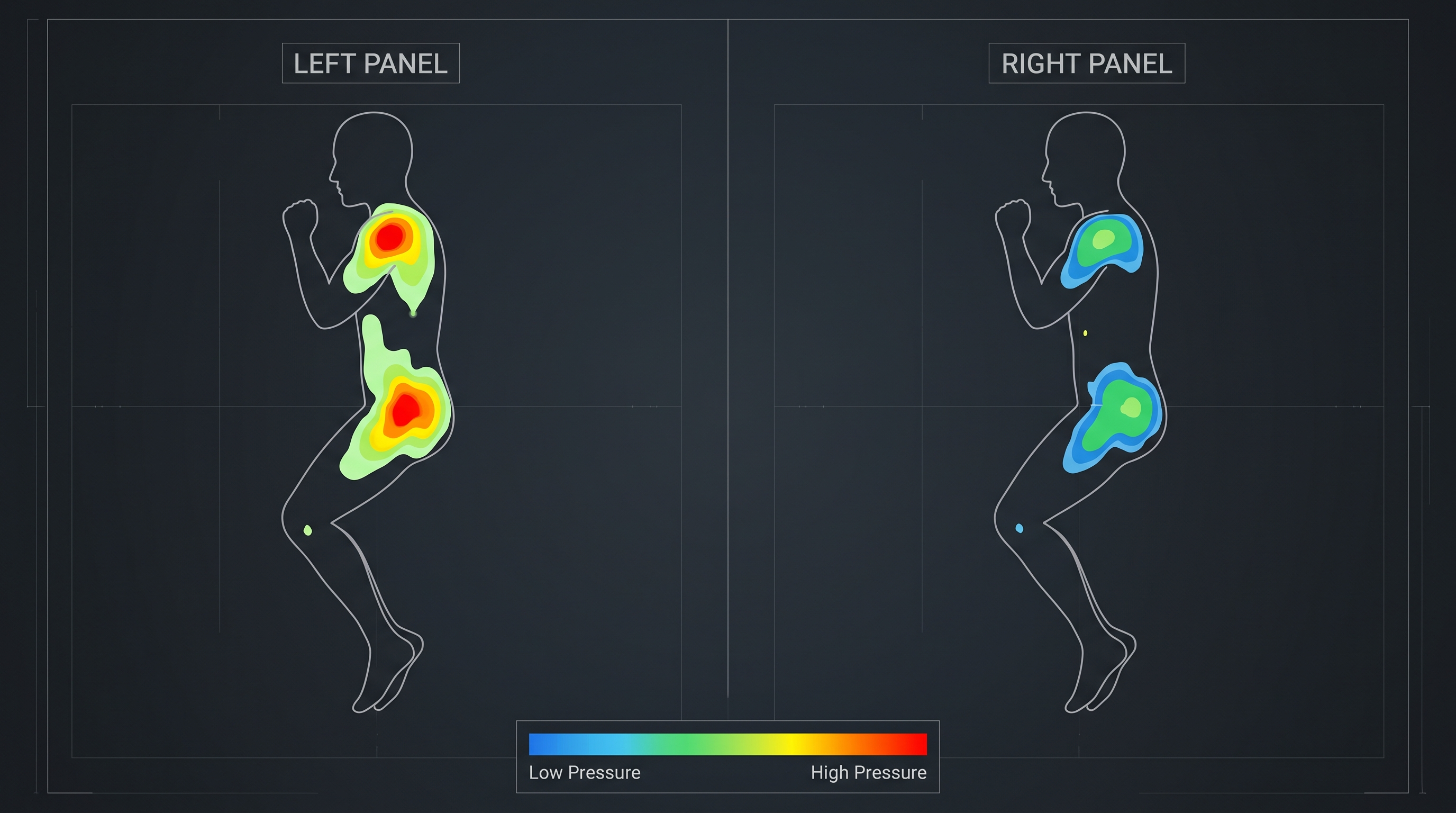
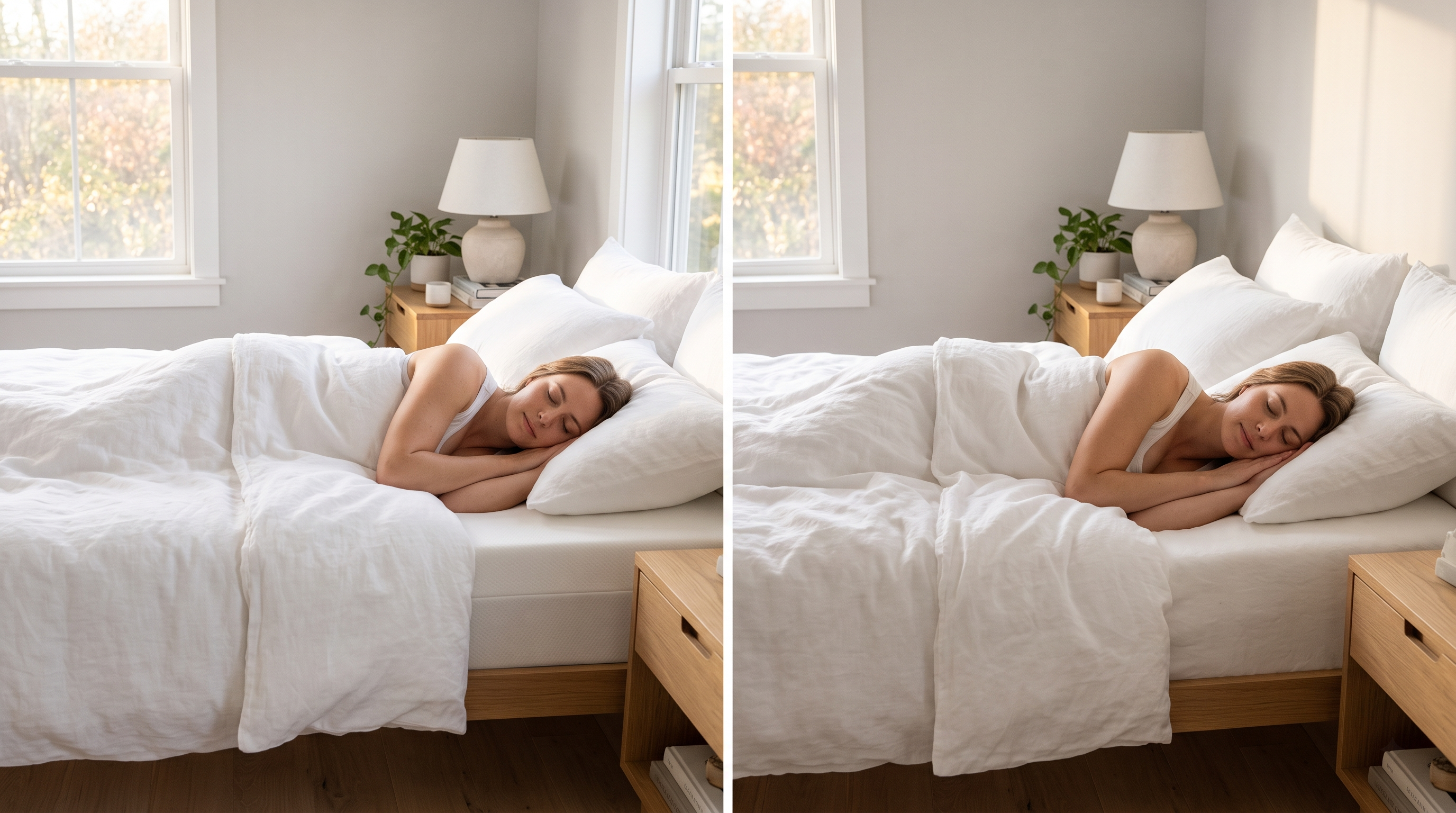
A soft mattress allows the heaviest parts of your body — typically the shoulders and hips — to sink deeper into the comfort layer. This distributes your body weight across a wider surface area, which reduces peak pressure at any single contact point.
Where a soft mattress genuinely helps:
- Side sleepers — the shoulder and hip need to sink in enough to keep the spine in a straight horizontal line. Without adequate sinkage, the spine bows and creates pressure points.
- Lighter-frame sleepers (under 130 lbs) — a lighter body does not compress a firm surface enough to relieve pressure naturally, so a softer surface is needed to achieve the same effect.
- Sleepers with shoulder or hip pressure sensitivity — conditions like arthritis or bursitis benefit from the reduced peak pressure a soft surface provides.
Where a soft mattress causes problems:
- Stomach sleepers — a soft surface lets the hips sink deeper than the chest, forcing the lower back into hyperextension.
- Heavier sleepers (over 230 lbs) — a soft comfort layer bottoms out under higher body weight, effectively becoming a firm surface anyway, but without the structural support underneath.
- Back sleepers with lumbar pain — excessive softness can allow the hips to sink too far, pulling the lumbar spine out of neutral alignment.
What a Firm Mattress Actually Does
A firm mattress resists sinkage, keeping the body's weight distributed across the surface rather than allowing deep contouring at any point. The body rests more "on top of" a firm mattress than "inside" it.
Where a firm mattress genuinely helps:
- Stomach sleepers — the hips stay level with the chest and shoulders, preventing the lumbar hyperextension that soft surfaces cause in this position.
- Heavier sleepers (over 230 lbs) — a firm support structure resists sinkage under higher sustained weight, preventing the "bottoming out" that undermines a soft mattress at higher body weight.
- Back sleepers who prefer minimal contouring — some back sleepers find a firmer surface keeps the lumbar curve supported without feeling like they are sinking into the mattress.
Where a firm mattress causes problems:
- Side sleepers — the shoulder and hip cannot sink in, creating concentrated pressure at those joints. This is the most common cause of the "numb arm" complaint from side sleepers on overly firm mattresses.
- Lighter-frame sleepers — insufficient body weight to compress a firm surface at all, meaning zero pressure relief regardless of sleep position.
- The persistent myth that firm is always better for back pain — research does not support this broadly. A widely cited 2003 study in The Lancet found medium-firm mattresses outperformed firm mattresses for chronic low back pain outcomes.
Firm vs Soft by Sleep Position
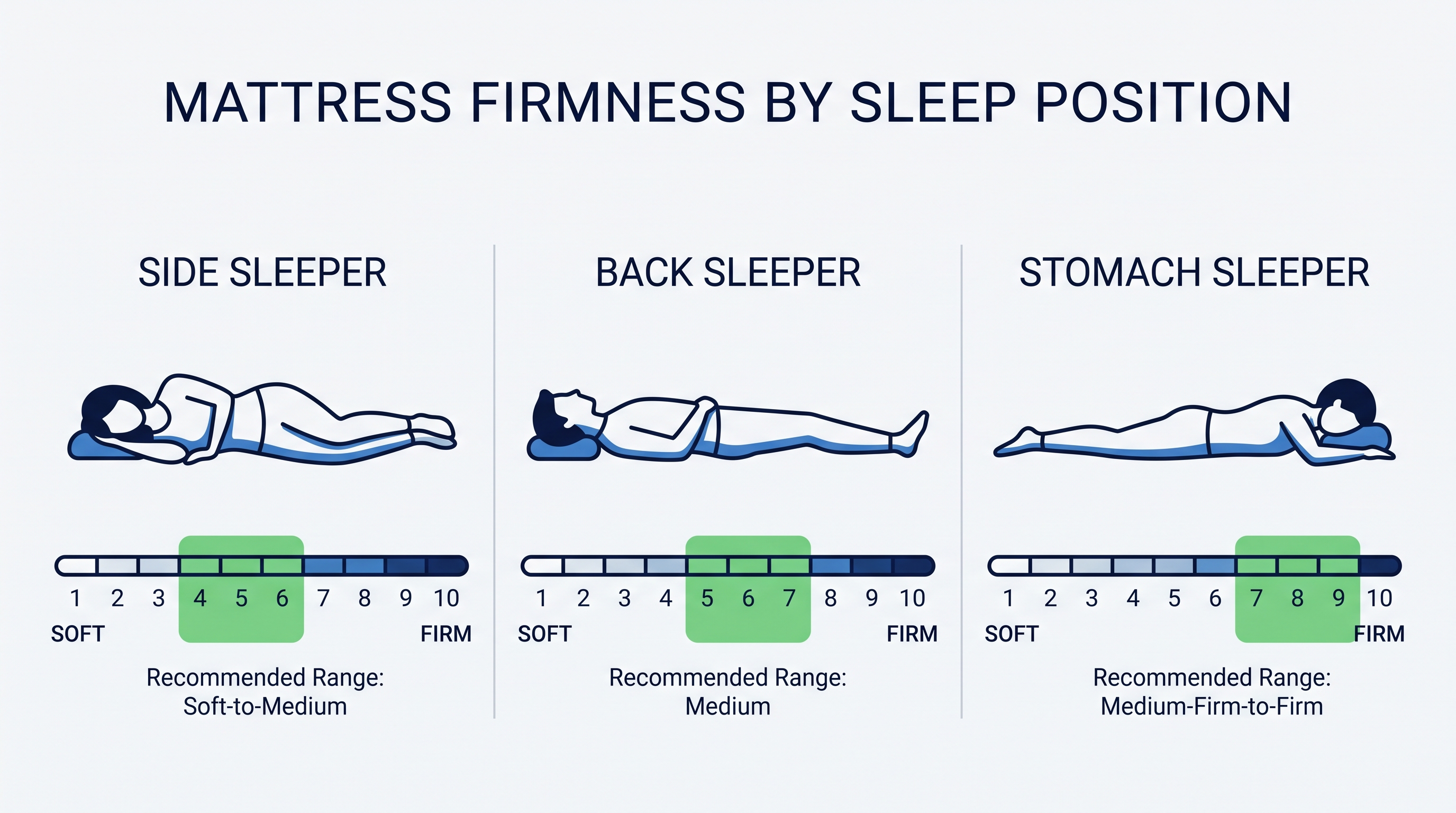
| Sleep Position | Recommended Direction | Firmness Range |
|---|---|---|
| Side sleeping | Soft to Medium | 3–6/10 |
| Back sleeping | Medium to Medium-Firm | 5–7/10 |
| Stomach sleeping | Medium-Firm to Firm | 6–8/10 |
| Combination sleeping | Medium | 5–6/10 |
The body weight adjustment: these ranges shift firmer as body weight increases. A 130 lb side sleeper and a 220 lb side sleeper need meaningfully different firmness levels to achieve the same pressure relief, because heavier bodies compress any given surface more deeply. As a rule of thumb, add one firmness point to the ranges above for every 50 lbs above 200 lbs, and subtract one point for every 30 lbs under 130 lbs.
Firm vs Soft for Back Pain Specifically
This is the single most searched version of this question, and the evidence-based answer is more nuanced than either extreme.
Medium-firm is the evidence-based sweet spot for most back pain sufferers, not firm. The mechanism: a mattress that is too firm leaves a gap beneath the lumbar curve, since the lower back does not press evenly against a rigid surface — that unsupported gap is a common source of morning stiffness. A mattress that is too soft allows the hips to sink below the shoulders, curving the spine into a position that strains the lumbar discs over a full night.
The exception: stomach sleepers and heavier back sleepers (220+ lbs) with back pain generally do need to lean firmer than the medium-firm default, since their body mechanics make excessive sinkage the primary risk rather than inadequate support.
For a full breakdown of mattress recommendations specifically for back pain, including our tested picks by sleep position, see our Best Mattress for Back Pain guide.
Firm vs Soft for Couples
When two people share a bed and want different firmness levels, the practical reality is that most couples are not actually as far apart in preference as they assume. A genuinely "soft" preference and a genuinely "firm" preference are less common than a moderate one-or-two-point gap on the 10-point scale — which a well-chosen medium mattress with good pressure relief resolves reasonably well for both partners.
For couples with a larger gap in preference, a Split King setup — two independently firm Twin XL mattresses placed side by side — is the only configuration that gives each partner their own actual firmness level. See our Best Mattress for Couples guide and Mattress Size Chart Guide for the full breakdown.
Our Tested Picks by Firmness Direction
| Mattress | Firmness | Best Direction | Price (Queen) |
|---|---|---|---|
| Novilla Bliss 12" | Medium (5/10) | Softer side of medium — side sleepers | $249–$299 |
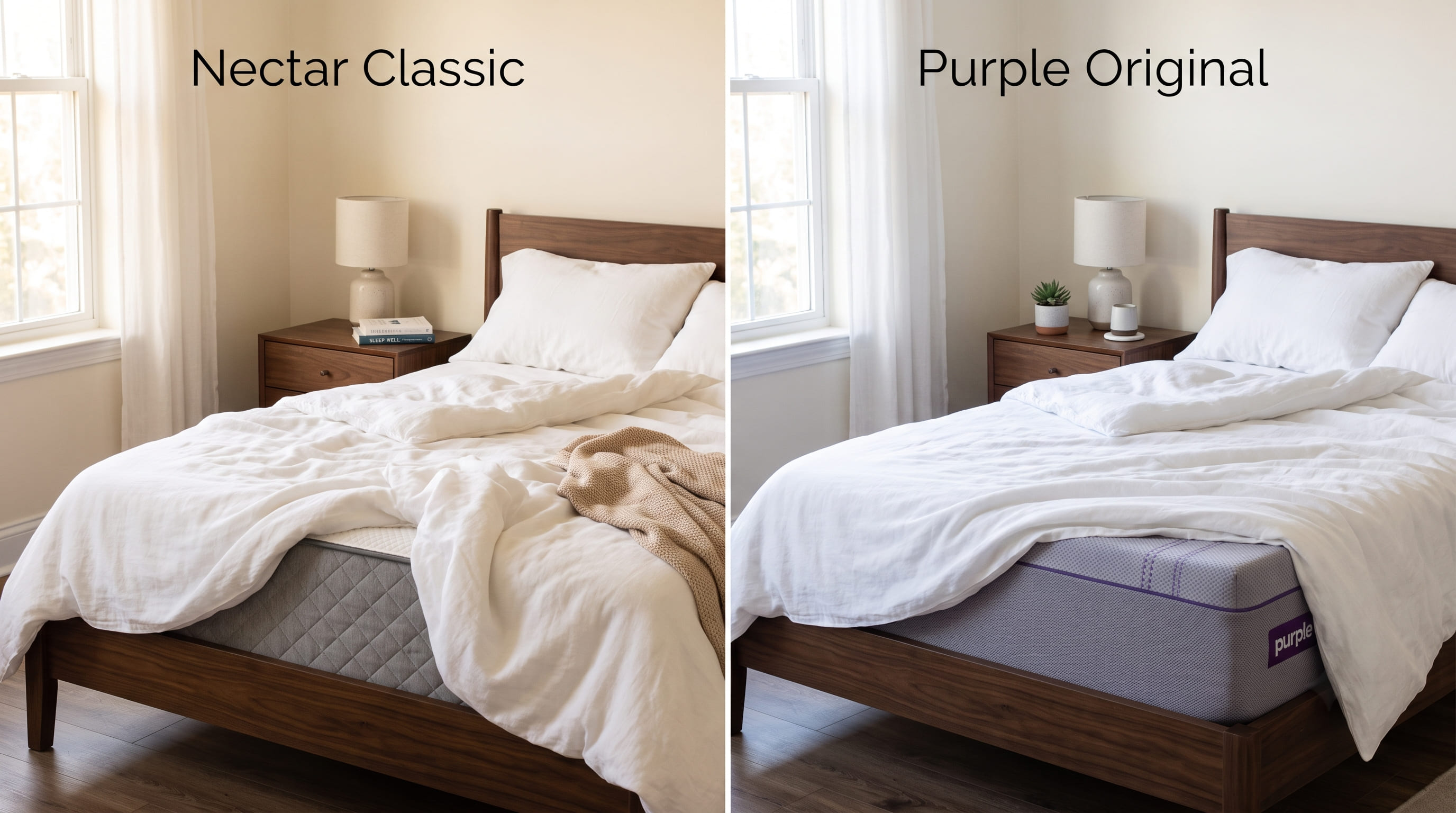
| Nectar Classic | Medium (5–6/10) | Balanced — most side and back sleepers | $679–$699 |
| DreamCloud Classic | Medium-Firm (6.5/10) | Firmer side of medium — back sleepers, heavier frames | $649–$699 |
| Zinus Green Tea | Medium-Firm (6/10) | Firm-leaning — stomach and back sleepers on a budget | $279–$299 |
| Saatva Classic | Plush Soft / Luxury Firm / Firm | Full range across three firmness options | ~$795 |
Frequently Asked Questions
Is a firm or soft mattress better for back pain?
Medium-firm is the evidence-based answer for most back pain sufferers — not firm. A mattress that is too firm leaves the lumbar spine unsupported by a gap beneath the lower back; a mattress that is too soft allows the hips to sink out of alignment. The exception is stomach sleepers and heavier back sleepers, who generally need to lean firmer than the medium-firm default.
Do side sleepers need a soft or firm mattress?
Side sleepers need a soft to medium mattress (3–6 on a 10-point scale). The shoulder and hip need to sink into the surface enough to keep the spine in a straight horizontal line — a firm mattress prevents this sinkage and creates concentrated pressure at the shoulder and hip joints.
Is firm always better for heavier people?
Generally yes, but with nuance. Heavier sleepers (230+ lbs) need a firmer support structure to prevent a soft comfort layer from bottoming out under sustained weight. However, "firm" here refers primarily to the support base — heavier side sleepers still benefit from a reasonably plush comfort layer on top of that firm foundation, rather than a mattress that is firm all the way through. See our Best Mattress for Heavy People guide for weight-specific recommendations.
Can a mattress topper change firmness without buying a new mattress?
Yes, within limits. A 2–3 inch memory foam or latex topper can soften a mattress that is too firm. Making a mattress firmer is harder — a firm topper on top of a soft base does not fully correct excessive sinkage in the base layer, since the underlying structure still determines overall support. See our Mattress Topper Guide for material and thickness guidance.
What firmness is best for combination sleepers?
Medium (5–6 on a 10-point scale) is the safest default for combination sleepers, since it provides workable pressure relief for side sleeping without being so soft that back or stomach sleeping positions lose support when you shift throughout the night.
Does firmness matter more than mattress material?
For most sleepers, yes — firmness match to sleep position and body weight has a larger impact on comfort and pain outcomes than whether the mattress is foam, hybrid, or latex. A well-matched medium-firm hybrid and a well-matched medium-firm memory foam mattress will both outperform a poorly matched mattress of either material. See our How to Choose a Mattress guide for the full decision framework.
The Bottom Line
There is no universal answer to "firm vs soft" — the right direction depends on your sleep position first, then your body weight. Side sleepers should lean soft to medium; stomach sleepers and heavier back sleepers should lean firm; most back pain sufferers do best at medium-firm rather than either extreme. If you are still uncertain after reading this guide, a medium mattress in the 5–6 range is the safest default for most sleepers, since it avoids the failure modes at both ends of the scale.
Browse all reviewed mattresses →
Related Guides
Ready to shop? Browse our expert mattress reviews to find your perfect match.