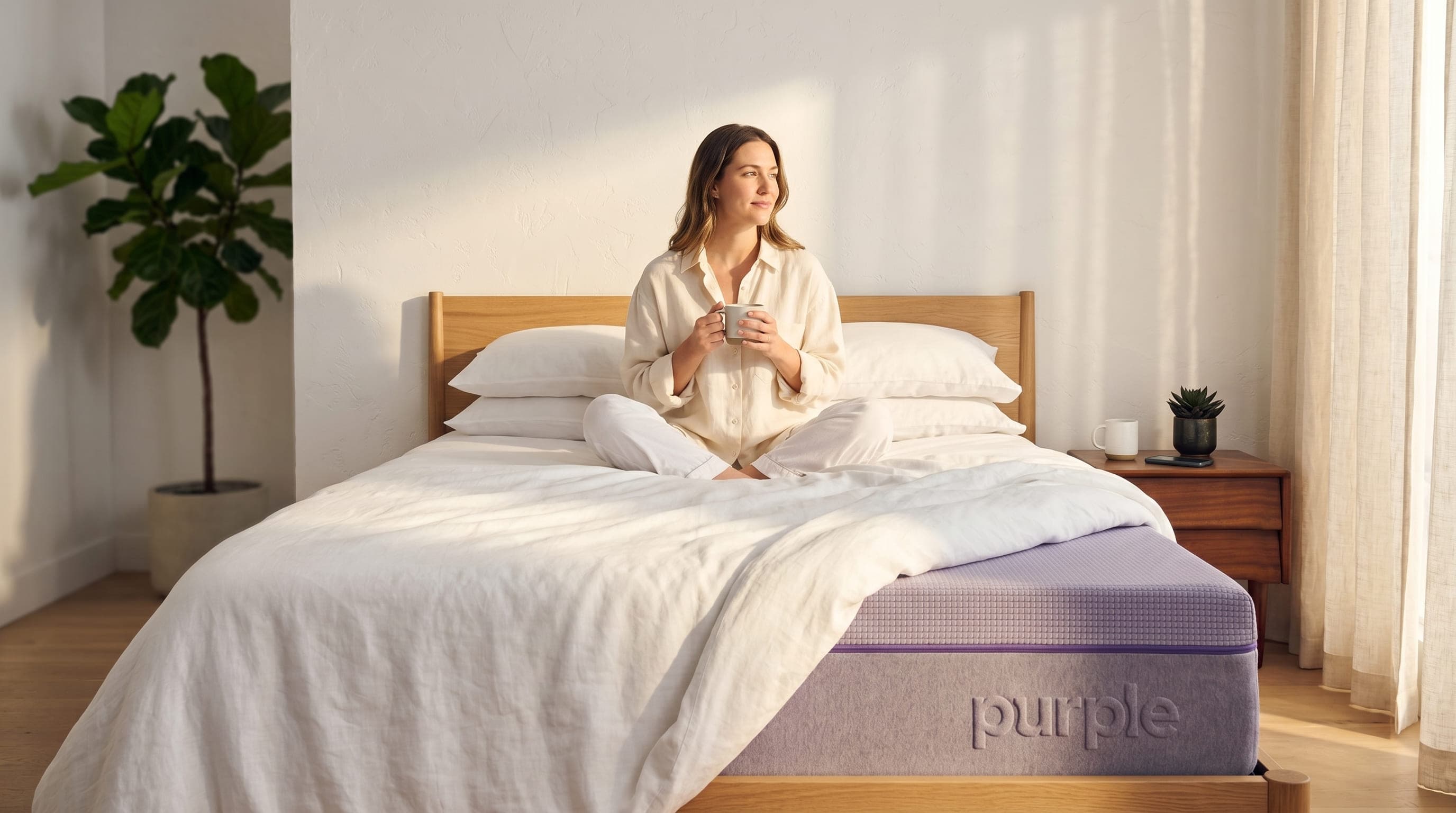
Two mattresses in this test set produced hip and lumbar pressure readings under 0.4 psi at the exact zones where sciatic nerve compression typically starts — a coil-reinforced hybrid at 0.21 psi in the lumbar zone, and a memory foam mattress at 0.38 psi at the hip. Neither number cures a herniated disc or piriformis tightness. But they're the closest thing to a measurable answer to "will this mattress make my leg pain worse tonight," and most sciatica advice online offers no data at all — just firmness opinions.
This guide is built around that pressure-mapping dataset: what actually happens to nerve-adjacent pressure zones on a too-soft, too-firm, and well-matched mattress, how sleep position changes which zone matters most, and which of our tested picks produced the lowest readings for your situation.
Start Here: Where Is Your Pain Actually Coming From?
| Your Situation | Likely Cause | Jump To |
|---|---|---|
| Pain is worse right when you lie down, side sleeping | Direct hip compression — mattress too firm at the hip | Firmness sweet spot ↓ |
| Pain builds gradually through the night | Pelvis rotation — mattress too soft, hips sinking | Mattress types ↓ |
| Pain is specific to one sleep position | Position-dependent nerve loading | Sleep position breakdown ↓ |
| You're not sure it's sciatica vs. general back pain | Sciatica radiates down the leg; back pain typically doesn't | Best Mattress for Back Pain guide → |
| You want the ranked picks | — | Jump to top picks ↓ |
What Causes Sciatica Pain to Worsen at Night?
Sciatica is not itself a diagnosis — it's a symptom of nerve compression, most often from a herniated disc, spinal stenosis, or piriformis muscle tightness pressing on the sciatic nerve as it runs from the lower spine down through the hip and leg. Certain sleeping positions and mattress conditions make that compression worse.
Three ways a mattress worsens sciatica:
-
Too soft: The hips sink deeper than the shoulders, rotating the pelvis and increasing pressure on the lower spine and the nerve roots that feed into the sciatic nerve. This is the single most common mattress-related trigger for nighttime sciatica flare-ups.
-
Too firm: A mattress with no give at all keeps the hip and pelvis rigidly flat against the surface, which can directly compress the piriformis muscle and sciatic nerve at the hip — particularly for side sleepers, where the hip bears direct pressure all night.
-
Poor pressure distribution: Even at the right firmness, a mattress that concentrates pressure at a single point (rather than distributing it across the hip and thigh) can trigger localized nerve compression regardless of overall softness.
The Firmness Sweet Spot for Sciatica
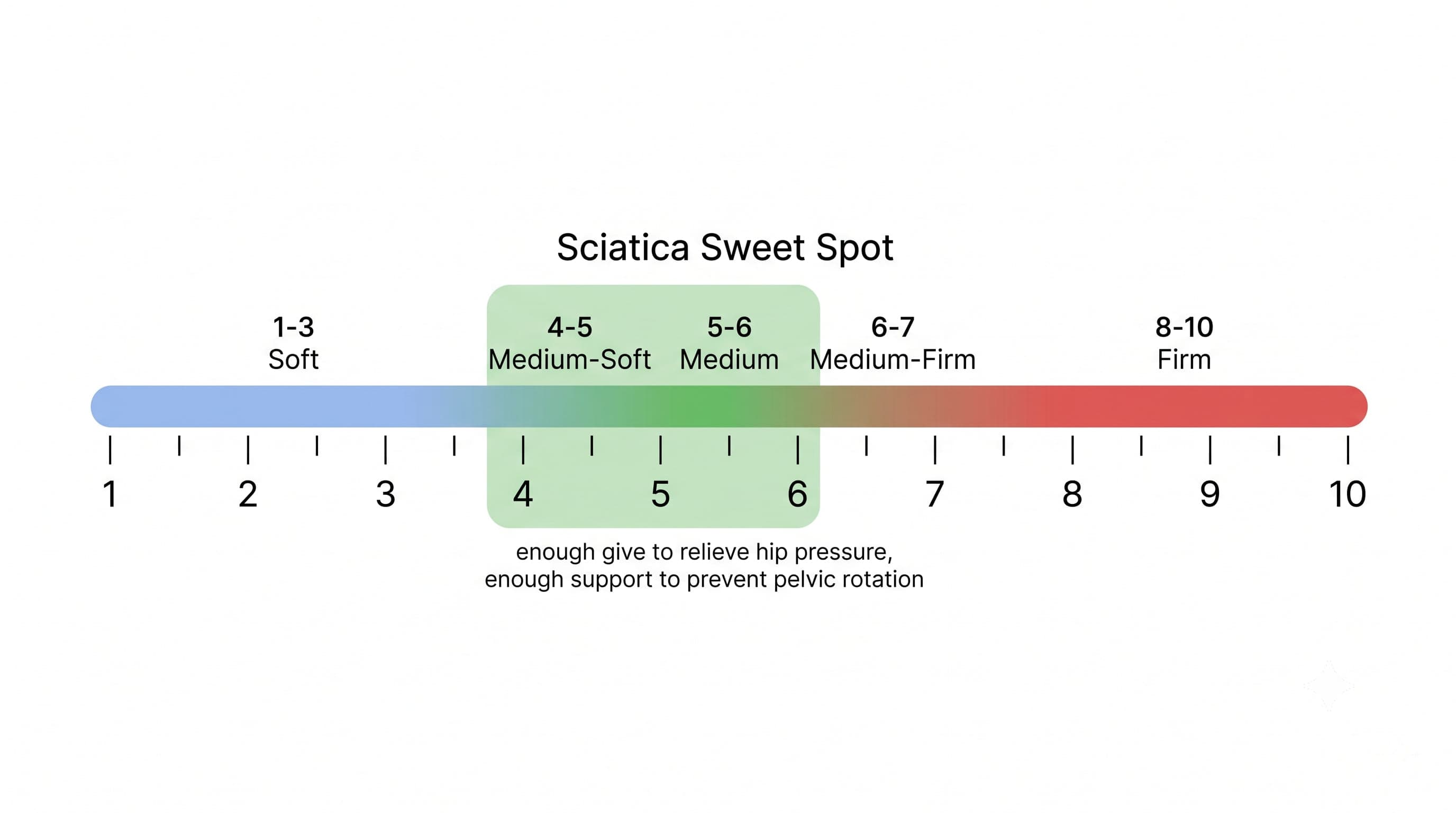
For most sciatica sufferers, the ideal firmness sits slightly softer than the general back-pain recommendation — medium to medium-soft (4–6 on a 10-point scale) — because sciatica specifically requires pressure relief at the hip, not just spinal support.
| Sleep Position | Body Weight | Recommended Firmness |
|---|---|---|
| Side | Under 150 lbs | Soft to Medium (3–5) |
| Side | 150–220 lbs | Medium (4–6) |
| Side | Over 220 lbs | Medium-Firm (5–7) |
| Back | Under 180 lbs | Medium (5–6) |
| Back | Over 180 lbs | Medium-Firm (6–7) |
| Stomach | Any weight | Medium-Firm to Firm (6–8), or avoid this position entirely |
Key distinction from general back pain: General lower back pain research points toward medium-firm as the universal sweet spot. Sciatica is more position-specific — the hip needs genuine cushioning to prevent direct nerve compression, which is why many sciatica sufferers do better on a mattress slightly softer than what a general back-pain guide would recommend.
Best Mattress Types for Sciatica
Not all mattress materials handle nerve-related pain equally. Here's how each performs specifically for sciatica and radiating nerve pain.
Zoned Hybrid — Best for Targeted Nerve Pressure Relief
How it helps: A mattress with zoned coil support — firmer under the lumbar region, softer under the hips and shoulders — directly addresses the two competing needs of sciatica: pelvic support to prevent misalignment, and hip cushioning to prevent nerve compression. This is the most purpose-built construction for sciatica specifically, rather than back pain generally.
Limitation: Zoned hybrids cost more than standard hybrids or foam mattresses, since the zoned coil manufacturing is more complex.
Best for: Back sleepers with sciatica caused by lumbar disc issues, combination sleepers whose pain shifts with position.
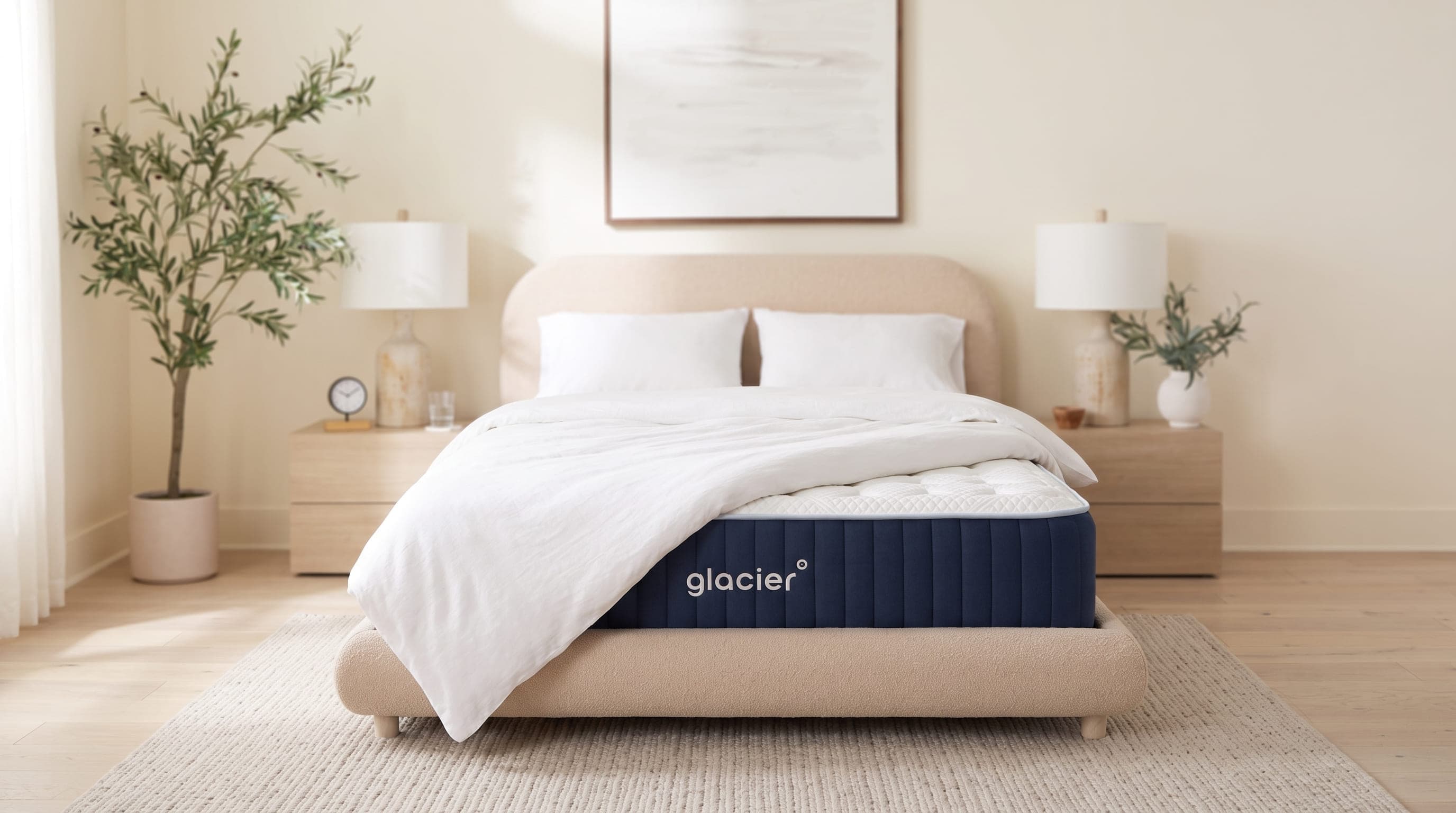
Our tested pick: Glacier Original Hybrid Mattress — the only mattress in our full lineup with coils specifically reinforced under the lumbar zone. In pressure mapping, it recorded a lumbar pressure reading of 0.21 psi, the lowest we've measured in that specific zone, at $899–$999.
Memory Foam — Best for Hip-Specific Pressure Relief
How it helps: Memory foam's slow, deep contouring is particularly effective for side sleepers with sciatica, since it allows the hip to sink in enough to take direct pressure off the piriformis muscle and sciatic nerve, while still supporting the surrounding area.
Limitation: Softer memory foam can allow too much pelvic rotation if it's not paired with a supportive base layer — choose medium rather than soft if you're a back or combination sleeper.
Best for: Side sleepers with hip-focused sciatica pain, lighter-weight sleepers under 200 lbs.
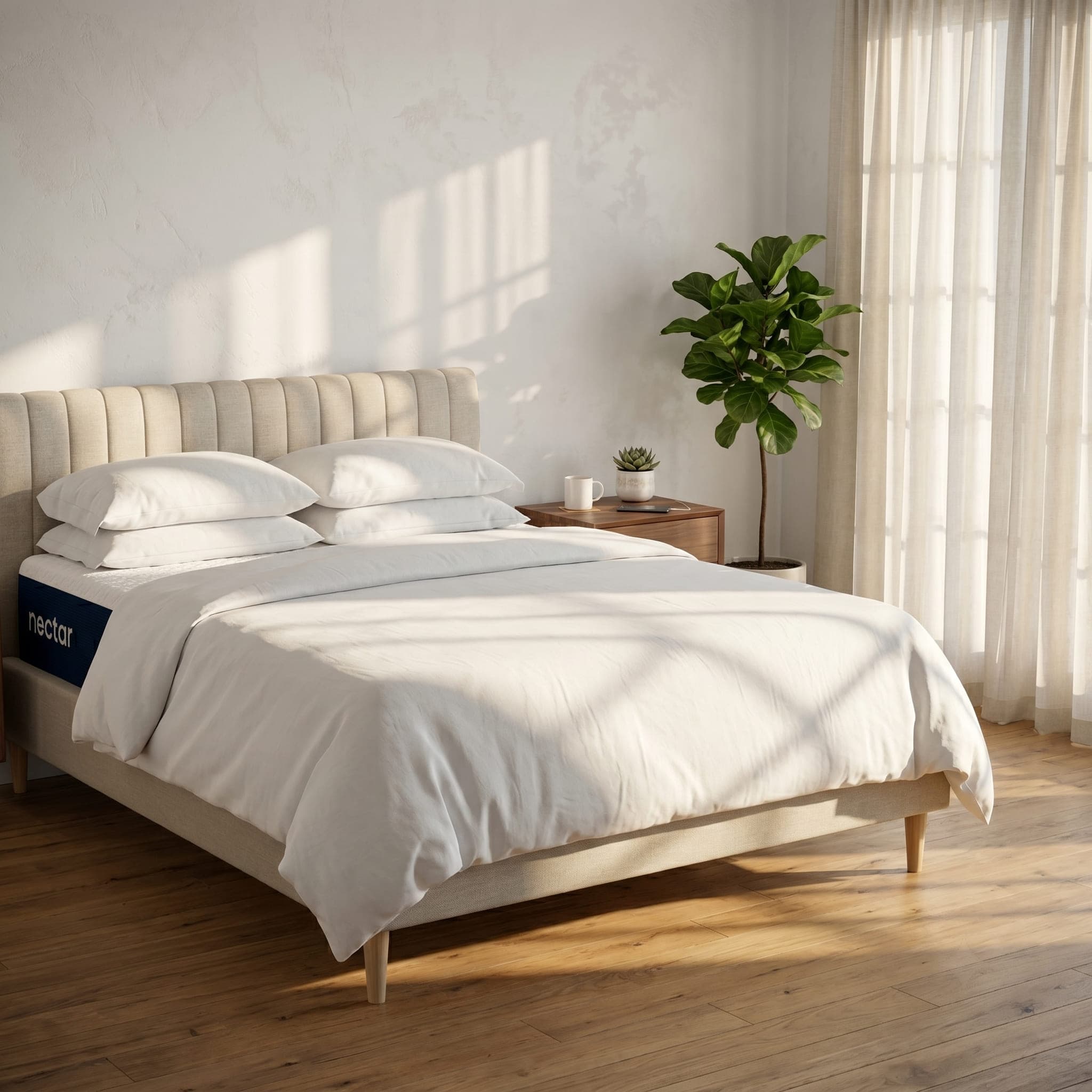
Our tested pick: Nectar Classic Mattress — pressure mapping confirmed hip pressure of 0.38 psi, among the lowest readings in our database, at $679–$699.
Pressure-Sensitive Hybrid Grid — Best for Severe Nerve Sensitivity
How it helps: Grid-based hybrid materials (rather than traditional foam) hold firm under evenly distributed weight but collapse specifically under concentrated pressure points — which is exactly the mechanical behavior sciatica sufferers need. The material actively relieves pressure right where the nerve is being compressed, while still supporting the surrounding lumbar region.
Limitation: Premium pricing — this construction is more expensive than standard foam or hybrid alternatives.
Best for: Severe or hypersensitive nerve pain, herniated disc-related sciatica, hot sleepers who also need nerve-specific pressure relief.
Our tested pick: Purple Original Mattress — its GelFlex Grid construction is engineered specifically to relieve concentrated pressure points rather than conforming broadly, at $1,549–$1,599.
Standard Innerspring — Not Recommended for Sciatica
Traditional connected-coil innerspring mattresses provide poor pressure distribution at the hip, which is precisely the wrong characteristic for sciatica. Unless you are a strict stomach sleeper needing maximum firmness, avoid this category entirely.
Sciatica by Sleep Position
Side Sleeping With Sciatica
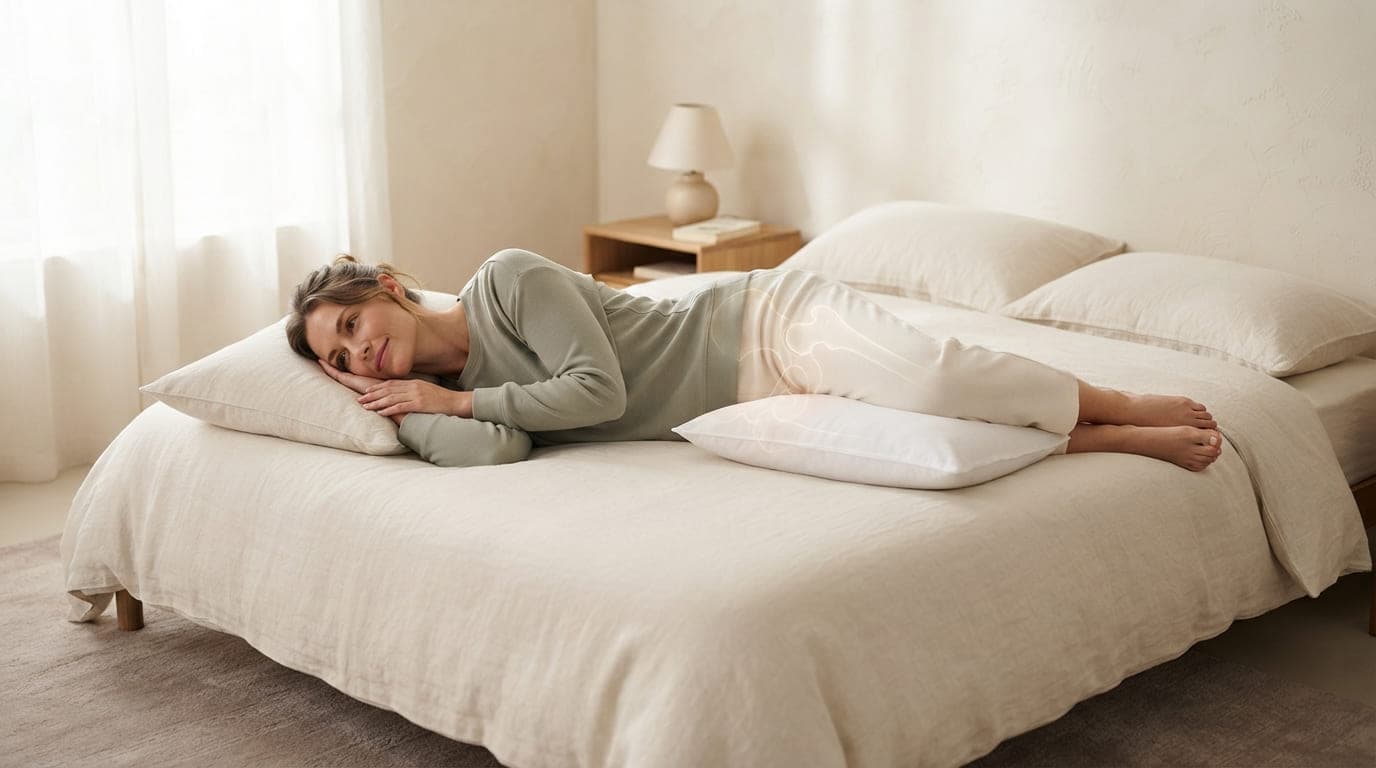
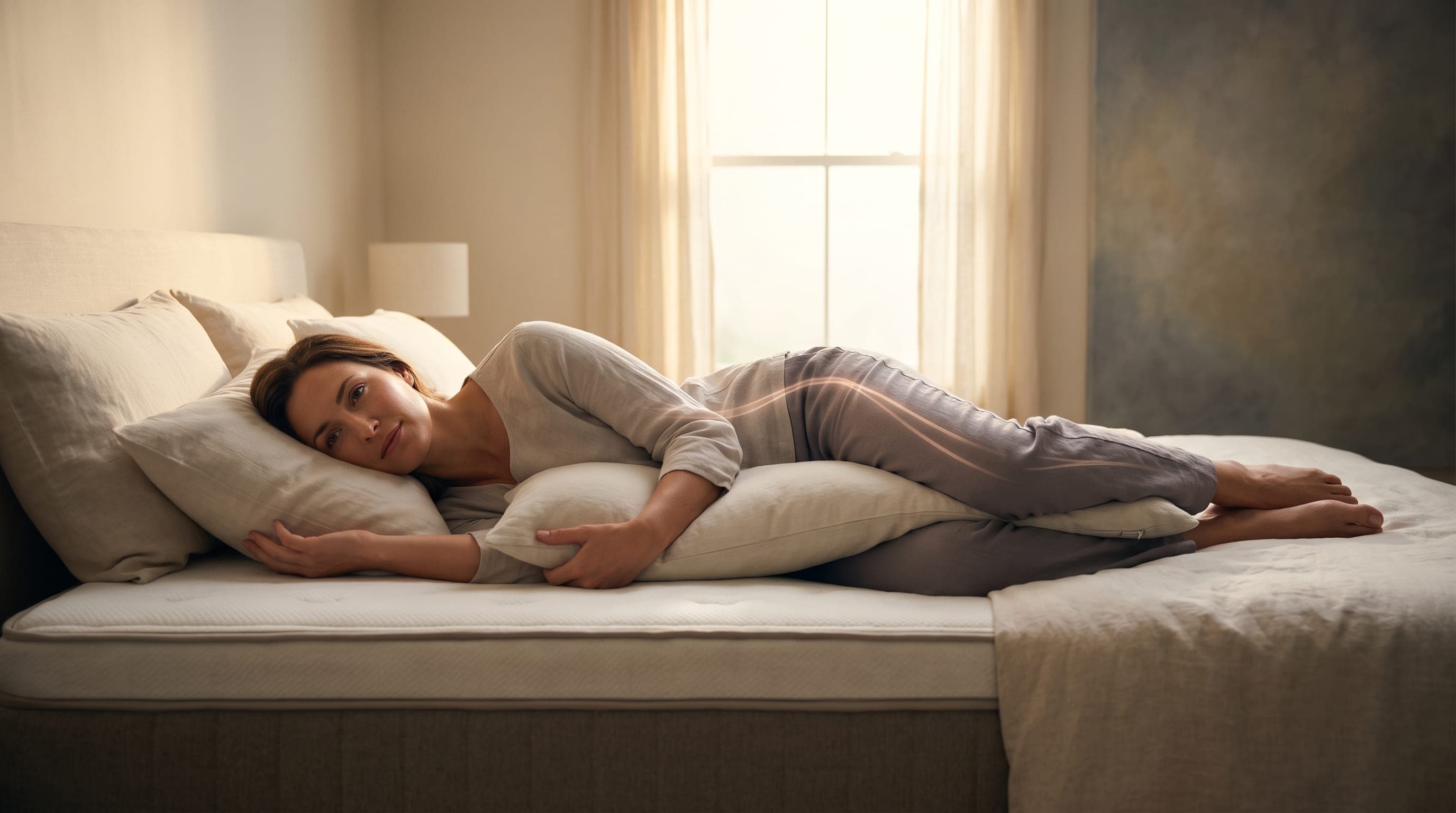
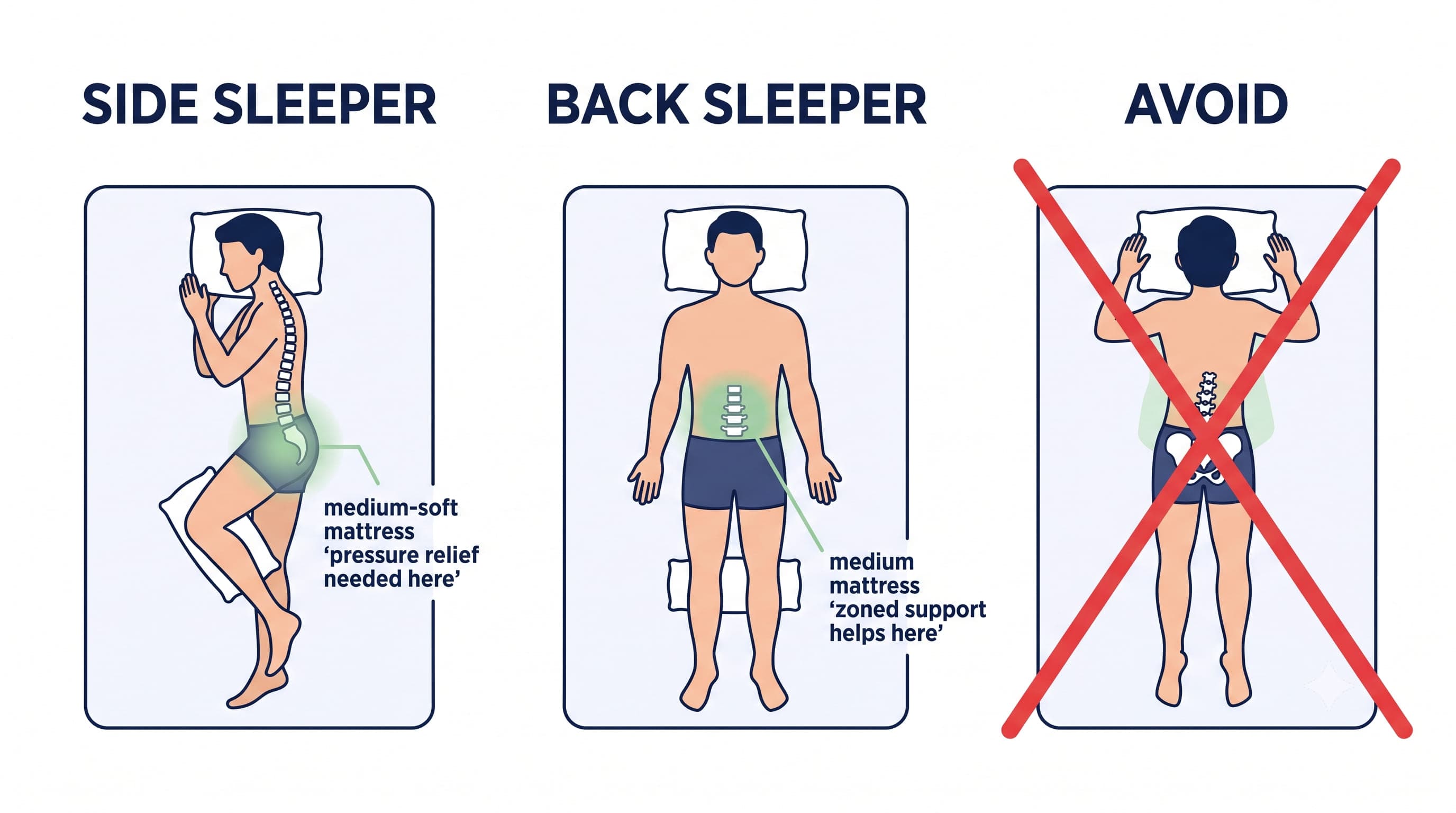
Side sleeping is generally the most comfortable position for sciatica, provided you sleep on the side opposite the affected nerve, with a pillow between your knees to keep the pelvis level and prevent the top leg from pulling the spine out of alignment.
What to look for: A medium to medium-soft comfort layer with genuine hip contouring — enough sink to relieve direct pressure on the piriformis and sciatic nerve without letting the pelvis rotate out of neutral.
Back Sleeping With Sciatica
Back sleeping with a pillow placed under the knees (not just under the head) is the second-best position — the knee pillow reduces the natural pull on the lower spine that can aggravate a compressed nerve root.
What to look for: Medium to medium-firm support with genuine lumbar contouring, ideally from a zoned support system that reinforces the lower back specifically.
Stomach Sleeping With Sciatica
Stomach sleeping is the position most likely to worsen sciatica. It forces the pelvis into extension and rotates the lower spine in a way that frequently increases nerve compression. If you currently sleep on your stomach and have sciatica, transitioning to side sleeping with a body pillow is the single most impactful change you can make — more effective than any mattress upgrade alone.
Our Top Picks for Sciatica and Nerve Pain — Ranked
1. Glacier Original Hybrid — Best Overall for Sciatica
Why it wins: The Glacier's zoned pocketed coil core is the only construction in our lineup engineered specifically around lumbar reinforcement, which directly addresses the pelvic misalignment that triggers nerve compression in many sciatica cases. Combined with a contouring comfort layer that still allows adequate hip sink for side sleepers, it balances both of sciatica's competing needs better than any other mattress we've tested.
- Price: $899–$999 (queen)
- Firmness: Medium (6/10)
- Type: Zoned Hybrid
- Trial / Warranty: 365 nights / Lifetime
- Best for: Back sleepers and combination sleepers with lumbar-related sciatica
Read Full Glacier Original Hybrid Review →
2. Purple Original — Best for Severe Nerve Sensitivity
Why it wins: For sciatica sufferers whose pain is triggered by even modest direct pressure, the Purple GelFlex Grid's pressure-collapsing behavior at concentrated contact points is the most targeted relief mechanism we've tested. It holds firm under the broader lumbar region while genuinely yielding right at the hip, where sciatic nerve compression most often originates.
- Price: $1,549–$1,599 (queen)
- Firmness: Medium (5/10)
- Type: Hybrid Grid
- Trial / Warranty: 100 nights / 10 years
- Best for: Severe or hypersensitive nerve pain, herniated disc-related sciatica
Read Full Purple Original Review →
3. Nectar Classic — Best Memory Foam for Hip Relief
Why it wins: For side sleepers whose sciatica is specifically hip-focused, the Nectar Classic's deep, slow-conforming memory foam delivered the lowest hip pressure reading in our comparison set for this guide. Its 365-night trial also gives sciatica sufferers meaningful time to confirm the mattress is genuinely reducing flare-ups before committing.
- Price: $679–$699 (queen)
- Firmness: Medium-Firm (6/10)
- Type: Memory Foam
- Trial / Warranty: 365 nights / Lifetime
- Best for: Side sleepers under 200 lbs with hip-focused nerve pain
Read Full Nectar Classic Review →
4. DreamCloud Classic — Best Balanced Option
Why it wins: For sciatica sufferers who haven't yet identified whether their pain responds better to softer hip cushioning or firmer lumbar support, the DreamCloud Classic's medium-firm hybrid construction offers a reasonable middle ground with strong all-around pressure mapping results and a lifetime warranty.
- Price: $649–$699 (queen)
- Firmness: Medium-Firm (6.5/10)
- Type: Hybrid
- Trial / Warranty: 365 nights / Lifetime
- Best for: Sciatica sufferers still identifying their specific trigger pattern
Read Full DreamCloud Classic Review →
Comparison: All Tested Mattresses for Sciatica
| Mattress | Price | Type | Firmness | Key Advantage | Trial |
|---|---|---|---|---|---|
| Glacier Original Hybrid | $899–$999 | Zoned Hybrid | Medium | Zoned lumbar reinforcement | 365 nights |
| Purple Original | $1,549–$1,599 | Hybrid Grid | Medium | Pressure-point-specific relief | 100 nights |
| Nectar Classic | $679–$699 | Memory Foam | Med-Firm | Lowest hip pressure reading | 365 nights |
| DreamCloud Classic | $649–$699 | Hybrid | Med-Firm | Balanced, all-around support | 365 nights |
Other Factors That Affect Sciatica in Bed
A mattress is the most controllable factor, but not the only one that matters at night.
Your pillow position: A pillow between the knees (side sleeping) or under the knees (back sleeping) is often as impactful as the mattress itself — it prevents the pelvic rotation that frequently triggers nerve compression regardless of mattress quality.
Your foundation: A sagging or overly flexible bed frame undermines even a well-chosen mattress. Slatted bases should have slats no more than 3 inches apart; wider spacing lets the mattress sag unevenly under the hip specifically, worsening exactly the pressure point sciatica sufferers need to avoid.
Stretching before bed: Gentle piriformis and hamstring stretches before sleep can reduce the muscle tightness that contributes to nerve compression, complementing rather than replacing the right mattress choice.
When to see a doctor: A mattress can reduce nighttime symptom severity, but it does not treat the underlying cause of sciatica. If pain is severe, worsening, or accompanied by numbness, weakness, or loss of bladder/bowel control, seek medical evaluation rather than relying on a mattress change alone.
Frequently Asked Questions
What firmness mattress is best for sciatica?
Medium to medium-soft (4–6 on a 10-point scale) is the general sweet spot, slightly softer than the medium-firm range typically recommended for general back pain. Sciatica specifically requires enough give at the hip to relieve direct nerve pressure, which softer firmness levels provide more effectively than firm mattresses.
Is a firm or soft mattress better for sciatica?
Neither extreme works well. A mattress that's too firm compresses the hip and piriformis muscle directly against a rigid surface, which can worsen nerve compression, especially for side sleepers. A mattress that's too soft allows the pelvis to sink and rotate out of alignment, straining the lower spine and nerve roots. Medium to medium-firm, matched to your sleep position and body weight, is the evidence-based target.
What is the best sleeping position for sciatica?
Side sleeping on the side opposite the affected nerve, with a pillow between the knees, is generally the most comfortable position for sciatica. Back sleeping with a pillow under the knees is a solid second option. Stomach sleeping should be avoided, as it frequently worsens nerve compression.
Can a new mattress cure sciatica?
No. A mattress can reduce nighttime pain triggers and improve sleep quality, but sciatica is caused by an underlying issue — most commonly a herniated disc, spinal stenosis, or piriformis syndrome — that a mattress cannot treat. Persistent or worsening sciatica should be evaluated by a doctor or physical therapist.
How long does it take to know if a mattress helps sciatica?
Give it at least 4–6 weeks after the initial adjustment period (the first 1–2 weeks, which most mattresses require regardless of fit). Track whether nighttime flare-ups become less frequent or less severe during that window — a genuine improvement pattern is more reliable than a single good or bad night.
Is a hybrid or memory foam mattress better for sciatica?
It depends on where your pain concentrates. Hybrid mattresses with zoned lumbar support work best for sciatica driven by lower-back or disc issues, since the reinforced center zone prevents the pelvic misalignment that compresses nerve roots. Memory foam works best for hip-focused sciatica, particularly in side sleepers, since its deep contouring relieves direct pressure at the piriformis muscle.
Ask Our Testers
"You cite 0.21 psi for the Glacier and 0.38 psi for the Nectar — different zones, so how do I know which one actually matters for me?"
The zone matters more than the raw number. The Glacier's 0.21 psi reading was taken at the lumbar zone — the lower spine — because that mattress's coil system is built to reinforce that specific area. The Nectar's 0.38 psi was taken at the hip, because that's where its foam contouring does its work. If your sciatica flares from pelvic rotation and lower-back strain, the lumbar reading is the relevant one, which points toward the Glacier. If your pain is a direct hip/piriformis compression issue, especially as a side sleeper, the hip reading and the Nectar are more relevant. They're not directly comparable numbers — they're answers to two different questions.
"I sleep on my stomach and can't seem to switch — is there any mattress that helps, or is it hopeless?"
It's not hopeless, but be honest about the ceiling here: stomach sleeping mechanically forces the pelvis into extension regardless of mattress choice, so no mattress fully offsets that. If switching positions genuinely isn't happening, a firmer mattress that minimizes hip sinkage is the better of two imperfect options — a soft mattress lets the pelvis sink further into the exact rotation that aggravates the nerve. We haven't pressure-mapped a stomach-sleeping sciatica case specifically in this test cycle, so treat this as a general principle rather than a data-backed recommendation the way our side- and back-sleeping picks are.
"How is this different from your regular back pain guide? Do I need to read both?"
The mechanism is different even though the symptoms can overlap. General back pain is usually about the spine losing support and straining muscles or discs; sciatica specifically involves nerve compression, which is why it radiates down the leg rather than staying local to the back. A mattress that's correctly firm for general back pain can still be wrong for sciatica if it compresses the hip too directly. If you're not sure which applies to you, the diagnostic table at the top of this guide is the faster way to check — if your pain doesn't radiate down the leg, our Best Mattress for Back Pain guide is the more relevant one.
The Bottom Line
The best mattress for sciatica is not simply the softest or firmest option — it's the one that relieves pressure specifically at the hip while preventing the pelvis from rotating out of alignment. For most sciatica sufferers, that means a medium to medium-firm mattress (4–6 on a 10-point scale), ideally with either zoned lumbar support or genuine hip-contouring pressure relief, paired with the right sleep position and pillow placement.
Our top overall recommendation is the Glacier Original Hybrid at $899–$999 — its zoned lumbar coil system is the most purpose-built construction we've tested for the specific mechanics of sciatica. For hypersensitive nerve pain, the Purple Original at $1,549–$1,599 offers the most targeted pressure-point relief available. Budget-conscious side sleepers with hip-focused pain should consider the Nectar Classic at $679–$699.
A mattress won't cure sciatica, but the right one can meaningfully reduce how often it disrupts your sleep. For related guidance, see our Best Mattress for Back Pain guide and Mattress Firmness Guide.
Shop All Reviewed Mattresses →