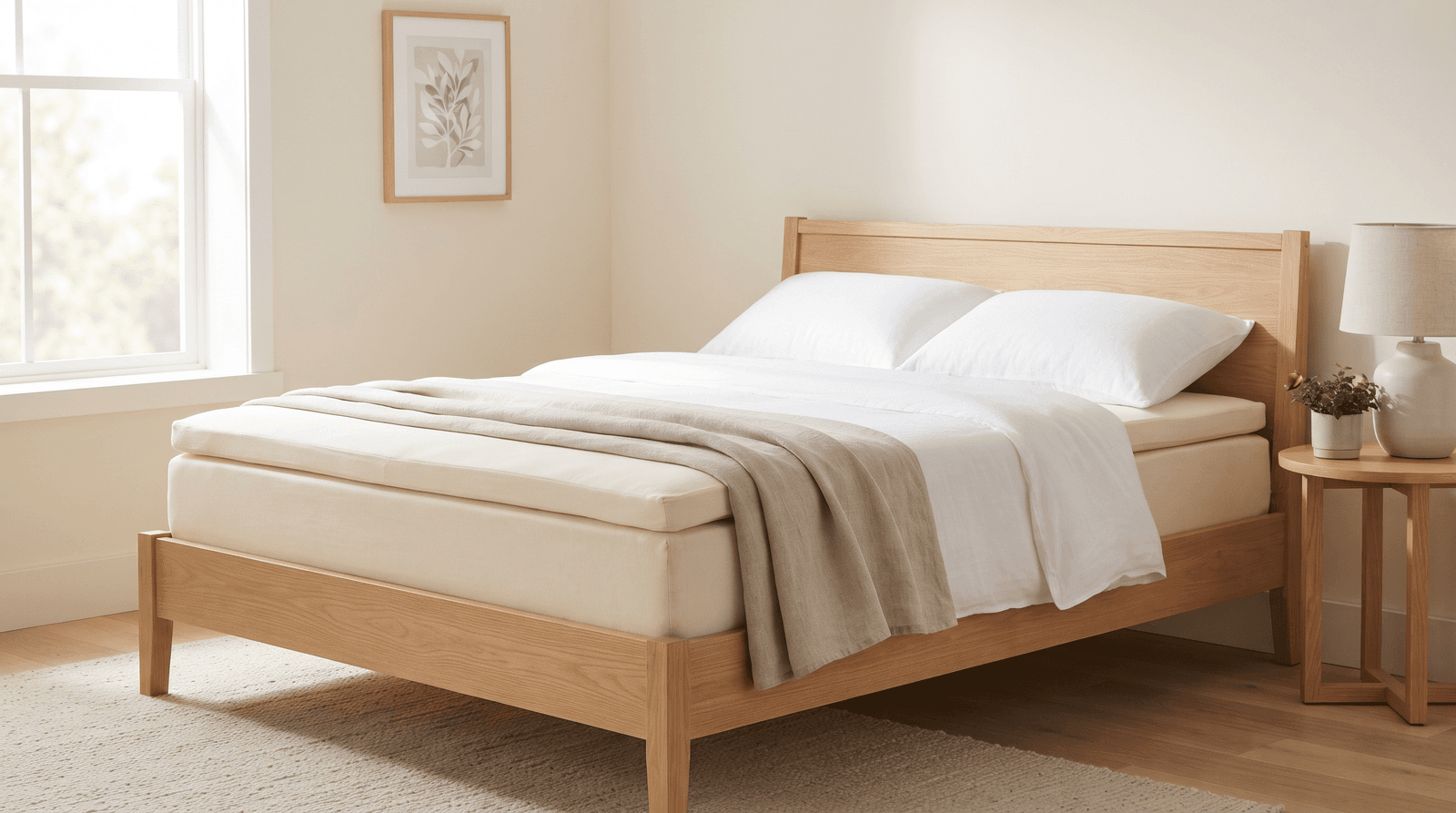
Your mattress isn't old enough to replace, but you wake up stiff, or it feels like sleeping on a board, or it traps heat all night. A topper looks like the easy fix, and it often is. The right one can soften a too-firm bed, make a guest mattress more comfortable and ease the pressure that makes you wake sore. This mattress topper guide explains how to choose a mattress topper: memory foam vs latex topper, thickness and firmness, and when a topper won't help.
The wrong one ends up in a cupboard after two weeks. This guide covers what a topper can and can't do, how the five main materials differ, and how to choose thickness, firmness and cooling for the way you sleep. It's about how toppers work, not which one to buy: when you're ready for specific products, see our best mattress topper picks.
The Short Answer
- A topper changes how your mattress feels; it cannot fix sagging. If there's a visible dip where you sleep, replace the mattress instead.
- Choose the material by your main problem: memory foam for deep pressure relief, natural latex for breathability and bounce, wool for temperature regulation, down or fiberfill for inexpensive surface softness.
- 3 inches is the right thickness for most people. Go 2 inches for light softening, 4 inches only for very firm beds or heavier sleepers.
- Match firmness to sleep position: soft for side sleepers, medium for back sleepers, firm and thin (or none at all) for stomach sleepers.
- Warm sleepers should avoid plain memory foam and look at latex or a graphite- or gel-infused foam.
What Is the Difference Between a Mattress Topper and a Mattress Pad?
A pad protects your mattress; a topper changes how it feels. They do different jobs, which is why buying the wrong one is so common.
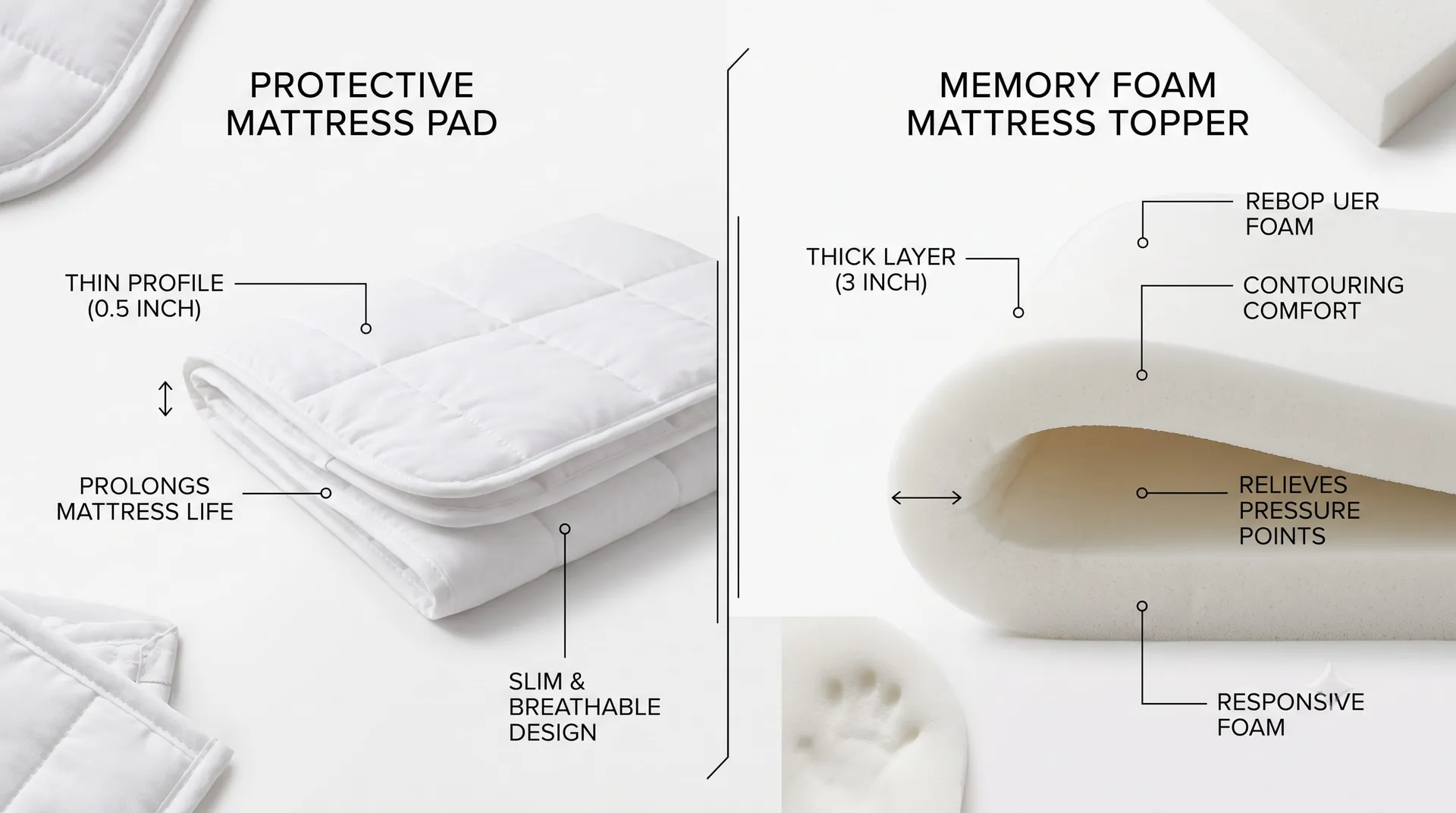
A mattress pad is a thin quilted layer, usually 0.5–1 inch, that guards against spills, allergens and general wear. It won't change your mattress's feel in any meaningful way.
A mattress topper is a thicker comfort layer, usually 2–4 inches, that adds softness, pressure relief or support depending on its material. It sits on top of the mattress, usually held in place by anchor straps or bands.
| You want to… | Buy a |
|---|---|
| Protect a mattress you're happy with | Mattress pad |
| Soften a mattress that's too firm | Mattress topper |
| Ease shoulder, hip or lower back pressure | Mattress topper |
| Change the surface feel without buying a new bed | Mattress topper |
Will a Mattress Topper Fix My Mattress?
Only if the mattress underneath is still structurally sound. A topper upgrades the comfort layer; it can't replace a failed support layer.
A topper works well when your mattress has a solid, flat support core but the surface feels too firm or too thin. It will not fix:
- A sagging mattress. Visible body impressions mean the support layer is failing. The topper follows the sag, so you sleep in the same dip on softer material.
- Broken coils. Structural failure needs a new mattress.
- An old mattress with visible wear. Your money is better spent on a replacement; see how long a mattress lasts and our best queen mattress under $800 guide.
press your hand flat into the mattress across the surface. If it springs back evenly with no visible dip, a topper is a reasonable upgrade. If there's a hollow where you sleep, replace the mattress.
Mattress Topper Guide: Memory Foam vs Latex vs Wool vs Fiber
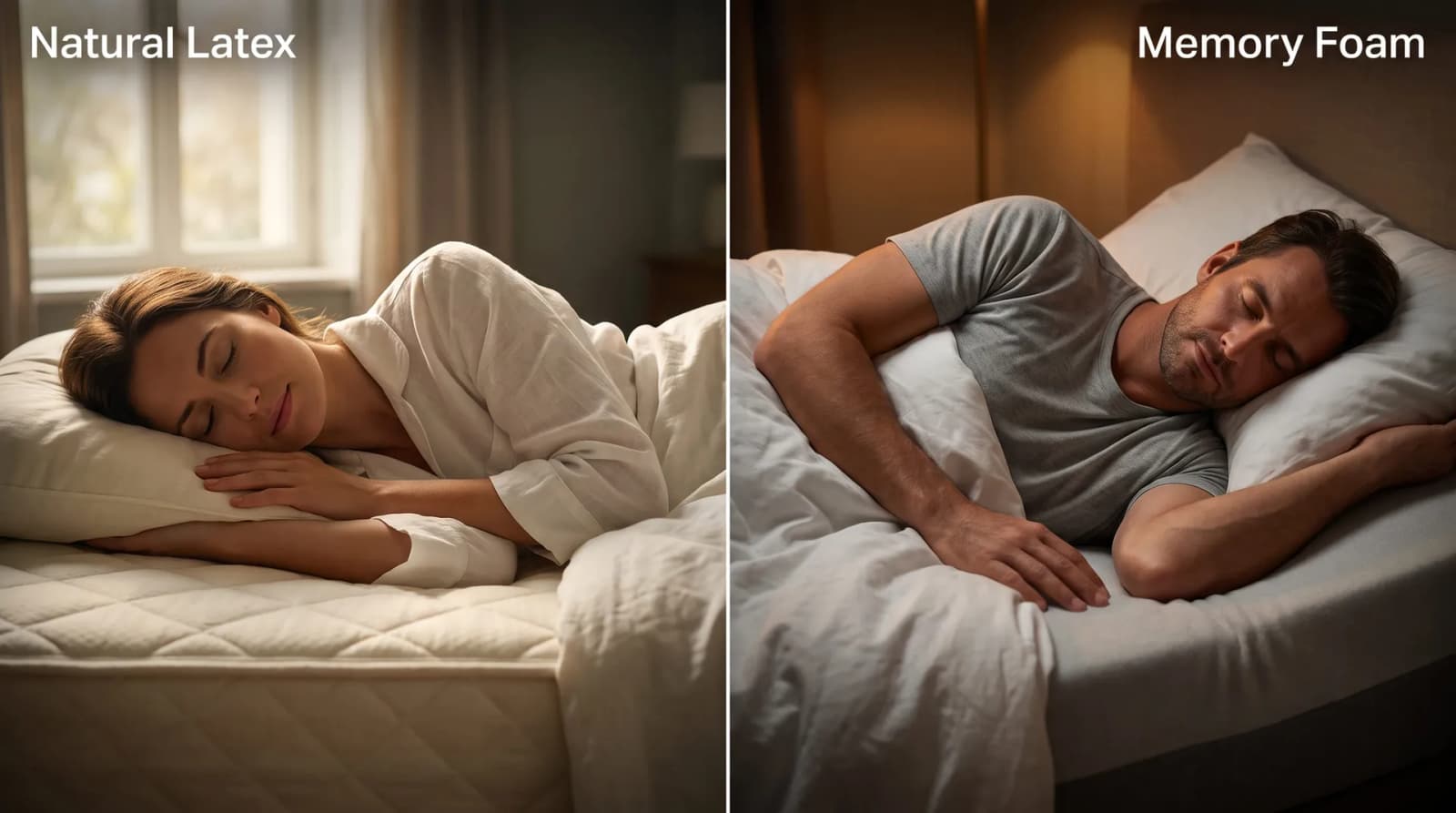
There are five main types: memory foam, latex, wool, down/feather and fiberfill. Each has a distinct feel, and memory foam and latex are the two that meaningfully change pressure relief.
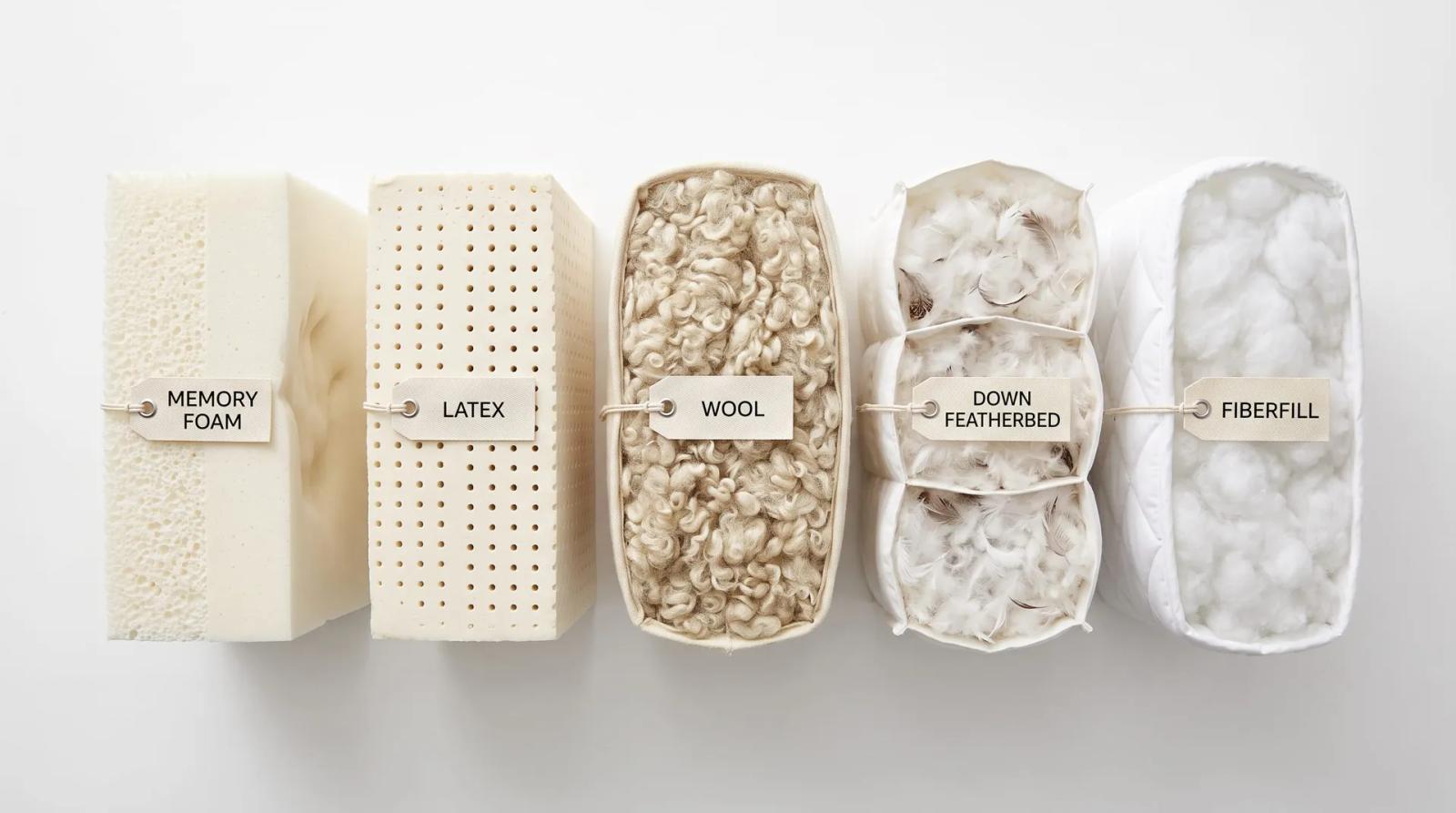
| Type | Best at | Feel | Main trade-off |
|---|---|---|---|
| Memory foam | Pressure relief, motion isolation | Slow, contouring hug | Holds heat |
| Latex | Breathability, durability, responsiveness | Fast, buoyant push-back | Heavier; not for latex allergies |
| Wool | Temperature and moisture regulation | Light, natural cushion | Only moderate pressure relief |
| Down / feather | Plush surface softness | Cloud-like | Little pressure relief; needs fluffing |
| Fiberfill | Low cost, easy washing | Soft, lofty | Flattens fastest |
Memory Foam Toppers
Memory foam gives the deepest, closest contouring of any topper material. Slow-conforming foam spreads your weight over a larger area, which reduces concentrated pressure at the shoulders and hips. It also absorbs motion, which helps couples on a bouncy innerspring.
There are three broad grades:
- Standard memory foam softens under pressure and body heat into a hugging feel. It's the most affordable option, and lower-density versions tend to soften and lose height sooner than denser foam.
- Gel- or graphite-infused memory foam adds a material meant to move or absorb heat. Gel absorbs heat until it warms up; graphite conducts heat away. Either helps somewhat, but neither changes the fact that dense foam limits airflow.
- TEMPUR material, TEMPUR-Pedic's own viscoelastic foam, is denser than typical memory foam and conforms closely as it warms. That density gives a precise feel and also makes it one of the warmer topper materials unless it's paired with a cooling cover.
Who should choose memory foam: side sleepers with shoulder or hip discomfort, couples who need motion isolation, and anyone softening a firm innerspring who doesn't sleep warm.
Latex Toppers
Latex is the most breathable, responsive and generally durable foam-type topper. It's made from natural latex (from rubber trees) or synthetic, petroleum-based latex. Natural latex is the premium choice.
There are two production methods. Dunlop latex is poured and settles, so it's denser and firmer. Talalay is vacuum-expanded and flash-frozen, giving a more uniform, buoyant feel with finer air channels, which is why most latex toppers are Talalay.
Latex feels very different from memory foam. Instead of a slow sink, it pushes back as soon as you move, which suits combination sleepers. Its open, interconnected cells let air circulate, so it should sleep cooler than dense foam.
synthetic latex is cheaper but generally gives up some of natural latex's breathability and durability. If you have a latex allergy, avoid latex or check with your doctor first.
Who should choose latex: warm sleepers who still want pressure relief, combination sleepers, and anyone who dislikes memory foam's hug.
Wool Toppers
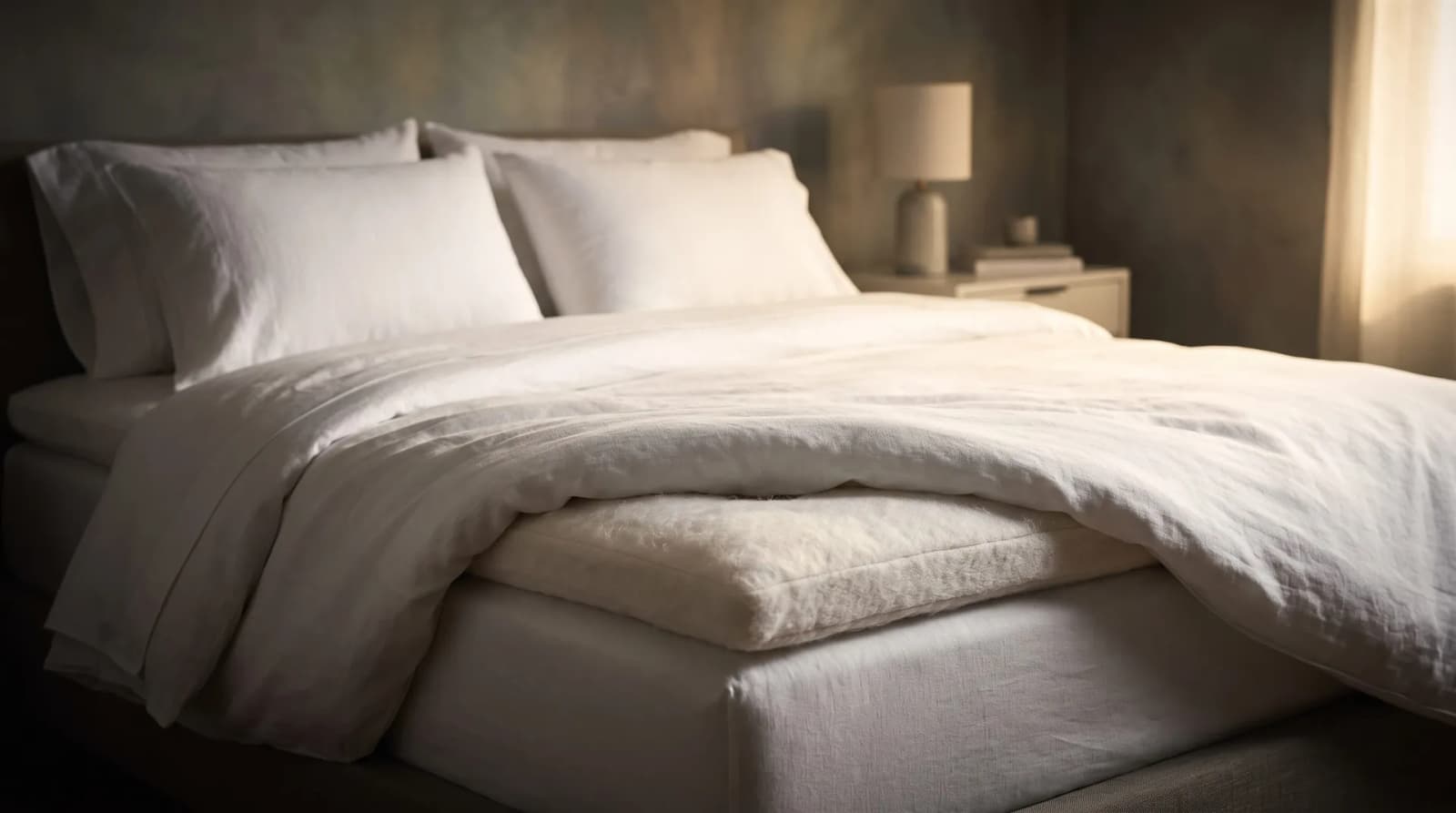
Wool is the most naturally temperature-regulating topper material. Wool fibers absorb and release moisture, which helps keep the surface comfortable across a wider range of room temperatures than foam.
Wool is also naturally flame resistant and less hospitable to dust mites than many synthetic fills. The trade-offs: only moderate pressure relief, a high price per inch of comfort, and usually specialist cleaning.
Who should choose wool: people in bedrooms without steady climate control, allergy-conscious sleepers wanting a natural option, and anyone who prefers natural materials.
Down and Featherbed Toppers
Featherbeds add cloud-like surface softness, not support. Filled with down, feathers or a blend, they're light, easy to reposition and often among the cheaper topper types.
They do little for pressure point discomfort, so if that's your issue, a featherbed is the wrong tool. Down compresses over time, needs regular fluffing, shifts more than foam, and isn't suitable if you avoid animal products or react to feathers.
Who should choose down: people who already sleep well and want a plush, hotel-like surface, and guest rooms where easy washing and storage matter.
Fiberfill (Gel Fiber) Toppers
Fiberfill is the budget, washable option. Polyester fibers, often gel-coated, create a soft, lofty layer at a low price. Many are fully machine washable, and they're light and easy to store.
The catch is durability: fiberfill compresses and mats faster than other types, and pressure relief is minimal. It suits guest rooms and kids' beds, not anyone with real pressure discomfort.
How Thick Should a Mattress Topper Be?
Three inches suits most people. Choose thickness by what you're trying to fix, not by "more is better."
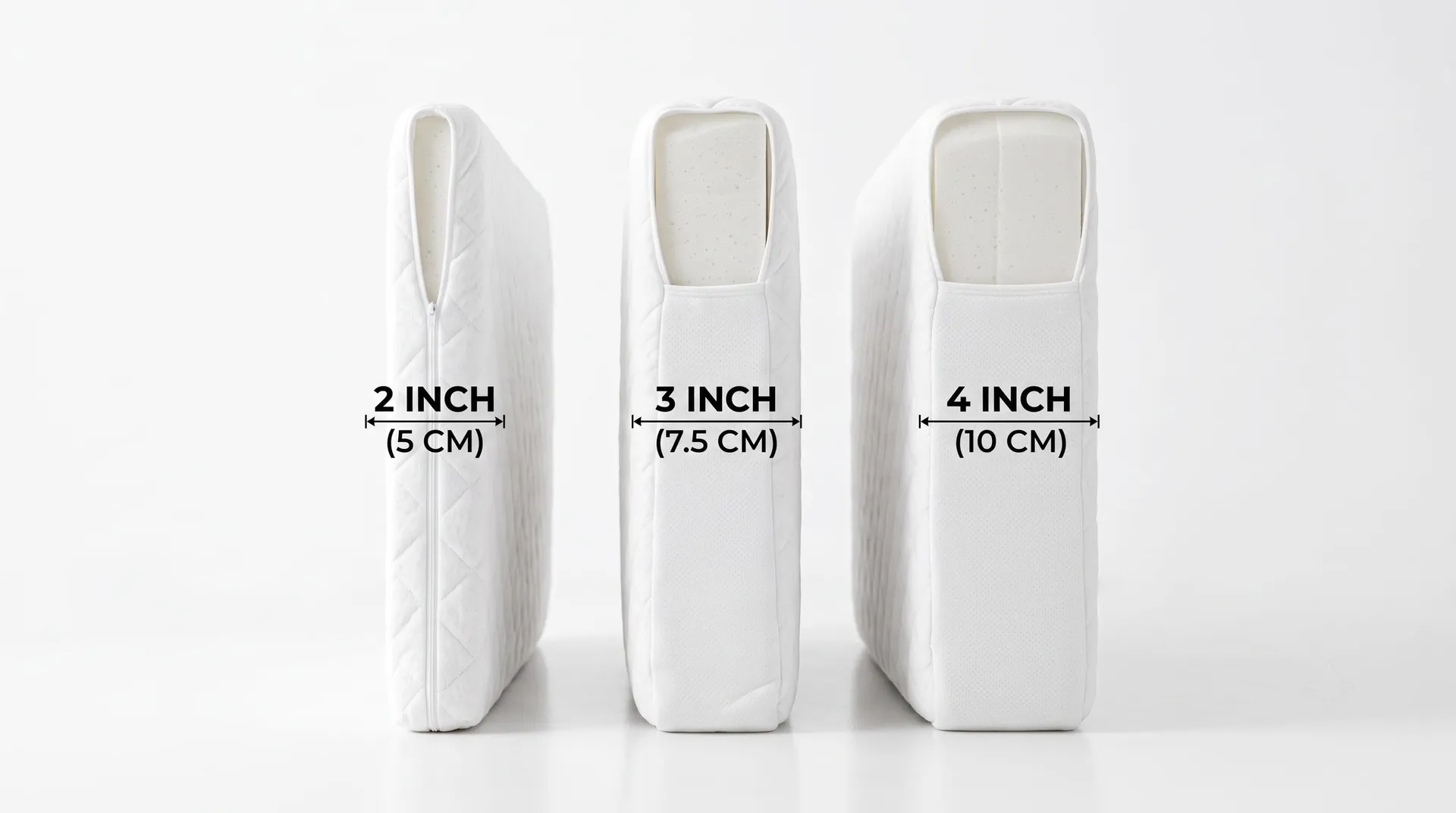
| Thickness | What it does | Choose it if |
|---|---|---|
| 2 inches | Softens the surface; the mattress still shapes how you sleep | Your bed is close to right and you want light softening, or budget is tight |
| 3 inches | Noticeably changes the feel; enough depth for real pressure relief | Your bed is medium-firm or firm, or you have shoulder or hip discomfort |
| 4 inches | Largely replaces the mattress's comfort layer | You're a heavier sleeper, or your bed is very firm |
2-inch toppers soften a firm mattress noticeably, but the mattress beneath still dominates the feel.
3-inch toppers are the most popular thickness for good reason: enough material for a side sleeper's shoulder and hip to sink in, without the instability of a very thick layer.
4-inch toppers are about the maximum useful thickness. Lighter sleepers may feel they're sleeping on the topper alone, and very thick soft layers can make edges feel less stable and hold more heat.
a thick topper adds a lot of height. Measure and buy deep-pocket sheets first.
What Topper Firmness Is Best for My Sleep Position?
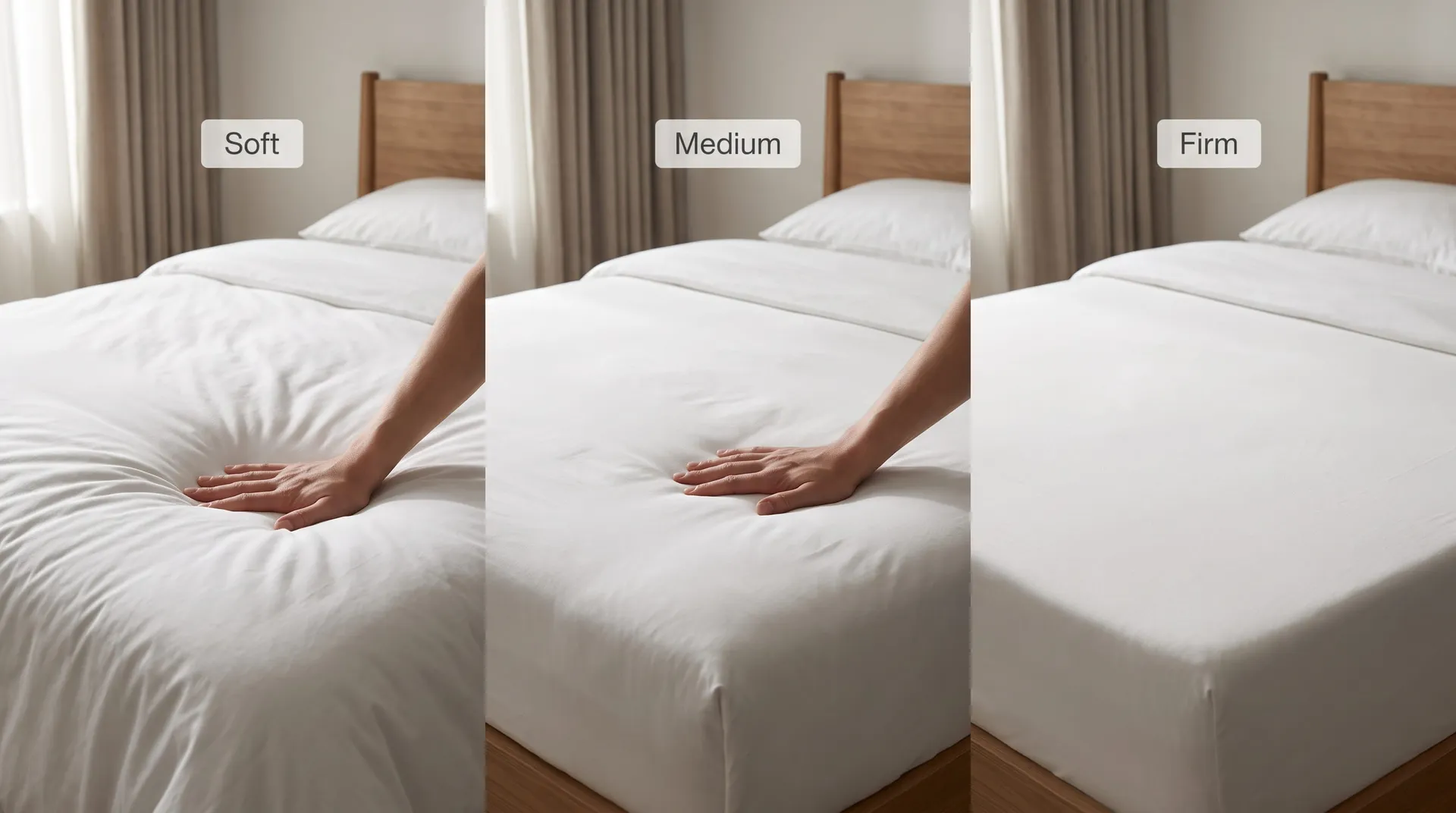
Side sleepers need soft, back sleepers need medium, stomach sleepers need firm and thin, or no topper. Sleep position matters more than taste here, because it decides whether your spine stays level.
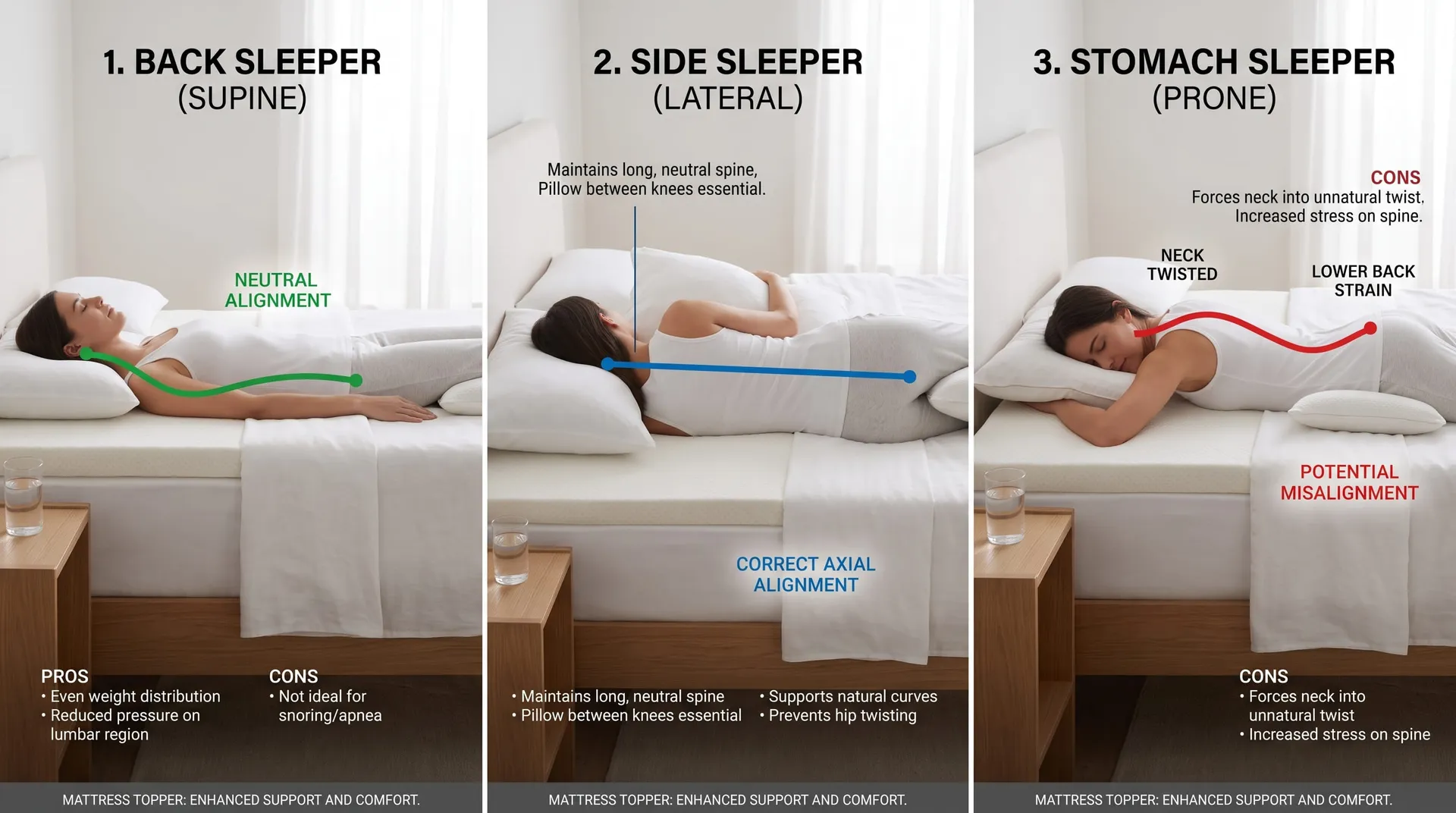
| Sleep position | Recommended topper feel | Why |
|---|---|---|
| Side sleeper | Soft to plush | Shoulders and hips must sink in to keep the spine straight |
| Back sleeper | Medium | The lower back needs support; too soft lets the hips sag |
| Stomach sleeper | Firm and thin, or none | Hips must not sink, or the lower back over-arches |
| Combination sleeper | Medium, fast response | The surface must reshape quickly when you turn |
Side sleepers need the most cushioning. Soft memory foam, TEMPUR material or soft latex gives the deepest relief, and 3 inches is a sensible minimum.
Back sleepers need enough softness to cushion the shoulders and lower back, but not so much that the hips drop below neutral. Medium memory foam or medium latex works well.
Stomach sleepers should avoid plush toppers, because sinking hips push the lower back into extension. A thin, firm latex topper is the safest choice, and many stomach sleepers are better off without one.
Which Mattress Toppers Sleep Coolest?
Natural latex is the most breathable common material; dense memory foam is the warmest. Heat is the most common complaint about toppers, especially foam ones. Based on how each material handles air and heat, from most to least cooling:
- Natural latex — open-cell structure lets air move through the layer.
- Wool — wicks and buffers moisture; tends to feel more comfortable than foam in warm conditions.
- Fiberfill and down — breathable, but with no active cooling.
- Graphite- or gel-infused memory foam — the additive helps move or absorb heat, but dense foam still limits airflow.
- Standard memory foam — no cooling additive; dense cells hold heat.
- Dense TEMPUR-style foam without a cooling cover — very dense, close-conforming foam with minimal airflow.
A cooling cover (such as a phase-change fabric) can make foam feel cooler when you first lie down, but it doesn't change the airflow through the foam beneath. Any 3-inch layer also adds some insulation, so a cool bedroom and breathable bedding matter as much as the topper.
if cooling is your priority, choose natural latex. If you need memory foam's contouring, choose a graphite- or gel-infused foam or one with a cooling cover. Avoid standard memory foam if you already sleep warm.
What Certifications Should a Mattress Topper Have?
At minimum, CertiPUR-US for any foam topper and GOLS for natural latex.
- CertiPUR-US — an independent program certifying that polyurethane foam is made without certain prohibited substances and meets low-VOC-emission limits.
- OEKO-TEX Standard 100 — tests textiles and components for harmful substances, so it can cover more of the product than a foam-only certification.
- GOLS (Global Organic Latex Standard) — certifies organic content and processing standards for latex.
- GOTS (Global Organic Textile Standard) — certifies organic fiber content and processing for covers made of cotton or wool.
Certified toppers in our coverage include natural and organic latex models with GOLS latex and GOTS cotton covers, and foam models with CertiPUR-US foam; see our best mattress topper page for details. For a full explanation, see CertiPUR-US certification explained.
How Do You Set Up and Care for a Mattress Topper?
Let it expand, strap it on, then cover it with a protector and a deep-pocket sheet.
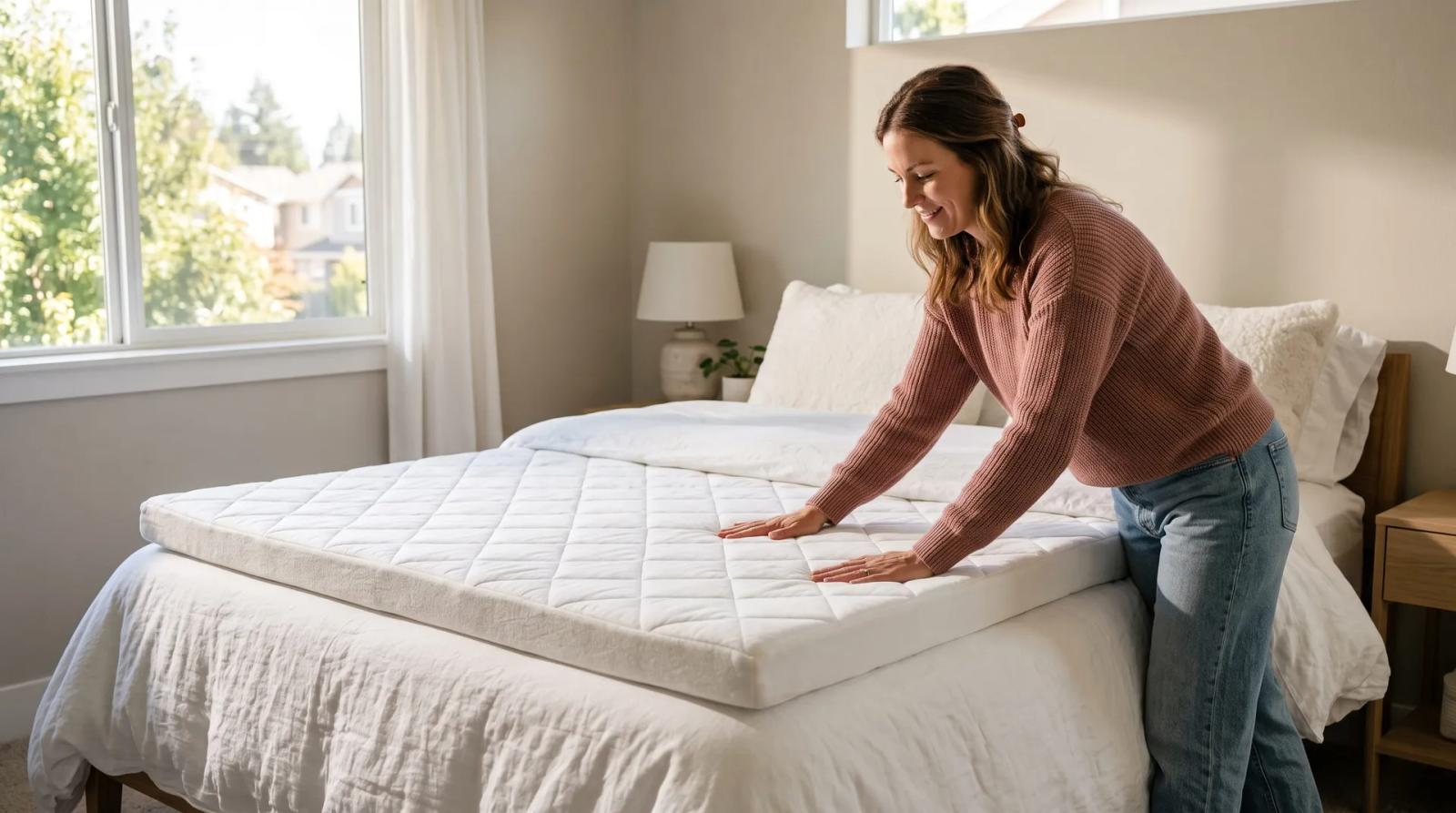
- Unpack and let it expand. Compressed foam toppers need a few hours; latex is usually ready sooner. New foam or latex can have a faint smell that fades with airing.
- Center it on the mattress and attach the anchor straps or bands.
- Add the layers in order: mattress, topper, mattress protector, fitted sheet.
- Check sheet depth. Add mattress depth and topper thickness. A 12-inch mattress plus a 3-inch topper needs at least 15 inches of pocket depth.
Washing: don't machine wash a foam or latex core. Spot clean it with mild soap and water, and wash a removable cover according to the label. Wool usually needs specialist cleaning. Many down and fiberfill toppers are machine washable; follow the care label. See how to clean a mattress for more.
Rotation: turning a topper head to foot every few months helps even out wear.
How Long Does a Mattress Topper Last?
It depends on the material, density and how it's used. As a general rule:
- Natural latex and wool tend to last longest.
- Dense memory foam (including TEMPUR material) usually outlasts low-density budget foam.
- Down and fiberfill compress the fastest.
Replace a topper when it no longer recovers to its original height after you get up, or when you can feel permanent impressions. The warranty length is a useful signal of how long the manufacturer expects it to last.
Ready to Choose a Topper?
This guide is deliberately product-neutral. When you know the material, thickness and firmness you want, our best mattress topper page compares six latex and memory foam toppers we've reviewed, with price, trial and warranty for each and who should skip which.
Mattress Topper Buying Checklist
Before you buy, confirm:
- My mattress has no visible sag or deep body impression
- I've matched topper firmness to my main sleep position
- I've chosen the material for my problem: foam for deep contouring, latex for breathability and bounce, wool for temperature control
- I've chosen thickness: 2 inches for light softening, 3 for a full change, 4 for heavier sleepers or very firm beds
- The topper carries CertiPUR-US (foam) or GOLS (latex) certification
- I've measured the combined depth and have fitted sheets deep enough
- I understand how to clean the material, and whether it can be returned
Bottom Line
A topper is one of the best-value comfort upgrades you can make, but only on a mattress that still supports you. Match the material to your problem, go with 3 inches unless you have a clear reason not to, and choose firmness by sleep position. Then compare specific options on our best mattress topper page.

Frequently Asked Questions
Can a mattress topper help with back pain?
It can help if the discomfort comes from a mattress that's too firm. A 3-inch medium topper can cushion the shoulders and hips while keeping the lower back supported.
If you have ongoing, severe or radiating pain, numbness or sciatica symptoms, see a doctor or physical therapist first; a topper isn't a treatment. See also our best mattress for back pain guide.
How long does a mattress topper last?
It varies by material and density. Natural latex and wool generally last longest, dense memory foam outlasts budget foam, and down or fiberfill compress fastest.
Replace it when it no longer springs back.
Should I buy a 2-inch or 3-inch topper?
For most people, 3 inches. Two inches makes sense if your mattress is already close to the feel you want.
If your bed is firm and you have shoulder or hip discomfort, 3 inches gives enough depth to make a real difference.
What is the difference between a mattress topper and a mattress pad?
A pad is a thin 0.5–1 inch layer that protects the mattress; a topper is a 2–4 inch layer that changes how it feels.
Can I put a topper on a memory foam mattress?
Yes, if the mattress is too firm or sleeps warm. A latex topper over foam adds breathability and bounce.
Don't add soft foam to an already soft foam bed, because the extra sink can throw off spinal alignment.
Does a mattress topper go under the mattress protector?
Yes. The order from bottom to top is mattress, topper, mattress protector, then fitted sheet.
Will a mattress topper void my mattress warranty?
Generally no. Warranties are usually voided by damage, stains or misuse, and a topper doesn't alter the mattress.
Check your own warranty terms to be sure.
What type of mattress topper is best for hot sleepers?
Natural latex, because its open-cell structure lets air move through it. If you want memory foam, choose a graphite- or gel-infused topper or one with a cooling cover.
See our best mattress topper picks for specific options.
Can a topper fix a sagging mattress?
No. If the support layer has failed, the topper will follow the dip.
Replace the mattress instead.