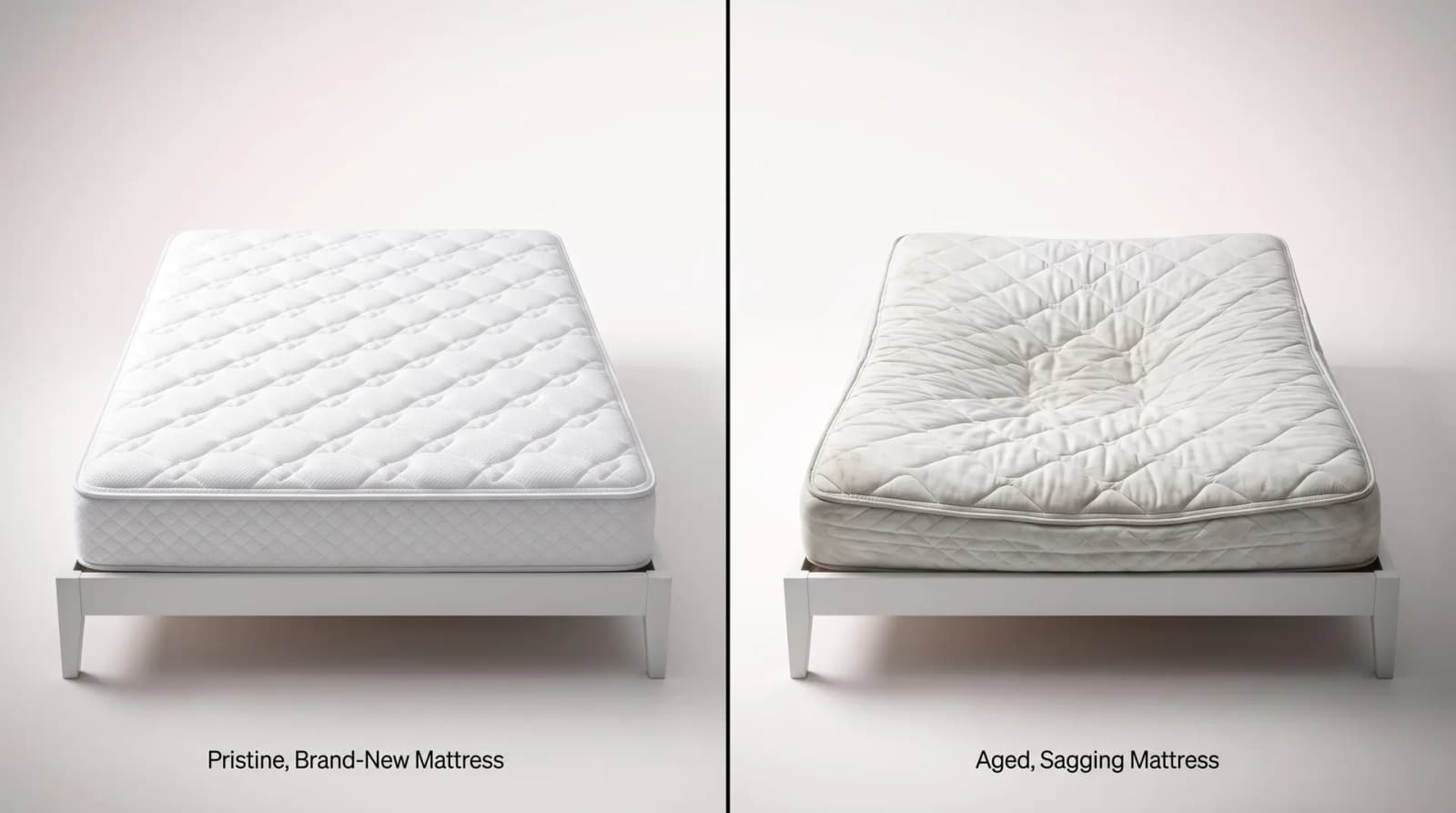
You roll over at 2 a.m. and the bed squeaks loudly enough to wake your partner. Or it creaks every time you shift, pops when you climb in, or groans in a way it never did when it was new. It's easy to assume the whole bed is finished.
Usually it isn't. Bed noise almost always has one specific cause you can find, and most fixes take under 30 minutes. This guide shows you how to isolate the source, then fix it step by step. As a former physical therapist, I also care about the other side of this: a noisy coil bed is sometimes telling you its support is wearing out, and I'll show you how to tell the difference.

The Short Answer
- Most bed noise comes from the frame, slats or box spring, not the mattress. Loose frame bolts are the single most common cause.
- All-foam and latex mattresses are essentially silent; only innerspring and hybrid beds have coils that can squeak.
- Find the source in about 10 minutes by taking the bed apart in stages and testing the mattress on the floor.
- Most fixes are cheap and quick: tighten bolts, pad the slats, add a non-slip pad or rotate the mattress.
- Persistent coil noise in a mattress over 7 years old, especially with sagging, means it's time to replace it.
Is It the Mattress or the Bed Frame Making Noise?
Most of the time it's the frame or foundation. Bed frames, slats and box springs account for the majority of noise complaints, along with the mattress rubbing against the surface beneath it.
Pure memory foam, gel foam and latex mattresses have no metal parts or springs to rub together, so they're essentially silent. If yours is all-foam or latex and the bed is noisy, the mattress is almost certainly not the culprit. Innerspring and hybrid mattresses do contain coils that can get noisy with age, but even with these, the frame and base cause most complaints.
knowing this up front can save you from replacing an expensive mattress when a simple frame fix solves the whole problem.
What Are the Main Causes of Mattress Noise?
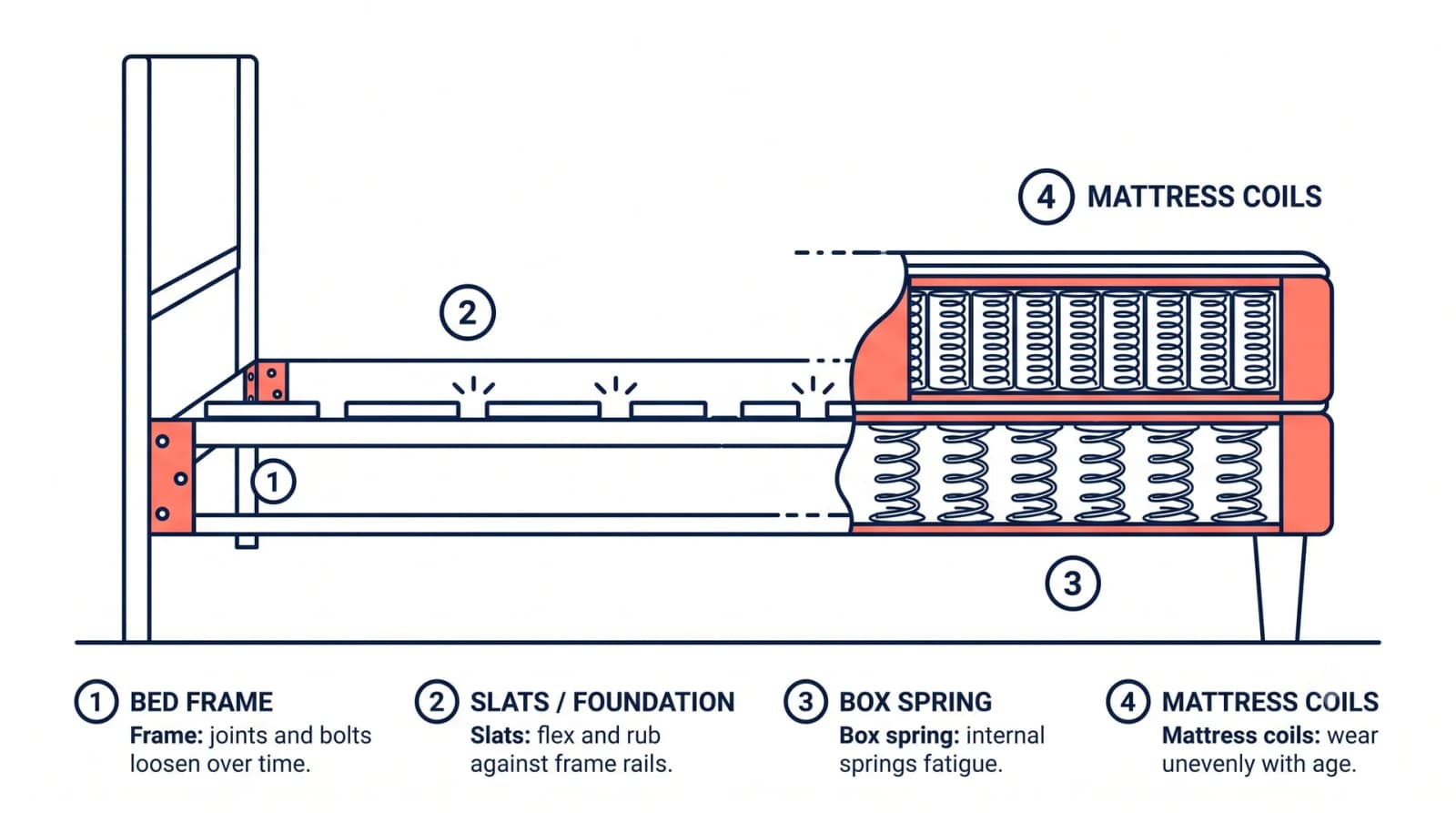
There are four: the bed frame, the slats, the box spring and the mattress coils.
| Source | What it sounds like | Usual fix |
|---|---|---|
| Bed frame | Rhythmic creak or squeak as you move, often from one corner | Tighten bolts, add rubber washers, glue wooden joints |
| Slats | Dull thud or creak in one spot; squeak when rolling | Reposition, pad the rails, add a center support leg |
| Box spring | Lower-pitched creak or metallic squeak from below the mattress | Replace with a platform or slatted foundation |
| Mattress coils | Metallic squeak or "ping" from inside the mattress, even on the floor | Rotate; warranty claim; replace if old |
Why is my bed frame squeaking?
Because its bolted joints have loosened. The movement of sleeping slowly works bolts loose, and even slight play creates metal-on-metal or metal-on-wood contact. Metal frames squeak where sections rub at connection points, and it gets worse as bolts loosen further. Wooden frames creak when joints that were once glued or tightly fitted start to separate and rub.
Why are my bed slats creaking?
Slats on platform beds and modern frames can bow and flex under your weight, shift sideways, or rub against the rails and each other. You'll hear a thud or creak when you sit on one area, or a sharper squeak when you roll to one side.
Why is my box spring squeaking?
A box spring is a fabric-covered wooden frame with a spring grid inside. Over time the internal springs lose tension unevenly and squeak under load, and the wooden frame inside can crack or loosen and creak. Lift the mattress off and press on the box spring directly; the source becomes obvious.
Why do mattress coils squeak?
In older connected coil systems (Bonnell or offset), the wire links between coils develop friction as coils wear at different rates. In pocketed coils, small tears in the fabric pockets let coils touch. Hybrids with pocketed coils are generally quieter because each coil moves on its own, but heavy wear in the center third, where most body weight sits, can bring on early fatigue and noise there.
How Do I Find Out Where the Noise Is Coming From?
Take the bed apart in stages and test each layer. It takes about 10 minutes and pins down the source in almost every case.
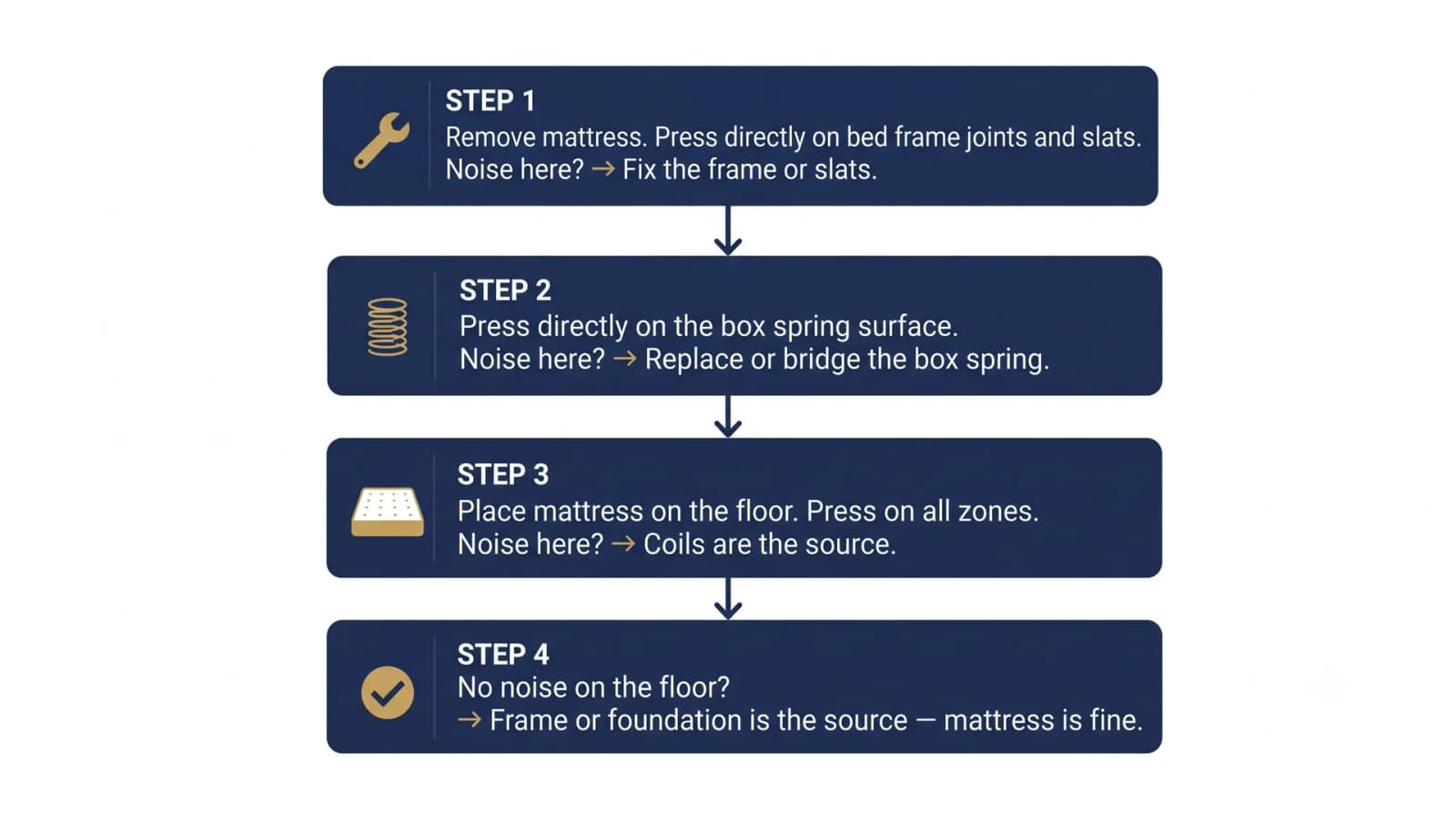
- Check the frame. Take off the mattress (and box spring). Press hard on every joint and connection, and wiggle each section. Noise here means the frame is the source.
- Check the box spring. Put the box spring back on the frame without the mattress. Sit and press on several areas. Noise here means the box spring is involved.
- Test the mattress on the floor. Put the mattress directly on the floor with nothing under it. Press everywhere, sit on the edges, roll side to side. If it's quiet, the mattress is fine and the problem is underneath. If it still squeaks, the coils are the source.
- Check where the mattress meets the base. Put it back on the frame and press the edges and corners. A friction sound only where the mattress touches the frame or slats means it's rubbing, and a non-slip pad will stop it.
How Do I Fix a Squeaky Mattress or Bed?
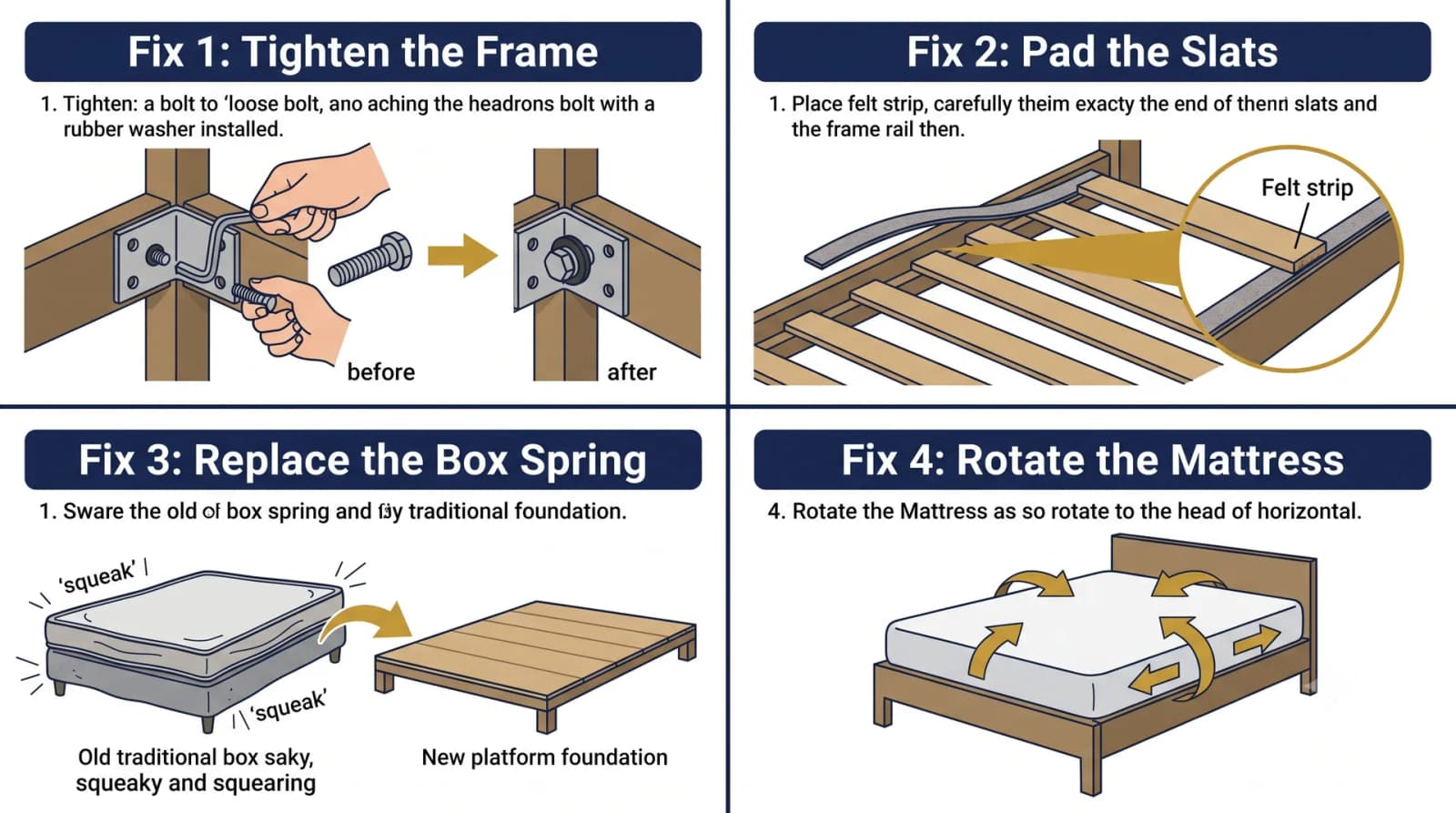
Match the fix to the source you found, starting with the cheapest and quickest.
| Fix | Time | Typical cost (check today's price) |
|---|---|---|
| Tighten frame hardware | 10 minutes | $0 |
| Pad slats and rails | 15 minutes | $5–$10 |
| Add a non-slip pad | 5 minutes | $15–$30 |
| Rotate the mattress | 5 minutes | $0 |
| Replace the box spring with a foundation | 1 hour | $80–$200 |
Fix 1: Tighten the frame hardware
Always try this first, whatever the noise sounds like.
- Remove the mattress and foundation.
- With the tool that came with the frame (usually an Allen key) or an adjustable wrench, tighten every bolt, nut and screw: legs, side rails, center support and headboard mounts.
- Make each one snug but don't overtighten, which can strip the threads.
- Reassemble and test.
If it still squeaks, fit a thin rubber washer between each bolt head and the frame to absorb the small movement that remains. For a creaking wooden joint, work a little wood glue into it, clamp it and let it cure.
Fix 2: Pad the slats and rails
- Remove the mattress and foundation, then press each slat to find the noisy one.
- Put any shifted slats back in position.
- Run self-adhesive felt or thin foam weather-strip tape along the top inner edge of each rail where the slat ends sit.
- Make sure no two slats touch along their length; space them evenly.
- If a slat bows and flexes, add a center support leg directly under it.
Fix 3: Add a non-slip pad under the mattress
A mattress that shifts slightly on its base makes a friction noise that sounds like it's coming from inside. Lay a non-slip rubber mesh grip pad on the slats or platform before putting the mattress back. It stops the sideways movement and the sound, and keeps the mattress from sliding when you get in and out.
Fix 4: Rotate the mattress
For coil noise in an innerspring or hybrid, strip the bedding and turn the mattress 180° head to foot. The worn zones that sat under your hips and shoulders move to the foot, the least-loaded area, which often quiets fatigued coils and spreads wear more evenly. Most modern mattresses are no-flip, so rotation is your main option. If the mattress is still under warranty, coil noise is typically covered, so contact the manufacturer.
Fix 5: Replace the box spring with a solid foundation
Box springs can't really be repaired, so replacement beats trying to fix them. If the noise is from the wooden frame inside, a fabric-covered plywood board between box spring and mattress can damp it in the meantime.
Memory foam, latex and hybrid mattresses don't need a box spring and perform as well or better on a solid platform or quality slatted foundation, which removes the spring noise, supports the mattress more evenly and usually lasts longer.
check slat spacing on any new foundation. Most foam and latex mattresses need slats no more than 3 inches apart so they don't sag between them; hybrids can handle slightly wider gaps thanks to their coils.
Can Memory Foam and Latex Mattresses Make Noise?
Not structurally. With no springs or metal parts, they're silent by design, so apparent noise almost always comes from outside the mattress. There are two minor exceptions:
- Cover noise. Some covers rustle or squeak slightly when compressed, especially after storage or long use when they stiffen. Washing the cover usually softens it and ends the sound.
- Air movement. Very dense memory foam can make a faint "exhale" as air moves through it under pressure. It's more noticeable in a very quiet room, isn't a defect and doesn't affect performance.
If neither applies, test the mattress on the floor. Whether the noise follows the mattress or stays with the frame settles it.
When Does a Noisy Mattress Mean It's Time to Replace It?
When the noise is a symptom of worn-out support rather than a loose part. Watch for these four signs:
- Persistent coil noise in a mattress more than 7 years old. It usually means the springs have fatigued to the point of poor support, often alongside sagging, less pressure relief and more morning stiffness.
- Noise across the whole sleep surface. If pressing anywhere produces sound, the coil system has worn broadly, not in one spot.
- Noise plus visible sagging. A body impression of 1 inch or more with noise means the support structure has failed. A topper can hide the dip for a while, but it can't restore coil support.
- Noise that returns within days of rotating. The coils in the original zone have lost their tension for good.
from a back-health point of view, a squeaky, sagging coil bed is no longer holding your spine in line. Fix the noise if it's the frame; replace the mattress if it's the support. Our How Long Does a Mattress Last guide gives lifespan benchmarks by type.
How Do I Stop My Bed From Squeaking Again?
A few minutes of maintenance twice a year keeps it quiet.
- Tighten frame hardware every 6 months. Set a calendar reminder for a 10-minute check.
- Rotate the mattress every 3–6 months. Mark the head end with tape on the underside when it's new so you always know which way to turn it.
- Use a mattress protector. It keeps the mattress cover from stiffening or getting damaged, and some have a non-slip backing that stops sliding.
- Check slat spacing once or twice a year. Slats creep out of position, especially in shallow grooves on wooden rails.
- Lubricate metal joints. A small amount of WD-40 or white lithium grease on metal-on-metal contact points cuts friction noise. Use it sparingly and wipe off the excess so it doesn't reach your bedding.
Our Tested Recommendations
If your mattress turns out to be the problem and it's past saving, these are the quietest beds from our testing.
Nectar Classic Mattress: silent all-foam for light sleepers
All-foam means no coils to squeak, and it's one of the quietest beds we've tested, with strong motion isolation for couples. Read our Nectar Classic review.
Sweetnight CoolNest Mattress: a quiet hybrid on a budget
If you want coil bounce without the noise, this is one of the quietest hybrids we've tested at its price, and it nearly matched the Purple in our heat tests. Read our Sweetnight CoolNest review.
DreamCloud Classic Mattress: quiet hybrid with long-term cover
We found it quiet in our noise testing, and its lifetime warranty covers sagging over 1.5 inches, the very failure that often comes with coil noise. Read our DreamCloud Classic review.
The Bottom Line
Before you blame the mattress, spend 10 minutes testing the layers. Most of the time it's a loose frame bolt, a rubbing slat or a tired box spring, and the fix is a wrench, some felt or a new foundation.
If the noise really is coming from coils inside an older, sagging mattress, no fix will last, and replacing it is better for your back as well as your sleep. For a bed that stays quiet, start with our Nectar Classic review or see our best mattresses for couples.
Frequently Asked Questions
Why does my mattress squeak when I move?
Usually it's the frame or box spring, not the mattress. Loose joints rub metal on metal or wood on wood as you move.
Put the mattress on the floor: if the squeak stops, the frame or foundation is the source.
Can a new mattress make noise?
A new innerspring or hybrid can make some noise for the first few days as coils settle and cover materials break in, and this usually stops within a week. If it continues beyond 2 weeks, contact the retailer, since it may be a defect covered by the trial or warranty.
Why does my foam mattress make noise?
It almost certainly doesn't; the frame, slats or box spring do. The only foam-specific sound is a faint rush of air through the foam under your weight, which isn't a defect.
Test the mattress on the floor to confirm.
Is a squeaky mattress bad for sleep?
Yes, for many people. The sound can pull light sleepers out of deeper sleep, and in coil mattresses the noise can signal worn support that contributes to morning back pain.
Fixing the source often improves sleep beyond just removing the sound.
How do I stop my bed frame from squeaking?
Tighten every bolt and nut, which solves most frame squeaks. Add rubber washers at metal joints, glue loose wooden joints, and line the rails with felt where the slats rest.
Will a mattress topper stop the noise?
No, not if the noise comes from the frame, slats or box spring. For coil noise, a firm topper may reduce it slightly by spreading your weight, but it doesn't fix the worn coils.
Fix the structure first; add a topper only for comfort.
How long should a mattress last before it starts making noise?
Quality innerspring and hybrid mattresses should stay quiet for 5–7 years with regular rotation and proper support; budget innersprings can start at 3–4 years. All-foam and latex beds never develop coil noise.
Noise before 5 years suggests the support doesn't suit your weight or the build quality was low.
Why does my mattress make a popping noise?
A pop when you get in or out usually comes from a loose frame joint or a slat shifting, or from a coil in an older innerspring. Use the floor test to tell which: if it pops on the floor, it's the coils.
Does a box spring make noise?
Yes, as its internal springs lose tension and its wooden frame loosens. Since box springs can't really be repaired, replacing one with a platform or slatted foundation usually solves it for good.