On this page
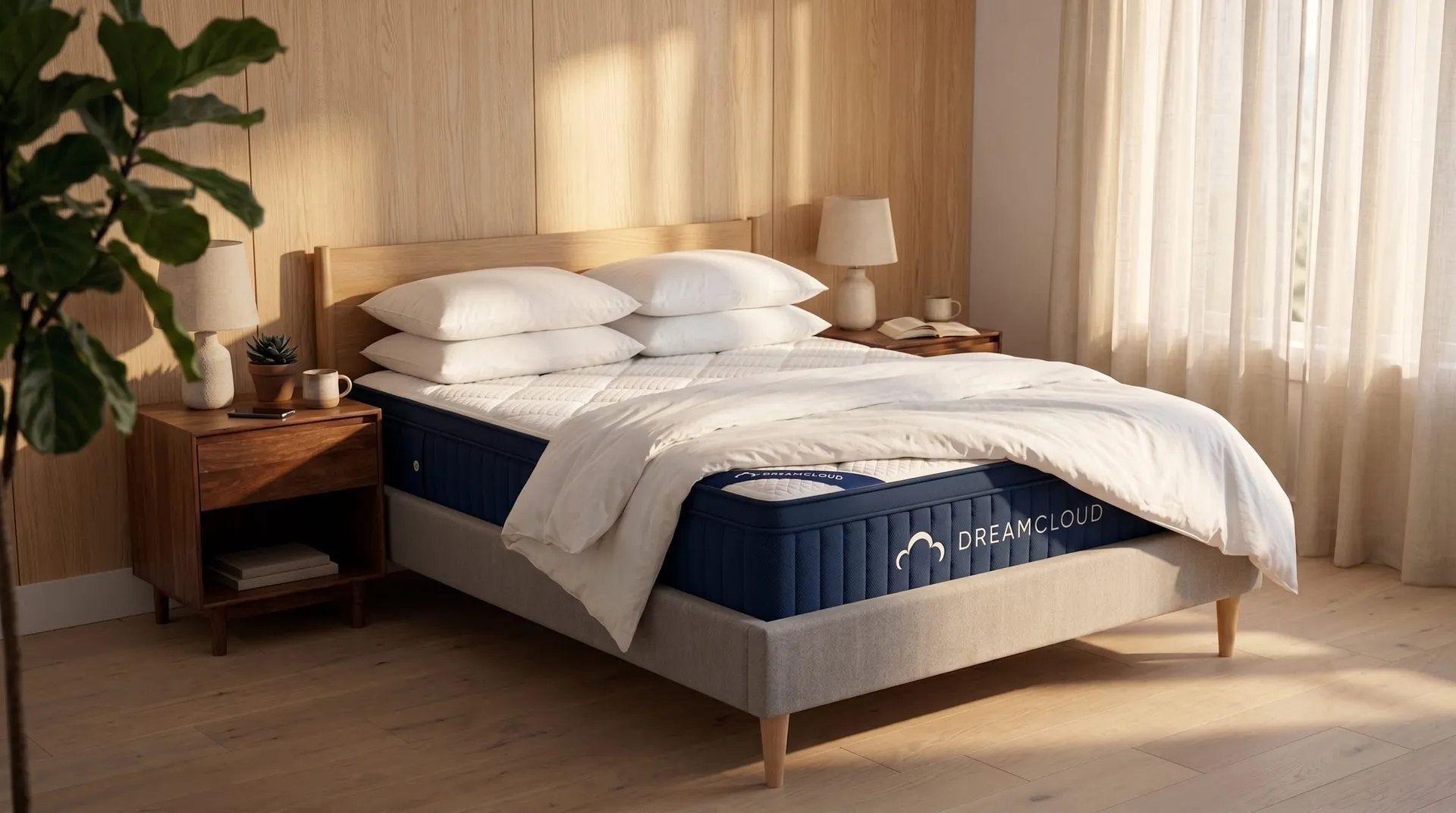
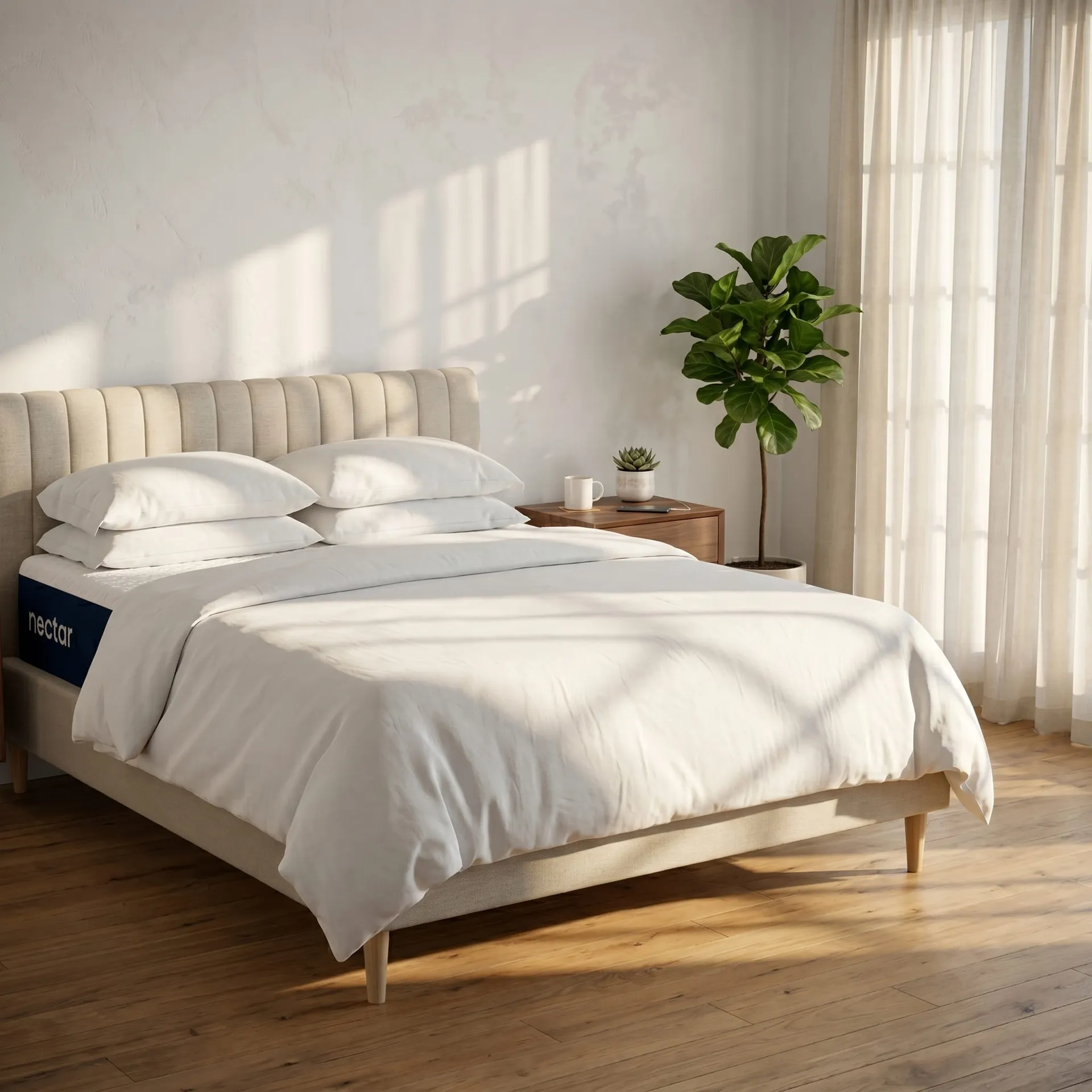
The Nectar Classic and DreamCloud Classic are made by the same company (Resident), cost almost the same, and both come with a 365-night trial and a lifetime warranty. The real difference is construction: Nectar is all-foam, DreamCloud is a hybrid with pocketed coils. That one choice drives how they feel, how hot they sleep and how usable the edges are.
Quick answer: choose the DreamCloud Classic (4.6/5) if you sleep warm, share the bed or sit on the edge — it was cooler and its edges compressed far less in our tests. Choose the Nectar Classic (4.5/5) if you are a side sleeper who wants classic deep-hug memory foam and the quietest, most motion-free surface.
Side-by-Side Comparison
| Nectar Classic | DreamCloud Classic | |
|---|---|---|
| Construction | 12" all-foam, 3" gel memory foam comfort layer | 12" hybrid: Euro pillow top, 2" gel memory foam, 5" pocketed coils |
| Firmness | Medium-firm (about 6/10) | Medium-firm |
| Our score | 4.5/5 | 4.6/5 |
| Queen price | $679–$699 | $649–$699 |
| Edge compression | 3.8" under a 185 lb seated tester | 1.1" |
| Surface temperature | +5.2°F above ambient (standard memory foam: +7.1°F) | 71.6°F average (standard memory foam: 78.4°F) |
| Motion isolation | 0.12 mm displacement across the bed | 0.02g on the vibration sensor |
| Trial / warranty | 365 nights / lifetime | 365 nights / lifetime |
| Weight & setup | Lighter; 24–72 hours to fully expand | About 70 lbs (queen); two-person setup |
Temperature and motion were measured with slightly different methods in each review, so compare each mattress against its own reference rather than the raw numbers against each other.
Feel and Pressure Relief
Nectar: the 3-inch gel memory foam layer gives the slow, deep "hug" memory foam is known for. Our 185 lb side-sleeping tester sank about 1.8 inches into the comfort layer — enough to relieve the shoulder and hip without feeling swallowed. The trade-off is a slower response, so changing position takes more effort.
DreamCloud: the pillow top and thinner 2-inch gel foam layer sit on coils, so it feels a little more buoyant. Tekscan readings for side sleeping were excellent: 0.32 psi at the shoulder, 0.38 psi at the hip and 0.21 psi at the lower back. The memory foam still has a 3–4 second response time, so it isn't truly bouncy.
Verdict: both relieve side-sleeper pressure well. Nectar has the deeper foam hug; DreamCloud adds better lower-back support from the coils.
Cooling
All-foam mattresses trap more heat. The Nectar's gel foam ran 5.2°F above ambient — cooler than standard memory foam, but warmer than hybrids. The DreamCloud's coil core lets air move through the mattress, and its surface averaged 6.8°F cooler than standard memory foam in our 8-night tests.
Verdict: DreamCloud for hot sleepers.
Edge Support and Motion Isolation
This is the biggest measured gap. The Nectar's foam edge compressed 3.8 inches under a seated tester, effectively narrowing the usable sleep surface by about 4–5 inches per side. The DreamCloud's coil perimeter compressed just 1.1 inches.
Both isolate motion well. The Nectar measured 0.12 mm of displacement on the far side of the bed; the DreamCloud's pocketed coils read 0.02g, below the threshold of perceptible motion.
Verdict: DreamCloud for edge support; both are good for couples on motion.
Who Should Buy Which
Buy the Nectar Classic if you:
- Sleep on your side and love a deep memory foam feel
- Weigh between about 130 and 220 lbs
- Want a lighter mattress that one person can move
Buy the DreamCloud Classic if you:
- Sleep hot
- Share the bed and use the full width, or sit on the edge to dress
- Want coil support for the lower back, or switch positions during the night
Neither is ideal if you sleep strictly on your stomach — see our best mattress for stomach sleepers or best firm mattress guides.
Frequently Asked Questions
Is DreamCloud better than Nectar?
For most people, slightly — it scored 4.6/5 to Nectar's 4.5/5, sleeps cooler and has much stronger edges. Nectar is the better choice for side sleepers who specifically want an all-foam hug.
Are Nectar and DreamCloud made by the same company?
Yes. Both are made by Resident, which is why their trials (365 nights) and warranties (lifetime) match.
Which is better for side sleepers?
Both performed well for side sleepers in pressure mapping. Choose Nectar for the deeper foam contour, or DreamCloud if you also sleep hot or need edge support.
Which is better for couples?
DreamCloud. Both isolate motion well, but its edges compressed only 1.1 inches versus 3.8 inches on the Nectar, so couples keep more usable width.
Related Guides
More on learn the basics
- How to choose a mattress
- Firmness guide
- Size chart
- King vs queen
- How long a mattress lasts
- Cleaning a mattress
- Noisy mattress fixes
- Disposing of a mattress
- CertiPUR-US explained
- Hybrid vs memory foam
- Latex vs memory foam
- Nectar vs Purple