How to Dispose of a Mattress: 2026
How to dispose of a mattress in 2026: recycling, donation, pickup and disposal options, what they cost, and how to prepare your mattress for each one.
A mattress is one of the most awkward things to get rid of: too big for most curbside trash pickups, too heavy to carry alone, and — because most take decades to break down — a genuinely bad candidate for the landfill in the first place. The good news is you have more options than you probably think, several of them free.
This guide covers every realistic way to get rid of an old mattress in 2026 — recycling, donation, retailer pickup, and disposal — what each one costs, and how to prepare your mattress so whichever option you choose actually goes smoothly.
Why You Shouldn't Just Put It on the Curb
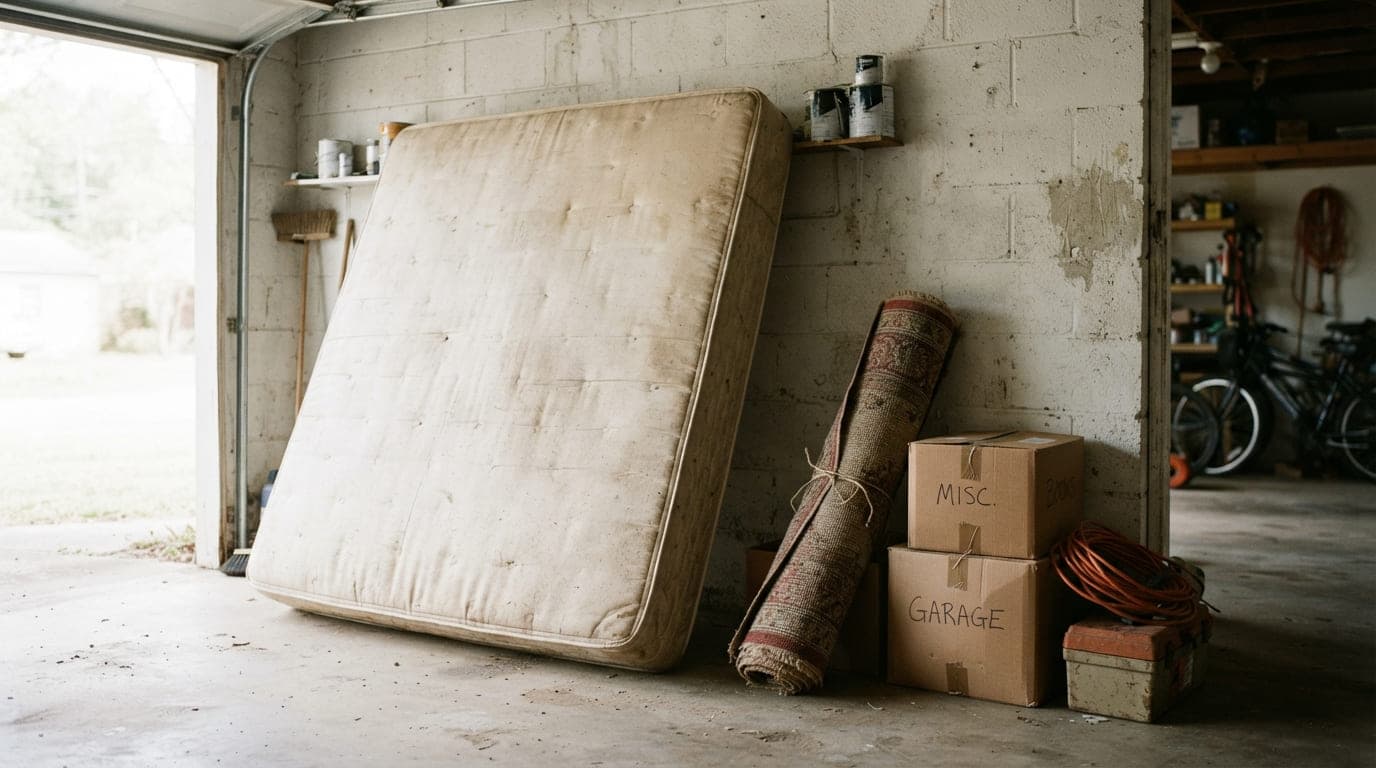
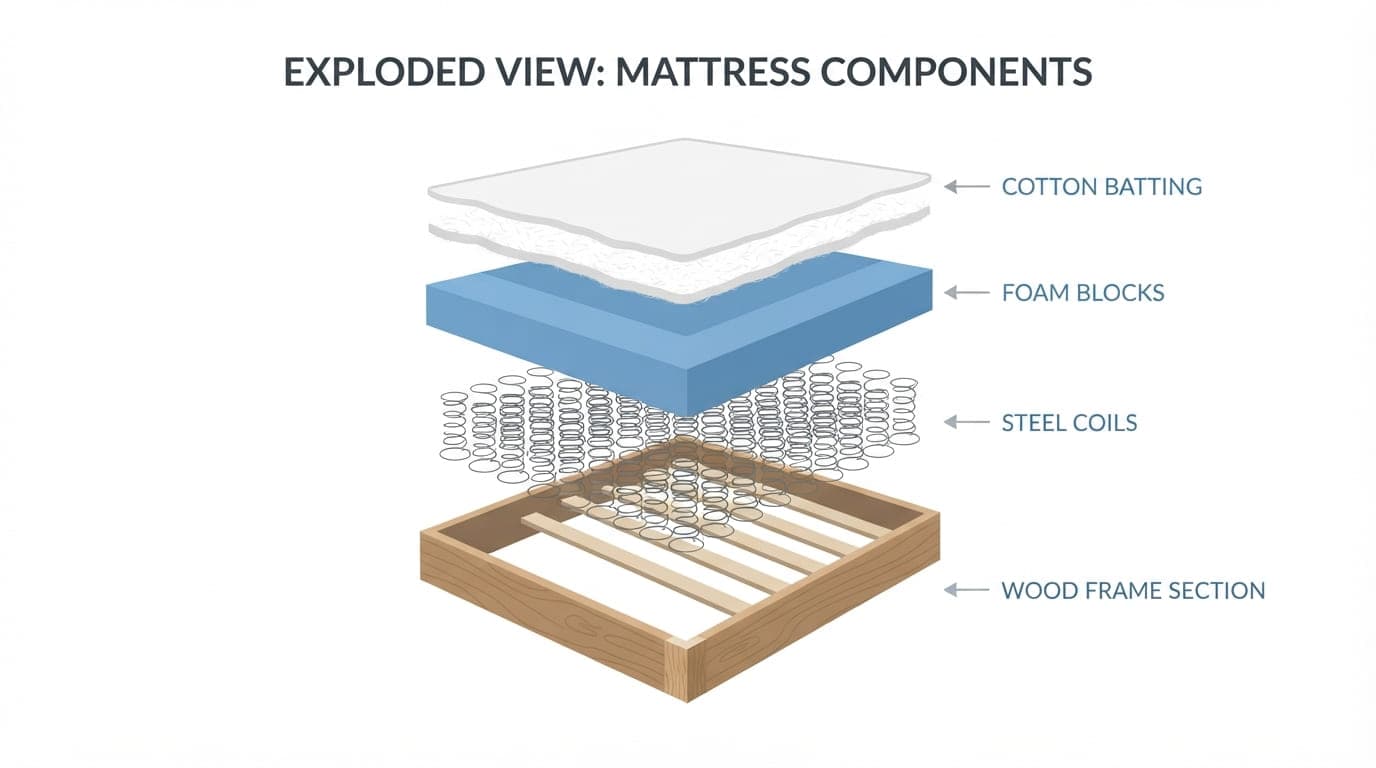
Most curbside trash services either won't take a mattress at all or charge a bulk-item fee for it, and many cities fine you for leaving one out without a scheduled pickup. Beyond the logistics, a mattress in a landfill takes decades to decompose, and foam and fabric components don't break down cleanly. Roughly 80–90% of a mattress by weight — steel springs, foam, cotton, wood — is recyclable, which is why recycling and donation are worth trying before you throw one away.
Your Options, Ranked by Cost
1. Retailer or Delivery Take-Back — Often Free
If you're buying a new mattress, ask whether the retailer removes your old one at delivery. Many major brands and retailers offer this, sometimes free and sometimes for a small fee ($20–$75 is typical). This is the easiest option if the timing lines up, since the old mattress never has to leave your house under its own power. Confirm it in writing when you order — a phone rep's verbal "sure, we'll take it" isn't always what shows up on delivery day.
If you're shopping for a replacement, see our Best Mattresses of 2026 and Best Mattress Under $500 guides, and ask about take-back before you buy.
2. Donation — Free, If the Mattress Qualifies
Charities generally accept mattresses only in good condition: no stains, tears, sagging, odor, or signs of bed bugs. If yours qualifies, donation is free and keeps a usable mattress out of the waste stream entirely.
- Habitat for Humanity ReStores accept furniture and mattress donations at many locations — check your local ReStore first, since policies vary by location.
- Salvation Army and Goodwill — call ahead, since not every location takes mattresses, and some require the mattress to be a specific age or condition.
- Local shelters and community organizations — some accept mattresses directly, particularly for family or transitional housing programs.
Most donation programs won't schedule a pickup for a mattress in poor condition, so be honest about its state before you call — a wasted pickup trip helps no one.
3. Mattress Recycling — Free to Moderate Cost
Recycling breaks the mattress down into its raw materials — steel, foam, wood, fabric — for reuse, rather than reselling it whole. Some states and municipalities fund dedicated mattress recycling programs, so it's worth checking whether yours does before assuming there's a cost.
Search for "mattress recycling" plus your city or county — many areas have a dedicated facility, and some waste management companies offer curbside mattress recycling for a flat fee. Where a local program exists, recycling is often cheaper than a bulk-trash pickup fee, and sometimes free.
4. Bulk Trash Pickup — Moderate Cost
Many cities offer scheduled bulk-item pickup for a flat fee, typically $20–$80 depending on the city, though some include a set number of free bulk pickups per year. Check your city or county waste management website for scheduling and fees — you generally need to schedule in advance rather than just leaving it at the curb.
5. Junk Removal Service — Highest Cost, Most Convenient
National and local junk removal companies will pick up a mattress from inside your home, no curb-dragging required, typically for $75–$200 depending on your area and how much else you're disposing of at the same time. This is the most convenient option if you can't move the mattress yourself, but it's the most expensive per item unless you're clearing out multiple things at once.
Cost Comparison
| Option | Typical Cost | Best If |
|---|---|---|
| Retailer take-back | Free–$75 | You're buying a new mattress |
| Donation | Free | Mattress is clean and undamaged |
| Mattress recycling | $0–$50+ | Your area has a facility or local program |
| Bulk trash pickup | $20–$80 | You just want it gone, no rush |
| Junk removal service | $75–$200 | You can't move it yourself |
How to Prepare Your Mattress for Pickup or Drop-Off
Check the condition first. Donation centers will turn away mattresses with stains, tears, sagging, or odor, so know which category yours falls into before you call around.
Bag it if required. Some cities and recycling facilities require the mattress to be wrapped in plastic before pickup, both for hygiene and to keep bed bugs from spreading if present. A mattress disposal bag (sold at most hardware stores) works for this.
Strip the bedding and check for anything left inside or underneath. It sounds obvious, but items left in a fitted sheet or wedged against a headboard are a common last-minute scramble.
Get help moving it. A queen or king mattress is awkward for one person to carry, especially down stairs. If you don't have help, a junk removal service that hauls it from inside your home may be worth the extra cost over a curb-only pickup.
Measure doorways and stairwells before moving day, particularly for a new memory foam or hybrid mattress being delivered at the same time — see our Mattress Size Chart Guide for exact dimensions by size.
When Should You Actually Replace Your Mattress?
Disposal only matters once you've decided it's time to let go. Most mattresses last 7–10 years, with sagging, new aches on waking, or visible body impressions as the clearest signs it's time. Our How Long Does a Mattress Last guide covers the full signs-to-replace checklist, and our Mattress Topper Guide is worth reading first if your mattress is only a little too firm or soft rather than genuinely worn out — a topper can buy you another year or two before disposal becomes necessary.
Frequently Asked Questions
Can I just throw a mattress in the regular trash?
Usually not directly — most trash services either refuse mattresses or require a separate bulk-item pickup, often for a fee. Check your city or county's waste management page before assuming curbside works.
Is mattress recycling free?
It depends on where you live. Some cities and states fund dedicated mattress recycling programs that are free to use, while other areas only have a paid facility. Search "mattress recycling" plus your city to find options and pricing near you.
Will charities pick up a mattress?
Some will, but only if it's in good condition — no stains, tears, sagging, or odor. Call ahead to confirm pickup availability and condition requirements before scheduling.
Does a new mattress purchase include old mattress removal?
Often, yes, but not always automatically — ask specifically when you order, and get the terms in writing (free or a set fee) rather than relying on a verbal confirmation.
How much does it cost to get rid of a mattress?
Anywhere from free (donation, retailer take-back, or a local recycling program) to $200 (a full-service junk removal pickup). Bulk trash pickup and standard recycling usually fall in between, at $20–$80.
What happens to a mattress that gets recycled?
It's broken down into its raw materials — steel springs, foam, wood, and cotton or fabric — which are separated and sold for reuse. Roughly 80–90% of a mattress by weight can be recycled this way.
Can I recycle a mattress with bed bugs?
Disclose it. Many facilities and donation centers won't accept a mattress with bed bugs, and some require it to be sealed in plastic. Call ahead and be upfront — this protects both the facility staff and whoever might otherwise unknowingly receive it.
The Bottom Line
If you're buying a new mattress, ask about take-back removal first — it's often free and the least hassle. If your old mattress is still in good shape, try donation before recycling. Otherwise, check whether your area has a local recycling program, compare that against your city's bulk pickup fee, and reserve a junk removal service for when you genuinely can't move it yourself.
Related Guides
Ready to shop? Browse our expert mattress reviews to find your perfect match.