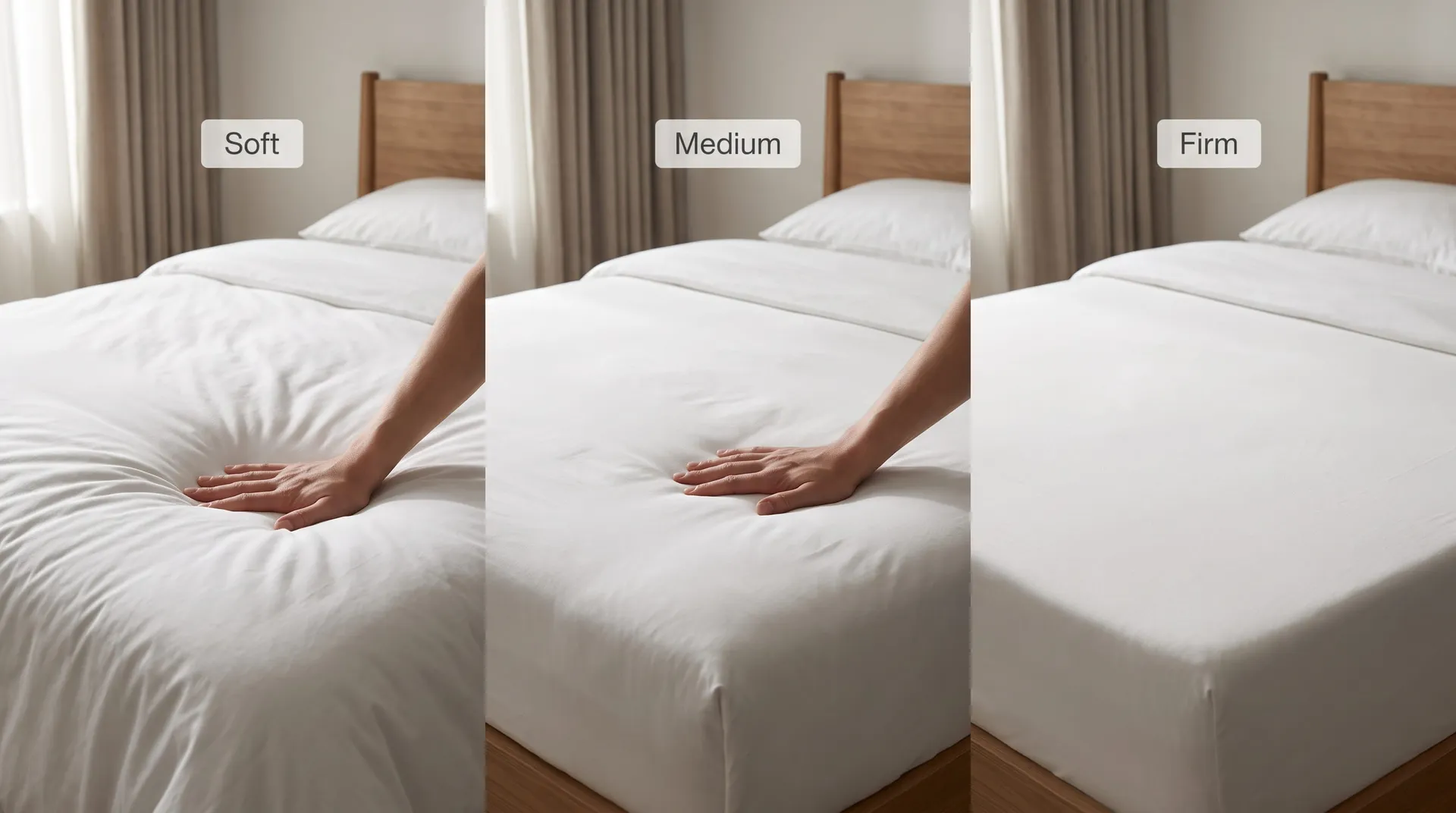
Your new mattress arrived, and it doesn't feel like it did in the store or the reviews. Maybe it's firmer than you expected, it has a faint smell, or you woke up with a stiff back. That's normal. New foams and coils need time to soften, and your body needs time to adjust to a different kind of support. This guide explains how to break in a new mattress, how long it usually takes, and how to tell whether it's still settling or simply the wrong bed for you.

The Short Answer
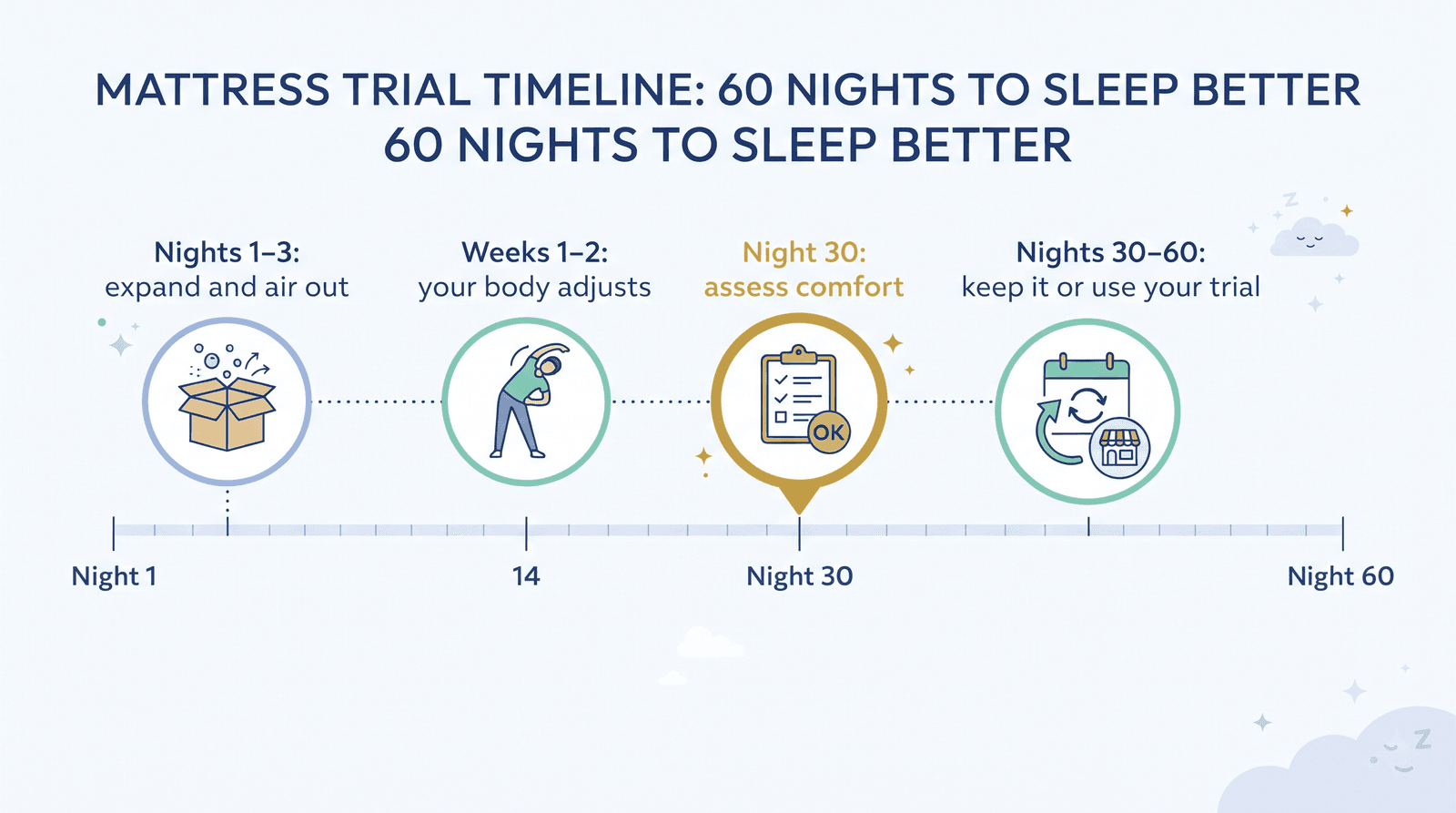
Most new mattresses take about 30 nights to break in, though some feel right within a week and firmer or denser beds can take up to two months. To speed it up:
- Let it fully expand and air out before judging the feel.
- Sleep on it every night — don't switch back to your old bed.
- Walk or crawl across it gently for a few minutes each day.
- Rotate it 180° every couple of weeks during the first few months.
- Keep the room warm if you have memory foam.
- Put it on the right base.
- Give your body time, too.
If it still hurts after 30 to 60 nights, it's probably the wrong firmness, and that's what your sleep trial is for.
Why Do New Mattresses Need Breaking In?
Two things are adjusting at once: the mattress and you.
The materials are brand new. Foam cells start out stiff and loosen with use, and coil units settle as the layers above them compress slightly. Most mattresses feel softer after a few weeks than they did on night one.
Your body is adjusting too. If your old mattress was sagging, your muscles and joints got used to sleeping out of line. A supportive new bed can feel strange, or even cause mild aches, for the first week or two while your body gets used to sleeping in a better position.
How Long Does It Take to Break In a New Mattress?
About 30 days on average, but it depends on the material.
| Mattress type | Typical break-in | What changes |
|---|---|---|
| Memory foam | 30–60 nights | Softens and responds faster as foam cells loosen |
| Hybrid | 2–4 weeks | Comfort foam softens; coils settle |
| Latex | 2–4 weeks | Little change in feel; very resilient |
| Innerspring | 2–4 weeks | Padding compresses slightly |
| Polymer grid (like Purple) | 3–5 nights | You get used to the grid texture |
Ranges are typical, not guaranteed; firmer and denser mattresses usually take longer.
In our own testing, the polymer grid of the Purple Original took testers 3–5 nights to stop feeling unusual, and all of them had adjusted by night six. Memory foam beds are the slowest to change, because dense foam softens gradually with heat and use.
Before You Sleep on It: Expansion and Smell
Let a bed-in-a-box mattress fully expand before you judge it. It's normal for a compressed mattress to feel firm and look slightly thin for the first day or two.
How long that takes varies a lot. In our tests:
- The Purple Original reached full height in about 3 hours, with no smell.
- The Helix Midnight Luxe needed 2–4 hours to expand, and its light smell was gone by 72 hours.
- The DreamCloud Classic's day-one smell dropped by about 80% within 24 hours and was gone by 48 hours.
- The Nectar Classic took 58 hours to reach full height; its new-foam smell faded within 24 hours with a window open.
You can usually sleep on it the first night, but give it a few days before deciding how it feels.
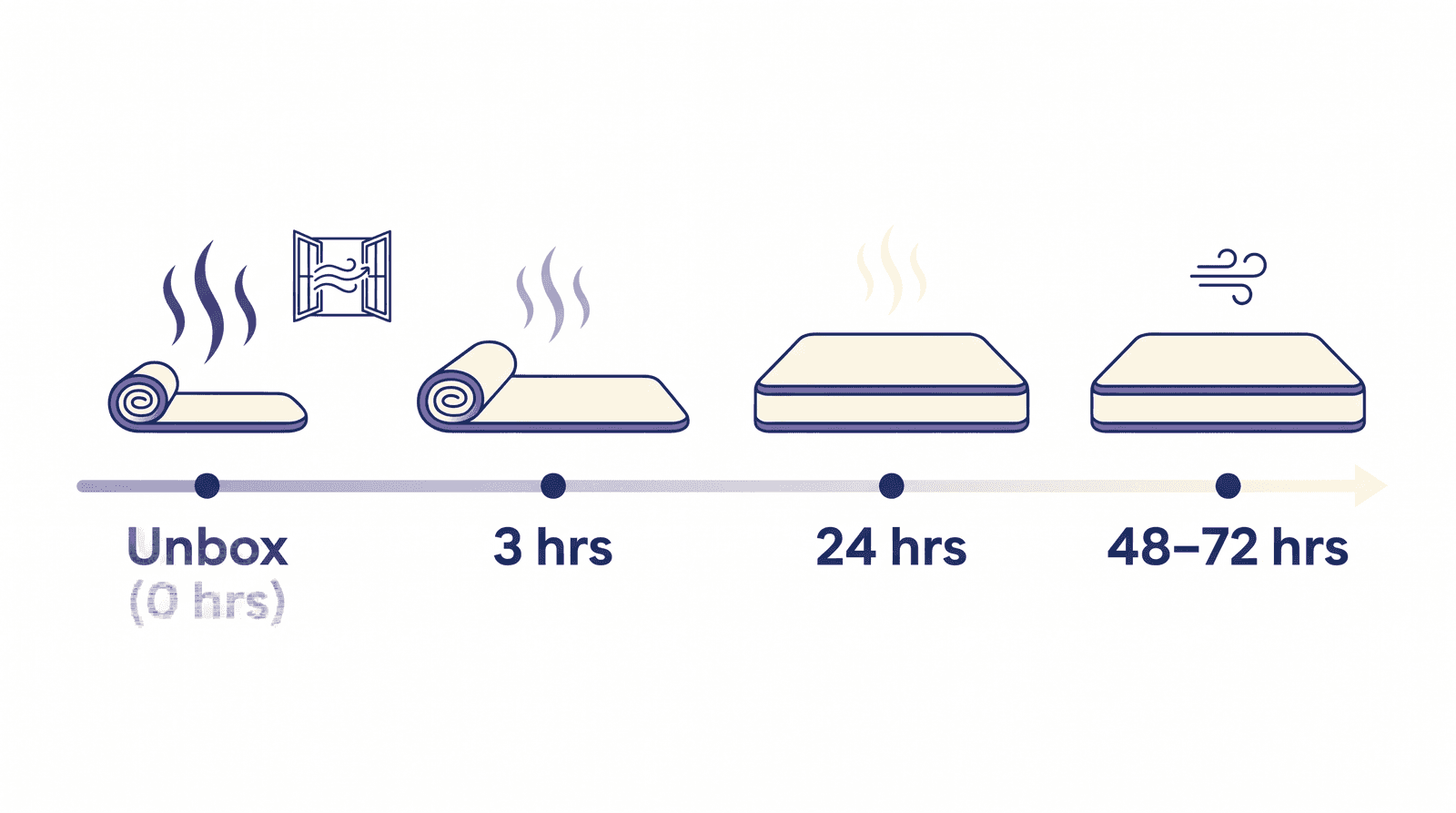
How to get rid of new mattress smell
That smell is off-gassing from new foam, and it's usually harmless and short-lived. Open a window, run a fan, and leave the mattress uncovered for a day or two before adding sheets. Look for CertiPUR-US certified foam, which is tested for low emissions.
7 Ways to Break In a New Mattress Faster
1. Sleep on it every night
Consistency matters most. Your body weight and warmth are what soften the materials, and switching back to your old bed or the couch resets your body's adjustment.
2. Walk or crawl across it
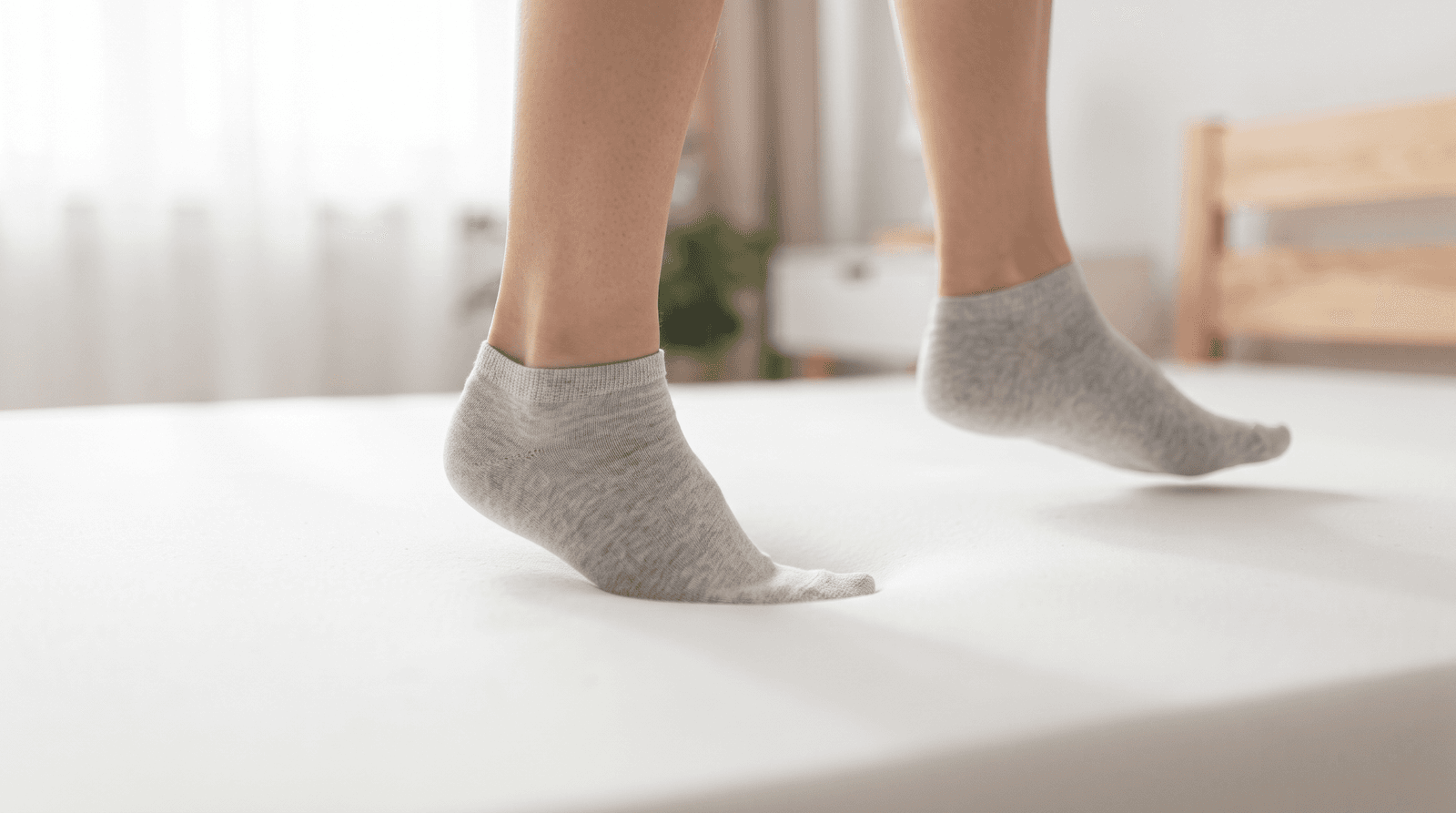
For a few minutes a day, walk gently across the mattress in socks or crawl over it on your hands and knees. This puts concentrated pressure on the comfort layers and helps them loosen. Avoid jumping or standing on the edges.
3. Rotate it every two weeks
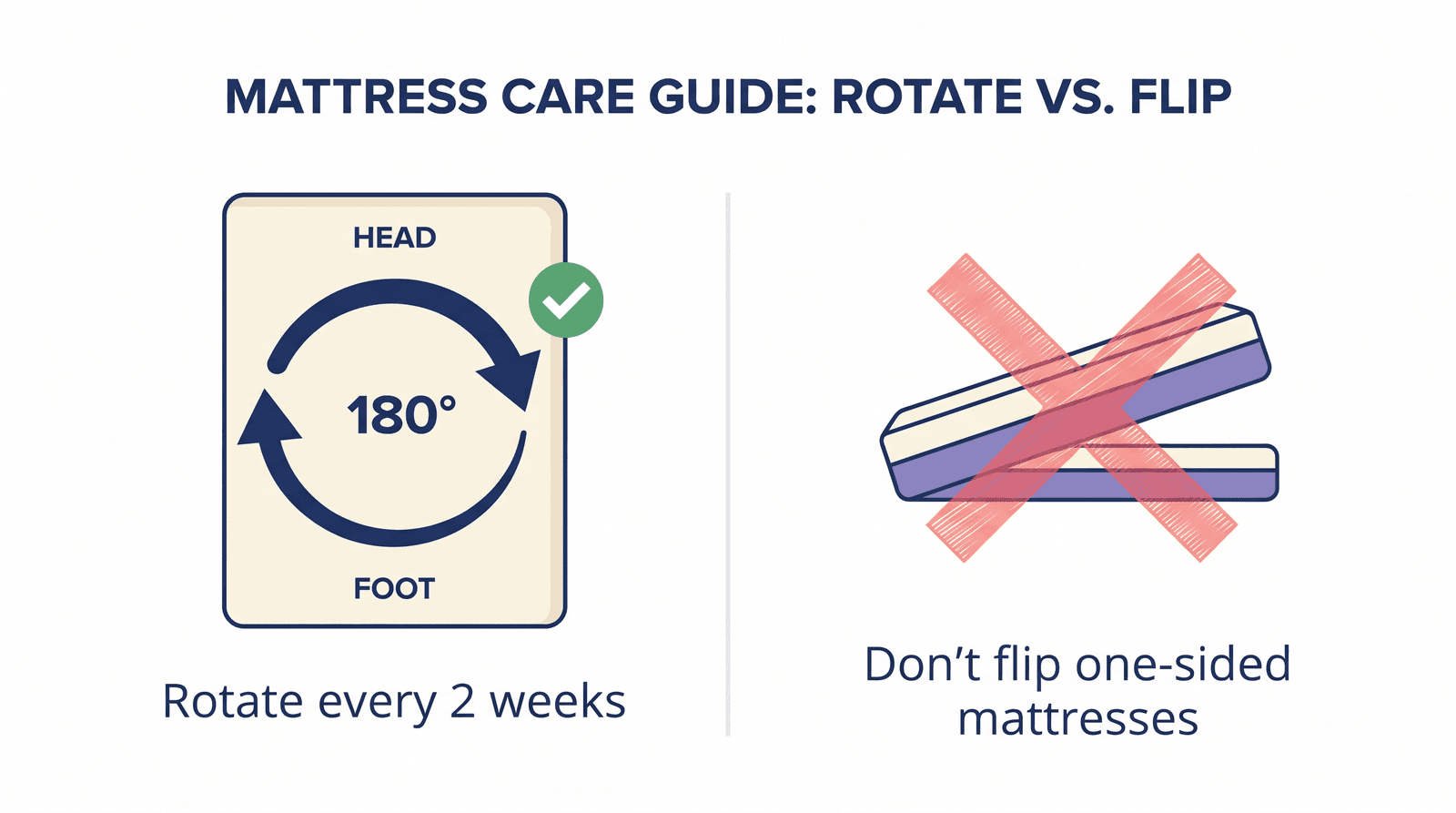
Turn the mattress 180° head-to-foot every couple of weeks for the first few months, so it softens evenly instead of only where you sleep. Most modern mattresses are one-sided, so rotate rather than flip.
4. Keep the room warm
Memory foam softens with heat. A slightly warmer bedroom in the first few weeks helps the foam relax faster. It will still firm up a little on cold nights.
5. Use the right base
A sagging or uneven base can make a mattress feel wrong and wear unevenly. Use a solid platform, slats no more than about 3–4 inches apart, a box spring or an adjustable base. Check your mattress's warranty for base requirements.
6. Sit on the edges
Spending a few minutes sitting along the perimeter while you dress or read helps the edge foam and coils settle, so the whole surface feels consistent.
7. Give your body time
If you're waking up stiff, stretch gently and give it two to three weeks. Aches from adjusting usually ease quickly; aches that get worse are a sign the mattress isn't right for you.
What If Your New Mattress Is Too Firm?
Wait, then fix it. A new mattress almost always feels firmest in the first week. If it's still too firm after 30 nights:
- Add a topper. A soft latex or memory foam topper can turn a firm bed plush. See our best mattress topper guide.
- Check your base. A very rigid base can make a mattress feel firmer than it is.
- Use your trial. If a topper doesn't fix it, the firmness simply isn't right for you. Our mattress firmness guide explains which firmness suits your position and weight.
Is Back Pain After a New Mattress Normal?
Mild stiffness in the first week or two can be normal; pain that persists or gets worse isn't. As your body adjusts to new support, you may feel muscle aches you didn't feel on your old, sagging bed.
If you still wake up sore after 30 nights, the mattress is likely the wrong firmness for your sleep position or weight. Side sleepers usually need a softer surface for the shoulders and hips; back and stomach sleepers usually need firmer support. See our best mattress for back pain guide, and talk to a doctor or physical therapist if pain continues.
When Should You Use Your Sleep Trial?
Give it a fair try first, then don't hesitate. Most online mattresses come with a trial of 100 nights or more — some, like the Nectar and DreamCloud, offer 365 nights — and some brands ask you to keep the mattress for a minimum period before returning it. Check your trial terms before you start.
Consider returning it if, after about 30 to 60 nights:
- you still wake up with new aches or pain
- it's clearly too firm or too soft, even with a topper
- it sleeps too hot for you
- you or your partner are sleeping worse than on your old bed
Our Tested Recommendations
If you're still shopping, these beds were among the easiest to settle into in our testing:
- Easiest to get used to quickly: the DreamCloud Classic, a pillow-top hybrid with a familiar feel and a 365-night trial.
- Longest safety net on memory foam: the Nectar Classic, also with a 365-night trial.
- Ready the fastest: the Purple Original, which expanded in about 3 hours with no smell.
Not sure which feel you want? Start with our how to choose a mattress guide or our best mattresses overall.
The Bottom Line
Breaking in a new mattress takes about 30 nights for most beds. Let it expand and air out, sleep on it every night, walk on it gently, rotate it early and give your body time to adjust. If it still feels wrong or causes pain after 30 to 60 nights, a topper may help — and if it doesn't, use your sleep trial.
Frequently Asked Questions
How long does it take to break in a new mattress?
About 30 nights for most mattresses. Memory foam can take up to 60 nights, while hybrids, latex and innerspring beds usually settle in two to four weeks.
How can I break in a new mattress faster?
Sleep on it every night, walk or crawl across it gently for a few minutes a day, rotate it every two weeks and keep the room warm if it's memory foam.
Why does my new mattress feel so firm?
New foam and coils start out stiff and soften with use. Most mattresses feel noticeably softer after a few weeks.
If it's still too firm after 30 nights, a soft topper or a different firmness may be the answer.
Is it normal to have back pain after a new mattress?
Mild stiffness in the first week or two can be normal while your body adjusts. Pain that lasts beyond about 30 nights, or gets worse, usually means the mattress isn't right for you.
How long does new mattress smell last?
Usually one to three days. In our tests, smells faded within 24 to 72 hours with good ventilation, and some mattresses, like the Purple Original, had none.
Should I rotate my new mattress?
Yes. Rotate it 180° every two weeks for the first few months so it softens evenly, then every three to six months after that.
When should I return a new mattress?
After a fair trial of about 30 to 60 nights, if it still causes pain, feels clearly wrong even with a topper, or sleeps too hot. Check your trial terms for any minimum period.