The short version
If you only read one thing
- Best Queen for Heavier Sleepers and CouplesBrooklyn Bedding Titan Hybrid Luxe (Queen)4.4
- Best Twin XL for Solo Heavy SleepersHelix Plus Elite (Twin XL)4.3
- Firmest Pick for Back and Stomach SleepersBrooklyn Bedding Plank Firm Luxe (Twin XL)4.3
- Best for Depth and a Plush TopBeautyrest Days End4.0
- Best for Heavier Side Sleepers Who Run HotPurple Original4.3
Scores are out of 5, from hands-on testing.
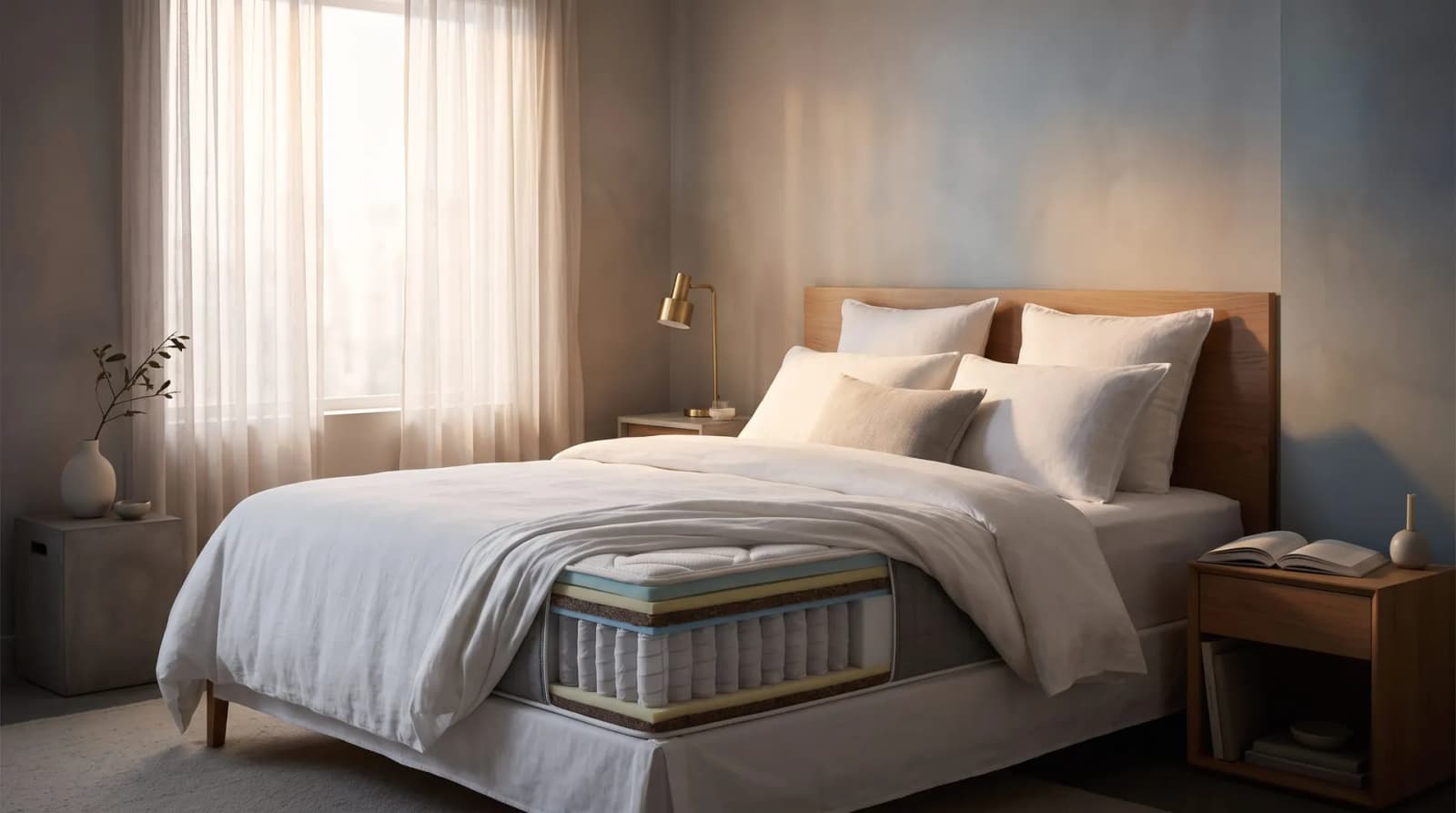
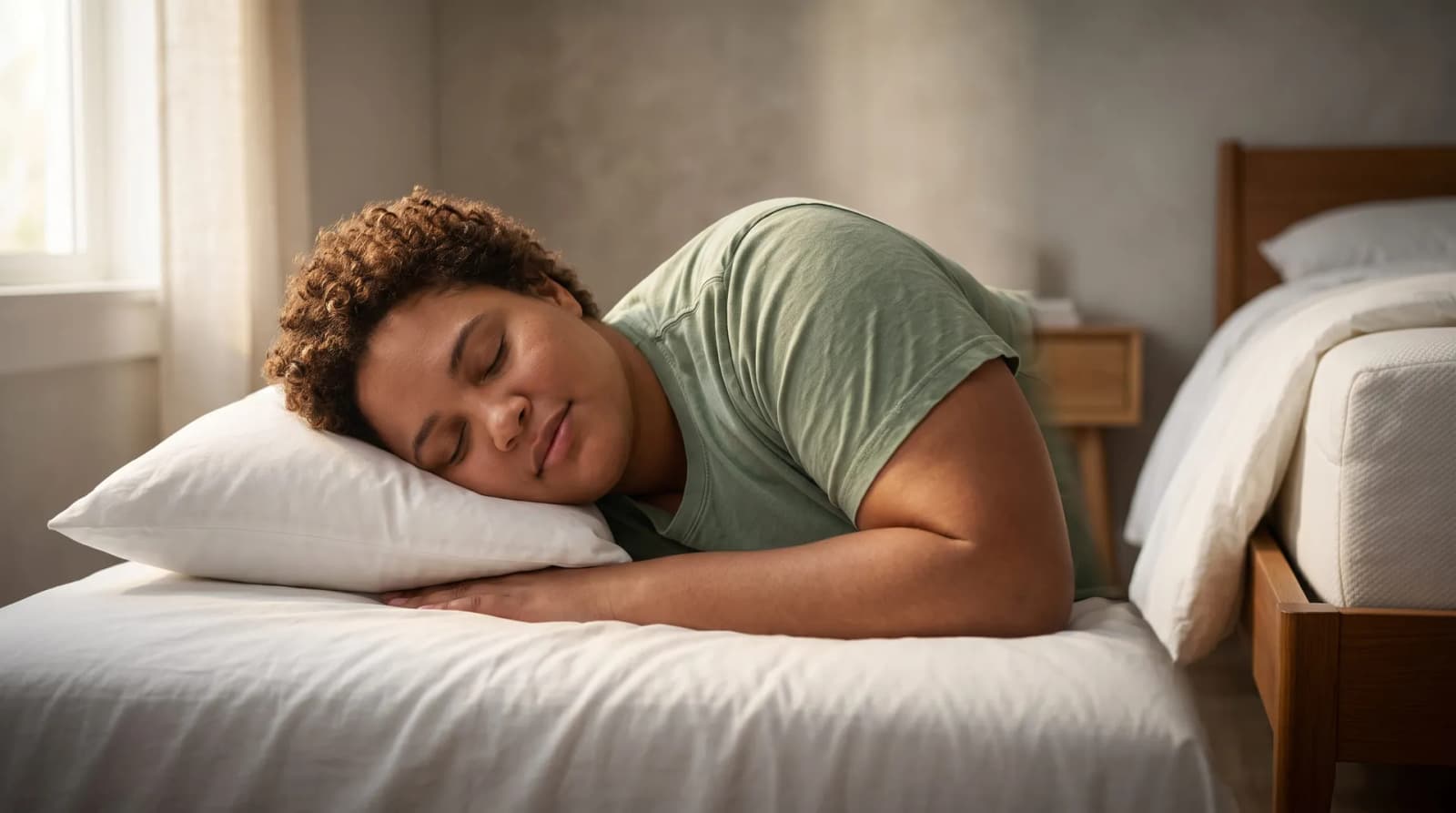
If you're a heavier sleeper, you've probably had a mattress that felt fine in the store and then sagged into a trench within a year or two. Standard advice doesn't help much. "Medium-firm is best" is calibrated on average body weights, and what feels medium-firm at 140 lbs can feel soft, or like you're sinking through to the springs, at 280 lbs. Edges that roll when you sit and surfaces that trap heat make it worse.
We tested these mattresses with heavier testers and loaded compression tests, looking at coil support, foam density, edge reinforcement and heat. In our loaded compression testing at 260 lbs, a reinforced coil base showed less compression over time than a standard hybrid coil system under the same load, the clearest sign of a bed engineered for this weight range rather than adapted to it. Our quick answer: the purpose-built Brooklyn Bedding Titan Hybrid Luxe is our top pick for sleepers over 230 lbs and heavier couples, with the Helix Plus Elite as the Twin XL choice. If you're under about 230 lbs, the DreamCloud Classic is the value pick.
Our Top Picks at a Glance
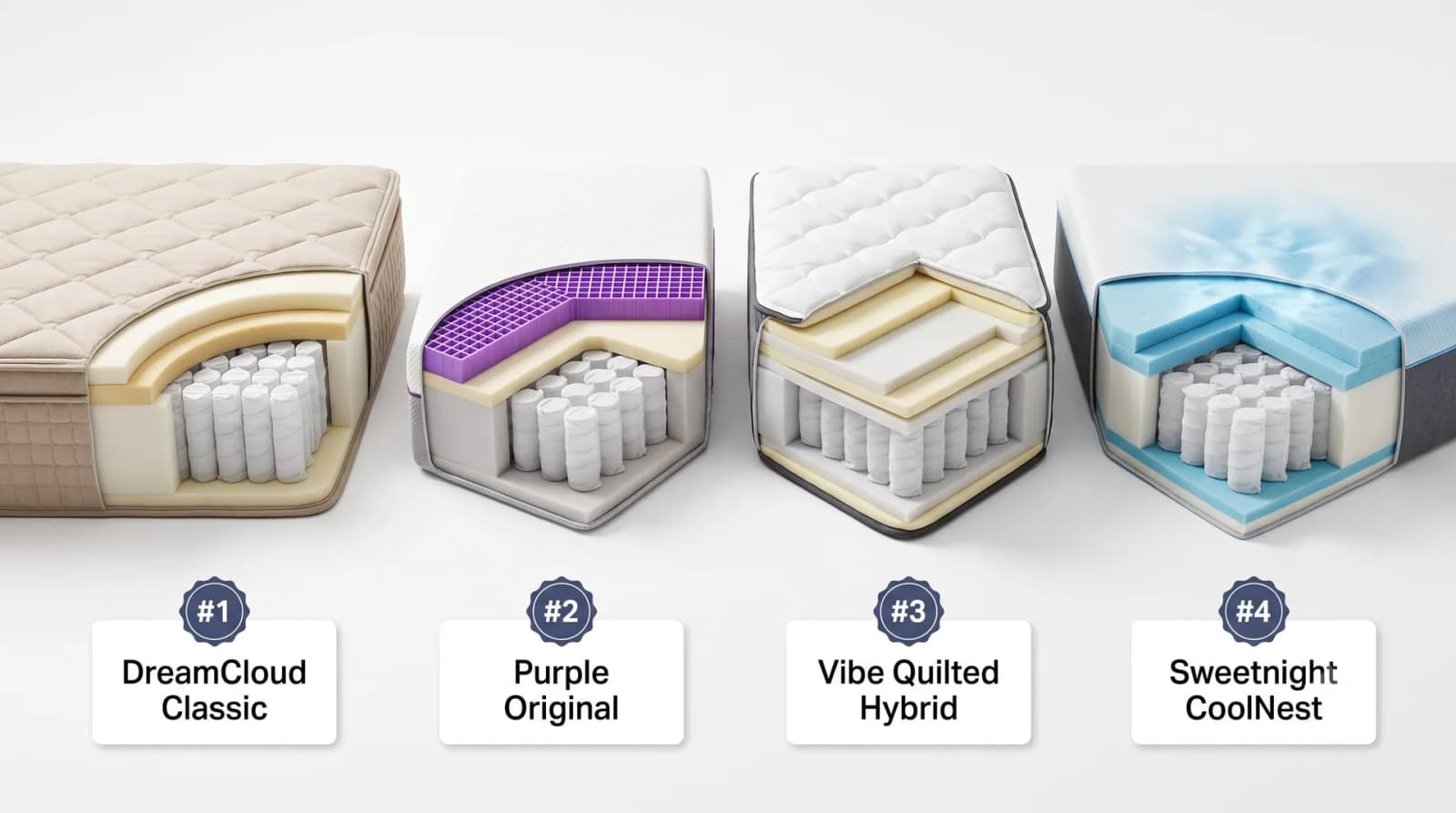
| Pick | Best for | Why it stands out |
|---|---|---|
| 1. Brooklyn Bedding Titan Hybrid Luxe (Queen) | Sleepers over 230 lbs and heavier couples | Held a 480 lb couple out to the edges |
| 2. Helix Plus Elite (Twin XL) | Solo sleepers over 230 lbs | 260 lb tester saw no added hip sink |
| 3. Brooklyn Bedding Plank Firm Luxe (Twin XL) | Heavier back and stomach sleepers | Firm ~8/10 and Firmer ~9/10 sides |
| 4. Beautyrest Days End | Plush top and a deep build | 14.75 in tall, 1.3 in edge for a 220 lb sitter |
| 5. Sweetnight CoolNest | Warm sleepers around 230–260 lbs | 70.6°F surface, 1.4 in edge |
| 6. Purple Original | Heavier side sleepers who run hot | Coolest surface we've measured, +1.4°F |
| 7. DreamCloud Classic | Value buyers up to about 230 lbs | 1.1 in edge compression, lifetime warranty |
| 8. Vibe Quilted Hybrid | Tight budgets | Coil edge compressed just 1.6 in |
| 9. Nectar Classic | Memory foam fans at the lighter end | Lifetime warranty, 365-night trial |
How We Tested Mattresses for Heavy Sleepers
- Loaded compression. We loaded coil systems with simulated heavier weights and compared how much they compressed over repeated cycles against standard hybrids.
- Heavier testers. Testers up to 260 lbs, plus a heavier couple on the Titan, slept on beds for weeks so we could see early sag and hip sink.
- Edge support. We sat testers on the perimeter and measured compression, because a soft edge both feels unsafe and shrinks the usable surface.
- Pressure and alignment. We pressure-mapped the hips and shoulders to check for bottoming out, where the body sinks through the comfort layer to the firm core.
- Heat. We tracked surface temperature, since heavier bodies sink deeper and trap more warmth.
Ratings come from our 8-category method — see how we test and score.
The 9 Best Mattresses for Heavy People of 2026
Brooklyn Bedding Titan Hybrid Luxe
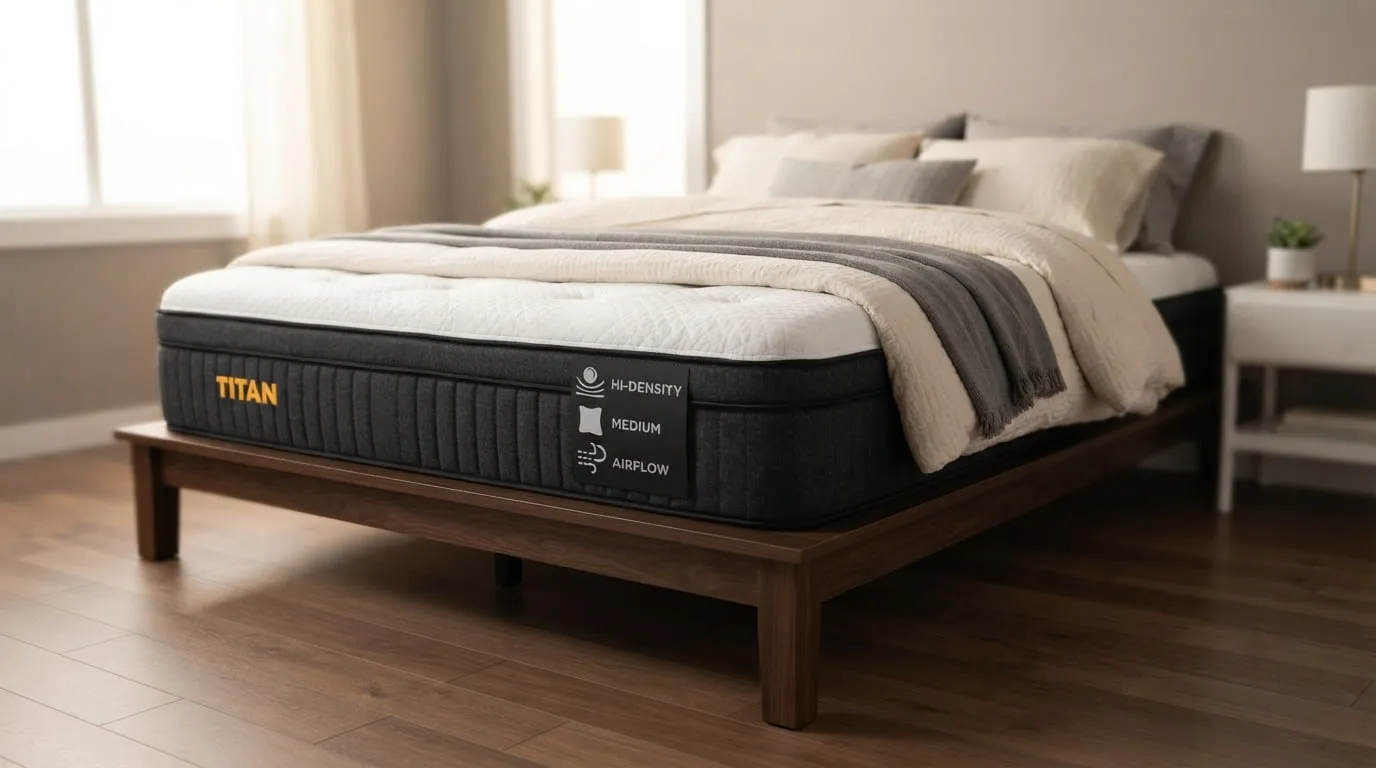
Built for sleepers over 230 lbs, with a reinforced coil core and some of the strongest edges we have measured; heavy to move.
- Type
- Hybrid
- Firmness
- Medium-Firm
- Trial
- 365 nights
- Warranty
- Lifetime
- Reinforced high-gauge coil core engineered specifically for sleepers over 230 lbs, with measurably less compression than a standard hybrid under sustained heavy loads
- Quilted Luxe comfort layer adds genuine cushioning at the shoulder and hip without letting heavier frames bottom out through to the coil base
- Reinforced perimeter coils deliver some of the strongest edge support we've measured
- The reinforced coil gauge makes this mattress noticeably heavier than a standard hybrid, so setup and any future flipping or rotating is a two-person job
- Sleepers under 150 lbs may find the surface firmer than expected
Brooklyn Bedding Titan Hybrid Luxe (Queen)
The Titan Hybrid Luxe is the Queen built for heavier bodies: a reinforced high-gauge coil core, a dense quilted comfort layer and a reinforced perimeter coil ring. It's the pick if your last hybrid sagged within a year or two.
Under simulated 230 and 280 lb loads, its coil base compressed less than a standard hybrid's, and our 480 lb combined couple used the full width out to the edges.
Sleepers over 230 lbs, heavier couples sharing a Queen, and side sleepers around 240 lbs; it felt balanced at 240–255 lbs.
You weigh under 150 lbs; it felt firmer than a typical medium-firm, so the DreamCloud Classic suits you better.
It costs well above the DreamCloud and is a two-person job to move. A 365-night trial and lifetime warranty help.
Affiliate link: we may earn a commission at no extra cost to you.
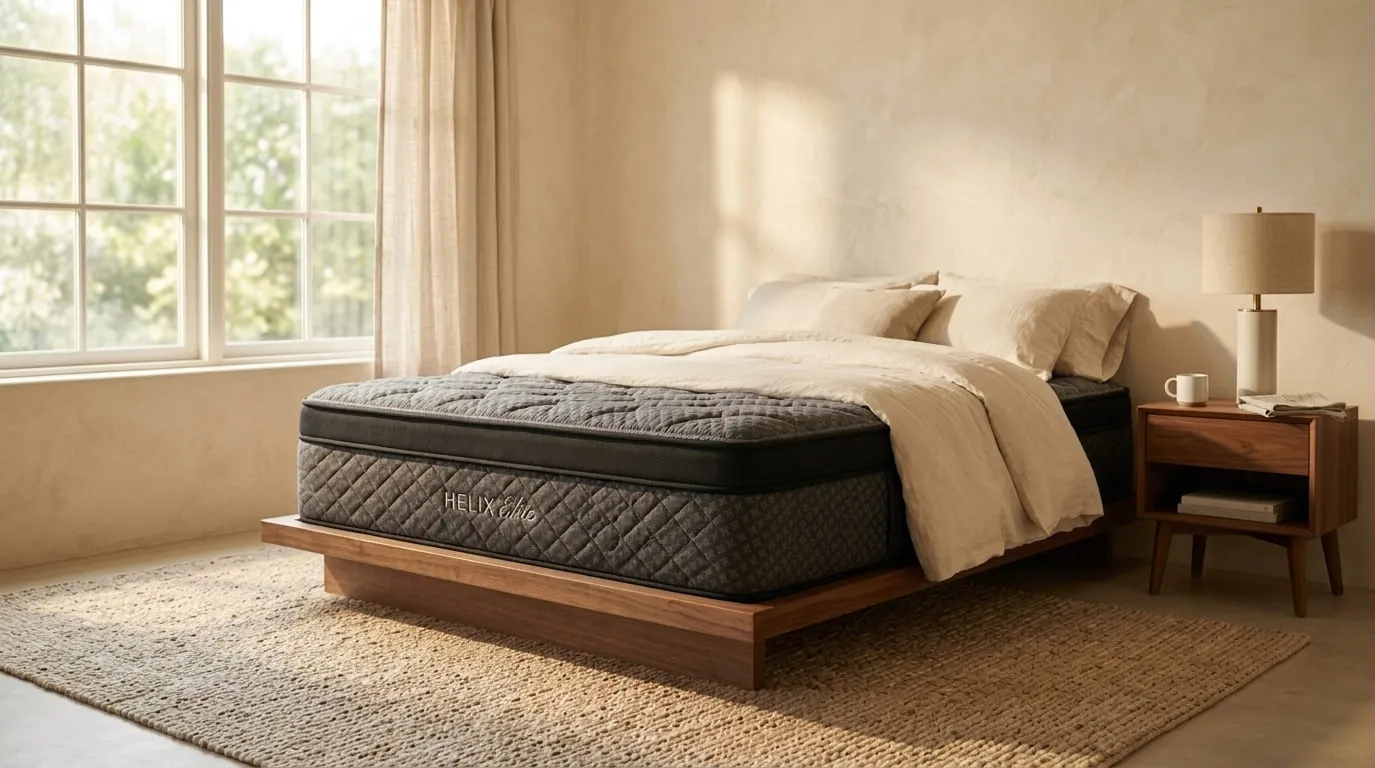
Helix Plus Elite Twin XL Mattress
A reinforced Twin XL hybrid for heavier sleepers, with a plush pillow top over firm support; firm for anyone under 150 lbs.
- Type
- Hybrid
- Firmness
- Medium-Firm
- Trial
- 100 nights
- Warranty
- 10 years
- Reinforced high-gauge coil support base is specifically engineered for heavier sleepers
- Plush pillow-top comfort layer adds genuine pressure relief without sacrificing the firmer underlying support the Plus line is built around
- TENCEL cooling cover measurably improves surface temperature regulation over standard mattress fabric
- The reinforced coil gauge means less give than a standard hybrid, which may feel too firm for lighter sleepers under 150 lbs
- Heavier than a standard Twin XL mattress
Helix Plus Elite (Twin XL)
Most beds here are general hybrids that cope with extra weight. The Helix Plus Elite is built around a reinforced, high-gauge coil base engineered for heavier sleepers, topped with a plush pillow top and TENCEL cover.
Our 260 lb tester noticed no increase in hip sink over eight weeks, and the surface warmed only 2.4°F in two hours.
Tall solo sleepers over about 230 lbs who need Twin XL length, including back and stomach sleepers.
You weigh under 150 lbs or need a Queen; the Titan Hybrid Luxe uses the same reinforced idea at Queen size.
It's the priciest pick here for its size, with a 100-night trial.
Affiliate link: we may earn a commission at no extra cost to you.
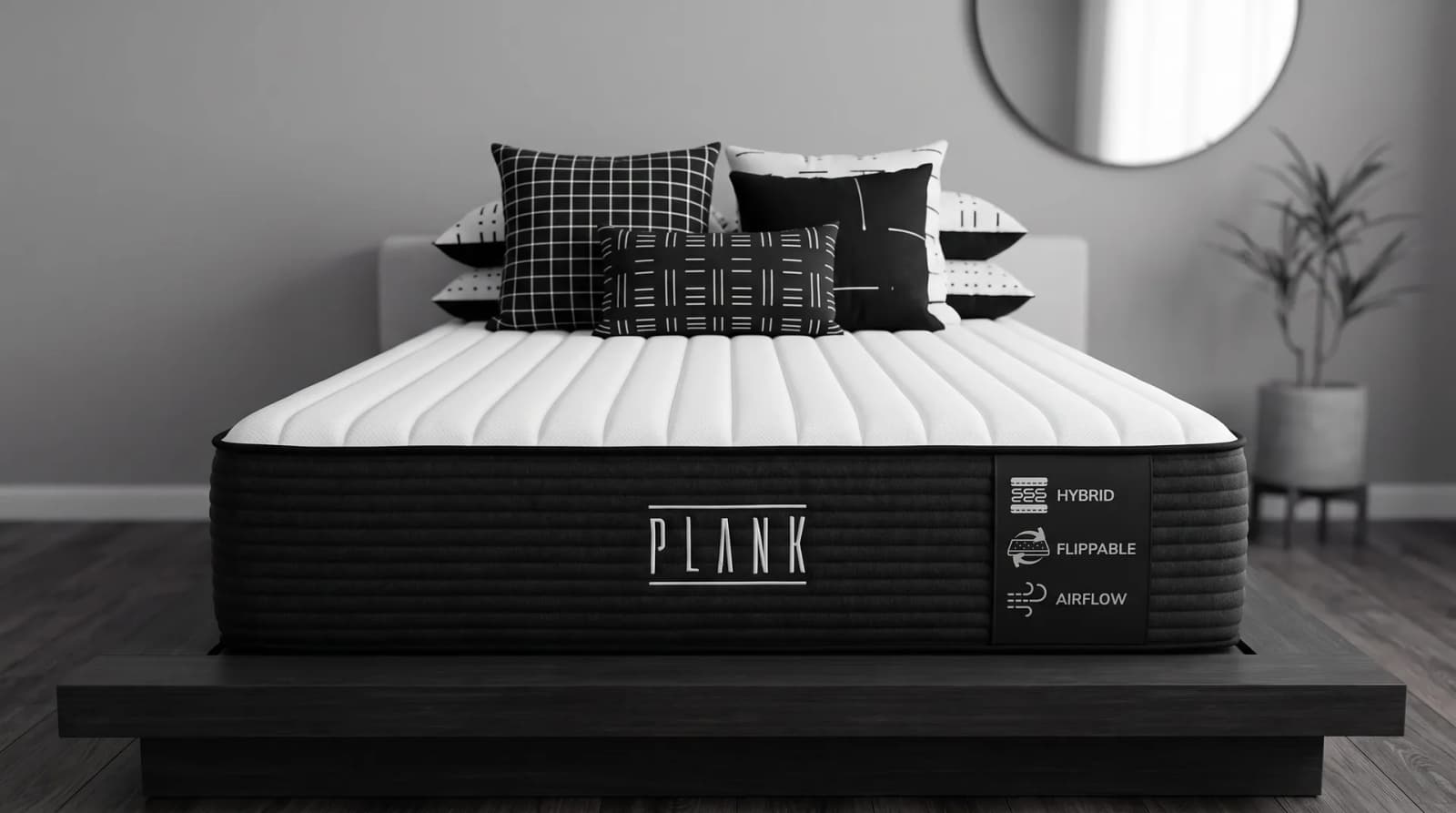
Brooklyn Bedding Plank Firm Luxe
A flippable firm-or-firmer hybrid for back and stomach sleepers who need flat, sag-free support; too firm for most side sleepers.
- Type
- Hybrid
- Firmness
- Firm
- Trial
- 120 nights
- Warranty
- 10 years
- Genuinely flippable dual-sided design
- 13-inch profile with a robust pocketed coil support core delivers exceptional lumbar support and near-zero sagging under sustained weight
- Quilted Luxe comfort layer takes the edge off Brooklyn Bedding's famously firm Plank line without sacrificing the underlying support
- Too firm for most side sleepers under 130 lbs, even on the softer Firm side
- Minimal pressure-relieving contour compared to memory-foam-heavy hybrids
Brooklyn Bedding Plank Firm Luxe (Twin XL)
Every pick above tops out at medium-firm. The Plank Firm Luxe is a flippable Firm/Firmer hybrid with a dense coil core and a thin quilted top, so there's little material to bottom out.
The coil core showed near-zero sagging under our 210 lb tester's sustained weight, and flipping takes you from ~8/10 to ~9/10.
Heavier back and stomach sleepers over about 220 lbs, and anyone who finds "firm" beds too soft.
You sleep on your side; the thin top gives far less pressure relief, so the Helix Plus Elite is kinder to hips.
We tested the Twin XL, and it's heavy to flip alone.
Affiliate link: we may earn a commission at no extra cost to you.
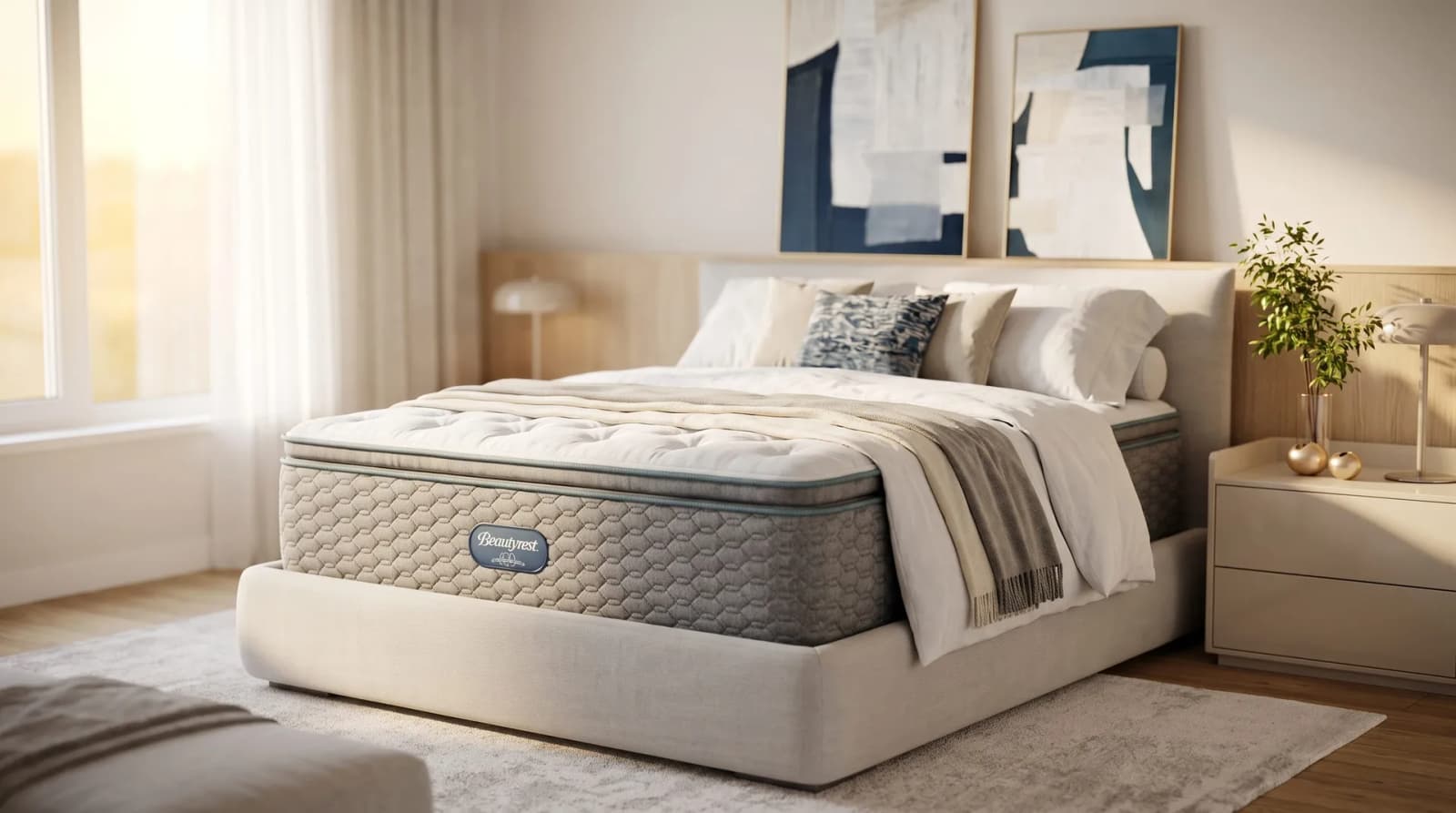
Beautyrest Days End Mattress
A deep pillow-top hybrid with unusually low motion transfer, suited to couples who want plush comfort; needs deep-pocket sheets.
- Type
- Hybrid
- Firmness
- Medium-Firm
- Trial
- 120 nights
- Warranty
- 10 years
- 14.75-inch profile delivers exceptional depth
- Beautyrest Pocketed Coil system with individually wrapped coils provides superior motion isolation for a hybrid
- Pillow top comfort layer delivers genuine plush cushioning without the bottoming-out risk of all-foam alternatives
- 14.75-inch height requires deep-pocket sheets
- Medium Firm feel may be too firm for lightweight side sleepers under 130 lbs who need a softer surface
Beautyrest Days End
The Beautyrest Days End is one of the tallest hybrids we've tested, with a pillow top over individually wrapped coils and reinforced perimeter coils. You get plush cushioning without the bottoming-out risk of all-foam.
The edge compressed just 1.3 inches, and our 220 lb tester felt no roll-off when sitting.
Side sleepers from about 150 to 250 lbs, couples (just 0.28 mm of motion transfer) and anyone who sits on the edge.
You sleep mostly on your stomach; a firmer build like the Plank Firm Luxe stops hip sink more reliably.
At 14.75 inches it needs deep-pocket sheets, and a queen weighs 85+ lbs.
Affiliate link: we may earn a commission at no extra cost to you.
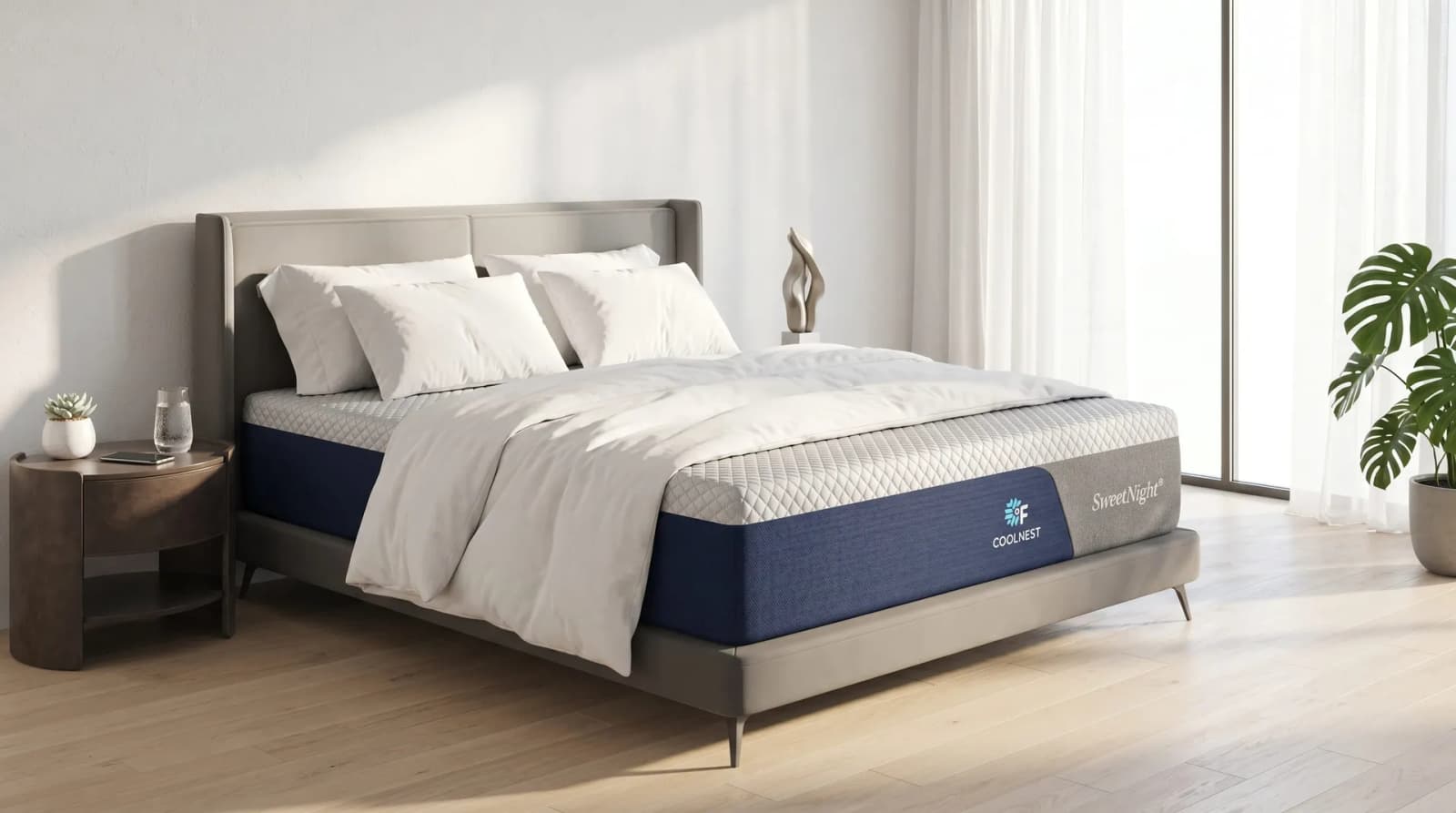
Sweetnight CoolNest Mattress
A cooling hybrid that nearly matched the Purple in our heat tests, with strong edges; feels firmer for the first two weeks.
- Type
- Hybrid
- Firmness
- Medium
- Trial
- 100 nights
- Warranty
- 10 years
- Phase-change material cover absorbed body heat at 88 degrees F threshold
- 14-inch profile with 7-inch pocketed coil system delivers a genuinely premium feel at a budget king price
- Reinforced perimeter pocketed coils compressed only 1.4 inches under 60-lb edge load
- 10-year warranty is shorter than the lifetime warranties from DreamCloud Classic and Nectar
- Medium feel runs slightly firm in weeks 1-2 before the comfort layer fully breaks in
Sweetnight CoolNest
Heavier bodies sink deeper and trap more heat. The Sweetnight CoolNest pairs a phase-change cover with a 7-inch pocketed coil system and reinforced perimeter coils, so you get airflow and a usable edge.
The surface averaged 70.6°F, within 0.4°F of the Purple, and the reinforced edge compressed only 1.4 inches under a 60 lb load.
Warm back and side sleepers around 230–260 lbs who want cushioning for less.
You're nearer 300 lbs; the medium comfort layer can compress more than ideal, so the Titan Hybrid Luxe is safer.
The 100-night trial and 10-year warranty trail the DreamCloud's terms.
Affiliate link: we may earn a commission at no extra cost to you.
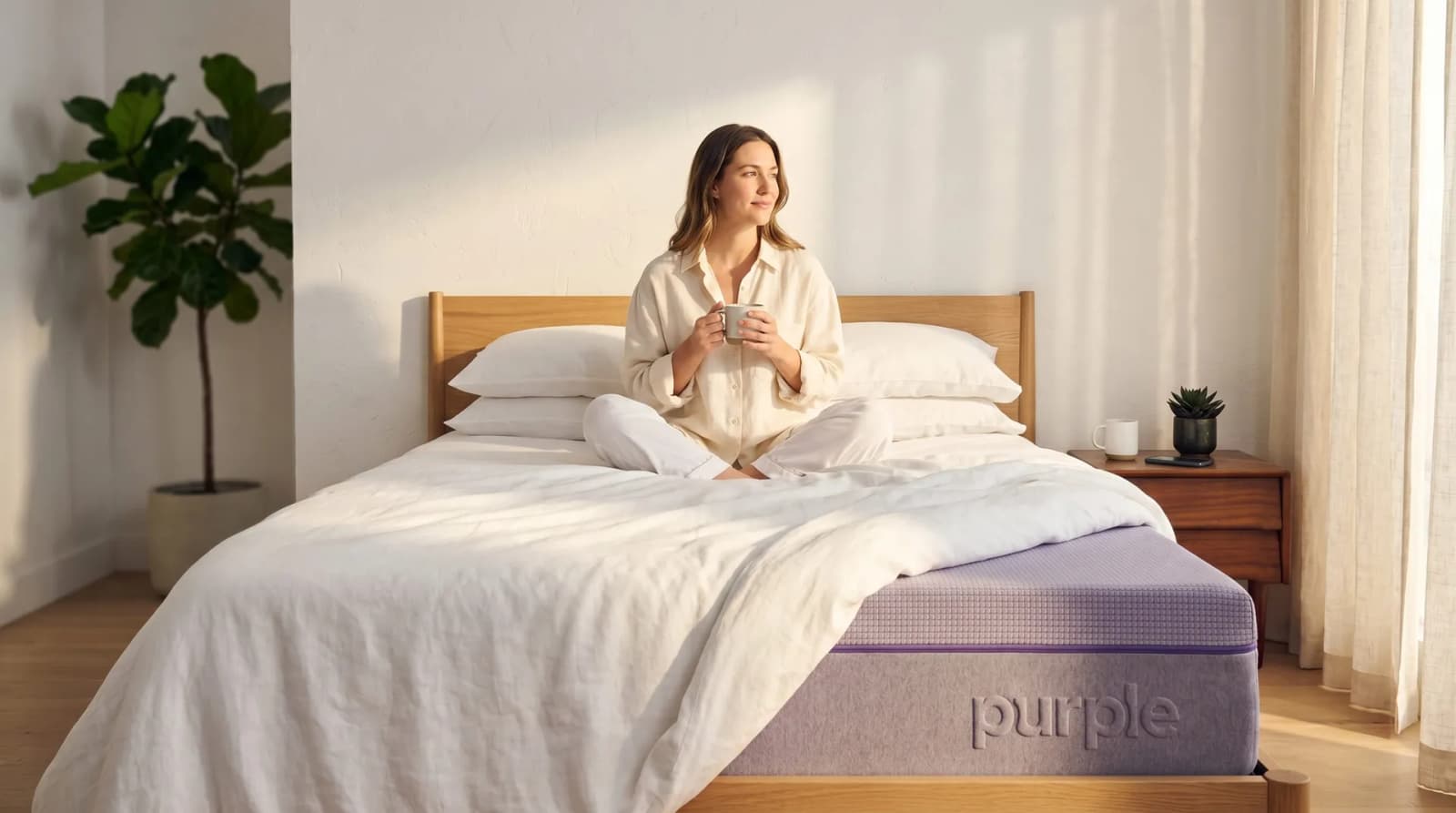
Purple Original Mattress
The coolest mattress we have tested, with a gel grid that relieves pressure in every position; the grid texture takes a few nights.
- Type
- Foam
- Firmness
- Medium
- Trial
- 100 nights
- Warranty
- 10 years
- GelFlex Grid surface measured +1.4 degrees F above ambient
- Hyper-elastic polymer grid collapses under pressure points and holds firm elsewhere
- Instant-response grid means zero stuck-in-foam feeling
- Hyper-elastic polymer grid is perceptible through thin sheets
- No coils
Purple Original
The Purple Original's GelFlex Grid collapses under the hip and shoulder and stays firm under the waist, so heavier side sleepers get relief without the deep hip sink of soft foam. Its open grid also keeps you cool.
The surface rose just +1.4°F above the room, the coolest we've recorded, and our side sleepers reported no shoulder or hip discomfort over 10 weeks.
Heavier side sleepers and hot sleepers who want pressure relief without foam heat.
You sit on the edge a lot; with no coils, it compressed 3.4 inches under a seated 190 lb tester, so the Beautyrest Days End holds firmer.
The grid texture takes 3–5 nights to get used to, and it's heavy to rotate alone.
Affiliate link: we may earn a commission at no extra cost to you.
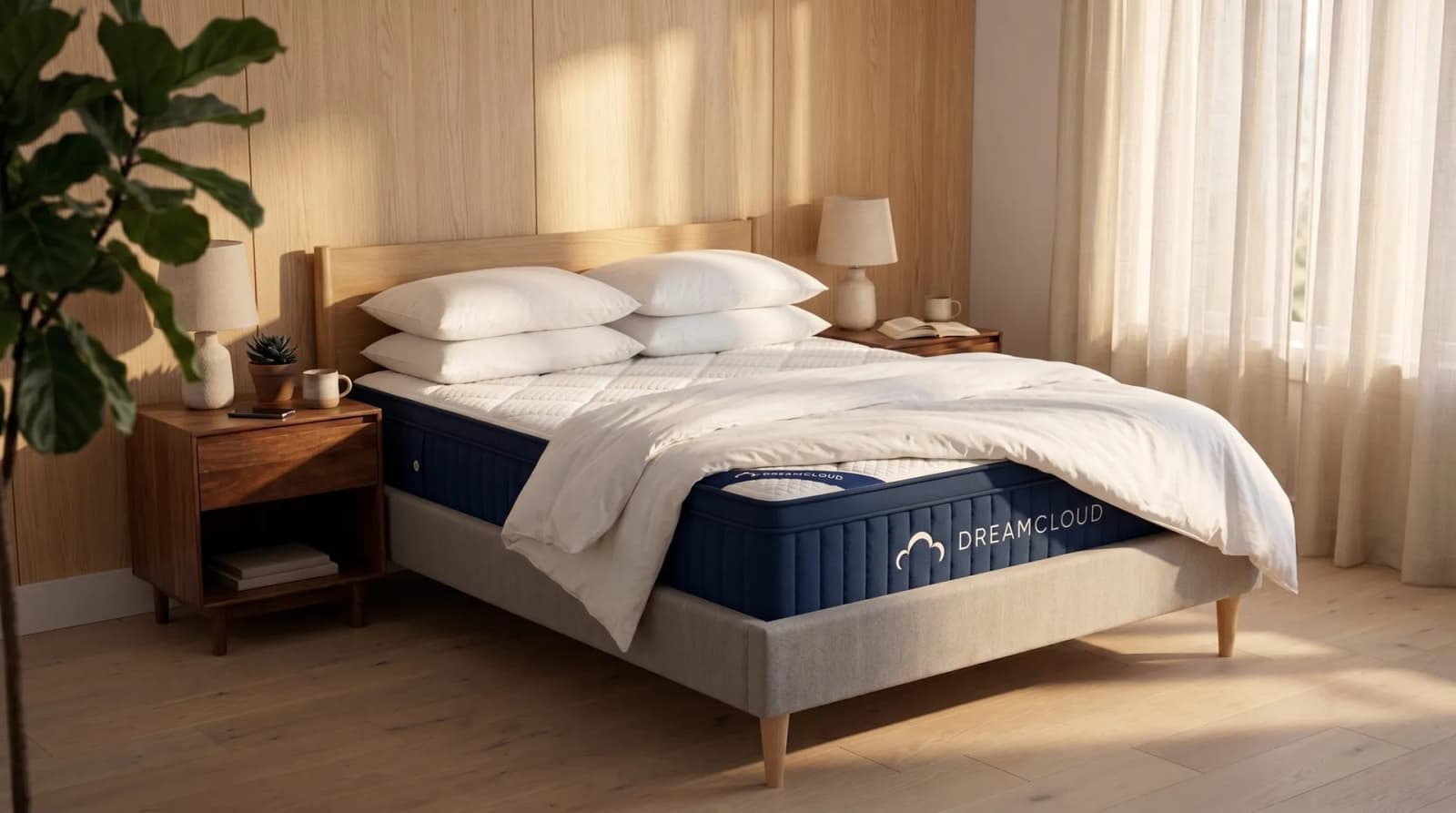
DreamCloud Classic Mattress
Our best overall pick: excellent shoulder and hip pressure relief, a 365-night trial and a lifetime warranty; heavy to set up.
- Type
- Hybrid
- Firmness
- Medium-Firm
- Trial
- 365 nights
- Warranty
- Lifetime
- Shoulder pressure of 0.32 psi and hip pressure of 0.38 psi in Tekscan testing
- 365-night sleep trial
- Lifetime warranty with no expiry date
- Heavier than average at 70 lbs for a queen
- Initial off-gassing odor is present on day one but dissipates within 48 hours with ventilation
DreamCloud Classic
The DreamCloud Classic gives heavier-than-average sleepers firm pocketed-coil support, a strong edge and low pressure for a fraction of the price of reinforced beds. It's the smart buy if you sit at the lower end of the plus-size range.
Its reinforced perimeter coils compressed only 1.1 inches at the edge, and lower-back pressure measured just 0.21 psi.
Back, side and combination sleepers up to about 230 lbs, including couples, who want a 365-night trial and lifetime warranty.
You weigh well over 230 lbs; it isn't built with reinforced coils for that, so choose the Titan Hybrid Luxe.
A queen weighs 70 lbs, and the foam takes 3–4 seconds to respond when you turn.
Affiliate link: we may earn a commission at no extra cost to you.
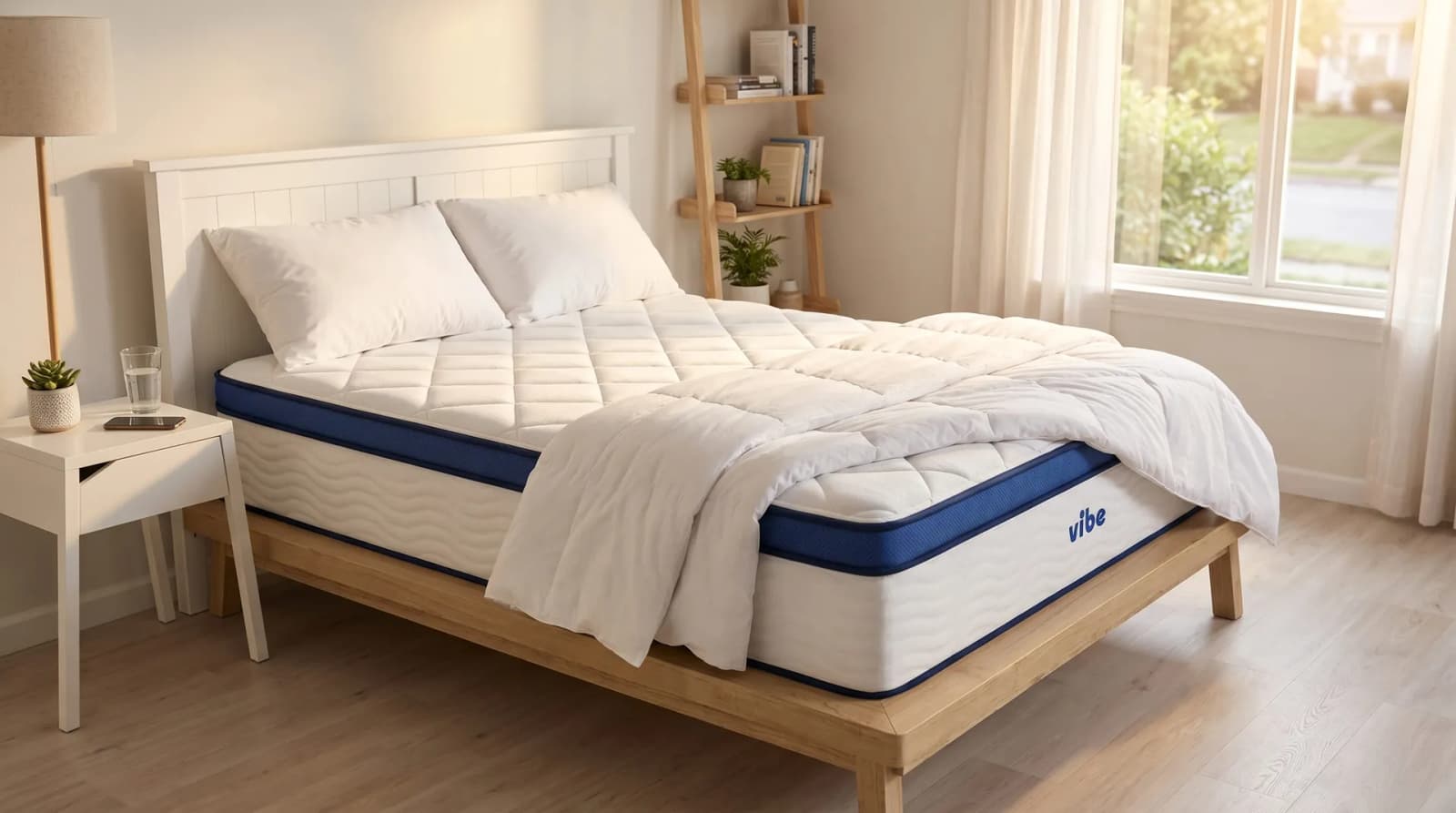
Vibe Quilted Hybrid Mattress
An entry-level quilted hybrid with a plush top and gel foam; motion transfer and a short trial are the trade-offs.
- Type
- Hybrid
- Firmness
- Medium
- Trial
- 30 nights
- Warranty
- 10 years
- Genuine hybrid construction
- Diamond-stitch quilted pillow top adds immediate plush surface comfort before gel foam layer engages
- Gel memory foam surface measured 2-3 degrees F cooler than standard non-gel foam in our thermal tests
- 30-night sleep trial is the shortest in our lineup
- Connected coil design measured 0.09g vibration transfer
Vibe Quilted Hybrid
If budget is tight, the Vibe still gives you coils under the foam, which matters more for heavier sleepers than any foam at this price. It's a sound stepping stone up from cheap all-foam.
Its 8-inch innerspring base compressed only 1.6 inches at the edge under a 60 lb load, versus 3.8 inches for budget foam.
Back and combination sleepers up to about 230 lbs on a tight budget.
You weigh over 230 lbs; the innerspring base may not give enough deep support, so step up to the DreamCloud Classic or a reinforced pick.
The 30-night trial is short, and its connected coils pass 0.09 g of motion to a partner.
Affiliate link: we may earn a commission at no extra cost to you.
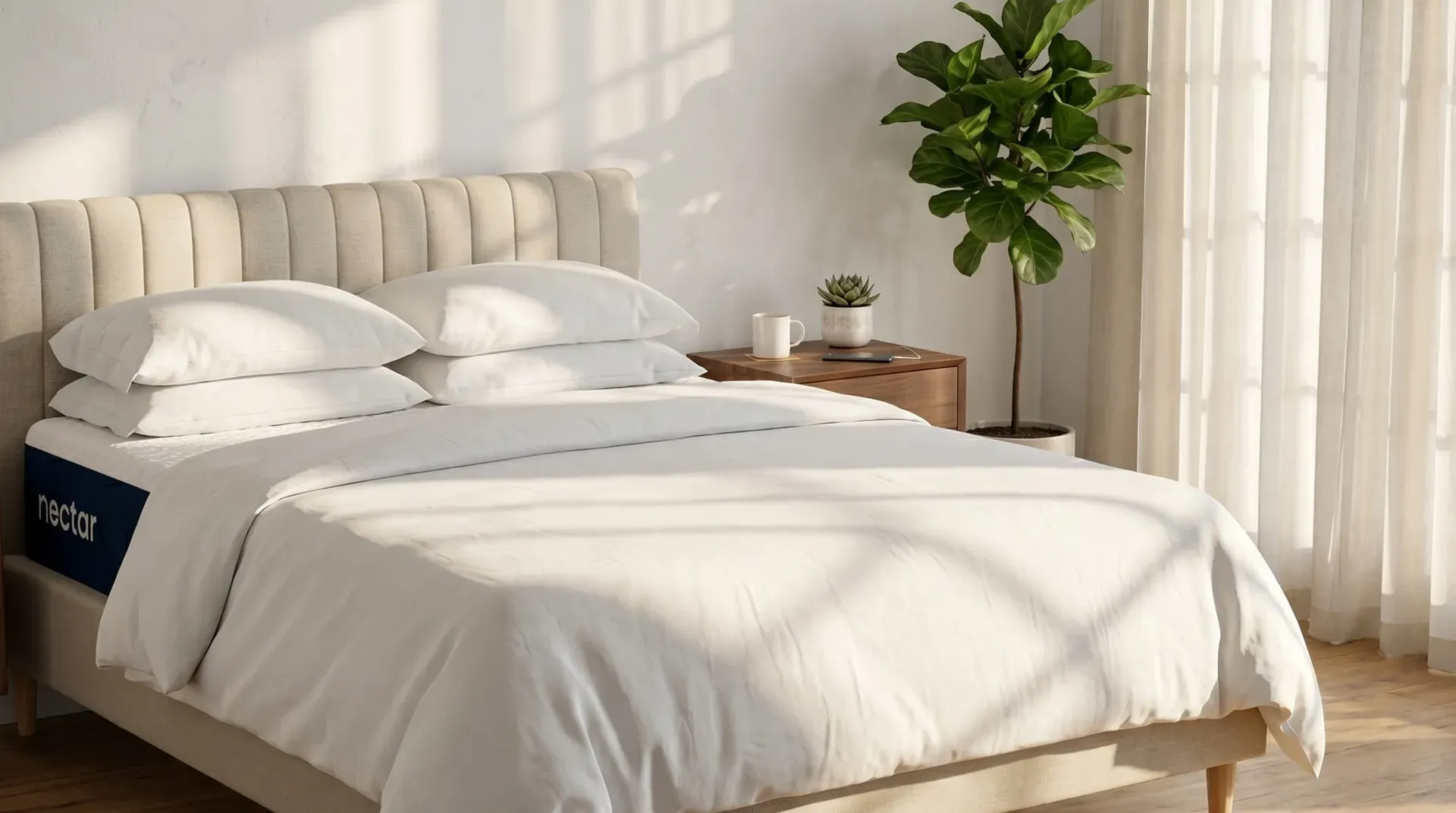
Nectar Classic Mattress
A gel memory foam mattress with deep pressure relief for side sleepers, a 365-night trial and a lifetime warranty; runs warm.
- Type
- Memory Foam
- Firmness
- Medium-Firm
- Trial
- 365 nights
- Warranty
- Lifetime
- 3-inch gel memory foam delivers exceptional pressure relief for side sleepers
- Lifetime warranty
- 365-night trial gives you a full year to decide with free returns
- Memory foam sleeps warmer than hybrid or latex alternatives
- Limited edge support
Nectar Classic
If you want slow-contouring memory foam rather than coils, the Nectar Classic is the foam bed we'd pick, with the best protection if it does wear. We recommend a hybrid for anyone over about 250 lbs.
Its medium-firm (6/10) feel suits sleepers up to about 220 lbs, and a 365-night trial plus lifetime warranty give real recourse if body impressions appear.
Memory foam fans at the lighter end of the plus-size range who share a bed; only 0.12 mm of motion crossed it.
You sleep hot (it warmed 5.2°F) or sit on the edge; it compressed 3.8 inches, so choose the DreamCloud Classic.
Any all-foam bed develops body impressions sooner than a hybrid under heavier weight.
Affiliate link: we may earn a commission at no extra cost to you.
Mattresses for Heavy People Compared
| Mattress | Type | Firmness | Key measured result | Trial | Warranty | Best for |
|---|---|---|---|---|---|---|
| Titan Hybrid Luxe | Hybrid (reinforced) | Medium-firm (7/10) | 480 lb couple, edges held | 365 nights | Lifetime | Queen, 230+ lbs, couples |
| Helix Plus Elite | Hybrid (reinforced) | Medium-firm (6.5/10) | No added sink at 260 lbs | 100 nights | 10 years | Solo Twin XL, 230+ lbs |
| Plank Firm Luxe | Hybrid | Firm ~8 / Firmer ~9 | Near-zero sag at 210 lbs | 120 nights | 10 years | Back and stomach |
| Beautyrest Days End | Hybrid | Medium-firm | 1.3 in edge at 220 lbs | 120 nights | 10 years | Plush top, deep build |
| Sweetnight CoolNest | Hybrid | Medium | 70.6°F; 1.4 in edge | 100 nights | 10 years | Hot sleepers ~230–260 lbs |
| Purple Original | GelFlex Grid foam | Medium | +1.4°F; 3.4 in edge | 100 nights | 10 years | Hot side sleepers |
| DreamCloud Classic | Hybrid | Medium-firm | 1.1 in edge | 365 nights | Lifetime | Value, up to ~230 lbs |
| Vibe Quilted Hybrid | Hybrid (innerspring) | Medium | 1.6 in edge | 30 nights | 10 years | Budget, up to ~230 lbs |
| Nectar Classic | Memory foam | Medium-firm | 3.8 in edge; +5.2°F | 365 nights | Lifetime | Foam fans, lighter end |
Prices change often, so check today's price on each review page.
How to Choose a Mattress if You're a Heavy Sleeper
Why Coil Support Matters Most
Heavier sleepers compress comfort layers further. On a standard bed, a 280 lb sleeper may sink through the whole comfort layer and load the support core directly, called bottoming out. At that point pressure relief disappears and the bed behaves like a hard, flat surface.
A hybrid with individually wrapped coils is the most reliable answer. Look for coils of 6 inches or more, a high-density foam base of at least 1.8 lb/ft³, and, above about 230 lbs, reinforced or higher-gauge coils built for the load.
Foam Density: The Durability Number
Foam density, measured in pounds per cubic foot, predicts how long foam keeps its shape. Low-density foam (under 1.5 lb/ft³) can develop permanent body impressions within 12–18 months under heavy loads. Higher-density foam resists much longer.
Look for memory foam comfort layers of 3.0 lb/ft³ or higher and base foam of 1.8 lb/ft³ or higher. Ask for actual figures, not "high-density" marketing.
Edge Support and Usable Width
Heavier sleepers compress the edge more when sitting or lying near it, so a soft edge rolls and can feel unsafe. It also shrinks the surface you actually use. Reinforced perimeter coils keep the edge firm and make getting in and out of bed easier.
What Firmness Is Best for Heavy People?
Medium-firm (6–7 on a 10-point scale) is the best starting point for most heavier sleepers, and many should go one level firmer than standard advice suggests. Side sleepers usually do better at medium-firm than firm, to protect the hip and shoulder. Heavier stomach sleepers need firm to stop the lower back arching.
Picks by Body Weight
Up to about 230 lbs: You have the widest choice. The DreamCloud Classic is the value pick, the Vibe is the budget hybrid, and quality foam like the Nectar still works.
230–270 lbs: Choose a hybrid. The Sweetnight CoolNest and Beautyrest Days End suit this range, and the Titan Hybrid Luxe and Helix Plus Elite are built for it.
270–300 lbs and above: Go straight to reinforced coils. The Titan Hybrid Luxe is our Queen pick and the Helix Plus Elite our Twin XL pick. For couples where both partners are heavier, check the manufacturer's combined weight capacity; the Titan held our 480 lb couple.
Picks by Sleep Position and Temperature
Back sleepers do well on the DreamCloud up to about 230 lbs and on the Titan or Helix Plus Elite above that. Side sleepers should look at the Purple, Beautyrest or Titan. Stomach sleepers need the Plank Firm Luxe or Helix Plus Elite.
If you run warm, the Purple Original is the coolest bed we've tested and the Sweetnight CoolNest is the lower-cost alternative. The Nectar is the warmest pick here because it's all foam.
- Over 230 lbs and your last mattress sagged within a couple of years
- Sitting on the bed edge daily and want it to stay firm
- Sleeping hot because you sink deeper into foam
- You weigh under 150 lbs — the reinforced picks will feel too firm; see our side sleeper guide
- You want deep, slow memory foam sink above 250 lbs — hybrids will last longer
Common Mistakes Heavier Sleepers Make
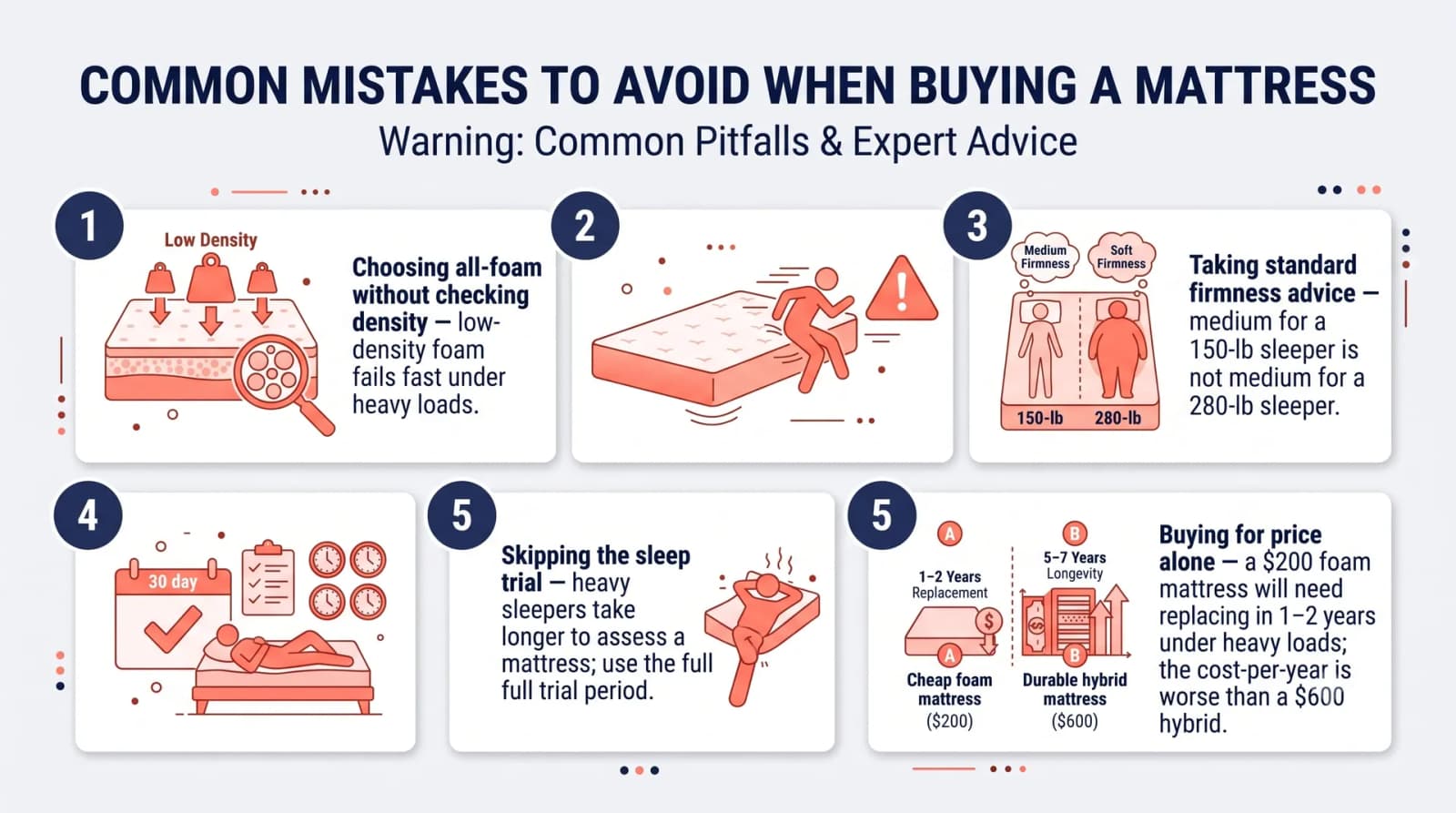
Buying budget all-foam. Low-density foam can develop permanent impressions within 12–24 months at 230+ lbs, which makes it more expensive per year than a quality hybrid.
Trusting standard firmness labels. At 270 lbs, "medium" may feel soft, and at 300 lbs "medium-firm" may behave like medium.
Rushing the trial. The first week feels different as a mattress adapts to heavier weight. Give it 4–6 weeks before you decide; every pick here offers at least a 30-night trial, and most far longer.
Ignoring weight capacity. For heavier couples, combined weight is the figure that matters, so check it before you buy.
Final Verdict
If you're over 230 lbs, or your last hybrid sagged early, buy reinforced coils. The Brooklyn Bedding Titan Hybrid Luxe is our top pick: it held our 480 lb couple out to the edges and suits a Queen or a heavier couple. For a solo Twin XL, the Helix Plus Elite is the match, and the Plank Firm Luxe is the firmest option for back and stomach sleepers.
If you're at the lower end of the plus-size range, up to about 230 lbs, the DreamCloud Classic gives you firm coil support, a strong edge and a lifetime warranty, and it's our value pick. Start with our full Brooklyn Bedding Titan Hybrid Luxe review and check today's price.
Frequently Asked Questions
What type of mattress is best for heavy people?
A hybrid with individually wrapped coils is best for most heavier sleepers. Coils keep their support under sustained load in a way foam alone can't.
Above about 230 lbs, look for reinforced or higher-gauge coils like the Titan Hybrid Luxe or Helix Plus Elite.
What firmness is best for heavy people?
Medium-firm, about 6–7 out of 10, is the best starting point. It stops excessive hip sink while still cushioning the joints.
Heavier stomach sleepers usually need firm.
Do heavy people need a thicker mattress?
Generally yes. Twelve inches or more gives more material before you bottom out, and beds under 10 inches aren't recommended over 230 lbs.
Thickness helps, but coil quality and foam density matter more.
How soon will a mattress sag if you are heavy?
It depends on construction. Budget all-foam can show body impressions within 12–18 months at 250+ lbs.
Quality hybrids with dense foam and strong coils last much longer under heavier weight.
Is memory foam good for heavy people?
It can work up to the lower end of the range if the foam is dense: 3.0 lb/ft³ or more in the comfort layer and 1.8 lb/ft³ in the base. Above about 250 lbs, a hybrid is the better choice.
The Nectar Classic is our foam pick, with that caveat.
Can two heavy people share the same mattress?
Yes, but plan around combined weight. The Titan Hybrid Luxe held our 480 lb couple and kept its edges usable.
Edge support matters more for couples because each partner sleeps nearer the perimeter.
I'm 320 lbs. Does anything here hold up?
Yes: choose a reinforced-coil bed. The Titan Hybrid Luxe was built and tested for sleepers over 230 lbs, including a 280 lb simulated load.
For a solo Twin XL, the Helix Plus Elite showed no added hip sink under our 260 lb tester.
Is edge support really that important?
For heavier sleepers it's close to essential. A soft edge feels unstable when you sit and shrinks the area you actually sleep on.
The DreamCloud, Beautyrest, Sweetnight and Titan all held firm edges in our tests.
What mattress lasts the longest for heavy people?
Natural latex keeps its support for many years but is usually premium-priced. Among our picks, the reinforced coils in the Titan and Helix Plus Elite showed the best resistance to sag under heavier loads.