Best Mattress for Allergies: 2026
Best mattress for allergies 2026: which certifications actually matter, why natural latex resists dust mites, and our top-tested hypoallergenic picks.
If you wake up congested, sneezing, or with itchy eyes regardless of the season, your mattress and pillow are a genuine, testable suspect — not a vague possibility. Dust mites, mold, retained VOCs from synthetic foam, and down or feather proteins are all common, well-documented triggers that live in the exact place you spend seven to eight hours a night with your face inches away.
This guide covers what actually causes mattress-related allergy symptoms, which certifications are worth checking and which are marketing noise, and our top-tested picks across mattresses, toppers, and pillows for allergy-prone sleepers — pulling from products we've independently tested for material safety and construction, not brand claims alone.
What Actually Causes Mattress-Related Allergy Symptoms
Before picking a product, it helps to know what you're actually solving for — because the fix is different depending on the trigger.
Dust Mites
Dust mites feed on shed human skin cells and thrive in warm, humid, organic-fiber environments — which describes a standard mattress and pillow almost perfectly. They're the single most common mattress-related allergen, and their droppings (not the mites themselves) are what trigger the immune response in sensitive people.
What reduces dust mite exposure: Natural latex is inherently resistant to dust mites — its cellular structure doesn't provide the organic material mites feed on, unlike down, wool, or standard foam with fabric fibers. Machine-washable covers also matter significantly, since regular washing at high heat kills mites and removes droppings that a spot-clean-only cover can't address.
Mold and Mildew
Mold and mildew grow in damp, poorly ventilated material — a real risk in humid climates or for sleepers who run warm and sweat through the night. Materials with better airflow (open-cell latex, coil-based hybrids) resist this better than dense, closed-cell memory foam that traps moisture.
VOCs and Off-Gassing
New mattresses, particularly synthetic foam ones, release volatile organic compounds (VOCs) during manufacturing — the "new mattress smell." For chemically sensitive sleepers, this isn't just an unpleasant odor; it can trigger headaches, respiratory irritation, and skin reactions. This is where certification matters most directly, since independent testing verifies VOC emissions stay below defined safety thresholds.
Down and Feather Proteins
A distinct and separate allergy category: some people react specifically to proteins in down or feather fill, unrelated to dust mites or synthetic chemicals entirely. For this group, the fix isn't organic materials — it's avoiding down and feather fill specifically, regardless of how "natural" the product otherwise is.
Certifications That Actually Matter — And What Each One Verifies
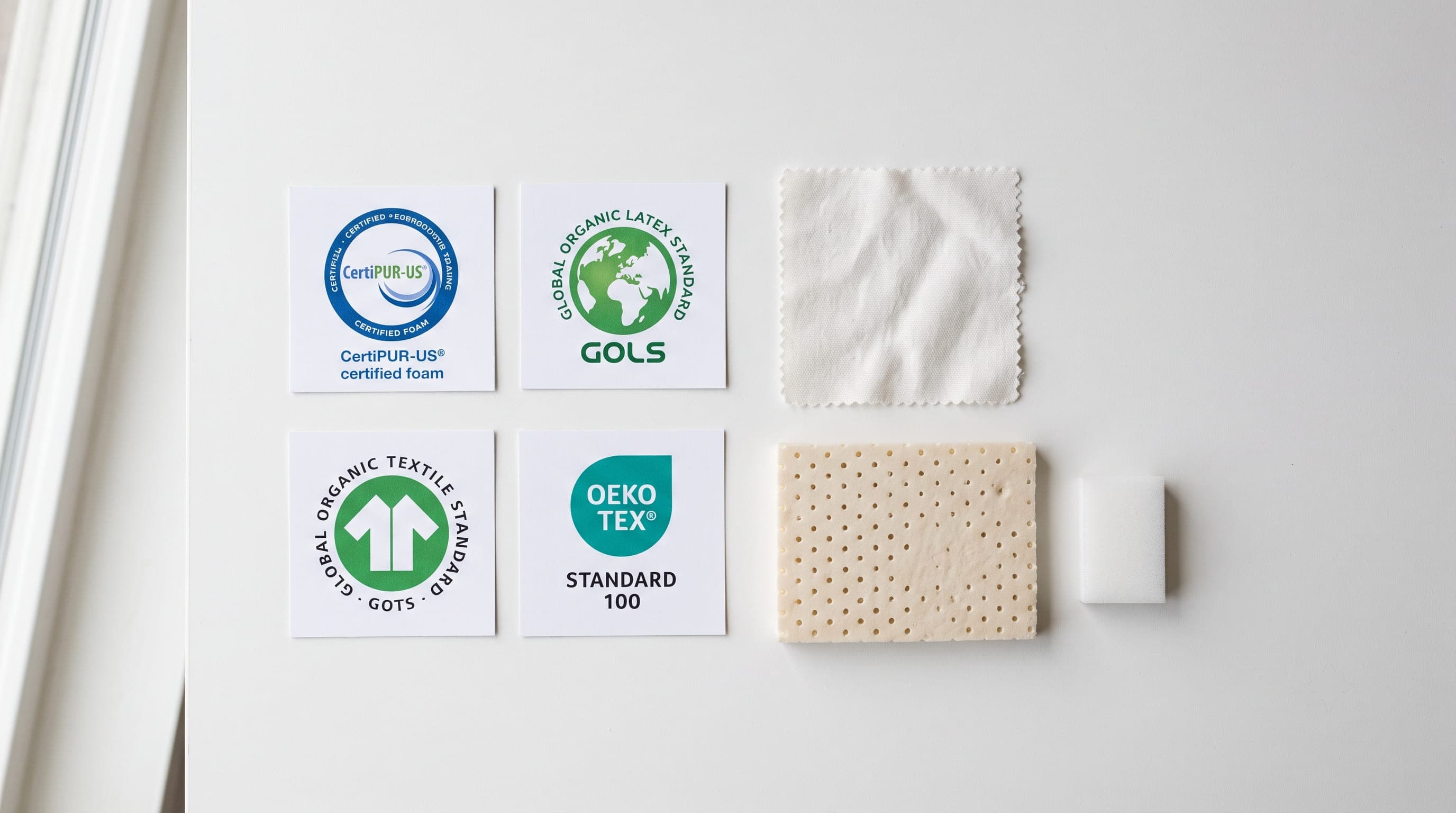
Not every "eco-friendly" or "natural" claim on a mattress listing is independently verified. These four certifications are the ones worth actually checking for:
CertiPUR-US — the baseline standard for polyurethane and memory foam. Verifies the foam is free from ozone depleters, PBDE flame retardants, mercury, lead, formaldehyde, and phthalates, and that VOC emissions stay below 0.5 parts per million. This is the minimum bar for any foam product, budget or premium.
GOLS (Global Organic Latex Standard) — specifically for natural latex. Verifies the latex is genuinely sourced from natural rubber trees rather than a synthetic blend, and that harvesting and manufacturing meet defined organic and environmental standards.
GOTS (Global Organic Textile Standard) — covers fabric and cover materials, typically organic cotton. Verifies the fiber was organically grown without synthetic pesticides and processed without harmful chemicals at every stage, not just the raw material.
OEKO-TEX Standard 100 — the broadest of the four, testing all components (fabric, fill, thread, dyes, fasteners) against a wide panel of regulated substances. Applicable to both foam and non-foam products.
Why this matters for allergy sufferers specifically: A product can carry one certification without the others — a mattress with an organic cotton cover (GOTS) over synthetic latex has only verified the cover, not the fill underneath. Checking for the certification that actually covers the material you're concerned about, rather than trusting a general "certified organic" label, is the difference between a real safety verification and a marketing claim.
Our Top Mattress & Topper Picks for Allergy Sufferers
1. Naturepedic Serenade — Best Overall Mattress for Allergy Sufferers
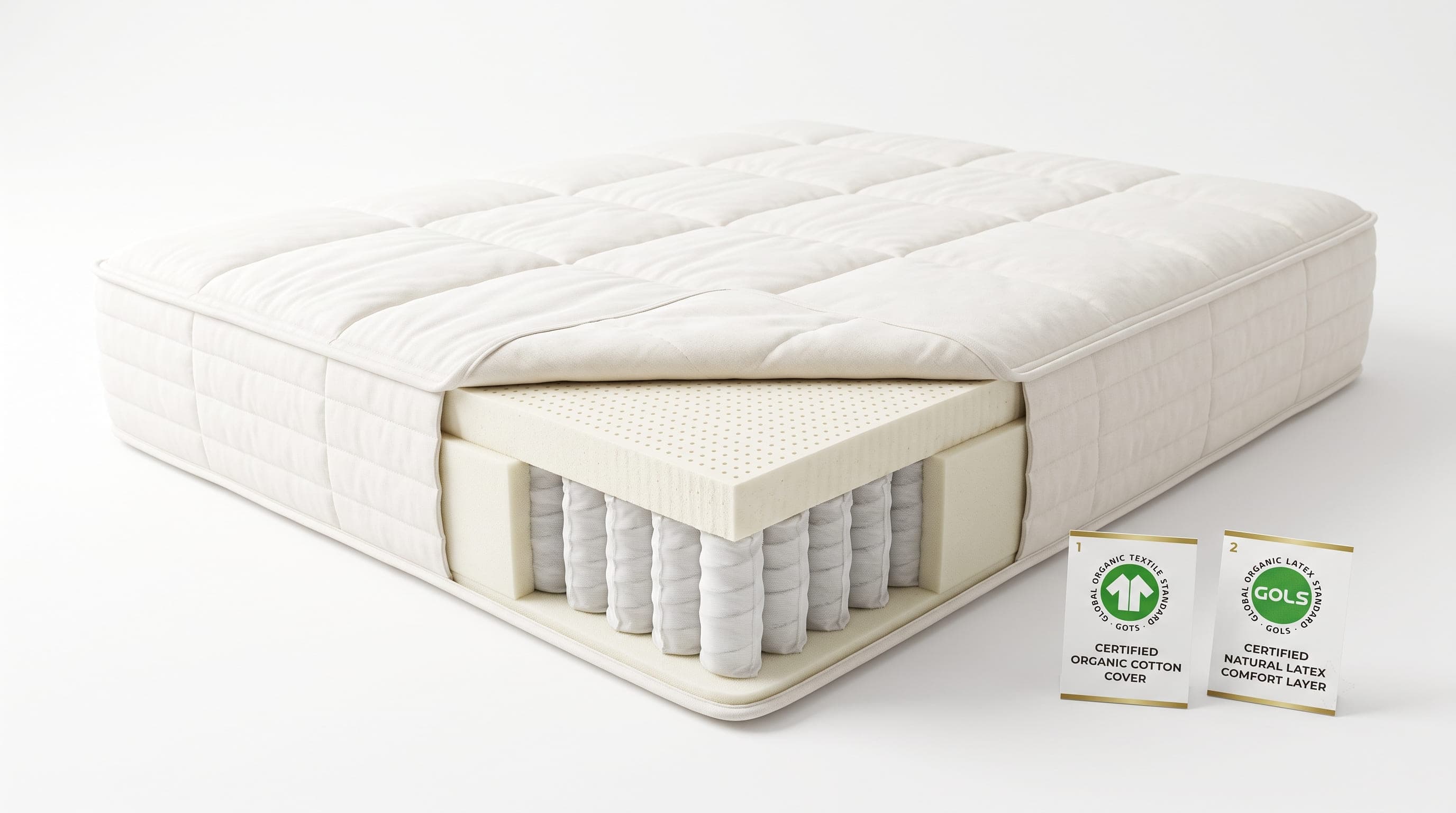
Price: $1,599–$1,999 | Type: Organic Hybrid | Certifications: GOTS, GOLS, MADE SAFE, Greenguard Gold
The Naturepedic Serenade carries the most comprehensive certification stack of any mattress in our reviewed range — GOTS, GOLS, MADE SAFE, and Greenguard Gold together represent independently verified safety across every material layer, not just the cover or just the comfort layer. In our own review, we noted this directly: "for chemical-sensitive sleepers, allergy sufferers, and those setting up sleep environments for children or pregnant women, this is not a minor detail — it is the central reason to choose this mattress over conventional alternatives."
The washable organic cotton cover is a genuine practical advantage for allergy management specifically — regular washing at high heat is one of the most effective ways to reduce dust mite populations and droppings, something a spot-clean-only cover can't offer.
Best for: Buyers who want the single most thoroughly certified mattress available, chemically sensitive sleepers, children's rooms, pregnancy.
Read our full Naturepedic Serenade Review →
2. Avocado Eco Organic Latex Topper — Best Topper Upgrade for an Existing Mattress
Price: $649–$949 | Type: Natural Latex Topper | Certifications: GOLS, GOTS
If replacing your entire mattress isn't practical, the Avocado Eco lets you add a genuinely dust-mite-resistant latex layer on top of your existing mattress. Natural latex's open-cell structure doesn't provide the organic material dust mites feed on the way standard foam or fiber fill does, and it's independently GOLS-certified rather than a self-declared "natural" claim.
Best for: Buyers who want certified organic materials without replacing a mattress that's otherwise still functional.
Read our full Avocado Eco Organic Latex Topper Review →
3. Saatva Natural Latex Topper — Best Value Latex Topper
Price: $365–$385 | Type: Natural Latex Topper | Certifications: GOLS, GOTS
The Saatva carries the same dual GOLS/GOTS certification as the Avocado Eco above at roughly half the price, with nearly identical test results across our pressure relief, temperature, and loft retention protocols. For allergy sufferers specifically, the certification coverage is what matters — and this delivers it without the premium price tag.
Best for: Budget-conscious buyers who still want fully certified natural latex rather than an uncertified "hypoallergenic" claim.
Read our full Saatva Natural Latex Topper Review →
4. PlushBeds Soft Organic Latex Topper — Best Soft Feel With Certification
Price: $345–$400 | Type: Natural Latex Topper | Certifications: GOLS, GOTS
Most latex toppers, including both picks above, skew medium-to-firm. The PlushBeds is tuned genuinely soft while keeping full GOLS and GOTS certification — the right pick if you want certified natural materials but have found firmer latex options too structured for your comfort preference.
Best for: Side sleepers and allergy-conscious buyers who specifically want a plush, certified organic feel.
Read our full PlushBeds Soft Organic Latex Topper Review →
Best Pillow for Allergy Sufferers
A pillow sits closer to your face than any other piece of bedding, which makes its material safety arguably more relevant than the mattress itself for airborne and contact allergens.
1. Naturepedic Organic Latex Side Sleeper Pillow — Best Pillow for Allergy Sufferers
Price: $125–$165 | Type: Solid Latex Pillow | Certifications: GOLS, GOTS
The Naturepedic pillow's solid latex core carries the same dual certification as our top mattress topper picks, and — unlike shredded fill, which can shift and compact unevenly — a solid core doesn't create pockets where dust and moisture accumulate over time.
Best for: Side sleepers who want certified organic materials in the pillow closest to their airway.
Read our full Naturepedic Organic Latex Pillow Review →
Down Allergy? Best Pillows for a Different Solution Entirely
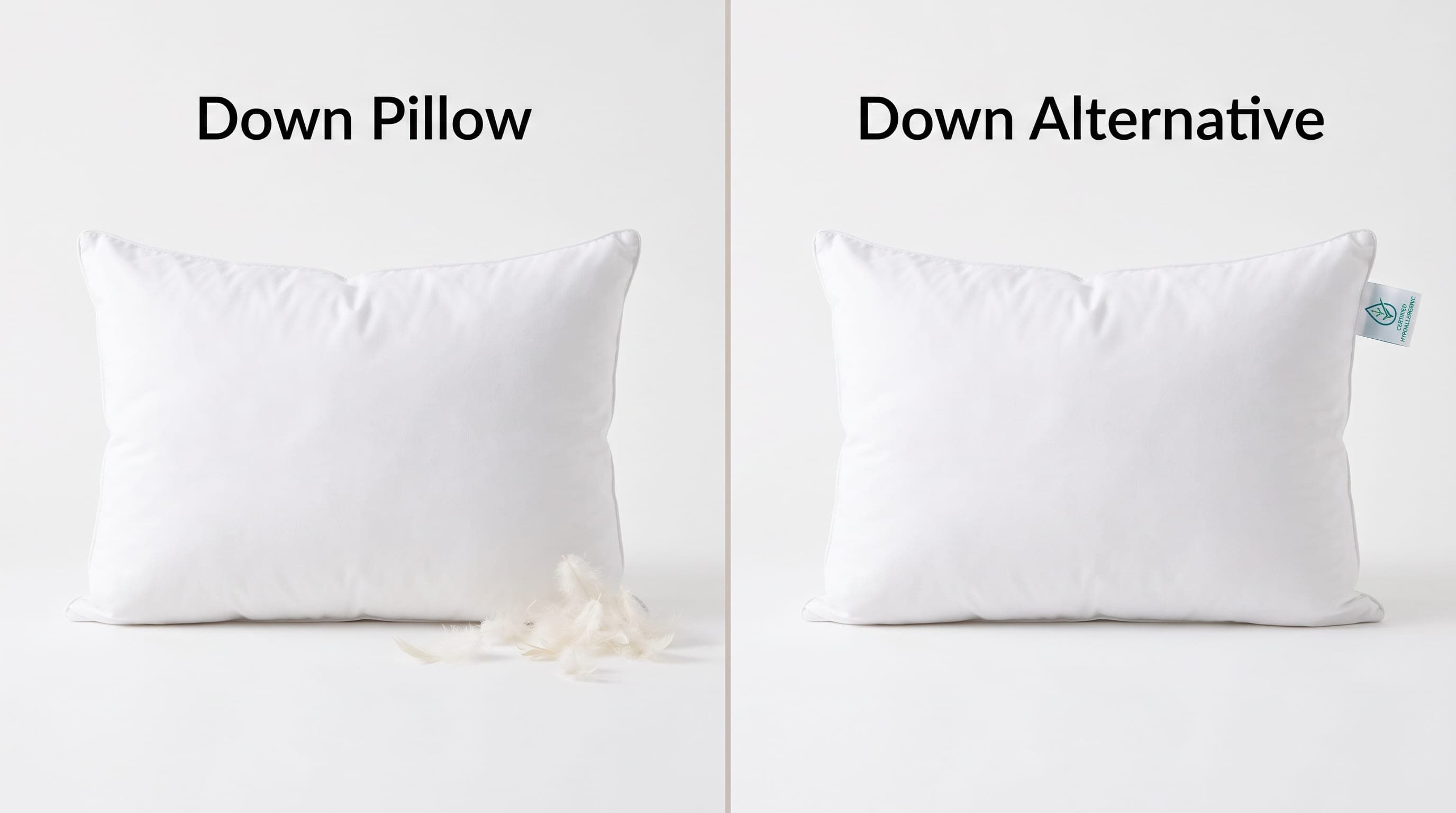
If your specific trigger is down or feather protein rather than dust mites or chemical sensitivity, organic latex doesn't solve your problem — you need a down-alternative fill entirely, regardless of how certified the rest of the product is.
Coop Home Goods Original ($69–$89) — Adjustable shredded fill, GREENGUARD Gold and OEKO-TEX certified, and fully machine washable including the fill itself, not just the cover.
Boll & Branch Down Alternative ($85–$95) — A GOTS-certified organic cotton shell wrapped around down-alternative fill, aimed at replicating a genuine luxury down feel without any animal-derived material.
Casper Original Pillow ($105–$125 for a 2-pack) — CertiPUR-US certified, machine washable, and sold in pairs — practical for couples where both partners need a down-free option.
Utopia Bedding Down Alternative ($19–$29) — The most affordable down-alternative option in our tested range, available in multiple firmness levels.
How to Choose Based on Your Specific Trigger
| Your Trigger | What to Look For | Our Top Pick |
|---|---|---|
| Dust mites | Natural latex, machine-washable cover | Naturepedic Serenade |
| Mold / humidity | Open-cell latex or hybrid coil airflow, avoid dense memory foam | Avocado Eco Topper over a coil mattress |
| Chemical sensitivity / VOCs | CertiPUR-US at minimum; GOLS + GOTS for the most rigorous verification | Naturepedic Serenade |
| Down / feather protein | Down-alternative fill specifically — certification of other materials doesn't help this trigger | Coop Home Goods Original |
| Budget-conscious, still certified | Saatva or PlushBeds toppers over full mattress replacement | Saatva Natural Latex Topper |
Care and Maintenance That Actually Reduces Allergens
Buying the right material is only half the equation — ongoing care determines whether allergen levels stay low over time.
Wash covers regularly and at high heat. Dust mites and their droppings are reduced significantly by washing at 130°F or higher. This is why a fully machine-washable cover (and ideally a washable fill, as with adjustable pillows) is a meaningful practical advantage, not just a convenience feature.
Use a mattress protector. A waterproof, allergen-blocking protector adds a physical barrier between you and the mattress surface, and it's far easier to wash a protector regularly than the mattress itself.
Maintain low humidity. Keeping bedroom humidity below 50% meaningfully slows both dust mite reproduction and mold growth — a dehumidifier is a legitimate addition to an allergy-management setup, not just a comfort feature.
Air out new mattresses and toppers before use. Even certified products emit some off-gassing on unboxing. Ventilating the room for 24–72 hours before regular use reduces initial VOC exposure, particularly relevant for chemically sensitive sleepers.
Vacuum and rotate regularly. Vacuuming the mattress surface every 1–2 months removes surface dust and skin cells before they become a dust mite food source, and rotating the mattress helps maintain even material performance over time.
Frequently Asked Questions
What is the best mattress material for allergies?
Natural latex, specifically GOLS-certified, is the strongest material choice for dust mite and mold resistance — its cellular structure doesn't provide the organic material dust mites feed on, and open-cell latex resists moisture retention better than dense memory foam. For chemical sensitivity specifically, look for the combination of GOLS, GOTS, and CertiPUR-US or Greenguard Gold certification together, which verifies every material layer independently rather than just one component.
Is memory foam bad for allergies?
Not inherently, provided it's CertiPUR-US certified — that certification verifies low VOC emissions and the absence of prohibited chemicals. However, standard memory foam's dense, closed-cell structure retains more moisture than natural latex, which can be a factor for mold-sensitive sleepers in humid climates. It doesn't have the same natural dust-mite resistance that latex offers structurally.
Can a mattress topper help with allergies without replacing the whole mattress?
Yes — this is one of the most practical solutions if your existing mattress is otherwise fine. A certified natural latex topper adds a genuinely dust-mite-resistant surface layer between you and the rest of the mattress. Our top picks — the Avocado Eco, Saatva Natural Latex, and PlushBeds Soft — all carry the same GOLS and GOTS certification standard as our top full-mattress pick.
What's the difference between hypoallergenic and certified organic?
"Hypoallergenic" is not a regulated or independently verified term — any manufacturer can use it without third-party testing. Certifications like GOLS, GOTS, CertiPUR-US, and OEKO-TEX are independently audited, verifying specific, defined standards rather than a vague marketing claim. When evaluating a "hypoallergenic" product, check whether it also carries an actual certification backing that claim.
Are down pillows always bad for allergy sufferers?
Only for the specific subset of people allergic to down or feather protein — a distinct trigger separate from dust mites or chemical sensitivity. If your allergy is to dust mites or synthetic VOCs rather than down itself, a well-maintained, regularly washed down pillow may not be the issue. If down protein specifically is your trigger, no amount of certification on the down itself will resolve it — you need a down-alternative fill.
How long does mattress off-gassing last?
For CertiPUR-US certified foam, initial off-gassing typically clears within 24–72 hours with adequate room ventilation. Natural latex products generally off-gas even less, with a faint rubber scent (not a chemical one) that clears within a similar or shorter window. If a strong chemical smell persists well beyond 72 hours, that's worth raising with the manufacturer directly.
The Bottom Line
For allergy sufferers, the Naturepedic Serenade is the strongest full-mattress choice in our tested range — its GOTS, GOLS, MADE SAFE, and Greenguard Gold certification stack verifies every material layer independently, and the washable cover is a genuine practical advantage for ongoing allergen management. If replacing your mattress isn't practical, the Saatva or Avocado Eco latex toppers deliver the same certified natural-latex benefit at a fraction of the cost.
If your specific trigger is down protein rather than dust mites or chemicals, skip the organic-materials conversation entirely and go straight to a certified down-alternative pillow like the Coop Home Goods Original.
Whatever you choose, certification is the difference between a verified safety claim and marketing language — check for GOLS, GOTS, CertiPUR-US, or OEKO-TEX specifically rather than trusting the word "hypoallergenic" alone.
For more on how these certifications compare in depth, see our CertiPUR-US Explained guide and Latex Pillow Guide.
Browse all reviewed mattresses →
Related Guides
Ready to shop? Browse our expert mattress reviews to find your perfect match.