How to Wash & Replace a Pillow: 2026
How to wash a pillow safely by fill type, plus how often to replace one. Machine wash guides, drying tips, and replacement timelines by material.
Most people wash their sheets weekly and never think about the pillow underneath them — even though it's closer to your face, absorbs sweat and oils every night, and is one of the few things in your bedroom that genuinely wears out. Washing it the wrong way can ruin it faster than not washing it at all, and most pillows have a shelf life far shorter than people assume.
This guide covers how to wash a pillow safely based on what it's actually made of, and how long each type realistically lasts before it's doing more harm than good.
Check the Care Label First
Before anything else, check the pillow's care label or the manufacturer's instructions. Fill type determines everything about how a pillow should be washed, and guessing wrong is the most common way people damage a pillow or void a warranty. If you've lost the label, the sections below match care instructions to the most common fill types.
The general rule that applies across almost every fill type: the outer cover is usually machine washable, while the fill or core inside often is not. Treating the two separately is the safest default when you're not sure.
How to Wash a Pillow by Fill Type
Down Alternative and Polyester Fibre Fill
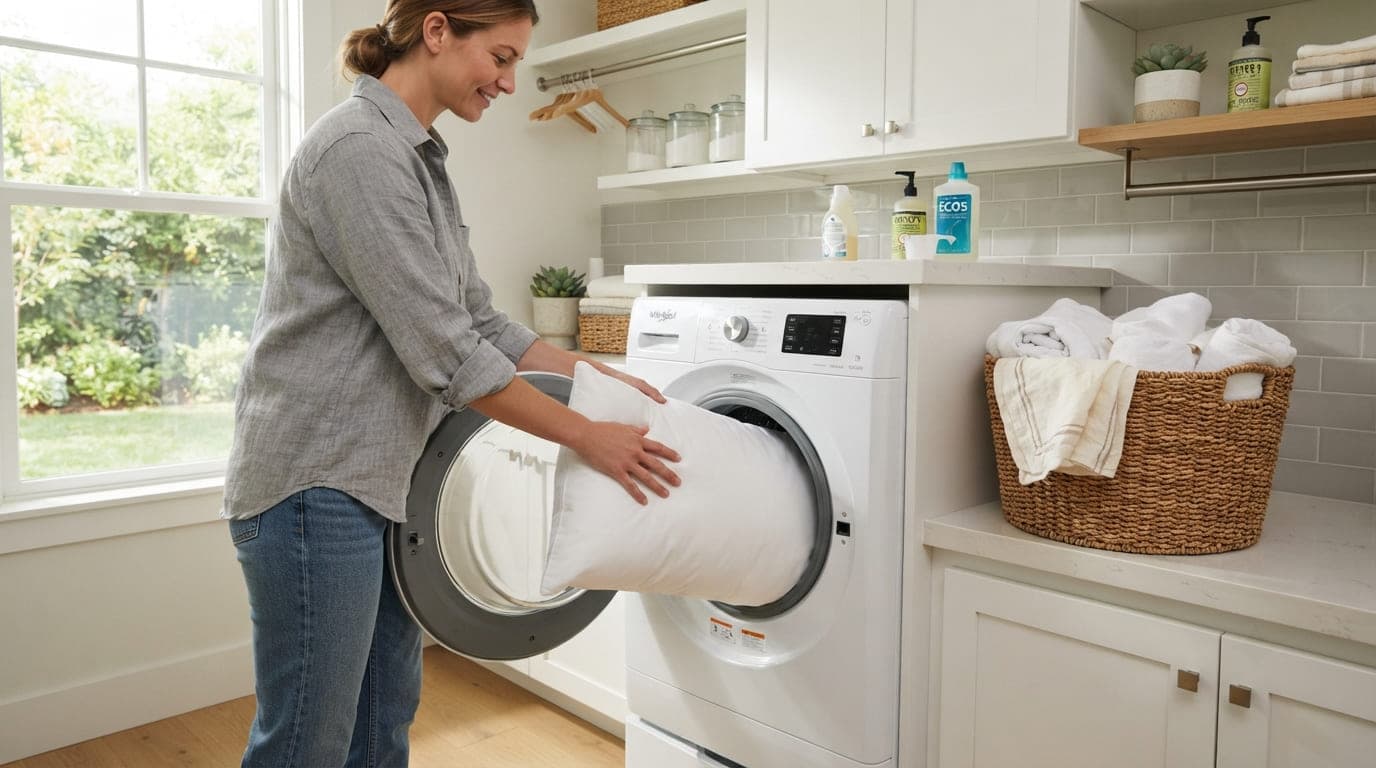
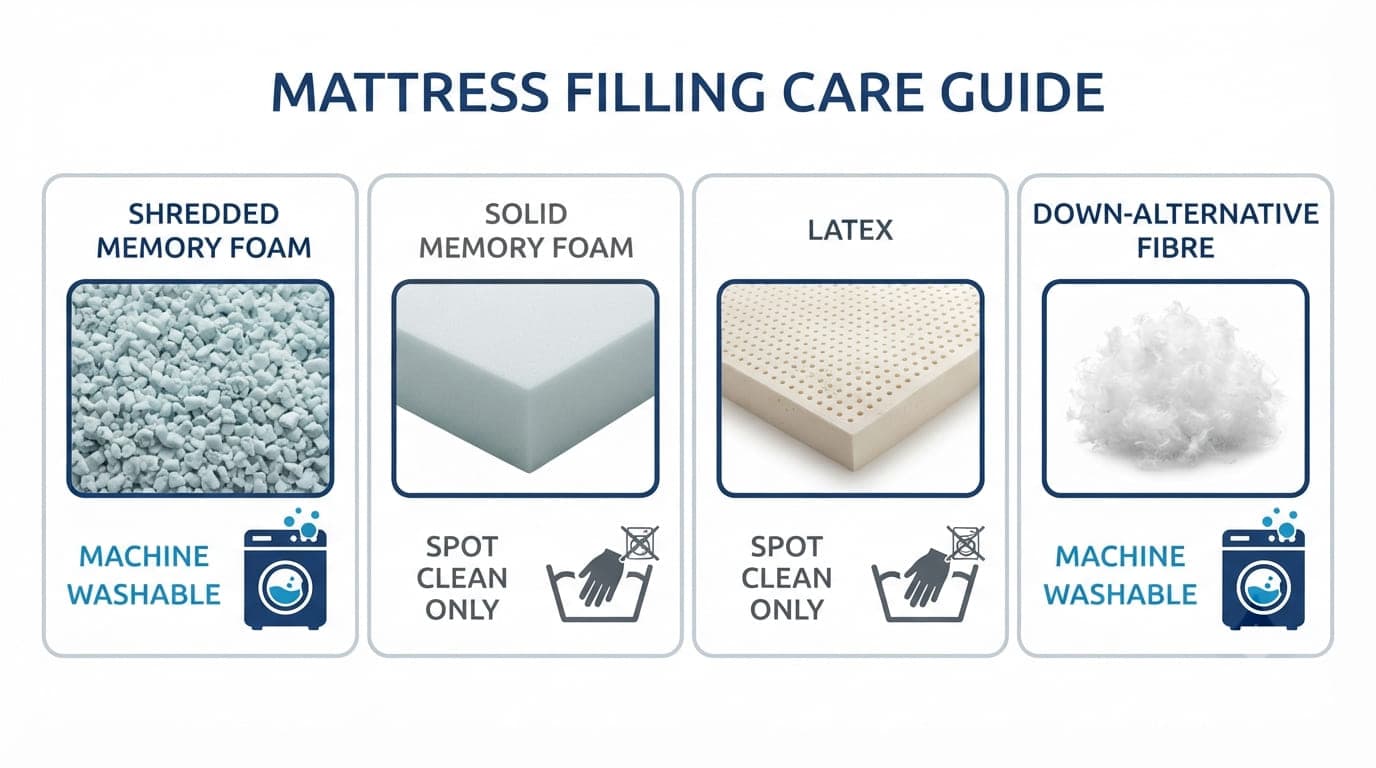
These are usually the easiest to wash. The entire pillow — cover and fill together — is typically machine washable, since the loose fibre fill can go through a wash cycle without breaking down the way foam does.
- Wash: Machine wash on a gentle or delicate cycle with cold water and a mild liquid detergent. Avoid powder detergent, which can clump in the fill.
- Dry: Tumble dry on low with two or three clean tennis balls or dryer balls to break up clumping as it dries. Expect several dry cycles to get it fully dry — a damp pillow left to sit is a mold risk.
- Wash frequency: Every 3–6 months, or more often if you don't use a pillowcase and protector.
Shredded Memory Foam (Adjustable Pillows)
Adjustable pillows built around shredded foam are usually washable in parts, not as a single unit.
- Cover: Almost always machine washable on a gentle cold cycle.
- Inner liner and fill: Usually should not be machine washed as a whole — the shredded pieces can shift, clump, or break down under agitation. Spot-clean the liner with a damp cloth and mild detergent instead.
- Wash frequency: Cover every 2–4 weeks; spot-clean the liner as needed.
Solid Memory Foam and TEMPUR-Style Foam
Solid foam pillows are the most restrictive to wash, because the foam core itself is never meant to get wet.
- Cover: Machine washable on a gentle cold cycle, tumble dry low.
- Foam core: Spot-clean only, using a damp cloth and a small amount of mild detergent. Never machine wash or submerge solid foam — water trapped inside foam doesn't dry out cleanly and can lead to mold or a breakdown of the foam's structure.
- Wash frequency: Cover every 2–4 weeks; spot-clean the core only when needed.
Latex
Latex pillows follow the same core logic as solid foam, since a latex core also shouldn't be submerged.
- Cover: Usually machine washable — check the label, since organic cotton covers sometimes call for cold water only.
- Latex core: Spot-clean with a damp cloth and mild detergent. Never machine wash or submerge the core, and keep it out of direct sunlight for extended periods, which can degrade natural latex over time.
- Wash frequency: Cover every 2–4 weeks; spot-clean the core only when needed.
Gel-Grid and Specialty Covers
Pillows with an open grid structure or a technical cooling cover (rather than standard fabric) often can't go in a washing machine at all.
- Cover: Check the label carefully — some grid and gel-cover pillows require hand-washing or spot-cleaning only, since a machine cycle can damage the structure.
- Core: Spot-clean only.
- Wash frequency: Spot-clean as needed; hand-wash the cover on the schedule the manufacturer specifies.
General Washing and Drying Tips
Always use a pillow protector. This is the single biggest thing you can do to keep a pillow clean and extend its life — it's much easier to wash a $15 protector every couple of weeks than to deep-clean the pillow itself.
Wash two pillows at once if your machine allows it. A single pillow can throw a washing machine off balance during the spin cycle; a pair balances the load better.
Dry completely before use. Any dampness left in a pillow, especially fill or foam, creates a mold risk. Squeeze-test the center of the pillow after drying — if it feels even slightly damp, run another dry cycle.
Never put solid foam or latex in the washing machine or dryer, even if the cover is removed. Water breaks down the internal structure of both materials, and heat from a dryer can melt or warp foam entirely.
How Often Should You Replace a Pillow?
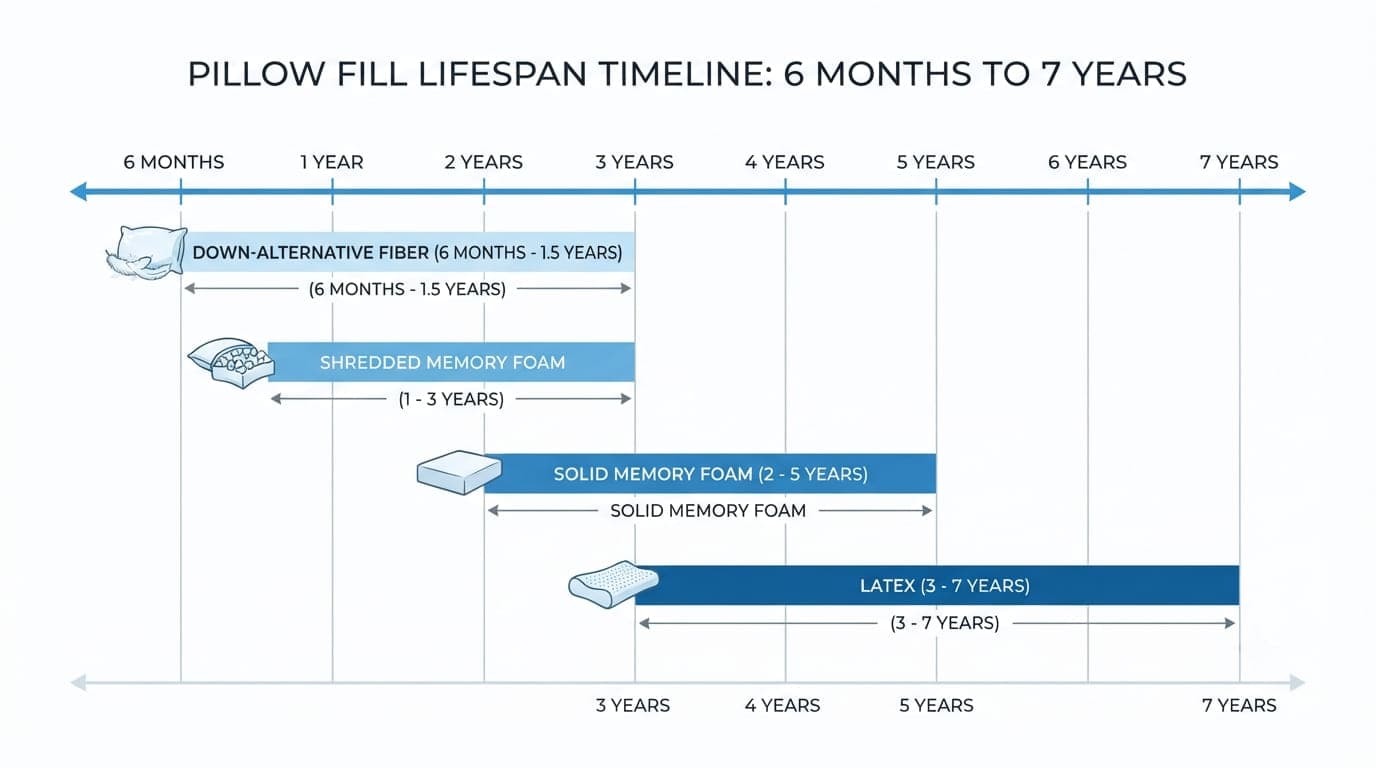
Replacement timing depends heavily on the fill, based on what we've measured across the pillows we've tested:
| Fill Type | Typical Lifespan | Why |
|---|---|---|
| Polyester fibre fill | 6–18 months | Fibres mat and flatten quickly under regular compression |
| Down alternative | 12–24 months | Holds up better than basic polyester, but still compresses over time |
| Solid memory foam | 18–24 months | Foam gradually loses its ability to spring back |
| Shredded adjustable foam | 2–3 years | Fill can be topped up, which extends usable life |
| TEMPUR-style foam | Several years | Denser foam resists compression longer than standard memory foam |
| Latex | 5–7 years | Naturally resists compression and doesn't break down like foam or fibre |
These are general ranges. In our own testing, a budget polyester fibre pillow showed noticeable flattening within 4–6 months of nightly use, while a Talalay latex pillow's manufacturer-rated lifespan runs 5–7 years with minimal loft loss. The cheapest fill types aren't necessarily a bad buy — replacing a $10–$15 pillow every year can still cost less over time than one $150 pillow, as long as you're comfortable replacing it that often.
Signs It's Time to Replace Your Pillow
Regardless of what the calendar says, replace your pillow if you notice any of these:
- The fold test: fold the pillow in half. If it stays folded or doesn't spring back within a few seconds, the fill or foam has broken down.
- Lumps or uneven fill. Fibre and down-alternative pillows that clump despite washing have reached the end of their useful life.
- Visible yellowing or staining that doesn't come out in a wash — this usually means sweat and oils have soaked deep into the fill, not just the cover.
- Persistent odor after washing, which can indicate mold or bacteria buildup inside the pillow.
- Waking with new neck or shoulder discomfort that wasn't there before — a pillow that's lost its loft no longer supports your neck the way it did when new. See our Best Pillow for Neck Pain guide if this is a recurring issue.
- Allergy symptoms that flare at night. Dust mites accumulate in pillows over years of use, and even regular washing doesn't fully remove them from an aging pillow.
What to Buy When You Replace It
If your old pillow was a basic fibre-fill pillow that flattened within months, an adjustable or latex pillow will likely last significantly longer. See our full guides for tested picks:
- Best Pillow for Side Sleepers
- Best Pillow for Back Sleepers
- Best Cooling Pillow
- Best Pillow Under $100
- Latex Pillow Guide
Frequently Asked Questions
Can you put a memory foam pillow in the washing machine?
No — the solid foam core should never be machine washed or submerged, since trapped water can lead to mold and can break down the foam's structure. The removable cover is usually machine washable; spot-clean the foam itself with a damp cloth.
How often should pillows be washed?
Wash the cover every 2–4 weeks, and the whole pillow (for fully washable fibre or down-alternative types) every 3–6 months. Using a pillow protector reduces how often deep cleaning is needed.
How do you dry a pillow so it doesn't get lumpy?
Tumble dry on low heat with two or three clean tennis balls or dryer balls, which break up clumps as the pillow dries. Expect multiple dry cycles for a fully washable pillow, and make sure it's completely dry before use.
How often should you replace your pillow?
It depends on the fill: roughly 6–18 months for basic fibre fill, 18–24 months for solid memory foam, 2–3 years for adjustable shredded foam, and 5–7 years for latex. The fold test — does it spring back after being folded in half? — is a faster way to check than counting months.
Can you wash a latex pillow?
The cover usually can be machine washed, but the latex core itself should only be spot-cleaned with a damp cloth. Never submerge or machine wash latex, and avoid leaving it in direct sunlight for long periods.
Is it bad to sleep on an old, flat pillow?
Yes, over time. A pillow that's lost its loft no longer holds your head and neck in a neutral position, which can lead to neck stiffness, shoulder tension, or disrupted sleep. If your pillow fails the fold test, it's time to replace it.
Can washing a pillow get rid of dust mites?
Regular washing at the hottest temperature the care label allows helps reduce dust mites and allergens, but it won't eliminate everything in an older pillow. A pillow protector, washed frequently, is a more effective long-term barrier than trying to deep-clean the pillow itself.
The Bottom Line
Wash the cover often and treat the fill or core with more caution — machine wash fibre and down-alternative fill, but only ever spot-clean solid foam and latex cores. Replace on a schedule that matches the material: a year or less for basic fibre fill, a couple of years for foam, and up to seven years for latex. When in doubt, the fold test tells you faster than any calendar: if it doesn't spring back, it's time for a new one.
Related Guides
Ready to shop? Browse our expert mattress reviews to find your perfect match.