
If you wake up with a stiff neck, keep folding your pillow in half, or flip it all night looking for a cool spot, your pillow is probably the wrong shape for you, not just old. The good news: once you know your sleep position, choosing a pillow comes down to three decisions. This guide explains how to choose a pillow by loft, fill and firmness, and which of the pillows we've tested fits each kind of sleeper.

The Short Answer
Choose your pillow in this order:
- Loft (height) to match your sleep position. Side sleepers need the highest pillow, back sleepers a medium one, and stomach sleepers the lowest.
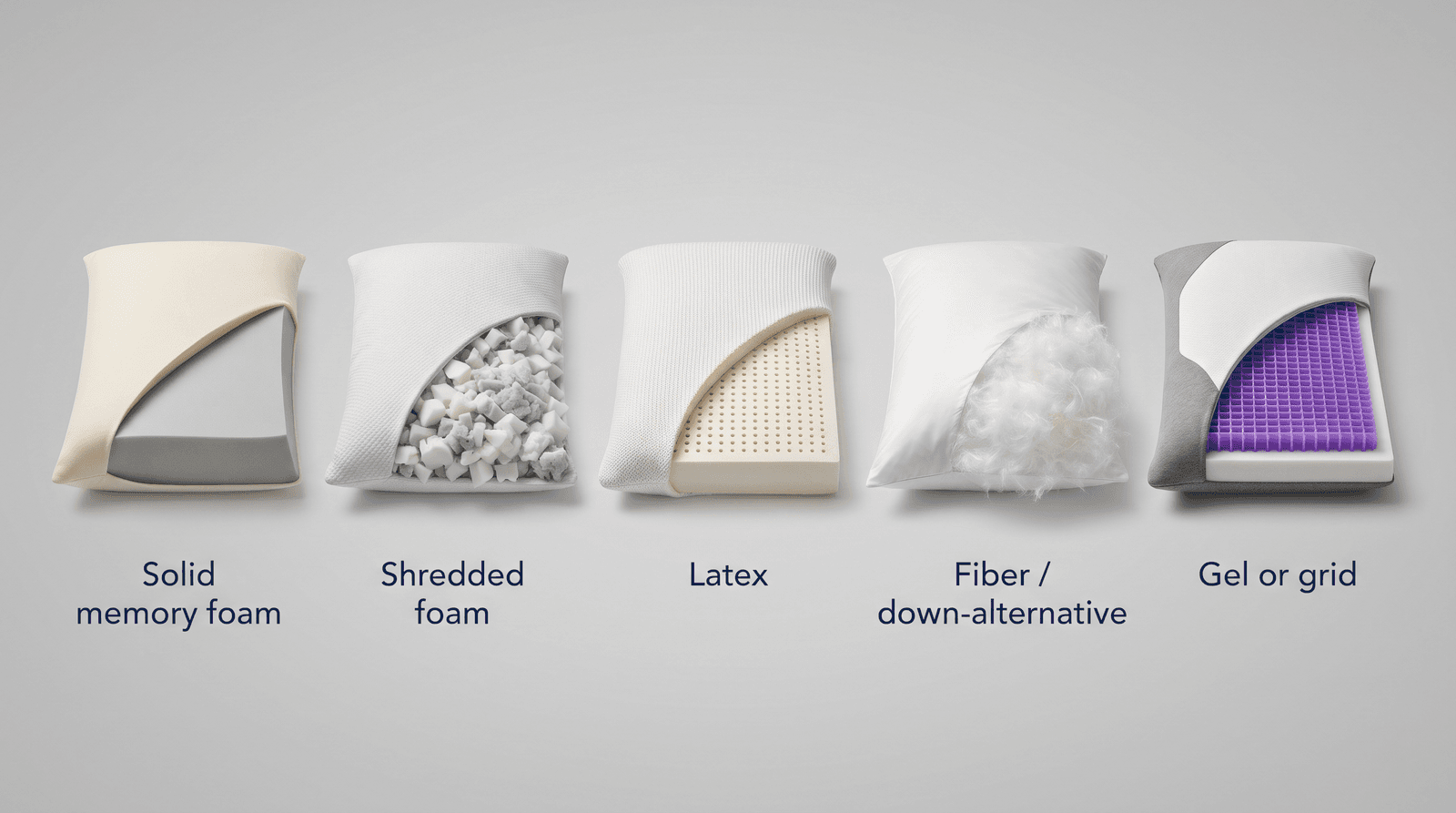
- Fill to match how you like it to feel. Memory foam contours, latex springs back, shredded fill adjusts, and fiber or down-alternative feels soft and squashy.
- Firmness to match your frame. Broader shoulders and heavier heads need a firmer, fuller pillow so it doesn't collapse overnight.
Not sure where you land, or you switch positions? An adjustable shredded-fill pillow lets you add or remove fill until your neck feels level.
Why Does Pillow Loft Matter Most?
Loft decides whether your head and neck stay in line with your spine. Too high, and your neck bends up; too low, and it bends down. Either way, muscles strain for hours, which is a common cause of morning neck stiffness.
The right loft fills the gap between your head and the mattress in your usual sleeping position. That gap is biggest when you lie on your side and smallest when you lie on your stomach.
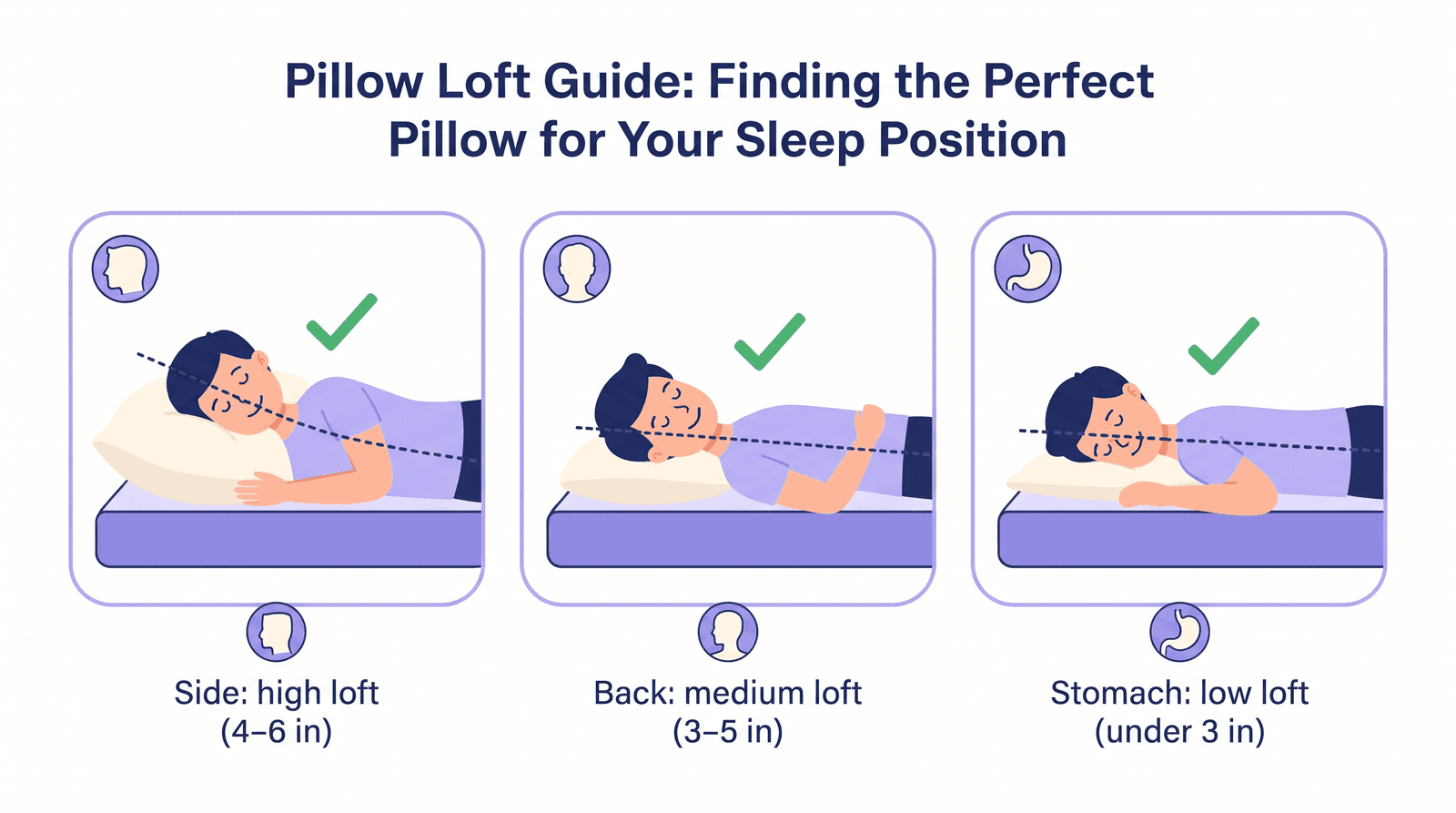
What Pillow Loft Do You Need for Your Sleep Position?
| Sleep position | Loft | Firmness | Good fills |
|---|---|---|---|
| Side | High, about 4–6 in | Medium-firm to firm | Latex, shredded foam, contoured foam |
| Back | Medium, about 3–5 in | Medium | Contoured memory foam, adjustable shredded fill |
| Stomach | Low, under about 3 in | Soft | Thin fiber or down-alternative, reduced shredded fill |
| Combination | Adjustable | Medium | Shredded foam or latex you can reshape |
Loft ranges are a general guide. Your shoulder width, head size and mattress firmness all shift the number, so use them as a starting point.
Side sleepers
You need the most height to fill the space between your shoulder and the side of your head. Broader shoulders need more loft; a softer mattress, which lets your shoulder sink, needs a little less. A firm, full pillow keeps that height all night. See our best pillow for side sleepers.
Back sleepers
You need moderate loft that supports the curve of your neck without pushing your chin toward your chest. Many back sleepers do better with less height than they expect, which is why contoured and adjustable pillows work well. See our best pillow for back sleepers.
Stomach sleepers
You need the lowest pillow possible, because any real height twists your neck to one side for hours. A thin, soft pillow is safest, and some stomach sleepers are most comfortable with no pillow at all.
Combination sleepers
If you move between positions, choose a pillow you can adjust or one that sits between the heights above. Shredded fill is the easiest way to find a middle loft you can live with on your side and your back.

Which Pillow Fill Is Right for You?
The fill decides how your pillow feels, how warm it sleeps and how long it lasts.
| Fill | Feel | Heat | Typical lifespan* | Best for |
|---|---|---|---|---|
| Solid memory foam | Slow, contouring hug | Warmer | 18–24 months | Back sleepers who want steady support |
| Shredded memory foam | Adjustable, moldable | Medium | 2–3 years | Combination sleepers, anyone unsure of loft |
| Latex | Bouncy, responsive | Cooler | 5–7 years | Side sleepers, hot sleepers, long-term value |
| Polyester fiber / down-alternative | Soft, squashy | Medium | 6–18 months | Stomach sleepers, tight budgets |
| Gel or grid cooling layers | Varies | Coolest | Varies | Hot sleepers |
Lifespans from our pillow washing and replacement guide.
Memory foam
Memory foam molds to your head and neck and holds its shape, which makes it a favorite for back sleepers and neck pain. Solid foam traps more heat than other fills; shredded foam breathes better and lets you change the loft. Compare picks in our best memory foam pillow guide.
Latex
Latex supports like foam but springs back instantly, sleeps cooler and lasts the longest of any fill. Skip it if you have a latex allergy. Our latex pillow guide explains Dunlop vs Talalay and solid vs shredded.
Fiber and down-alternative
These feel soft and plush and are easy to wash, but they flatten fastest. They suit stomach sleepers and anyone who wants a low, squashy pillow on a budget.
How Do You Choose a Pillow for Neck Pain or Hot Nights?
If you have neck pain
Start with loft. Most neck pain from pillows comes from height that doesn't match your position, not the material. A contoured memory foam pillow suits back sleepers, while side sleepers usually need a fuller, firmer pillow. An adjustable pillow lets you fine-tune the height until your neck feels neutral. If neck pain persists, see a doctor or physical therapist. Our best pillow for neck pain covers the pillows we've tested.
If you sleep hot
Choose latex, shredded foam or a pillow with a gel or grid layer, and avoid solid memory foam. In our testing, pillows ranged from about 1.4°F to 5.6°F above room temperature after two hours, a difference you can feel. See our best cooling pillow.
How Do You Know When to Replace a Pillow?
Try the fold test: fold the pillow in half. If it stays folded instead of springing back, it's lost its support. Other signs are lumps, permanent dents, yellow stains and waking up with a stiff neck.
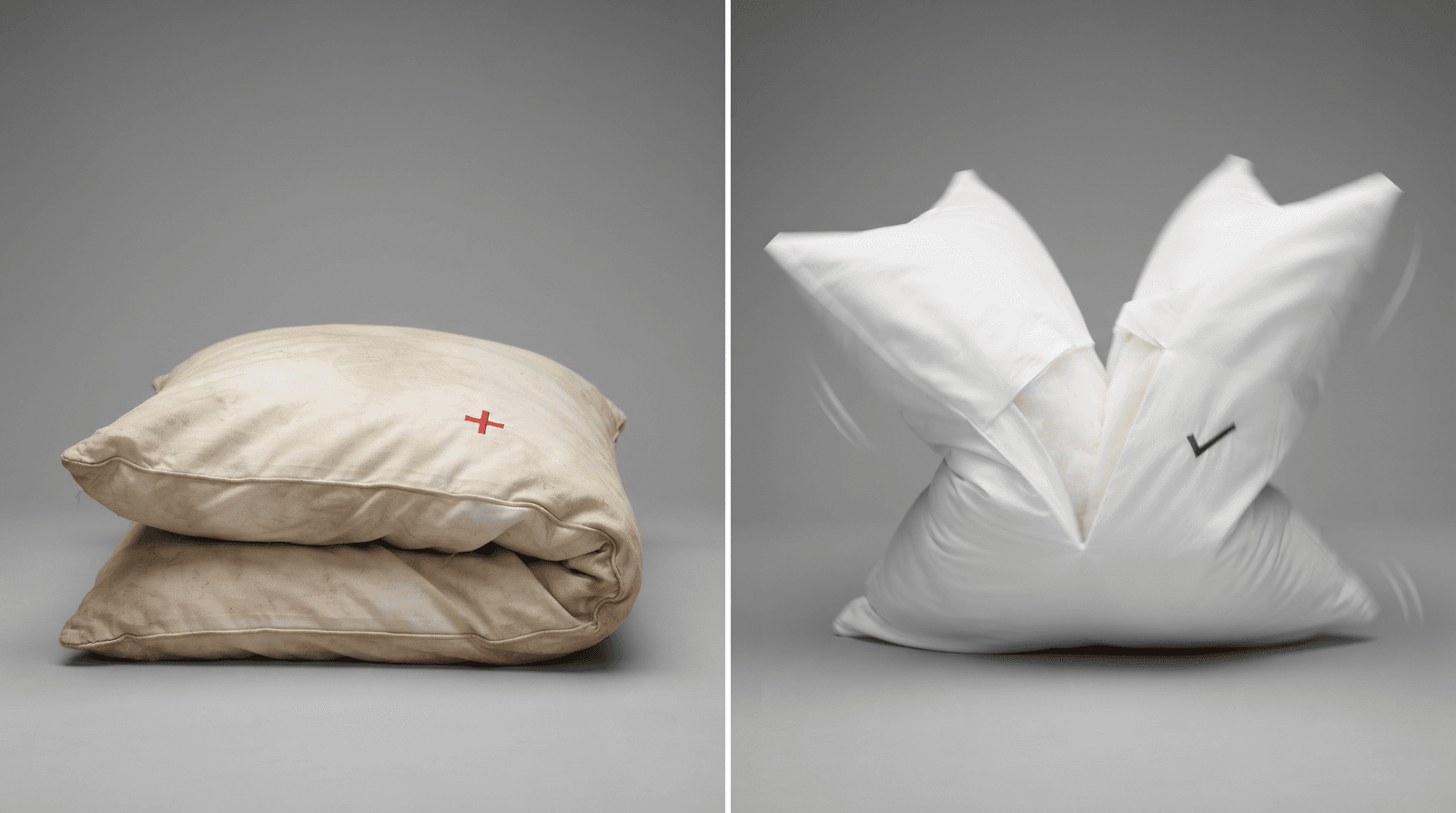
As a rough guide, replace polyester fiber every 6–18 months, solid memory foam every 18–24 months, shredded foam every 2–3 years and latex every 5–7 years.
Our Tested Recommendations
These are the top picks from our pillow guides, matched to the decisions above:
- Side sleepers: the Naturepedic Organic Latex Side Sleeper Pillow, a purpose-built high-loft latex pillow.
- Back sleepers and neck pain: the TEMPUR-Ergo Neck Pillow, for structured, contoured neck support.
- Not sure of your loft: the Coop Home Goods Original, an adjustable shredded-foam pillow and our best overall value.
- Hot sleepers: the Purple Harmony, the coolest pillow we've measured, or the adjustable Coop Cool+.
- On a budget: see our best pillow under $100 guide.
The Bottom Line
Choosing a pillow starts with your sleep position. Get the loft right — high for side sleepers, medium for back sleepers, low for stomach sleepers — then choose a fill for feel and temperature, and a firmness that holds up under your head all night. If you're unsure, start with an adjustable shredded-fill pillow and tune it until your neck feels level.
Ready to choose? Start with our best pillow for side sleepers if you sleep on your side, or the best pillow for back sleepers if you sleep on your back.
Frequently Asked Questions
How do I choose the right pillow height?
Match it to your sleep position. Side sleepers usually need about 4–6 inches of loft, back sleepers about 3–5 inches and stomach sleepers under about 3 inches.
Broader shoulders need more height; a softer mattress needs a little less.
What type of pillow is best for neck pain?
The one with the right height for your position. Contoured memory foam suits back sleepers, while side sleepers do better with a fuller, firmer pillow.
An adjustable pillow helps you find the right height. See a doctor if neck pain continues.
Is a firm or soft pillow better?
It depends on how you sleep. Side sleepers need a firm, full pillow that keeps its height; stomach sleepers need a soft, thin one.
Back sleepers are usually happiest with medium firmness.
What pillow fill sleeps coolest?
Latex and pillows with gel or grid layers sleep coolest; shredded foam is next. Solid memory foam traps the most heat.
Are adjustable pillows worth it?
Yes, especially if you change positions or aren't sure what loft you need. You can add or remove fill until your neck feels level, and adjust again if you change mattresses.
How often should I replace my pillow?
Roughly every 6–18 months for polyester fiber, 18–24 months for solid memory foam, 2–3 years for shredded foam and 5–7 years for latex. Replace it sooner if it fails the fold test.
Should stomach sleepers use a pillow?
A very thin, soft pillow is fine, and some stomach sleepers are most comfortable without one. Any real height twists the neck to one side.