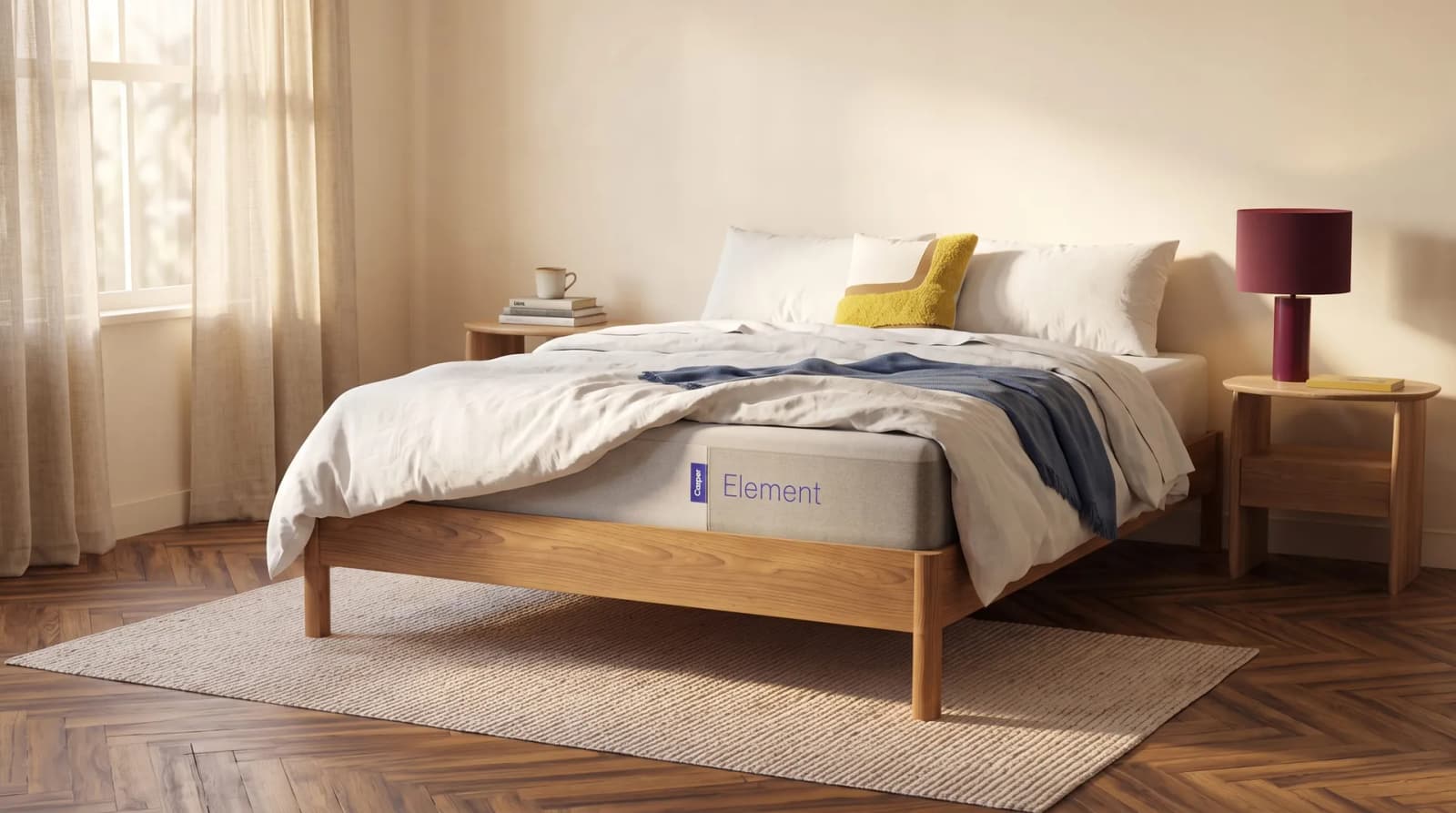
If you're replacing a tired spring mattress, furnishing a guest room or buying your first foam bed, you probably want something comfortable, simple and from a brand you trust, without paying for features you won't use. The Casper Element is Casper's entry-level all-foam mattress: 8 inches tall, a brand-rated medium feel, CertiPUR-US certified foam, a 100-night trial and a 10-year warranty.
This review is based on the Element's published construction, materials and policies, compared against similar beds and against well-established principles of pressure relief and spinal support. As a sleep scientist, I focus on what a design like this can and can't reasonably deliver, and who it fits. If you want more mattress for a bit more money, it's worth reading our Casper Original Hybrid review too; if you're deciding between brands, see our Nectar vs Casper comparison.
At a Glance
An entry-level all-foam Casper with a brand-rated medium feel for lighter sleepers; open-cell foam but no dedicated cooling layer, and a soft foam perimeter.
- Side sleepers under about 185 lbs
- Solo sleepers and guest rooms
- First-time foam mattress buyers
- Anyone setting up a bed alone
- You sleep hot
- You weigh over about 200 lbs
- You and a partner use the full width
- You want a 365-night trial
What the Casper Element Should Feel Like
Casper rates the Element as medium. With a 1.5-inch open-cell comfort layer on a 6-inch support base, you'd expect light initial contouring at the shoulder and hip before the firmer foam beneath takes over. Like most new foam beds, it may feel slightly firmer for the first week or two while the foam softens.
What that construction suggests for each position:
- Side sleepers: a good match at lighter weights, where the comfort layer can cushion the shoulder and hip without bottoming out. See our side sleeper guide.
- Back sleepers: reasonable at average weights. Heavier back sleepers are likely to compress the thin profile more than is ideal.
- Stomach sleepers: fair. A medium foam surface can let the hips dip; most stomach sleepers do better on firmer beds.
- Combination sleepers: fine. A thin comfort layer is easier to move on than deep, slow memory foam.
What's Inside the Casper Element
The Element is a straightforward all-foam build at 8 inches, thinner than 12-inch beds like the Nectar Classic or DreamCloud Classic.
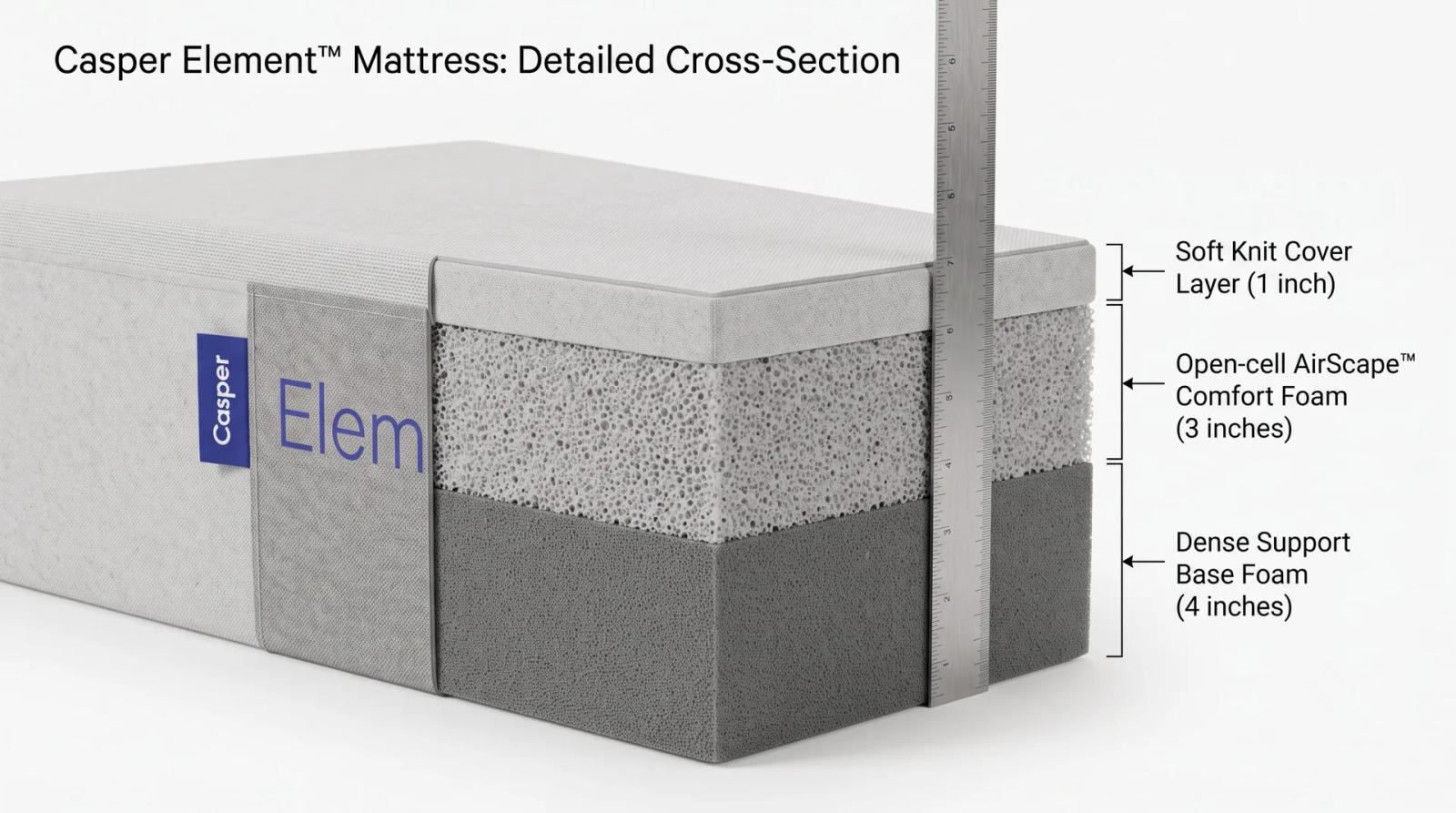
| Layer | Material | Thickness | What it does for you |
|---|---|---|---|
| Cover | Soft knit polyester | 0.5" | Breathable surface |
| Comfort | AirScape open-cell foam | 1.5" | Pressure relief with some airflow |
| Support | Durable support foam | 6" | Holds the mattress's shape |
| Total | — | 8" | — |
AirScape foam is Casper's open-cell comfort layer. Open-cell foam has more interconnected air pockets than traditional closed-cell memory foam, which generally lets it trap less heat, though it isn't an active cooling material like gel or phase-change foam.
The 6-inch support base makes up three-quarters of the mattress height. That's a sensible balance for lighter and average-weight sleepers, but it leaves limited depth for heavier bodies.
How We Evaluated It
Our assessment covers:
- Construction: layer types, thicknesses and total height.
- Materials and certifications: foam type and CertiPUR-US certification.
- Sleep-position fit: how the stated firmness and comfort layer depth match the needs of side, back, stomach and combination sleepers at different body weights.
- Couples' needs: likely motion isolation and edge behavior given the build.
- Value and policies: price, trial length, return conditions and warranty, compared with close rivals.
Pressure Relief and Back Support
Pressure relief is where a medium foam bed like this should do best. For side sleepers, the goal is to let the shoulder and hip sink in enough that the spine stays roughly straight; a contouring comfort layer helps with that. For lighter and average-weight side sleepers, the AirScape layer should provide noticeable cushioning; if hip pain is your main concern, a thicker comfort layer gives more margin.
For back sleepers, the support foam needs to keep the hips from sinking below the shoulders. At average weights, a 6-inch base is generally adequate. Heavier sleepers put more load into a thin bed, and I'd point them toward a thicker build such as the Nectar Classic.
| Sleep position | Likely fit | Why |
|---|---|---|
| Side, under ~185 lbs | Good | Comfort layer cushions shoulder and hip |
| Back, average weight | Good | Medium support base |
| Back, over ~200 lbs | Fair | Thin profile compresses more |
| Combination | Good | Easy to change position |
| Stomach | Fair | Medium foam can let hips dip |
If you have persistent back or joint pain, a mattress is only one factor; see a doctor or physical therapist for an assessment.
Motion Isolation for Couples
With no coils to carry vibration, all-foam beds tend to isolate motion well, and there's no reason to expect the Element to be an exception. Foam is also essentially silent. For couples, the more likely limitation is edge support, covered below.
Does the Casper Element Sleep Hot?
It isn't built for hot sleepers. Open-cell AirScape foam should trap less heat than dense, traditional memory foam, but there's no gel, phase-change material or coil layer to move heat away. Average-temperature sleepers in a cool bedroom should be fine; hot sleepers should look at the Sweetnight CoolNest or a hybrid.
Edge Support
This is the Element's likely weak spot. All-foam beds without a reinforced perimeter usually give more at the edges than hybrids with perimeter coils. Solo sleepers rarely notice; couples who sleep near the sides may find the outer few inches less stable, which effectively narrows a queen. If you sit on the edge to dress or share the full width, a hybrid like the DreamCloud Classic is a safer bet.
Casper Element vs Nectar Classic vs DreamCloud Classic vs Zinus Green Tea
| Feature | Casper Element | Nectar Classic | DreamCloud Classic | Zinus Green Tea |
|---|---|---|---|---|
| Type | Memory foam | Memory foam | Hybrid | Memory foam |
| Height | 8" | 12" | 12" | 8" |
| Trial | 100 nights | 365 nights | 365 nights | 100 nights |
| Warranty | 10 years | Lifetime | Lifetime | 10 years |
| Cooling features | Open-cell foam | Gel foam | Coils + cover | Basic |
| Edge support | Foam only | Foam only | Coil perimeter | Foam only |
| Best for | Lighter side / back | Side / back | All positions | Tight budgets |
Choose the Nectar Classic if you can spend a little more: it adds 4 inches of height, a gel comfort layer, a lifetime warranty and a 365-night trial.
Choose the DreamCloud Classic if you want coil support, firmer edges, better airflow and a 365-night trial.
Choose the Zinus Green Tea if price is everything, for example in a rarely used guest room.
Choose the Casper Element if you want a lightweight, simple medium foam bed with Casper's trial and warranty behind it, or step up to the Original Hybrid if you want coils and zoned support from the same brand.
Who Should Buy the Casper Element?
Based on its construction, lighter side and back sleepers are the natural fit, while hot sleepers and heavier bodies should look at thicker or coil-based beds.
- A side sleeper of light to average weightA contouring AirScape comfort layer over a medium support base should cushion the shoulder and hip without the heavier sinkage that would bottom out a thin bed.
- A back sleeper around average weightA 6-inch support foam base under a thin comfort layer is a reasonable recipe for keeping the lower back near neutral at moderate weights.
- Someone setting up a bed without helpAn 8-inch, all-foam queen is light and compact compared with 12-inch hybrids.
- A light sleeper sensitive to a partner's movementWith no coils to carry vibration, all-foam beds generally isolate motion well.
- A hot sleeperThere is no gel, phase-change or coil layer; open-cell foam alone usually isn't enough for people who wake up warm.Try instead: Sweetnight CoolNest
- A back sleeper over about 200 lbsHeavier bodies tend to compress an 8-inch foam bed further than ideal; a thicker build gives more support depth.Try instead: Nectar Classic
- A couple who sleeps near the edgesAn all-foam perimeter has no reinforcement, which usually narrows the usable width.Try instead: DreamCloud Classic
- A buyer on the tightest budgetFor a guest room, a cheaper all-foam bed covers the basics.Try instead: Zinus Green Tea Mattress
Sizes and Prices
The queen typically sold for about $645 at our last update. Prices change often, so check the current price before buying.
Delivery, Setup and Care
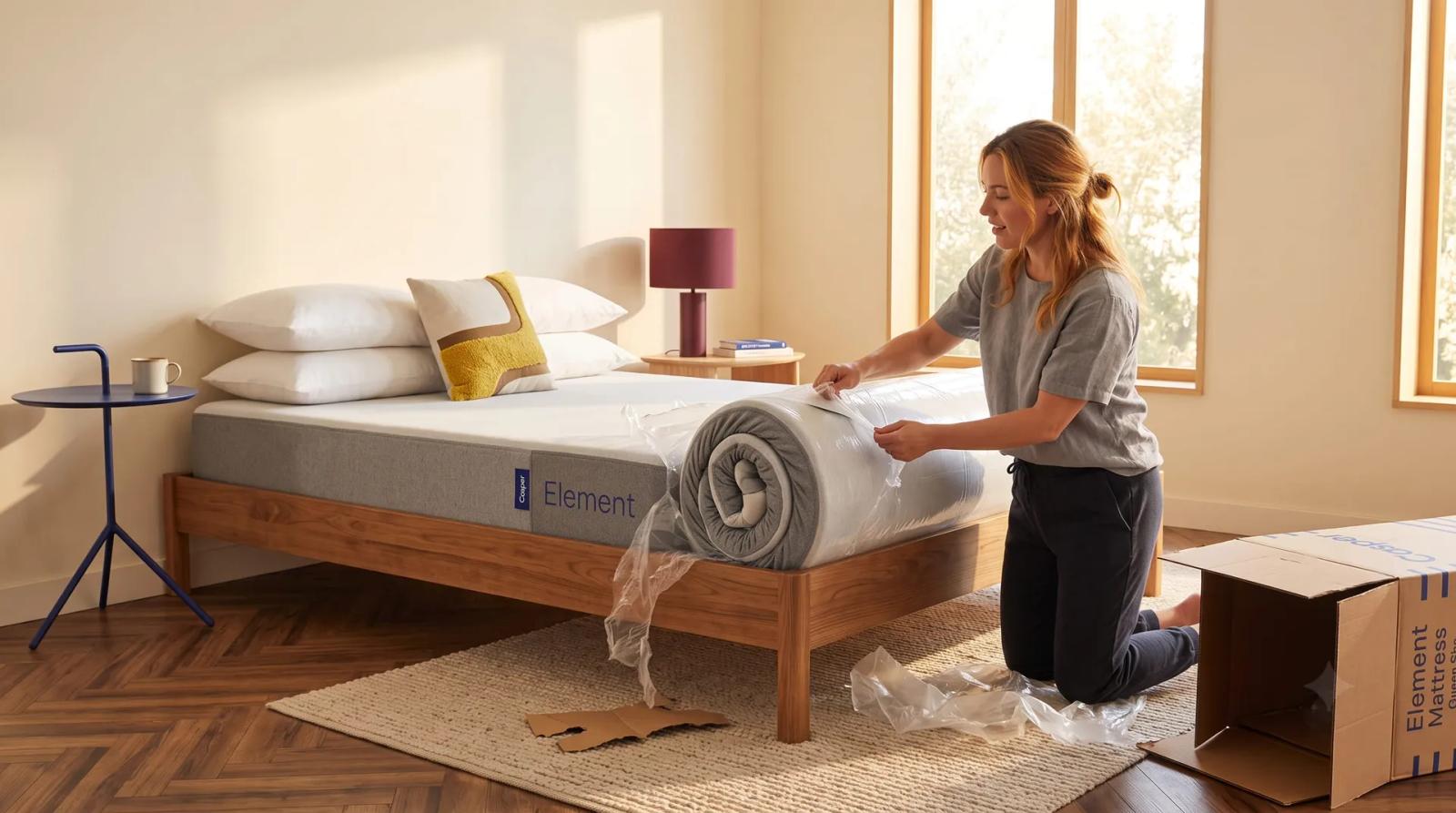
- Delivery: ships compressed in a box; an 8-inch foam queen is manageable for one adult.
- Expansion: like most boxed foam beds, give it up to a day to reach full height.
- Smell: a new-foam smell is common for the first day or so; airing the room helps. The foams are CertiPUR-US certified.
- Trial: 100 nights with free returns; you must sleep on it for at least 30 nights before starting a return.
- Warranty: 10 years for manufacturing defects. Check Casper's current terms for sag-depth limits.
Final Verdict
The Casper Element is a straightforward, well-specified entry-level foam mattress. Its contouring AirScape layer, medium feel and simple 8-inch build make sense for lighter side sleepers, average-weight back sleepers, guest rooms and first-time foam buyers.
Its limits follow from the same design: no dedicated cooling layer, a soft foam perimeter, limited depth for heavier sleepers, and a trial and warranty shorter than some rivals. If those matter, the Nectar Classic or DreamCloud Classic is the better buy.
Casper Element Mattress pros and cons
- AirScape open-cell comfort foam over a 6-inch support base gives a simple, balanced medium feel suited to lighter side and back sleepers
- CertiPUR-US certified foams
- 100-night sleep trial with free returns (30-night minimum before a return)
- No gel or phase-change layer
- All-foam perimeter with no edge reinforcement, so the sides should feel less stable than a hybrid's
- 8-inch profile with a 1.5-inch comfort layer is thin for sleepers over about 200 lbs
Frequently Asked Questions
Is the Casper Element good for side sleepers?
For lighter and average-weight side sleepers, it should be. The AirScape comfort layer is designed to contour at the shoulder and hip.
Heavier side sleepers will likely want a thicker comfort layer.
Is the Casper Element good for back pain?
For average-weight back sleepers, its medium support base is a reasonable choice. Sleepers over about 200 lbs are better served by a thicker mattress.
Ongoing back pain should be assessed by a clinician.
How firm is the Casper Element?
Casper rates it medium. Expect it to feel a little firmer at first while the foam breaks in.
Does the Casper Element sleep hot?
It's not designed for hot sleepers. Open-cell foam traps less heat than traditional memory foam, but there's no gel, phase-change or coil layer.
Is the Casper Element good for couples?
All-foam construction should isolate motion well, but the unreinforced foam edges may narrow the usable width for couples who spread out.
Is the Casper Element good for heavy people?
Not ideally. An 8-inch foam bed offers limited support depth; sleepers over about 200 lbs should look at a 12-inch foam or hybrid mattress.
Does the Casper Element smell when new?
Some new-foam smell is normal for boxed foam beds and usually fades after airing. The foam is CertiPUR-US certified.
What trial and warranty does the Casper Element come with?
A 100-night trial and a 10-year warranty. Returns are free, but you need to sleep on it for at least 30 nights before starting one.
Confirm current terms before you buy.
Is the Casper Element worth it?
Yes, for lighter solo sleepers, guest rooms and first-time foam buyers who value a known brand. If you sleep hot, weigh over 200 lbs or want a longer trial, the Nectar Classic or DreamCloud Classic is better value.
Where the Casper Element Mattress ranks

Written by
Dr. Sarah Mitchell earned her Ph.D. in Sleep Medicine from Stanford University, where her doctoral research focused on the biomechanical relationship between sleep surface properties and slow-wave sleep quality. With 12 years in sleep science research, she has developed and published standardized protocols for evaluating mattress pressure distribution, spinal alignment during sleep, and thermal comfort — research that informs the criteria we use when evaluating products from their published specs and construction. At Mattress Guide Pro she reviews research and editorial content.
- Education
- Ph.D. Sleep Medicine · Stanford University
- Experience
- 12 years · Sleep Medicine · Biomechanics · Clinical Research
Fact-checked by James Whitfield
Compare With Similar Mattresses
All mattress reviews →
FDW 8" Gel Memory Foam Mattress Review
A thin, certified two-layer gel foam mattress for guest rooms and tight budgets; heavier sleepers will reach the base and the foam edges are soft.
NapQueen 8 Inch Bamboo Charcoal Mattress Review
A certified bamboo-charcoal foam mattress aimed at odor control, suited to guest rooms and budget back sleepers; soft at the edges.
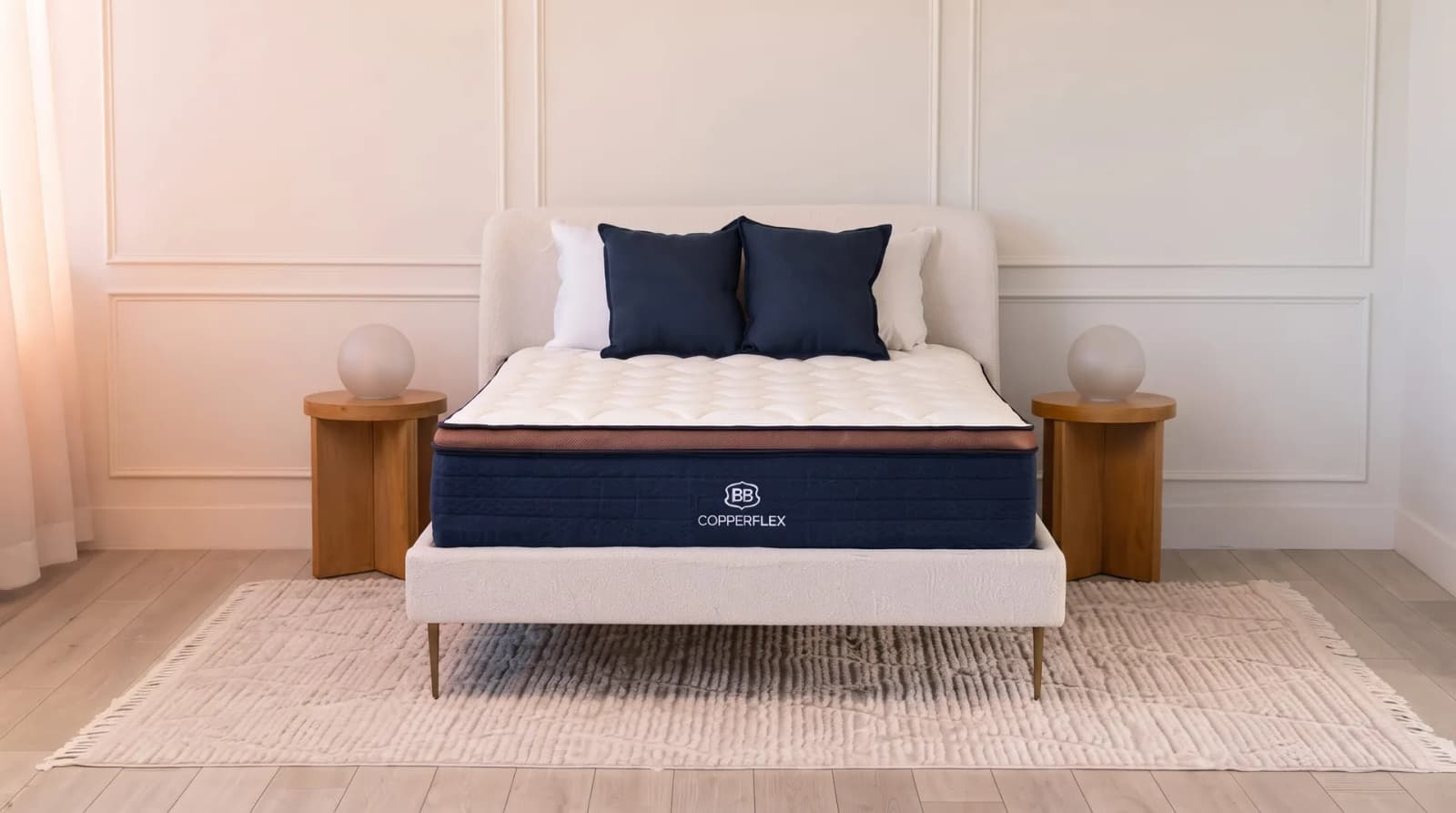
CopperFlex Pro 14" Mattress Review
A 14-inch copper-foam hybrid with a reinforced coil edge and deep comfort layers for most body types; not a dedicated cooling bed.